Key takeaways
- Find the best piano keyboards with weighted keys for beginners and returning players, with graded hammer action, full-size keys, and rich piano sound.
If you are learning piano or returning to it after years away, the best piano keyboards with weighted keys make the biggest difference to how fast you progress. Weighted keys push back against your fingers the way an acoustic piano does, so the finger strength, control, and dynamics you build transfer directly to a real piano. Light, springy keys may suit a quick melody, but they teach a touch that falls apart the moment you sit at an acoustic instrument.
This guide covers three 88-key digital pianos that all use genuine weighted hammer action, and each one is currently listed on Amazon US. We compare their key actions, sounds, connectivity, and portability so you can pick the one that fits your room, your practice habits, and the way you like to learn.
What to Look For in a Weighted-Key Piano Keyboard
Not every keyboard that claims weighted keys delivers the same feel. Before you compare models, it helps to know which features actually matter for piano practice and which ones are simply nice extras.
Key action and grading
The heart of a weighted-key piano is its hammer action. Inside each key sits a small hammer mechanism that mimics the way an acoustic piano key strikes a string. Many actions are graded, which means the keys in the bass feel heavier than the keys in the treble, just like a real piano. Graded hammer action is the single most important feature for building proper technique, because it trains your hands to adjust pressure across the whole keyboard.
Some actions add escapement, a subtle click near the bottom of the key travel that reproduces the feel of a grand piano action releasing. Escapement is not essential for a beginner, but players who have spent time on acoustic pianos tend to notice it immediately and appreciate it.
Key surface matters too. Several weighted actions use textured or ivory-feel keytops that absorb moisture and give your fingers extra grip during long practice sessions, while smooth plastic keys can feel slippery once your hands warm up.
Full-size keys and the full range
A proper piano keyboard has 88 full-size keys. Shorter keyboards force you to transpose or shift octaves while playing, which breaks the flow of practice and makes it harder to learn pieces as written. Full-size keys also keep your hand spacing consistent with an acoustic piano, so your muscle memory stays correct.
Polyphony and sound
Polyphony is the number of notes a piano can sound at the same time. When you hold the sustain pedal down and play with both hands, notes stack up quickly, and a low count can cause earlier notes to cut off. For serious practice, look for at least 64 notes of polyphony, and more is better for layered pieces played with the pedal held down. The models below range from 64 to 192 notes.
The sound engine matters as well. Each brand samples or models its own concert grand piano sound, and the character differs from one brand to another. Built-in speakers let you practice without headphones, while a headphone jack makes late-night practice possible without disturbing anyone in the house. Speaker strength matters most if you want the piano to fill a room.
Connectivity for lessons and recording
Most modern weighted-key pianos include Bluetooth and a USB connection. Bluetooth audio lets you stream songs from a phone and play along, which is a useful way to practice timing. Bluetooth MIDI and USB MIDI connect the piano to lesson apps and recording software, so check that the model supports MIDI over Bluetooth or USB if you plan to use a learning app, since that is how the app follows what you play.
Portability and setup
Portable digital pianos are designed to sit on a stand and be moved when needed, while console pianos come with built-in furniture stands. A portable model weighs roughly 24 to 28 pounds and fits on a standard X-style keyboard stand or a table, which suits a bedroom, a small apartment, or a player who packs the piano away between sessions. Console models look better in a living room but are much harder to move, so think about where the piano will live before you choose.
A sustain pedal is essential, and each model includes one in the box, along with a music rest for sheet music or a tablet. Optional extras worth considering later include a proper stand, a bench at the right height, and a three-pedal unit for the soft and sostenuto pedals of an acoustic piano.
The Best Piano Keyboards with Weighted Keys
The three pianos below all use real weighted hammer action and cover the full 88-key range. They differ in key feel, sound, weight, and connectivity, so the right choice depends on how and where you play.
Yamaha P-145BT 88-Key Digital Piano
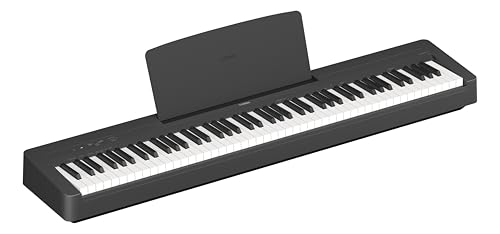
View the Yamaha P-145BT on Amazon
The Yamaha P-145BT is the current entry-level portable piano in the Yamaha P series, and it is built around the Graded Hammer Compact action, known as GHC. The GHC action uses graded hammers, so the bass keys feel heavier than the treble keys, and the matte black keytops give your fingers a secure grip. Four touch settings let you adjust how hard you need to press to reach full volume.
The listing describes 88 keys, 10 voices, and 64-note polyphony, with a grand piano voice at the center of the sound set. Bluetooth audio is built in, so you can stream music from a phone through the piano speakers and play along with songs you are learning. A headphone jack is included for quiet practice, and the piano connects to lesson apps over USB.
The P-145BT weighs 11.1 kg, which makes it one of the lighter full-size weighted pianos available, and the slim body fits easily on a stand or a sturdy table. A music rest and a sustain foot switch are included in the box, along with built-in speakers, so it is ready to play as soon as it is set up. Its compact size and straightforward controls suit beginners, players in small rooms, and anyone who wants a piano that can move between rooms without a struggle.
Considerations: the 64-note polyphony is the lowest of the three models here, so very dense pedalled passages may reach its limits sooner. The included sustain pedal is a simple footswitch rather than a full piano-style pedal, though a standard sustain pedal can be added later. Bluetooth on this model brings audio in from a phone, so wired headphones remain the way to practice silently.
Roland FP-10 Compact 88-Note Digital Piano

View the Roland FP-10 on Amazon
The Roland FP-10 is built around the PHA-4 Standard keyboard, an 88-note progressive hammer action with escapement and ivory-feel white keys. The escapement adds a small sense of release near the bottom of each key press, and the graded hammers give the bass a properly weighty response, so the feel is close to an acoustic piano. If key feel is your top priority, this is the model to look at first.
The listing describes 96-note polyphony and the SuperNATURAL piano sound engine, which models the tone of a grand piano. Built-in speakers are included for room practice, and a headphone jack covers quiet sessions. Bluetooth MIDI and USB connectivity let the piano work with lesson apps and recording software, and a pedal switch is included in the box. The FP-10 weighs 12.6 kg without the music rest, which keeps it portable enough to carry to lessons or move around the house.
The FP-10 suits beginners who want an action they will not outgrow quickly, and it also suits returning players who already know what a real piano should feel like under their fingers. Its combination of a strong action and a respected sound engine makes it a solid long-term practice instrument rather than a short-term first piano.
Considerations: the built-in speakers are modest compared with larger models, so players who want room-filling sound may prefer headphones or external speakers. The control panel is minimal, with most settings reached through button combinations or a companion app, which keeps the top surface clean but takes a little learning. A stand and bench are not included, so those need to be arranged separately.
Casio Privia PX-S1100 88-Key Weighted Digital Piano (Gloss Red)

View the Casio Privia PX-S1100 on Amazon
The Casio Privia PX-S1100 is the slimmest of the three pianos in this guide, packing a full weighted action into a compact body. It uses the Smart Scaled Hammer Action keyboard, with graded weighting across all 88 keys, and the AiR Sound Source provides the piano tones. The listing describes 18 tones and 192-note polyphony, which gives it the highest polyphony of the three models here.
Bluetooth audio and Bluetooth MIDI are both included, so you can stream songs to play along with and connect to lesson apps without cables. USB-MIDI is also available. Touch sensor controls sit along the front edge of the piano, keeping the top surface clean, and the 16-watt speaker system is strong enough for practice in a living room. The gloss red finish suits a modern room, and the piano is light enough at around 24.7 pounds to move between rooms or take to a lesson.
The PX-S1100 suits players who care about how the piano looks in their home as well as how it plays, and it suits apartment dwellers who need a slim instrument that can slide against a wall or onto a narrow stand. The high polyphony and wide tone selection also make it a good choice for players who enjoy exploring electric piano and other instrument sounds alongside the main grand piano voice.
Considerations: the touch sensor controls take a little getting used to, since there are no physical buttons for most functions. The slim body means the speakers face in a way that suits a player sitting directly in front of the piano. As with the other portable models here, a stand and bench are separate items.
Piano Keyboards with Weighted Keys Compared
| Feature | Yamaha P-145BT | Roland FP-10 | Casio Privia PX-S1100 |
|---|---|---|---|
| Keys | 88 full-size weighted | 88 full-size weighted | 88 full-size weighted |
| Key action | Graded Hammer Compact (GHC) | PHA-4 Standard with escapement | Smart Scaled Hammer Action |
| Keytops | Matte black | Ivory-feel white keys | Standard |
| Polyphony | 64 notes | 96 notes | 192 notes |
| Voices / tones | 10 voices | SuperNATURAL piano sound | 18 tones |
| Bluetooth | Bluetooth audio | Bluetooth MIDI | Bluetooth audio and MIDI |
| USB | USB connectivity | USB connectivity | USB-MIDI |
| Speakers | Built-in speakers | Built-in speakers | 16-watt speaker system |
| Headphone jack | Yes | Yes | Yes |
| Sustain pedal | Foot switch included | Pedal switch included | Sustain pedal included |
| Music rest | Included | Included | Included |
| Weight | 11.1 kg | 12.6 kg | About 24.7 pounds |
| Finish in this listing | Black | Black | Gloss red |
Choosing the Right Weighted-Key Piano for Your Use Case
The best choice depends less on which piano is objectively strongest and more on how you will use it day to day.
For a complete beginner, the Yamaha P-145BT is the simplest first choice. Its action is graded and realistic, its controls are straightforward, and its light weight makes it easy to set up and put away. Bluetooth audio is a practical bonus for playing along with songs from a phone, which keeps practice enjoyable in the early months when motivation matters most.
For a player who cares most about touch, the Roland FP-10 is the strongest pick. The PHA-4 Standard action with escapement gives the most acoustic-like feel of the three, and the SuperNATURAL sound engine pairs well with it. If you have played an acoustic piano before and want a digital piano that feels familiar, this is the one that will feel most like home.
For a small room or a player who values looks and portability, the Casio Privia PX-S1100 is the natural choice. Its slim profile and light weight make it the easiest to live with in a tight space, and its 192-note polyphony and 18 tones give it the most room to grow into. The gloss red finish also makes it a visible part of the room rather than a black box in the corner.
For lessons, all three models work well, since each one connects to lesson apps and has a full 88-key weighted keyboard. The deciding factor is usually whether the teacher or the app you use needs Bluetooth MIDI, in which case the Roland and the Casio have the edge, or whether simple Bluetooth audio for play-along tracks is enough, in which case the Yamaha covers it.
Care and Everyday Use
A few habits will keep a weighted-key digital piano playing well for years. Dust the keys regularly with a dry or slightly damp soft cloth, and avoid household cleaners or sprays, which can damage the key surface and the finish. Keep drinks away from the keyboard, since liquid between the keys can reach the electronics underneath.
Place the piano on a stable stand or table at a height where your forearms sit level with the keys when seated. A bench at the right height matters as much as the piano itself, because poor posture makes practice tiring and teaches bad habits. A dedicated stand is more stable than a table and keeps the instrument at a consistent height.
When the piano is not in use for a long stretch, cover it to keep dust out of the key mechanism. If you move the piano, carry it flat with two hands and avoid gripping it by the keys. Keep the power adapter somewhere it will not be tripped over, and keep the piano away from radiators, damp rooms, and direct sunlight, all of which can affect the electronics and the finish over time.
Frequently Asked Questions
Are weighted keys really necessary for learning piano?
Weighted keys are strongly recommended for anyone learning piano seriously. They build the finger strength and control that acoustic piano playing requires, and they teach dynamics, meaning how to play loudly and softly by varying finger pressure. A keyboard with unweighted keys does not train these skills, so a student who later moves to an acoustic piano often has to relearn basic technique.
What is the difference between weighted, semi-weighted, and hammer-action keys?
Weighted keys use a hammer mechanism that adds resistance similar to an acoustic piano. Hammer action is the fullest form of this, with actual hammers inside the key mechanism. Semi-weighted keys use springs and a small amount of added weight, which feels heavier than a synth keyboard but lighter and less realistic than true hammer action. Graded hammer action makes the bass keys heavier than the treble keys, matching an acoustic piano across the whole range.
Is 88 keys necessary, or is a smaller keyboard enough?
For piano study, 88 keys is the standard and the best choice. A shorter keyboard forces you to shift octaves in the middle of a piece. Smaller keyboards are fine for composing, for travel, or for learning a few songs, but they are not a substitute for a full-size piano keyboard if your goal is to learn piano properly.
Can I connect a weighted-key digital piano to lesson apps?
Yes. The models in this guide all support connections to lesson apps through USB or Bluetooth MIDI, depending on the model. Lesson apps can follow the notes you play, highlight mistakes, and track your progress through songs and exercises. Check that the app you want to use supports the connection type your piano provides, and keep the piano firmware and the app updated so the connection stays reliable.
Do I need a stand and bench, or can I use a table and chair?
A table and chair will work at first, but a proper stand and bench make practice more comfortable and consistent. A stand holds the piano at the correct height and stays stable, and a bench keeps your posture correct. If you plan to practice regularly, arrange them early, since poor seating height can cause discomfort during longer sessions.
Conclusion
The best piano keyboards with weighted keys share the same foundation: 88 full-size keys, a graded hammer action, and a sound that rewards careful playing. The Yamaha P-145BT is the lightest and simplest, the Roland FP-10 has the most acoustic-like key feel, and the Casio Privia PX-S1100 combines the slimmest design with the highest polyphony and the widest tone selection. Any of the three will serve a beginner or returning player well, so choose based on the feel you prefer, the space you have, and the way you like to practice.
Disclosure: As an Amazon Associate, we earn from qualifying purchases.
FAQ
Are weighted keys really necessary for learning piano?
What is the difference between weighted, semi-weighted, and hammer-action keys?
Is 88 keys necessary, or is a smaller keyboard enough?
Can I connect a weighted-key digital piano to lesson apps?
Do I need a stand and bench, or can I use a table and chair?
More from Amazon
Programs that pair well with the guide above. Offers and eligibility are set by Amazon and may change.
Free shipping on eligible items, Prime Video and more. Eligible new members can start with a free trial.
Start a Prime free trialAd-free music streaming. Eligible new subscribers can start with a free trial.
Try Music Unlimited freeA Prime membership for ages 18-24 with a trial period. Eligibility is set by Amazon.
See Prime for Young AdultsAudiobooks and podcasts to listen to on the go. Eligible new members can start with a free trial.
Try Audible freeAs an Amazon Associate we earn from qualifying purchases.