Our Short List of 3

All 4 Picks at a Glance
| Product | Specs | Action |
|---|---|---|
| 1. AWOL VISION LTV-3000 Pro — Best Overall for Bright Living Rooms | Check price on Amazon | |
 2. BenQ TH671ST — Best Bright-Room Gaming Projector | Check price on Amazon | |
| 3. NEBULA Cosmos Laser 4K — Best Laser Projector With Smart TV Built In | Check price on Amazon | |
 4. Roconia Q6 — Best Budget Projector for Bright Rooms | Check price on Amazon |
Key takeaways
- The best projectors for light areas hold up in bright living rooms and sunny offices. Compare high-lumen laser, lamp, and budget picks that beat daylight.
The best projectors for light areas solve the one problem that ruins most home theater dreams: daylight. A projector that looks stunning in a dark basement can turn into a washed-out gray rectangle the moment sunlight hits the living room. If your room has big windows, white walls, or lights you cannot turn off, you need a projector built for brightness — plus the right screen and setup habits to help it.
This guide focuses on projectors that keep their image visible and colorful when the lights are on. Every pick is a real projector listed on Amazon US with a verified ASIN, and every one is rated bright enough — or paired with the right technology — to work in a bright room. We also explain how lumens are measured, why your screen matters as much as the projector, and how to set up a room so daylight stops winning.
How to Choose a Projector for a Bright Room
Understand lumens: ANSI lumens are the only number to trust
Brightness is measured in lumens, but not all lumen numbers mean the same thing. ANSI lumens are measured with a standardized test, so you can compare them across brands. Many budget projectors advertise huge numbers like 18,000 lumens, but those are marketing figures measured at the light source, not on your wall — the real ANSI output is far lower. As a rule of thumb for light areas, look for at least 2,000 ANSI lumens for a dim living room, 3,000 ANSI lumens for a genuinely bright room, and treat any non-ANSI lumen claim with suspicion.
Laser beats lamp in bright rooms
Laser projectors hold their brightness better over time and usually deliver richer color at high brightness than lamp projectors. A laser light source also starts instantly, runs quietly, and lasts tens of thousands of hours without a lamp replacement. Lamp projectors can be just as bright on day one, but their lamps dim gradually, and a replacement lamp is an extra cost down the road. For a living room projector that runs every day, laser is worth the premium.
Resolution and color matter once brightness is solved
A bright but blurry image is still a bad image. For a main living room screen, 1080p is the minimum, and 4K is worth it once you go past 100 inches. Color accuracy matters too: a projector that boosts brightness by washing out colors will look harsh in daylight. Look for wide color gamut coverage and HDR support, which help the picture keep its punch when ambient light competes with it.
The screen is half the system
No projector can beat a sunlit white wall on its own. An ambient light rejecting (ALR) screen is the single biggest upgrade for a bright room: it reflects the projector’s light back toward viewers while rejecting light coming from above and the sides. Ultra short throw projectors pair especially well with ALR screens, because the steep projection angle makes the rejection effect stronger. If you cannot buy a new screen yet, a light gray screen or even a gray-painted wall will hold contrast better than a plain white surface.
Throw distance and placement
A standard projector needs several feet of distance to fill a 100-inch screen, which can be awkward in a small living room. Short throw and ultra short throw models sit inches from the wall instead, which keeps cables short, keeps people from walking through the beam, and keeps the projector out of the brightest part of the room. Measure your space before buying: throw ratio determines the screen size you get from a given distance.
Room habits that help
Close the curtains on the sunniest window, even sheer ones help. Paint the wall behind the screen a darker shade if you can. Turn off the overhead light directly above the screen and use lamps behind the seating instead. Small changes like these can make a 2,000-lumen projector look like a 3,000-lumen one.
Top Picks
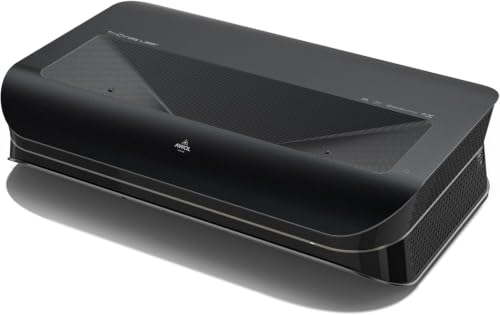
1. AWOL VISION LTV-3000 Pro — Best Overall for Bright Living Rooms
The AWOL VISION LTV-3000 Pro is the best projector for light areas if you want a true living room TV replacement. It is an ultra short throw triple-laser projector that sits inches from the wall and throws a 4K image up to 150 inches, with 3,000 peak lumens and support for Dolby Vision, HDR10+, and 3D. The triple-laser light engine covers a very wide color gamut, so the picture stays vivid and saturated even with the curtains open.
What makes it special for bright rooms is the pairing with an ALR screen. AWOL’s own daylight screens reject most ceiling light, and the combination is designed for daytime viewing in a normal living room. Owners report watching with morning light coming through the windows and still seeing a clear, colorful image. Dolby Atmos audio is built in, so you do not need a soundbar to get started, and the three HDMI ports cover a streaming stick, a console, and a Blu-ray player at once.
This is a premium purchase and a dedicated piece of furniture more than a portable gadget, but if your goal is a huge screen that works at noon as well as at midnight, it is the strongest pick in this guide.
Check the AWOL VISION LTV-3000 Pro on Amazon
Key specs: 4K UHD (3840 x 2160), 3,000 peak lumens, triple-laser light source, Dolby Vision and HDR10+, Dolby Atmos audio, ultra short throw up to 150 inches, 3 HDMI ports, 3D support.
2. BenQ TH671ST — Best Bright-Room Gaming Projector
The BenQ TH671ST is a 1080p short throw projector rated at 3,000 ANSI lumens, and BenQ markets it directly for lights-on entertainment. Its short throw lens produces a 100-inch image from about five feet away, so it fits in rooms where a standard projector would need to sit behind the sofa. A dedicated game mode cuts input lag for responsive play, and the 92 percent Rec. 709 color coverage keeps games and movies looking natural rather than bleached out.
In a bright room, the TH671ST’s strengths are honest ANSI brightness and a lamp that is designed to hold up at high output. The LumiExpert sensor detects ambient light and adjusts the picture automatically, which is genuinely useful when clouds pass over the sun mid-movie. It has no built-in smart TV system, so plan on a streaming stick or console for apps, and its built-in speaker is modest — but as a bright, sharp, low-lag big screen for a living room that never gets fully dark, it is hard to fault.
Check the BenQ TH671ST on Amazon
Key specs: 1080p Full HD (1920 x 1080), 3,000 ANSI lumens, short throw (100 inches from about 5 feet), low input lag game mode, 92 percent Rec. 709, LumiExpert ambient light adjustment, up to 300 inches.
3. NEBULA Cosmos Laser 4K — Best Laser Projector With Smart TV Built In
The NEBULA Cosmos Laser 4K by Anker pairs a laser light source with 2,200 ANSI lumens and true 4K resolution, and it is one of the few bright-room projectors with a full smart TV system built in. Android TV gives you streaming apps without a separate stick, and the Intelligent Environment Adaptation feature automatically adjusts focus, keystone, and screen fit to your wall. The laser engine is rated to keep its brightness far longer than a lamp, and the projector is designed to be watched with the lights on.
At 2,200 ANSI lumens it is not as bright on paper as the 3,000-lumen picks above, so it suits rooms with moderate daylight — a living room with curtains, or an evening room with lamps on — better than a sun-drenched conservatory. What it gives back is convenience: a handle for carrying it between rooms, strong built-in speakers, and a setup process that takes minutes rather than an afternoon of alignment. For renters and anyone who wants a projector that behaves like a TV, that trade is worth making.
Check the NEBULA Cosmos Laser 4K on Amazon
Key specs: 4K UHD (3840 x 2160), 2,200 ANSI lumens, laser light source, Android TV built in, autofocus and auto keystone, screen fit, Wi-Fi and Bluetooth, dual speakers.
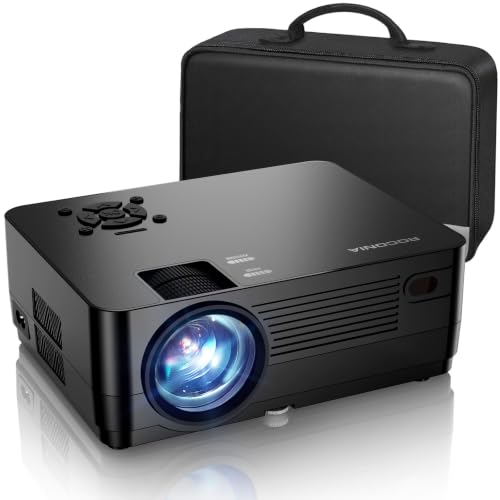
4. Roconia Q6 — Best Budget Projector for Bright Rooms
The Roconia Q6 is the budget pick, and it comes with an honest warning: its advertised 18,000-lumen figure is a light-source marketing number, not an ANSI rating, so do not compare it directly with the ANSI figures above. What it does offer for its class is a native 1080p picture, dual-band Wi-Fi and Bluetooth, and a claimed high-brightness output that owners find usable in a lit room at modest screen sizes, especially with the included 100-inch screen and the curtains drawn partway.
Keep expectations realistic. The Q6 works best at 80 to 100 inches rather than a giant 150-inch image, and it benefits more than any other pick here from dimming the room a little and using a gray or ALR surface. But for a bedroom, a classroom, or a first projector where the budget is tight, it delivers a big, watchable picture in conditions that would defeat most projectors at this level.
Check the Roconia Q6 on Amazon
Key specs: Native 1080p (1920 x 1080), high-brightness LED light source, 5G and 2.4G Wi-Fi, Bluetooth, 100-inch screen included, HDMI, USB, AV, and VGA inputs, up to 300-inch display.
Comparison Table
| Projector | Resolution | Brightness | Light Source | Throw | Best For |
|---|---|---|---|---|---|
| AWOL VISION LTV-3000 Pro | 4K UHD | 3,000 peak lumens | Triple laser | Ultra short throw | Living room TV replacement |
| BenQ TH671ST | 1080p | 3,000 ANSI lumens | Lamp | Short throw | Bright-room gaming |
| NEBULA Cosmos Laser 4K | 4K UHD | 2,200 ANSI lumens | Laser | Standard | Smart TV convenience |
| Roconia Q6 | Native 1080p | High (marketing lumens) | LED | Standard | Tight budgets |
Frequently Asked Questions
How many lumens do I need for a bright room?
For a room with curtains and normal lighting, 2,000 ANSI lumens is a good starting point. For a room with direct sunlight or lights you cannot dim, aim for 3,000 ANSI lumens or more, and pair the projector with an ALR screen. Remember that only ANSI lumens are comparable across brands; a budget projector claiming 18,000 lumens is not nine times brighter than a 2,000 ANSI lumen model.
Is a laser projector better than a lamp projector in daylight?
Usually, yes. Laser projectors maintain their brightness over a much longer lifespan, start instantly, and tend to hold color saturation better at high brightness. A lamp projector can match a laser on day one, but its lamp dims over hundreds of hours. If the projector will run daily in a bright room, laser is the safer long-term choice.
Do I really need an ALR screen?
If your room is bright, an ALR screen is the most effective upgrade you can buy — often more effective than spending extra on a brighter projector. It rejects overhead and side light while reflecting the projector’s beam toward your seat. A plain white screen reflects room light just as efficiently as projector light, which is exactly the problem in a bright room.
Can I use a projector instead of a TV in a sunny living room?
Yes, with the right combination: a projector rated at 3,000 lumens or more, an ALR screen, and some light control on the brightest window. An ultra short throw laser projector like the AWOL LTV-3000 Pro is designed for exactly this role. A standard projector on a white wall in direct sun will still struggle, so set expectations around the whole setup, not just the projector.
Does screen size affect brightness in a lit room?
Yes. The same projector spreads its light over a larger area as the image grows, so a 150-inch picture is dimmer per square inch than a 100-inch picture from the same projector. In a bright room, keeping the image at 100 inches or below makes a visible difference, and it is one reason the budget pick in this guide works best at moderate sizes.
Conclusion
The best projectors for light areas combine honest brightness with the right technology for your room. The AWOL VISION LTV-3000 Pro is the strongest all-round choice, pairing a bright triple-laser 4K image with an ultra short throw design made for daytime living rooms. The BenQ TH671ST is the pick for gamers, with 3,000 ANSI lumens and low input lag. The NEBULA Cosmos Laser 4K trades a little brightness for laser longevity and built-in smart TV convenience. And the Roconia Q6 brings a big screen to a small budget, as long as you keep the image modest and dim the worst of the sun. Whichever you choose, add an ALR screen and tame the brightest window, and your projector will finally hold its own against daylight.
Disclosure: As an Amazon Associate, we earn from qualifying purchases.
FAQ
How many lumens do I need for a bright room?
Is a laser projector better than a lamp projector in daylight?
Do I really need an ALR screen?
Can I use a projector instead of a TV in a sunny living room?
Does screen size affect brightness in a lit room?
More from Amazon
Programs that pair well with the guide above. Offers and eligibility are set by Amazon and may change.
Free shipping on eligible items, Prime Video and more. Eligible new members can start with a free trial.
Start a Prime free trialAd-free music streaming. Eligible new subscribers can start with a free trial.
Try Music Unlimited freeA Prime membership for ages 18-24 with a trial period. Eligibility is set by Amazon.
See Prime for Young AdultsAudiobooks and podcasts to listen to on the go. Eligible new members can start with a free trial.
Try Audible freeAs an Amazon Associate we earn from qualifying purchases.