Key takeaways
- 1TB Minimum: For 2026, 1TB is the realistic floor for a gaming-focused SSD. This covers your OS, essential apps, and roughly 6-8 large modern games simultaneously. Anything less and you’ll be constantly uninstalling to make room.
- 2TB Sweet Spot: If you play a rotation of 10-15 games and want headroom for game updates, mods, and captured footage, 2TB is the value sweet spot. Prices have dropped enough that this is viable for most mid-range builds.
- PCIe 4.0 vs 5.0: PCIe 4.0 NVMe drives hitting 7000MB/s+ remain the smart choice in 2026. PCIe 5.0 drives exist but carry a premium that isn’t justified by real-world game loading differences.
- Heatsink Consideration: High-speed NVMe drives generate significant heat. Choose a drive with an integrated heatsink or budget for one, especially in compact cases or when installed under a GPU heatsink.
- Prebuilt Storage Strategy: If buying a prebuilt gaming PC, prioritize systems with at least 1TB NVMe and available M.2 slots for future expansion. Don’t overspend on factory storage upgrades when you can add drives yourself for less.
Storage requirements for gaming PCs have exploded in recent years. With modern AAA titles routinely demanding 100GB or more of installation space, and some games pushing past 150GB, gamers are legitimately asking how much storage they actually need in 2026. The problem is compounded by the fact that game libraries are larger than ever, media consumption is increasingly PC-based, and NVMe SSD prices remain a meaningful factor in any build budget.
Our top picks




As an Amazon Associate we earn from qualifying purchases at no extra cost to you. Ratings are shown as listed on Amazon.
This guide breaks down exactly what storage capacity makes sense for different types of gamers in 2026, from casual players to content creators. We’ve selected top-performing NVMe SSDs and prebuilt gaming PCs that represent the best value across various storage tiers, so you can find the right match for your budget and library size without overpaying for space you’ll never use.
🛒 Best Price Today on Amazon
Prime members get fast, free shipping on everything above, plus member-only deals. New members get a 30-day free trial — cancel anytime.
Watch: How Much Storage for a Gaming PC in 2026? — Video Review
How to Choose a How Much Storage for a Gaming PC in 2026?
- 1TB Minimum: For 2026, 1TB is the realistic floor for a gaming-focused SSD. This covers your OS, essential apps, and roughly 6-8 large modern games simultaneously. Anything less and you’ll be constantly uninstalling to make room.
- 2TB Sweet Spot: If you play a rotation of 10-15 games and want headroom for game updates, mods, and captured footage, 2TB is the value sweet spot. Prices have dropped enough that this is viable for most mid-range builds.
- PCIe 4.0 vs 5.0: PCIe 4.0 NVMe drives hitting 7000MB/s+ remain the smart choice in 2026. PCIe 5.0 drives exist but carry a premium that isn’t justified by real-world game loading differences.
- Heatsink Consideration: High-speed NVMe drives generate significant heat. Choose a drive with an integrated heatsink or budget for one, especially in compact cases or when installed under a GPU heatsink.
- Prebuilt Storage Strategy: If buying a prebuilt gaming PC, prioritize systems with at least 1TB NVMe and available M.2 slots for future expansion. Don’t overspend on factory storage upgrades when you can add drives yourself for less.
The Best How Much Storage for a Gaming PC in 2026?s Reviewed
SIX NVMe M.2 SSD 1TB PCIe 4.0
This drive delivers blistering read speeds up to 7350MB/s with a pre-installed heatsink, making it an excellent standalone upgrade for gamers who need top-tier PCIe 4.0 performance without paying PCIe 5.0 premiums. The included thermal solution means it’s ready for PS5 or high-end desktop builds right out of the box.
The Horizon Autherium Dragon RGB i9 RTX Gaming PC
For gamers wanting a complete package, this system pairs a Core i9 and RTX 5070 OC with a massive 5TB of storage and 64GB of RAM, eliminating any storage anxiety entirely. It’s a no-compromise option for players who maintain enormous game libraries and stream or create content alongside their gaming sessions.
Fanxiang 1TB NVMe SSD PCIe Gen4 S690Q
Offering read speeds up to 4800MB/s at a notably lower price point than premium drives, this Fanxiang SSD represents strong value for budget-focused builders who still want legitimate PCIe 4.0 performance. It’s a smart pick for secondary storage expansion or a cost-effective primary drive in a mid-tier gaming rig.
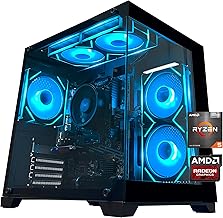
YAWYORE Gaming PC AMD R5 5600GT
This budget prebuilt comes equipped with a 1TB NVMe SSD paired with 16GB of DDR4 memory, hitting the minimum viable storage target for 2026 gaming without inflating the price. It’s a sensible entry-level option for casual gamers who keep a smaller library and don’t need to future-proof beyond the next couple of years.
Lenovo Legion Tower 5i
Featuring an Intel Core Ultra 7 265F and RTX 5070 Ti with 32GB of memory and a 1TB NVMe SSD, this AI-powered system delivers strong mainstream performance with storage that’s adequate but may need expansion for heavy gamers. The build quality and component selection make it a reliable platform to upgrade storage in later.
Frequently Asked Questions
Is 1TB enough for gaming in 2026?
Yes, but only for moderate gaming habits. You’ll fit your OS, core applications, and about 6-8 large AAA titles. If you rotate through a handful of games and uninstall what you finish, 1TB works fine. For larger libraries, consider 2TB or planning for a second drive.
Should I get PCIe 4.0 or wait for PCIe 5.0?
PCIe 4.0 remains the smarter buy for most gamers in 2026. The real-world load time difference between PCIe 4.0 and 5.0 in games is negligible, while 5.0 drives cost significantly more and run hotter. Invest the savings in more capacity instead.
Can I use a PS5-compatible SSD in my PC?
Absolutely. NVMe SSDs marketed for PS5 expansion are standard PCIe 4.0 M.2 drives and work perfectly in desktop PCs. Drives with integrated heatsinks are especially versatile since they handle thermal demands well in either system.
Is HDD still worth adding for bulk storage?
For active game installations, no. Modern games require SSD speeds for acceptable load times and DirectStorage compatibility. However, a secondary HDD can still serve for storing media files, backups, or archived game installers you don’t need fast access to.
Final Thoughts
For most gamers in 2026, the SIX NVMe SSD at 1TB is the best standalone storage pick for its speed and included heatsink, while the Lenovo Legion Tower 5i offers a well-balanced prebuilt option with room to grow. Those wanting a storage-rich all-in-one solution should look at the Horizon Autherium Dragon system, which eliminates capacity concerns entirely with 5TB of space.