Key takeaways
- Cache and Architecture: For pure gaming, large L3 cache (especially AMD’s 3D V-Cache) often matters more than core count or clock speed. If your priority is maximum frame rates at 1080p or 1440p, an X3D chip will consistently outperform higher-core-count alternatives.
- Core Count vs. Game Usage: Modern titles are finally leveraging more threads, but six strong cores remain sufficient for most scenarios. Eight cores gives breathing room for streaming or multitasking, while anything beyond that yields diminishing returns for gaming specifically.
- Socket and Platform Longevity: An AM5 motherboard will likely support new CPU generations through at least 2027. Intel’s LGA1700 is end-of-life, meaning future upgrades require a full board swap. Factor this into your total cost.
- Thermal and Power Requirements: High-end Intel chips can draw 250W+ under load, demanding a robust cooler and a quality PSU. AMD’s 65W and 105W parts are dramatically easier to cool and quieter in compact builds.
- GPU Pairing Reality: At 4K, your GPU does nearly all the heavy lifting, and CPU differences shrink to single-digit percentages. Spend proportionally — a midrange CPU with a strong GPU almost always beats the reverse for actual gaming.
Choosing a gaming CPU in 2026 is harder than ever. With AMD’s X3D chips dominating frame rates, Intel’s hybrid architecture maturing, and new platforms launching left and right, buyers are drowning in conflicting benchmarks, socket compatibility headaches, and outdated forum advice that still recommends six-core processors as “good enough.” Throw in the reality that GPU pairing matters more than raw clock speed, and it’s no wonder so many gamers overspend on a CPU that bottlenecks nothing — or underspend and choke a high-end graphics card.
Our top picks


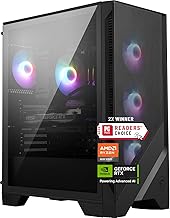
 CyberPowerPC Gaming PC
- Product Group: Personal Computer
- Binding: Personal Computers


As an Amazon Associate we earn from qualifying purchases at no extra cost to you. Ratings are shown as listed on Amazon.
This guide cuts through the noise. We’ve selected the five best gaming processors you can buy right now across every price tier and use case, from budget 1080p builds to high-refresh-rate powerhouses. Each pick is evaluated on gaming performance, platform longevity, power efficiency, and real-world value — not synthetic scores. Whether you’re upgrading an existing rig or starting fresh, these are the CPUs worth your money.
🛒 Best Price Today on Amazon
Prime members get fast, free shipping on everything above, plus member-only deals. New members get a 30-day free trial — cancel anytime.
Watch: How to Choose a Gaming CPU (2026 Guide) — Video Review
How to Choose a Gaming CPU (2026 Guide)
- Cache and Architecture: For pure gaming, large L3 cache (especially AMD’s 3D V-Cache) often matters more than core count or clock speed. If your priority is maximum frame rates at 1080p or 1440p, an X3D chip will consistently outperform higher-core-count alternatives.
- Core Count vs. Game Usage: Modern titles are finally leveraging more threads, but six strong cores remain sufficient for most scenarios. Eight cores gives breathing room for streaming or multitasking, while anything beyond that yields diminishing returns for gaming specifically.
- Socket and Platform Longevity: An AM5 motherboard will likely support new CPU generations through at least 2027. Intel’s LGA1700 is end-of-life, meaning future upgrades require a full board swap. Factor this into your total cost.
- Thermal and Power Requirements: High-end Intel chips can draw 250W+ under load, demanding a robust cooler and a quality PSU. AMD’s 65W and 105W parts are dramatically easier to cool and quieter in compact builds.
- GPU Pairing Reality: At 4K, your GPU does nearly all the heavy lifting, and CPU differences shrink to single-digit percentages. Spend proportionally — a midrange CPU with a strong GPU almost always beats the reverse for actual gaming.
The Best How to Choose a Gaming CPU (2026 Guide)s Reviewed
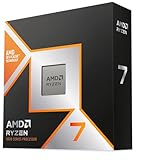
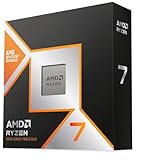
AMD Ryzen 7 9800X3D
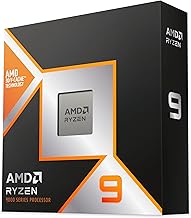
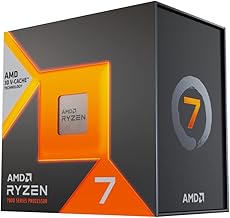
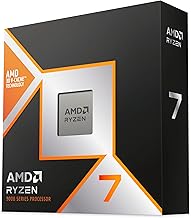
The undisputed gaming king right now. AMD’s second-gen 3D V-Cache delivers class-leading 1% lows and razor-sharp frame pacing that no competitor can match, all while sipping power at a 120W TDP. If gaming is your primary workload and budget allows, this is the chip to buy.
Intel Core i7-14700K
Twenty cores across Intel’s hybrid architecture make this a compelling all-rounder for users who game heavily but also render, compile, or stream. Gaming performance lands within striking distance of the top spot, and the integrated graphics provide a useful fallback if your discrete GPU fails.
Intel Core i9-12900KF
An older flagship that has aged into a genuine budget value play. Sixteen threads and boost clocks up to 5.2 GHz still handle modern games well, and its unlocked multiplier on LGA1700 means easy tuning. Just budget for a decent cooler, as the 125W base rating climbs significantly under load.
Intel Core i7-14700KF
The unlocked variant of the 14700K minus integrated graphics, letting you save a few dollars if you already have a discrete GPU locked in. Performance is identical in practice, and the 20-core configuration makes it a productivity monster that never feels sluggish when you tab out of a game.
AMD Ryzen 5 9600X
The best pure-gaming value under $250. Six Zen 5 cores deliver snappy single-threaded performance that punches well above its weight class, and the 65W TDP means the stock cooler is genuinely usable. Pair it with a midrange GPU and you have a 1080p or 1440p rig that wastes nothing.
Frequently Asked Questions
Do I need an eight-core CPU for gaming in 2026?
No. Six cores remain perfectly adequate for the vast majority of titles. Eight cores provide a safety margin for multitasking and future-proofing, but the performance gap in gaming alone is typically under 5%. Architecture and cache matter far more than raw core count.
Is the Ryzen 7 9800X3D worth the premium over a standard Ryzen 7?
For gaming enthusiasts, absolutely. The 3D V-Cache provides measurable improvements in 1% lows and frame consistency, which translates directly to smoother gameplay. For productivity-focused builds, the standard variant offers nearly identical multi-core output at a lower price.
Should I buy a prebuilt instead of building?
Prebuilts like the CyberPowerPC Gamer Xtreme with an RTX 5060 and i5-14400F make sense when component pricing is inflated or you need a complete system immediately. You sacrifice upgrade flexibility and pay a modest assembly premium, but the convenience is real and the hardware is solid.
Will LGA1700 motherboards support future Intel chips?
No. Intel has confirmed LGA1700 is at end of life, so the 14th-gen processors are the last on this socket. If long-term upgradeability matters to you, AMD’s AM5 platform is the safer investment with confirmed support through 2027 and beyond.
Final Thoughts
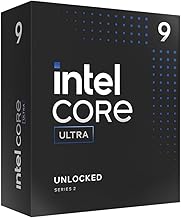
The AMD Ryzen 7 9800X3D stands as the clear top pick for pure gaming performance, while the Intel Core i7-14700K earns its place as the best hybrid choice for users who need serious productivity alongside their gaming sessions. For budget-conscious builders, the AMD Ryzen 5 9600X delivers exceptional value without compromising the experience at 1080p or 1440p. Match any of these with a capable GPU and a quality motherboard, and you will have a rig that handles everything 2026 has to offer.