Key takeaways
-
Buying bulky controllers for shallow drawers:
Many slide-out keyboard trays and desk drawers have a clearance of only 2 inches. Standard controllers require at least 2.4 inches of height. Forcing a controller into a tight space can permanently damage the tension of the Hall Effect joysticks or crush the trigger springs. -
Placing Bluetooth dongles behind metal PC cases:
One of the most common causes of wireless lag is plugging a tiny Bluetooth USB adapter into the back of a metal PC tower. The metal chassis acts as a shield, severely degrading the wireless range. Always use front-panel USB ports or a USB extension cable to bring the receiver into clear line-of-sight. -
Ignoring the footprint of charging docks:
While a charging dock keeps your desk tidy, it significantly increases the physical space required. A docked controller can stand up to 7 inches tall and require a permanent 4×4-inch footprint on your desk. Make sure to measure your desk surface before committing to a dock-based system. -
Underestimating cable tension in tight spaces:
Using a stiff, heavy-duty USB-C cable in a cramped space can put upward or downward pressure on the controller’s internal port. Over time, this wiggle room destroys the connection solder joints, rendering the wired connection useless.
The Short Answer
For the best wireless gaming experience on a PC, you need at least Bluetooth 4.0 (specifically with Low Energy / LE support), but Bluetooth 5.0 or higher is highly recommended. While older controllers can operate on Bluetooth 4.0, modern controllers utilize the enhanced bandwidth, stability, and energy efficiency of Bluetooth 5.0 and newer versions to minimize latency and prevent signal drops caused by home office interference.
If you are planning a clean, cable-free desk setup, understanding the physical size of your controller is just as important as its wireless specifications. Modern PC controllers generally span 5.7 to 6.1 inches in width and require at least 2.4 inches of vertical clearance for drawer storage. Balancing your technical requirements with the physical layout of your workspace ensures a high-performing, clutter-free environment.
Our top picks
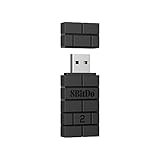
 8Bitdo Ultimate 2C Wireless Controller for Windows
- Product Group: Video Games
- Binding: Video Game


As an Amazon Associate we earn from qualifying purchases at no extra cost to you. Ratings are shown as listed on Amazon.
Standard Sizes
When integrating gaming peripherals into your home office or living room media console, physical dimensions dictate how well a controller fits your hands, your desk drawers, and your charging docks. Below is a detailed size and price comparison of popular PC controllers in the current market, spanning budget-friendly options to premium standards.
| Controller Model | Dimensions (Inches) | Dimensions (cm) | Weight (oz / g) | Price Range | Connectivity Profile |
|---|---|---|---|---|---|
| 8Bitdo Ultimate 2C Wireless | 5.78″ x 4.05″ x 2.40″ | 14.7 x 10.3 x 6.1 cm | 7.0 oz / 200 g | $25.00 – $35.00 | Bluetooth, 2.4GHz Dongle, USB-C |
| EasySMX X15 Wireless | 6.10″ x 4.17″ x 2.40″ | 15.5 x 10.6 x 6.1 cm | 7.7 oz / 220 g | $25.00 – $35.00 | Bluetooth, 2.4GHz Dongle, USB-C |
| Xbox Wireless Controller | 6.00″ x 4.02″ x 2.40″ | 15.2 x 10.2 x 6.1 cm | 9.9 oz / 280 g | $50.00 – $65.00 | Xbox Wireless, Bluetooth, USB-C |
| GameSir Nova Lite | 6.10″ x 4.09″ x 2.40″ | 15.5 x 10.4 x 6.1 cm | 7.6 oz / 215 g | $20.00 – $30.00 | Bluetooth, 2.4GHz Dongle, USB-C |
How to Measure Your Space
To maintain an organized, ergonomic desk or entertainment center, you must measure your physical environment alongside your technical setup. Follow these steps to ensure your new PC controller fits perfectly into your home.
-
Measure Drawer and Shelf Vertical Clearance:
Most standard PC controllers have a height of 2.4 inches (6.1 cm). To store a controller comfortably without scraping the analog sticks, your desk drawer or media cabinet shelf needs a minimum vertical clearance of 3.0 inches (7.6 cm). If you use a controller stand or a dedicated charging dock, measure the combined height, which typically requires 5.5 to 7.0 inches of vertical space. -
Calculate the Signal Line-of-Sight Distance:
Measure the physical distance between your seating position and your PC tower. Standard Bluetooth 4.0 connections begin to drop packets beyond 15 feet in crowded wireless environments. If your PC is tucked inside a wooden cabinet or sits under a heavy metal desk, you will need a Bluetooth 5.0 adapter or a dedicated 2.4GHz USB dongle to maintain connection stability across distances greater than 10 feet. -
Assess USB Port and Dongle Clearance:
Check the available space around your PC’s USB ports. If you are using a wireless USB receiver (such as the ones included with the 8Bitdo Ultimate 2C or GameSir Nova Lite), it will protrude 0.5 to 1.5 inches from the port. Ensure there is enough physical clearance so that passing foot traffic or swivel chairs will not accidentally strike and bend the dongle. -
Account for Cable Routing and Charging Space:
If you plan to charge your controller via a wired connection, measure your cable path. A standard USB-C cable requires at least 1.5 inches of straight, unbent clearance directly behind the controller’s plug port. Ensure your desk grommets or cable management trays have enough room to route these cables without putting strain on the controller’s charging port.
By Room or Use Case
How you integrate your PC controller depends heavily on where and how you play. Different rooms present unique physical layouts and wireless interference profiles that dictate your choice of Bluetooth version and hardware size.
The Dedicated Home Office Desk
In a compact home office, desk real estate is at a premium. As we look at modern interior styling and gaming setups in 2026, keeping cords to a minimum is essential for a clean aesthetic. For tight workspaces, smaller controllers like the 8Bitdo Ultimate 2C (measuring under 5.8 inches in width) are ideal because they slide easily under monitor risers or into shallow desk drawers. Since your PC is likely sitting within 3 feet of your hands, a built-in motherboard Bluetooth 4.0 or 5.0 connection is perfectly adequate, as there are minimal physical barriers to disrupt the signal.
The Living Room Media Center
If your PC acts as a media center connected to a large television, your controller needs to bridge a much wider physical gap. Couch gaming typically puts a distance of 8 to 15 feet between you and the computer. In this scenario, older Bluetooth versions will struggle with latency and signal dropouts, especially if your PC is housed inside a closed wooden or glass media console. For this setup, a controller paired with a Bluetooth 5.0 adapter or a dedicated 2.4GHz wireless dongle is essential. The physical footprint is also less restricted here; a robust option like the Xbox Wireless Controller fits comfortably on side tables or inside deep media cabinet shelves.
The Shared Family Ergonomic Space
When a computer desk is shared by multiple family members, controller size and weight become critical factors. Heavy controllers can cause hand fatigue for younger users during extended sessions. Opting for lightweight controllers, such as the GameSir Nova Lite (weighing just 7.6 ounces), ensures comfort for smaller hands. In shared spaces with multiple wireless devices (smartphones, tablets, smart TVs, and routers), the 2.4GHz band becomes incredibly crowded. Utilizing a controller with Bluetooth 5.0 or a high-polling-rate dongle ensures that your controller’s signal isn’t drowned out by other household electronics.
Common Sizing Mistakes
Avoid these frequent pitfalls when selecting and positioning your PC controller and wireless adapters:
-
Buying bulky controllers for shallow drawers:
Many slide-out keyboard trays and desk drawers have a clearance of only 2 inches. Standard controllers require at least 2.4 inches of height. Forcing a controller into a tight space can permanently damage the tension of the Hall Effect joysticks or crush the trigger springs. -
Placing Bluetooth dongles behind metal PC cases:
One of the most common causes of wireless lag is plugging a tiny Bluetooth USB adapter into the back of a metal PC tower. The metal chassis acts as a shield, severely degrading the wireless range. Always use front-panel USB ports or a USB extension cable to bring the receiver into clear line-of-sight. -
Ignoring the footprint of charging docks:
While a charging dock keeps your desk tidy, it significantly increases the physical space required. A docked controller can stand up to 7 inches tall and require a permanent 4×4-inch footprint on your desk. Make sure to measure your desk surface before committing to a dock-based system. -
Underestimating cable tension in tight spaces:
Using a stiff, heavy-duty USB-C cable in a cramped space can put upward or downward pressure on the controller’s internal port. Over time, this wiggle room destroys the connection solder joints, rendering the wired connection useless.
FAQ
Do I need a special dongle to use an Xbox controller on PC via Bluetooth?
No, you do not need a proprietary dongle if your PC has built-in Bluetooth (Bluetooth 4.0 or higher is required). However, if your PC lacks Bluetooth, you can either use a standard USB Bluetooth 5.0+ adapter or the official Xbox Wireless Adapter for Windows, which uses a proprietary protocol to support up to eight controllers simultaneously with ultra-low latency.
Is Bluetooth 5.0 noticeably better than Bluetooth 4.0 for PC gaming?
Yes, Bluetooth 5.0 offers twice the data transmission speed, four times the range, and significantly better message capacity compared to Bluetooth 4.0. For gaming, this translates directly to more stable connection profiles, fewer dropped inputs, and a more reliable signal when you are sitting further away from your PC or when other wireless devices are active nearby.
How do I check what Bluetooth version my PC currently has?
In Windows, right-click the Start button and open Device Manager. Expand the Bluetooth section, find your Bluetooth adapter (often listed as “Intel Wireless Bluetooth” or “Generic Bluetooth Radio”), right-click it, and select Properties. Go to the Advanced tab and look for the LMP (Link Manager Protocol) version. LMP 6.x corresponds to Bluetooth 4.0, LMP 9.x corresponds to Bluetooth 5.0, and higher LMP numbers indicate newer Bluetooth versions.
What is the physical size difference between an Xbox controller and budget wireless controllers?
The physical size differences are minimal but ergonomically noticeable. While almost all modern controllers maintain a standard height of 2.4 inches, budget models like the 8Bitdo Ultimate 2C are slightly narrower (5.78 inches wide) than the standard Xbox controller (6.00 inches wide). Additionally, budget controllers often weigh 2 to 3 ounces less because they lack heavy rumble motors and battery compartment doors, making them lighter in the hand.