Key takeaways
- Step 1: Measure Hand Length. Open your dominant hand flat. Use a flexible measuring tape or ruler to measure from the first crease at the base of your palm (where your hand meets your wrist) straight up to the very tip of your middle finger. If this measurement is under 6.7 inches (17 cm), you will benefit most from a compact or mini controller.
- Step 2: Measure Hand Span. Stretch your fingers out as wide as possible. Measure the distance from the tip of your thumb to the tip of your pinky finger. A span of less than 7.5 inches (19 cm) indicates that standard-sized controllers will force your hands into an unnatural, wide-angled grip, making a compact chassis much more comfortable.
- Step 3: Calculate Grip Clearance. Hold your current controller (or a mock object like a small book) and check the distance between your palms. For small hands, a controller with a narrower inner grip width (under 2.5 inches or 6.3 cm between the handles) prevents your palms from sliding forward, which can cause cramping in the thenar eminence (the muscular area at the base of the thumb).
- Step 4: Assess Desk and Storage Space. Measure the available footprint on your desk. If you use a compact 60% mechanical keyboard or have a narrow keyboard tray, a mini controller (measuring under 5 inches wide) is much easier to tuck away or rest next to your mouse pad without cluttering your physical workspace.
The Short Answer
For gamers with small hands—typically defined as a hand length under 6.7 inches (17 cm) from the base of the palm to the tip of the middle finger—standard first-party controllers like the Xbox Wireless Controller or PlayStation DualSense can feel bulky, leading to wrist fatigue and missed button inputs. The best PC controller size for small hands is a compact or mini-sized controller with a width between 4.3 and 5.5 inches (11 to 14 cm) and a grip depth of under 2.0 inches (5 cm).
Selecting a controller within these dimensions ensures that your thumbs can comfortably rest on the analog sticks without overextending, and your index fingers can naturally wrap around the bumpers and triggers. Highly recommended models in this category range from $20 to $50, including the ultra-compact HyperX Clutch Tanto (a wired mini option priced around $35 to $40) and the ergonomically shaped 8Bitdo Ultimate 2C (a wireless option priced around $25 to $30) which offers a slightly scaled-down profile compared to traditional gamepads.
Our top picks
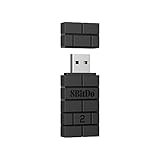
 8Bitdo Ultimate 2C Wireless Controller for Windows
- Product Group: Video Games
- Binding: Video Game


As an Amazon Associate we earn from qualifying purchases at no extra cost to you. Ratings are shown as listed on Amazon.
Standard Sizes
To help you visualize how different controller form factors compare, the table below outlines the standard physical dimensions, weights, and average price ranges of PC-compatible controllers. When planning your gaming desk setup, keeping these measurements in mind ensures your controller fits comfortably alongside your keyboard, mouse pad, and other tabletop accessories.
| Controller Category | Width (in / cm) | Height (in / cm) | Thickness / Depth (in / cm) | Weight (oz / g) | Average Price Range |
|---|---|---|---|---|---|
| Standard / Full-Sized (e.g., Standard Xbox/PS5) |
6.0″ to 6.3″ / 15.2 to 16.0 cm |
4.0″ to 4.2″ / 10.1 to 10.6 cm |
2.4″ to 2.6″ / 6.1 to 6.6 cm |
9.5 to 10.2 oz / 270 to 290 g |
$50.00 – $70.00 |
| Compact / Ergonomic (e.g., 8Bitdo Ultimate 2C, turbX Mini Mate Pro) |
5.5″ to 5.7″ / 14.0 to 14.5 cm |
3.9″ to 4.1″ / 9.9 to 10.4 cm |
2.0″ to 2.2″ / 5.0 to 5.5 cm |
7.0 to 8.1 oz / 200 to 230 g |
$30.00 – $50.00 |
| Mini / Micro-Sized (e.g., HyperX Clutch Tanto, XPT Portable Mini) |
4.3″ to 4.7″ / 10.9 to 11.9 cm |
3.3″ to 3.5″ / 8.4 to 8.9 cm |
1.5″ to 1.8″ / 3.8 to 4.5 cm |
4.0 to 5.3 oz / 113 to 150 g |
$20.00 – $40.00 |
How to Measure Your Space
Before purchasing a new controller, it is essential to measure both your physical hand dimensions and your immediate gaming workspace to ensure a perfect ergonomic fit. Follow these steps to determine the ideal controller size for your setup:
- Step 1: Measure Hand Length. Open your dominant hand flat. Use a flexible measuring tape or ruler to measure from the first crease at the base of your palm (where your hand meets your wrist) straight up to the very tip of your middle finger. If this measurement is under 6.7 inches (17 cm), you will benefit most from a compact or mini controller.
- Step 2: Measure Hand Span. Stretch your fingers out as wide as possible. Measure the distance from the tip of your thumb to the tip of your pinky finger. A span of less than 7.5 inches (19 cm) indicates that standard-sized controllers will force your hands into an unnatural, wide-angled grip, making a compact chassis much more comfortable.
- Step 3: Calculate Grip Clearance. Hold your current controller (or a mock object like a small book) and check the distance between your palms. For small hands, a controller with a narrower inner grip width (under 2.5 inches or 6.3 cm between the handles) prevents your palms from sliding forward, which can cause cramping in the thenar eminence (the muscular area at the base of the thumb).
- Step 4: Assess Desk and Storage Space. Measure the available footprint on your desk. If you use a compact 60% mechanical keyboard or have a narrow keyboard tray, a mini controller (measuring under 5 inches wide) is much easier to tuck away or rest next to your mouse pad without cluttering your physical workspace.
By Room or Use Case
How and where you play determines the ideal balance between controller size, weight, and connectivity. As we evaluate the best ergonomic layouts for 2026, gaming setups have become highly specialized, requiring different controller profiles for different environments.
The Dedicated PC Desktop Setup
If you play at a dedicated desk with a high-performance monitor, ergonomics and input speed are your top priorities. For this space, a compact wired or low-latency wireless controller is ideal. The 8Bitdo Ultimate 2C Wireless Controller ($29.99) is an excellent choice here. It features a slightly narrower grip profile than standard controllers, making it comfortable for smaller hands, while boasting a 1000 Hz polling rate and drift-free Hall Effect joysticks. At approximately 5.7 inches wide, it sits comfortably on a desktop without crowding your mouse space, offering high-end performance in a scaled-down footprint.
The Compact Home Office or Shared Workspace
In smaller rooms where your gaming PC doubles as your work-from-home station, keeping your desk tidy is essential. A mini wired controller like the HyperX Clutch Tanto ($39.99) is perfect for this environment. Officially licensed for Xbox and fully compatible with PC, this ultra-compact controller measures just 4.7 inches wide and weighs a mere 4.2 ounces. Its small physical footprint allows it to easily slip into a desk drawer or a small organizer tray when your workday begins, while its shorter grip reach ensures effortless button access for smaller hands during after-hours gaming sessions.
The Mobile Lounge and Handheld Companion
For setups that bridge the gap between PC, Steam Deck, and mobile gaming around the house, portability and versatility are key. The turbX Mini Mate Pro 2.0 Ergonomic Controller ($47.00) is specifically engineered for small hands and features wireless Bluetooth connectivity that pairs seamlessly with multiple devices. Its Sakura Pink aesthetic adds a touch of personal style to a modern living room or bedroom setup. Equipped with Hall Effect triggers and joysticks, it provides a premium, drift-free gaming experience in a lightweight, compact body that is easy to carry from the living room couch to the bedroom.
The Ultra-Budget or Travel Setup
If you frequently game on a laptop while traveling or have limited storage space in a dorm room, an ultra-mini controller is a lifesaver. The XPT Portable Mini Controller ($20.98) is designed for extreme portability. While its flat, pocket-sized design sacrifices some of the deep ergonomic grips found on larger models, it is incredibly easy to pack. It provides a functional, highly tactile layout for casual retro gaming, side-scrollers, or indie titles on your PC without taking up valuable luggage or backpack space.
Common Sizing Mistakes
When shopping for a smaller PC controller, buyers often fall into a few common traps that can lead to discomfort or poor performance:
- Going Too Small: While a micro-sized controller is highly portable, choosing a model that is too flat or lacks proper grip contours can cause your hands to claw tightly around the chassis. This tension can lead to finger cramping during long sessions. Look for a controller that is short in width but still offers subtle, ergonomic palm swells.
- Ignoring Controller Depth: Many shoppers only look at the width of a controller. However, the thickness (or depth) of the grips is just as important. A controller can have a narrow width, but if the handles are thick and bulbous, small fingers will still struggle to reach the bumpers and triggers. Keep grip depth under 2.2 inches.
- Neglecting Analog Stick Tension: Smaller hands naturally have less leverage. If a mini controller features stiff, heavy analog sticks, your thumbs will tire quickly. Opt for controllers with smooth, low-friction joysticks—such as those utilizing magnetic Hall Effect sensors—which require less physical force to actuate.
- Forgetting About Weight: A heavy controller puts continuous strain on small wrists. For users with smaller hands, aim for a controller weight of under 8 ounces (226 grams) to ensure comfortable, strain-free play over extended periods.
FAQ
Is a standard Xbox controller too big for small hands?
For many users, yes. A standard Xbox Series X|S controller measures approximately 6.0 inches wide and 2.4 inches deep. While it is highly ergonomic for average to large hands, users with hand lengths under 6.7 inches often find themselves stretching their thumbs to reach the inner menu buttons or struggling to keep a secure grip on the handles while using the triggers.
What are the benefits of Hall Effect joysticks in compact controllers?
Hall Effect joysticks use magnets rather than physical contact sensors to measure stick movement. This technology completely eliminates stick drift, which is a common issue in smaller controllers. Additionally, because there are no rubbing parts, Hall Effect sticks offer a smoother, lighter glide that requires less thumb joint exertion, making them highly beneficial for smaller, more sensitive hands.
Can adults use mini controllers, or are they only for children?
Mini and compact controllers are excellent for both children and adults with smaller hands. Ergonomically designed mini controllers, such as the HyperX Clutch Tanto or the turbX Mini Mate, maintain standard button sizes and spacing while reducing the overall body size, allowing adults to play comfortably without feeling like they are using a toy.
Are wired mini controllers better than wireless ones?
Wired mini controllers are typically lighter because they do not require internal batteries, which is a major advantage for reducing wrist strain in small hands. They also offer a constant connection with zero latency and are generally more budget-friendly. However, wireless compact controllers offer greater freedom of movement and keep your desk free of cord clutter.