Key takeaways
- Buying Too Much Length: A common mistake is buying a 15-foot passive cable “just in case.” USB signals degrade over distance. For USB 2.0, signal strength begins to drop after 16 feet; for USB 3.0, degradation can begin at just 9 feet. Excessively long passive cables can cause your controller to randomly disconnect or experience massive input latency.
- Ignoring Cable Stiffness: Ultra-thick, heavily armored cables are great for durability, but they are incredibly stiff. If you buy a stiff, thick cable that is too short, it will constantly pull on your wireless receiver, causing it to slide around your desk or tilt upward. Look for flexible PVC or braided nylon cables for easy desk routing.
- Forgetting the USB 3.0 Interference Rule: While it seems logical to buy a USB 3.0 extension cable for “faster” performance, USB 3.0 ports and cables actually emit broad-spectrum radio frequency interference that directly disrupts the 2.4GHz band used by wireless gamepads (like Xbox and PlayStation controllers). Using a high-quality USB 2.0 extension cable is actually the recommended industry standard for wireless receivers.
Whether you are fine-tuning a high-end sit-stand desk or building a clean, minimalist media console, managing cables and maintaining a stable wireless connection are essential for a premium experience. For PC gamers, few things are more frustrating than a dropped input or lag spikes mid-game. These issues are rarely caused by the gamepad itself; instead, they are usually the result of electromagnetic interference (EMI) from your PC chassis, monitors, or nearby Wi-Fi routers.
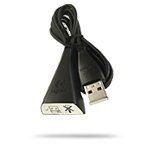
Plugging your wireless controller receiver directly into the back of your computer is a recipe for poor signal quality. Your heavy metal PC case acts as a shield, blocking the 2.4GHz radio waves. To solve this, a USB extension cable is used to bring the wireless adapter out of the “dead zone” behind your desk and place it directly on your desktop within a clear line of sight of your gamepad. But what length wireless adapter extension cable for pc gamepad is best for your specific room layout?
Our top picks

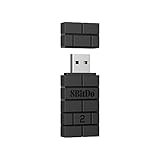
 PEGLY Wireless Adapter with Original IC Chip
- Play with your Xbox Wireless Controller on Windows…
- It can be used with PC and Xbox…
- Bind the Adapter to your Wireless Controller to…

As an Amazon Associate we earn from qualifying purchases at no extra cost to you. Ratings are shown as listed on Amazon.
In this comprehensive guide, we will break down the ideal cable lengths for every setup, provide step-by-step measuring instructions, and help you select the perfect cable to keep your gaming setup clean, organized, and completely lag-free.
The Short Answer
For the vast majority of desktop gaming setups, the ideal wireless adapter extension cable length is 3 to 6 feet (0.9 to 1.8 meters). A 3-foot cable is perfect if your PC tower sits on top of your desk and you simply need to route the receiver away from the back of the case. A 6-foot cable is the industry standard for under-desk PC placements, giving you plenty of slack to run the cable through grommets, under the desk surface, and up onto your monitor stand or desk mat.
Keeping your extension cable under 10 feet (3 meters) ensures you can use a standard passive USB cable without experiencing any signal degradation or voltage drops. If your setup requires a distance longer than 15 feet—such as routing a cable across a living room to a couch—you must use an active (amplified) USB extension cable to prevent input lag and connection dropouts.
Standard Sizes
To help you visualize your options, here is a breakdown of the standard USB extension cable lengths available on the market, along with their ideal use cases and physical dimensions.
| Cable Category | Length (Feet) | Length (Inches) | Length (Metric) | Best Suited For |
|---|---|---|---|---|
| Ultra-Short / Dongle Saver | 0.5 to 1.5 ft | 6 to 18 in | 15 to 45 cm | Laptops, front-panel PC ports, or preventing physical damage to USB ports. |
| Short Desktop | 3 ft | 36 in | 91 cm | On-desk PC towers, small form factor (SFF) builds, and direct routing to a nearby USB hub. |
| Standard Desk / Office | 6 ft | 72 in | 183 cm | Under-desk PC towers, sit-stand desks, and routing through desk grommet holes. |
| Long / Room Scale | 10 to 15 ft | 120 to 180 in | 305 to 457 cm | Large L-shaped desks, simulator rigs, and routing along baseboards in small rooms. |
| Extra-Long (Active) | 20 to 33+ ft | 240 to 396+ in | 610 to 1000+ cm | Home theater PC (HTPC) setups, living room couch gaming, and multi-room cable routing. |
How to Measure Your Space
To avoid buying a cable that is too short (causing tension on your ports) or too long (creating unnecessary clutter), follow these steps to measure your gaming workspace before purchasing your extension cable.
- Identify Your Source Port: Locate the USB port on your PC that you plan to use. For wireless adapters, a USB 2.0 port is actually preferred over USB 3.0, as USB 3.0 ports can emit 2.4GHz wireless interference. Note whether the port is on the front, top, or rear of your PC chassis.
- Determine the Receiver’s Final Destination: Choose a spot on your desk that is in direct line of sight of where you hold your controller. Ideal spots include the base of your monitor stand, the back corner of your desk mat, or mounted to the underside of a shelf.
- Route the Path (Do Not Measure in a Straight Line): Cables should never stretch diagonally through open air. Use a flexible measuring tape or a piece of string to trace the exact route your cable will take. Run the tape down the back of your PC, along your desk’s cable management tray, through any grommets, and up to the final destination.
- Account for Height-Adjustable Desks: If you use a standing desk, make sure to measure the path while the desk is at its maximum standing height. If you measure only at sitting height, the cable will pull tight and damage your PC port or the wireless receiver when the desk raises.
- Add Slack: Always add 6 to 12 inches (15 to 30 cm) of “slack safety margin” to your final measurement. This prevents the cable from being pulled taut around sharp corners and allows you to reposition the receiver slightly if needed.
By Room or Use Case
Every gaming environment has unique physical demands. Selecting the right cable length depends heavily on how your room is laid out and how you interact with your PC.
Minimalist Desktop Gaming Setup
If you keep your PC tower on top of your desk to show off your custom build, a 3-foot (91 cm) cable is your best option. A short cable like this allows you to plug the extension into the back of your PC, tuck the cord neatly along the bottom edge of the chassis, and place the receiver right under your monitor. This completely eliminates the metal-shielding effect of the PC case without adding a mountain of coiled cable behind your desk, keeping your desktop clean and wire-free.
Under-Desk PC to Monitor Stand Routing
For desks where the PC tower sits on the floor or on a low CPU mount, a 6-foot (183 cm) cable is the gold standard. As we look at modern desktop ergonomics in 2026, hiding cables out of sight is paramount. A 6-foot cable provides enough length to run from the floor, up the leg of your desk, through an under-desk cable tray, and out of a desktop grommet. It allows the receiver to sit unobtrusively next to your keyboard or monitor base, ensuring a flawless 2.4GHz connection to your gamepad.
Living Room Couch Gaming (HTPC)
If your PC is connected to a large-screen television and you play games from the comfort of a couch, you will need a 10 to 15-foot (305 to 457 cm) cable. For these distances, passive cables can occasionally drop connection if they are of low quality. It is often safest to opt for a high-quality, shielded 15-foot cable or an active extension cable. You can route this cable along your baseboards or under a rug, bringing the wireless receiver right next to your coffee table, ensuring zero dropped frames or lag while playing from across the room.
Sim Racing Rig and VR Setups
Dedicated simulation cockpits and virtual reality spaces often require complex cable routing. Because these rigs are often constructed of heavy aluminum extrusion profiles (which block wireless signals), a 10-foot (305 cm) cable is ideal. This length allows you to route the cable through the slot channels of your aluminum rig, bringing the receiver up to your wheel deck or dashboard, directly in front of your hands for instantaneous controller response times.
Common Sizing Mistakes
Avoid these common pitfalls when shopping for a wireless adapter extension cable:
- Buying Too Much Length: A common mistake is buying a 15-foot passive cable “just in case.” USB signals degrade over distance. For USB 2.0, signal strength begins to drop after 16 feet; for USB 3.0, degradation can begin at just 9 feet. Excessively long passive cables can cause your controller to randomly disconnect or experience massive input latency.
- Ignoring Cable Stiffness: Ultra-thick, heavily armored cables are great for durability, but they are incredibly stiff. If you buy a stiff, thick cable that is too short, it will constantly pull on your wireless receiver, causing it to slide around your desk or tilt upward. Look for flexible PVC or braided nylon cables for easy desk routing.
- Forgetting the USB 3.0 Interference Rule: While it seems logical to buy a USB 3.0 extension cable for “faster” performance, USB 3.0 ports and cables actually emit broad-spectrum radio frequency interference that directly disrupts the 2.4GHz band used by wireless gamepads (like Xbox and PlayStation controllers). Using a high-quality USB 2.0 extension cable is actually the recommended industry standard for wireless receivers.
FAQ
Does a longer USB extension cable cause input lag on a PC gamepad?
No, not if you stay within standard limits. Electric signals travel through copper USB cables at roughly two-thirds the speed of light. A passive extension cable under 15 feet (4.5 meters) will introduce absolutely zero perceivable input lag. However, if you exceed 15 feet with a passive cable, signal attenuation (weakening of the electrical signal) can cause packet loss, which presents itself as stuttering, dropped inputs, or temporary disconnections.
Is USB 2.0 or USB 3.0 better for a wireless gamepad receiver extension?
USB 2.0 is highly recommended over USB 3.0 for wireless gamepad adapters. The Intel-documented phenomenon of USB 3.0 radio frequency interference can severely impact 2.4GHz wireless devices. Using a USB 2.0 extension cable keeps the receiver running on a clean frequency, far away from any USB 3.0 noise, resulting in a much more stable wireless connection.
Can I use a passive USB extension cable for distances over 15 feet?
It is not recommended. The maximum official specification length for a passive USB 2.0 cable is 16 feet (5 meters). Beyond this length, the voltage drops below the threshold required to power the wireless receiver reliably. For distances over 15 feet, you should purchase an active USB extension cable, which features a built-in microchip that regenerates and amplifies the USB signal.
How much do wireless adapter extension cables typically cost?
Wireless adapter extension cables and replacement receivers are highly affordable accessories. Simple, high-quality USB 2.0 passive extension cables generally range from $5.00 to $10.00. Premium, branded receiver docks or active, extra-long cables designed for living rooms typically range from $12.00 to $20.00. Investing in a quality cable is a small price to pay for a completely lag-free gaming experience.