Key takeaways
- Setting Virtual Memory on an HDD: Never allocate virtual memory to an old mechanical Hard Disk Drive (HDD). HDDs read and write data up to 100 times slower than modern NVMe SSDs. If your VR streaming software spills over into an HDD-based pagefile, your frame rate will drop to single digits, causing instant motion sickness.
- Disabling the Pagefile Entirely: Many users believe that having 32 GB of physical RAM means they can disable virtual memory entirely to save SSD space. This is a critical mistake. Windows and VR runtimes require a paging file to allocate virtual memory addresses; disabling it causes immediate crashes when launching heavy VR applications.
- Neglecting Cable Slack in Physical Layouts: Buying a 16.4-foot streaming cable does not mean you can stand 16.4 feet away from your PC. Forgetting to account for the cable routing up your back, over a ceiling pully, or around furniture legs can pull your PC tower off your desk. Always leave at least 3 feet (90 cm) of safety slack.
- Running Out of Disk Space for the Pagefile: If your SSD is filled to 99% capacity with games, Windows cannot expand your virtual memory file during intensive VR streaming sessions. Always maintain at least 15% to 20% free space on your system drive.
The Short Answer
To run PC VR streaming software smoothly without crashes, you should allocate a minimum of 16 GB (16,384 MB) to 32 GB (32,768 MB) of virtual memory (Windows Pagefile). If your computer has 16 GB of physical RAM, setting your virtual memory maximum to 32 GB is highly recommended. For systems with 32 GB of physical RAM, a system-managed size or a manual allocation of 16 GB on your fastest NVMe Solid State Drive (SSD) is ideal.
Virtual reality streaming software—such as SteamVR, Meta Quest Link, or Virtual Desktop—handles massive texture maps, tracking data, and video encoding simultaneously. When physical RAM fills up, Windows relies on virtual memory to prevent the software from crashing to the desktop. Ensuring you have both the digital storage space on your SSD and the physical desk space for your streaming hardware is the secret to a seamless, high-performance VR setup.
Our top picks



As an Amazon Associate we earn from qualifying purchases at no extra cost to you. Ratings are shown as listed on Amazon.
Standard Sizes
Planning your physical VR streaming environment requires understanding the footprint of your hardware. Whether you are placing a compact capture card on your desk or routing a long fiber-optic tether, physical dimensions dictate your room layout. The table below outlines the standard physical dimensions and digital space allocations for common VR streaming components.
| Hardware Component | Width (Inches / cm) | Depth (Inches / cm) | Height / Length (Inches / cm) | Digital Spec / Storage Footprint |
|---|---|---|---|---|
| Meta Quest 2 Headset | 7.5 in / 19.1 cm | 4.0 in / 10.2 cm | 5.5 in / 14.0 cm | 256 GB physical storage (device capacity) |
| XREAL Beam Pro | 3.0 in / 7.6 cm | 0.4 in / 1.0 cm | 6.4 in / 16.3 cm | 8 GB RAM / 256 GB storage capacity |
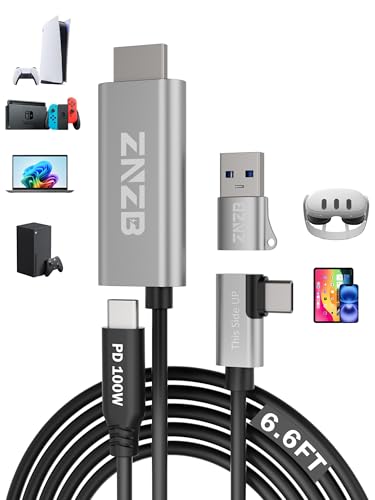
| HDMI to USB-C Capture Card | 3.5 in / 8.9 cm | 2.0 in / 5.1 cm | 0.6 in / 1.5 cm | Supports up to 1080p @ 60FPS video stream |
| HTC VIVE Wired Link Box | 3.8 in / 9.7 cm | 2.8 in / 7.1 cm | 0.9 in / 2.3 cm | Requires DisplayPort connection to PC GPU |
| HTC VIVE Streaming Cable | N/A | N/A | 16.4 ft / 500 cm (length) | High-speed DisplayPort mode data transfer |
| Standard VR-Ready PC Tower | 8.3 in / 21.1 cm | 18.9 in / 48.0 cm | 19.3 in / 49.0 cm | Requires 16–32 GB SSD-based Pagefile |
How to Measure Your Space
Setting up a VR streaming station requires a dual-measurement approach. You must measure your digital storage “space” to allocate virtual memory, alongside your physical “space” to ensure you can move safely without hitting furniture. Follow these steps to size your entire setup properly:
- Verify Digital Drive Space: Open Windows File Explorer and check your primary C: drive (ideally an NVMe SSD). Because virtual memory uses physical drive space, you must have at least 50 GB of unallocated, free drive space to safely set a 32 GB pagefile without choking your operating system.
- Measure Your Physical Play Boundary: Use a standard tape measure to mark out your physical floor space. For “Room-Scale” VR streaming, you need a minimum clear zone of 6.5 ft x 6.5 ft (200 cm x 200 cm). For stationary or seated streaming, ensure a clear radius of at least 4.0 ft (122 cm) around your desk chair to prevent hitting monitors or lamps.
- Calculate Cable Clearance: If you are using a tethered setup, measure the distance from your PC’s rear ports to the center of your play area. A specialized cable like the HTC VIVE Wired PC Streaming Kit ($189.00) offers 16.4 feet (5 meters) of length. Subtract 3 feet for vertical drape; this leaves you with approximately 13.4 feet of horizontal movement range.
- Determine Desk Footprint for Peripherals: Ensure your desk has enough physical surface area for accessories. A standard video capture card with PD 100W ($29.99) requires a small 3.5 in x 2.0 in footprint but needs 3 inches of bend clearance for the connected HDMI and USB-C cables.
By Room or Use Case
The Compact Bedroom Desk Setup
In a small bedroom or shared office, space is at a premium. Gamers frequently use wireless streaming to bypass cable clutter. A headset like the Meta Quest 2 — Advanced All-In-One Virtual Reality Headset — 256 GB (Renewed) ($299.99) is ideal here because it streams wirelessly over Wi-Fi 6, requiring zero desk space for link boxes. For this use case, your PC is likely tucked under a compact 40-inch desk. Because wireless streaming software (like Virtual Desktop) encodes video on the fly, your CPU and RAM usage will spike. Set your virtual memory to a fixed 16 GB (16,384 MB) on your SSD to prevent stream stuttering without consuming too much precious drive space.
The Dedicated VR Living Room / Home Studio
If you stream your VR gameplay to platforms like Twitch or YouTube from a spacious living room, you require a robust wired setup. This setup typically features a high-end VR headset connected via a dedicated link box, such as the HTC VIVE Wired PC Streaming Kit ($189.00), alongside an external Video Capture Card with PD 100W ($29.99) to route camera feeds or console inputs. Here, your PC is handling the VR game, the headset rendering, and the broadcasting software (OBS Studio) simultaneously. This heavy multitasking demands a massive virtual memory allocation. Manually set your pagefile to an initial size of 24 GB (24,576 MB) and a maximum of 48 GB (49,152 MB) on a high-speed PCIe Gen4 SSD to guarantee your stream never drops a frame.
The Mobile Spatial Computing Nook
For those using lightweight AR and spatial computing setups on the go, a massive PC tower is replaced by compact, portable hardware. Using a device like the XREAL Beam Pro ($249.00), which features 8 GB of RAM and 256 GB of onboard storage, allows you to stream spatial apps directly to AR glasses. In this minimalist scenario, you do not need to configure Windows virtual memory at all, as the Android-based spatial companion manages its memory footprint dynamically. Physically, this setup requires virtually no desk space—only a small storage pouch or drawer measuring roughly 8.0 in x 4.0 in x 2.0 in to house the Beam Pro and its companion cables.
Common Sizing Mistakes
- Setting Virtual Memory on an HDD: Never allocate virtual memory to an old mechanical Hard Disk Drive (HDD). HDDs read and write data up to 100 times slower than modern NVMe SSDs. If your VR streaming software spills over into an HDD-based pagefile, your frame rate will drop to single digits, causing instant motion sickness.
- Disabling the Pagefile Entirely: Many users believe that having 32 GB of physical RAM means they can disable virtual memory entirely to save SSD space. This is a critical mistake. Windows and VR runtimes require a paging file to allocate virtual memory addresses; disabling it causes immediate crashes when launching heavy VR applications.
- Neglecting Cable Slack in Physical Layouts: Buying a 16.4-foot streaming cable does not mean you can stand 16.4 feet away from your PC. Forgetting to account for the cable routing up your back, over a ceiling pully, or around furniture legs can pull your PC tower off your desk. Always leave at least 3 feet (90 cm) of safety slack.
- Running Out of Disk Space for the Pagefile: If your SSD is filled to 99% capacity with games, Windows cannot expand your virtual memory file during intensive VR streaming sessions. Always maintain at least 15% to 20% free space on your system drive.
FAQ
How do I manually change my Windows virtual memory size for VR?
To adjust your virtual memory, open the Windows Search bar, type “Adjust the appearance and performance of Windows,” and click enter. Navigate to the “Advanced” tab and click “Change” under the Virtual Memory section. Uncheck “Automatically manage paging file size for all drives,” select your fastest SSD, choose “Custom size,” enter your desired Initial and Maximum sizes in megabytes (e.g., 16384 for 16 GB), click “Set,” and restart your computer.
Can virtual memory replace physical RAM for VR streaming?
No, virtual memory cannot replace physical RAM. Physical RAM operates at incredibly high bandwidths (often exceeding 50,000 MB/s), whereas even the fastest NVMe SSDs run virtual memory at around 3,500 to 7,000 MB/s. Virtual memory acts as a safety net to prevent system crashes when physical RAM is fully saturated; it does not boost your base frame rates.
What is the minimum physical space required for a room-scale VR streaming setup?
The absolute minimum physical space required for room-scale VR streaming is 6.5 ft x 6.5 ft (200 cm x 200 cm). However, a comfortable space that prevents you from accidentally punching your walls, bookshelves, or desk monitors is 8.0 ft x 8.0 ft (244 cm x 244 cm). Always configure your virtual guardian boundaries at least 12 inches (30 cm) away from physical hazards.
Do capture cards like the Meta Quest video capture card require virtual memory?
Yes, while the physical Video Capture Card with PD 100W ($29.99) handles the hardware-level translation of video signals, the software capturing that feed (such as OBS or Streamlabs) runs directly on your PC. This software buffers raw video frames in your system’s RAM and virtual memory before encoding them, making a robust 16 GB pagefile crucial for smooth streaming in 2026.