Key takeaways
- Underestimating Cable “Stiff-Out” Space: Many home decorators buy a desk that fits perfectly flush against a wall, forgetting that physical capture cards, power bricks, and HDMI cables stick straight out of the back of a PC by 2 to 3 inches. This forces you to pull your desk away from the wall anyway, ruining tight spatial layouts.
- Over-allocating Bitrate to Weak Connections: Setting your PC streaming software to 8,000 Kbps when your home internet only has 8,500 Kbps of total upload capacity will cause massive frame drops and stream stuttering. Always leave at least a 2,000 Kbps “buffer zone” for your household’s other digital needs.
- Buying Bulky Analog Audio Equipment: Purchasing a physical 8-channel mixer for a desk that is only 48 inches wide leaves almost no room for your mousepad or keyboard. Utilizing virtual mixing software like MixPad solves this physical spacing crisis entirely.
- Neglecting USB Port Bandwidth: Plugging a high-definition capture card, a USB microphone, a webcam, and an external hard drive into the same physical USB hub can bottleneck your motherboard’s internal bandwidth, leading to laggy streams regardless of your internet bitrate. Spread your physical connections across different USB controllers on your PC.
The Short Answer
To run PC streaming software successfully without cluttering your home or choking your internet connection, you need to balance your digital “bandwidth footprint” with your physical desk space. Digitally, you need a bitrate of 3,500 to 6,000 Kbps (Kilobits per second) for a standard 1080p stream at 30 frames per second (fps). If you want high-definition 1080p at 60fps, your streaming software will require 6,000 to 8,000 Kbps of dedicated upload bandwidth.
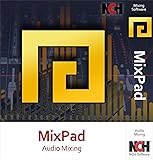
Physically, your streaming setup doesn’t have to overrun your living space. By swapping out bulky analog hardware for smart, virtual software solutions—like using DeskFX Free Audio Effects & Audio Enhancer Software to replace physical equalizer racks, or MixPad Free Multitrack Recording Studio and Music Mixing Software instead of massive physical mixing consoles—you can keep your desktop footprint remarkably small. For console streaming, a compact hardware tool like the Guermok HDMI Capture Card (USB 3.0, 4K60FPS, priced around $26.99) takes up a physical space of just 2.8 x 1.5 inches, requiring almost zero desk real estate while handling heavy digital pass-throughs.
Our top picks
![musikCube v 1.1 for PC [Open Source Download]](https://m.media-amazon.com/images/I/61ugV3KoqpL._SL500_.jpg)
![MixPad Free Multitrack Recording Studio and Music Mixing Software [Download]](https://m.media-amazon.com/images/I/71ltIxIuz1L._SL500_.jpg)
![DeskFX Free Audio Effects & Audio Enhancer Software [PC Download]](https://m.media-amazon.com/images/I/41fXbDohyuS._SL500_.jpg)

As an Amazon Associate we earn from qualifying purchases at no extra cost to you. Ratings are shown as listed on Amazon.
Standard Sizes
Designing a stream-ready home office requires mapping out both physical dimensions (how much desk space your gear takes up) and digital dimensions (how much bandwidth your streaming software consumes). Below is a comprehensive sizing guide to help you allocate the right amount of physical and digital space for your setup.
| Equipment / Stream Profile | Physical Dimensions (Inches) | Physical Dimensions (cm) | Digital Space / Bitrate Required |
|---|---|---|---|
| Guermok HDMI Capture Card (USB 3.0) | 2.8″ x 1.5″ x 0.5″ | 7.1 x 3.8 x 1.3 cm | 6,000 – 8,000 Kbps (for 1080p 60fps output) |
| Virtual Audio Mixer (MixPad Software) | 0″ x 0″ (Virtual Footprint) | 0 x 0 cm (Saves Desk Space) | 320 Kbps (Allocated for high-quality audio stream) |
| Lightweight Media Player (musikCube v 1.1) | 0″ x 0″ (Virtual Footprint) | 0 x 0 cm (Saves Rack Space) | 128 – 256 Kbps (For background music streaming) |
| Standard 24-Inch Stream Monitor | 21.5″ x 13.0″ x 2.5″ | 54.6 x 33.0 x 6.4 cm | N/A (Visual display of stream software dashboard) |
| Compact Streamer Desk (Minimum Size) | 47.0″ x 24.0″ x 29.5″ | 119.4 x 61.0 x 74.9 cm | Supports 1 laptop, 1 mic arm, and 1 capture card |
| Professional Streamer Desk (Recommended) | 60.0″ x 30.0″ x 29.5″ | 152.4 x 76.2 x 74.9 cm | Supports dual monitors, camera rigs, and physical mixers |
How to Measure Your Space
Setting up a home streaming studio requires measuring two distinct types of “space”: your physical desktop area and your digital network capacity. Follow these steps to ensure your PC streaming software has room to breathe on both fronts.
- Measure Your Physical Desk Depth: Use a standard tape measure to determine your desk’s depth from the front edge to the back wall. A minimum depth of 24 inches (61 cm) is required for a basic laptop and mic setup. For dual monitors and external capture cards like the Guermok HDMI Capture Card, a depth of 30 inches (76.2 cm) is highly recommended to prevent your workspace from feeling cramped.
- Account for Cable Clearance: When measuring your desk’s physical footprint, always add a 3-inch (7.6 cm) buffer zone between the back of your PC, monitors, or capture cards and the wall. HDMI cables, USB 3.0 connectors, and power strips require physical bending room to prevent port damage and cable strain.
- Test Your Digital Upload Speed: Go to a free internet speed test utility on your PC. Locate the “Upload Speed” metric (not the download speed). Note this number in Mbps (Megabits per second). 1 Mbps is equivalent to 1,000 Kbps.
- Calculate Your Safe Bitrate Overhead: Never use 100% of your upload speed for your stream bitrate, as your online games, voice chat programs, and smart home devices also require bandwidth. Multiply your total upload speed by 0.75 to find your “safe streaming cap.” For example, if your upload speed is 10 Mbps (10,000 Kbps), your safe streaming limit is 7,500 Kbps. This easily accommodates a high-quality 1080p 60fps stream.
By Room or Use Case
Every home has a different layout, and your physical room size will dictate how you configure your streaming gear and software. Here is how to optimize your setup based on your specific environment.
The Bedroom Corner Nook (Minimalist Setup)
If your streaming setup is confined to a small corner of your bedroom, physical space is at a premium. In these tight quarters, bulky physical hardware is your enemy. Instead of setting up a physical audio equalizer or a hardware soundboard, lean heavily on virtual tools. Installing DeskFX Free Audio Effects & Audio Enhancer Software allows you to run real-time voice effects, bass boosts, and noise reduction directly on your PC without sacrificing a single inch of physical desk space. Pair this with an open-source, ultra-lightweight music player like musikCube v 1.1 to manage your stream’s background music without hogging system RAM or physical shelf space. Since your desk is likely small (under 40 inches wide), route your console through a tiny, pocket-sized USB capture card to keep the workspace clean and visually peaceful.
The Dedicated Home Office Studio (Professional Setup)
For those fortunate enough to have a dedicated spare room or home office, your setup can expand both physically and digitally. Here, you can utilize a spacious 60-inch (152.4 cm) desk. To manage complex audio feeds—such as game sound, microphone input, discord chat, and alerts—you do not need a massive, dusty physical mixing board taking up half your desk. Instead, use MixPad Free Multitrack Recording Studio and Music Mixing Software. This software acts as a fully featured digital studio, letting you mix multiple audio tracks in real time. Combined with a dedicated physical capture card mounted neatly under your desk monitor, this setup allows you to stream at a crisp 1080p at 60fps using a steady 6,000 Kbps bitrate, provided your home’s fiber or cable internet can support it.
The Living Room Console Streamer (Multi-Zone Setup)
As we look ahead to interior design trends in 2026, the integration of gaming setups into main living spaces demands a clean, cord-free aesthetic. If you stream console games from your living room sofa, your PC or laptop might sit on a side table or media console. To bridge the physical gap between your gaming console (like a PlayStation or Xbox) and your streaming PC, a compact capture card like the Guermok HDMI Capture Card is essential. Because of its tiny 2.8-inch frame, it can easily be hidden behind your television or console cabinet. This allows you to run a clean HDMI cable from your console to the card, and a USB 3.0 cable directly into your laptop, keeping your living room looking like a stylish home rather than a chaotic server closet.
Common Sizing Mistakes
- Underestimating Cable “Stiff-Out” Space: Many home decorators buy a desk that fits perfectly flush against a wall, forgetting that physical capture cards, power bricks, and HDMI cables stick straight out of the back of a PC by 2 to 3 inches. This forces you to pull your desk away from the wall anyway, ruining tight spatial layouts.
- Over-allocating Bitrate to Weak Connections: Setting your PC streaming software to 8,000 Kbps when your home internet only has 8,500 Kbps of total upload capacity will cause massive frame drops and stream stuttering. Always leave at least a 2,000 Kbps “buffer zone” for your household’s other digital needs.
- Buying Bulky Analog Audio Equipment: Purchasing a physical 8-channel mixer for a desk that is only 48 inches wide leaves almost no room for your mousepad or keyboard. Utilizing virtual mixing software like MixPad solves this physical spacing crisis entirely.
- Neglecting USB Port Bandwidth: Plugging a high-definition capture card, a USB microphone, a webcam, and an external hard drive into the same physical USB hub can bottleneck your motherboard’s internal bandwidth, leading to laggy streams regardless of your internet bitrate. Spread your physical connections across different USB controllers on your PC.
FAQ
How does my physical desk layout affect my streaming bitrate?
While your desk layout doesn’t directly change your software settings, a cluttered desk often leads to poor ventilation and higher PC temperatures. When your PC runs hot due to restricted airflow, its processor may struggle to encode high-bitrate video streams (like 6,000 Kbps), leading to laggy broadcasts. Keeping your physical space organized and clear of dust directly supports your PC’s digital performance.
What are the physical dimensions of a standard streaming capture card like the Guermok 4K60FPS?
The Guermok HDMI Capture Card is incredibly compact, measuring roughly 2.8 x 1.5 x 0.5 inches (7.1 x 3.8 x 1.3 cm) and weighing less than 2 ounces. This tiny footprint makes it perfect for minimalist desk designs, as it can easily dangle behind a monitor or tuck inside a cable management tray under your desk.
Do open-source audio tools like musikCube require high CPU or digital bandwidth?
No, open-source programs like musikCube v 1.1 are designed to be ultra-lightweight. Physically, they exist only on your screen, and digitally, they use almost zero CPU resources and minimal RAM. This leaves your computer’s processing power and local bandwidth fully available to handle the heavy encoding demands of your main PC streaming software.
What is the absolute minimum upload speed I need to stream at a decent bitrate?
To stream reliably, you should have a minimum internet upload speed of 10 Mbps (10,000 Kbps). This gives you enough digital headroom to set your streaming software bitrate to a stable 4,500 Kbps for 720p at 60fps or 1080p at 30fps, while leaving plenty of bandwidth for your game’s online multiplayer servers and other household devices.