Key takeaways
- Find the best home projector for your living room or bedroom, from bright 4K laser models to portable mini projectors with built-in streaming.
A home projector is not just a bigger screen. The real decision is how much light your room lets in, how far the projector sits from the wall, and whether you want a fixed living-room setup or something you can carry to the bedroom. Brightness matters more than most buyers expect, because a dim projector washes out the moment a lamp stays on, while a bright one holds its picture in a room that never goes fully dark. Resolution, throw distance, and built-in streaming decide the rest, and getting those three wrong is what turns a promising purchase into a return.
This guide is for living-room movie nights, bedroom walls, and casual viewers who want a cinema feel without a dedicated theater room. Every pick below was chosen from the product name and specifications shown on its Amazon listing, so the brightness, resolution, and features quoted here come from the listing itself rather than a roundup claim. The five models cover bright rooms, dark rooms, small spaces, and portable use.
Quick Picks
As an Amazon Associate we earn from qualifying purchases
| Product | Best for | Key spec from title |
|---|---|---|
| Epson Home Cinema 2350 | Bright living rooms | 4K PRO-UHD, 2,800 lumens |
| BenQ TK710 | Laser sharpness and low lag | 4K laser, 3,200 lumens |
| XGIMI HORIZON S Pro | Smart 4K with Dolby Vision | 4K, Dolby Vision, 1,800 ISO lumens |
| Epson EpiqVision Mini EF12 | Small rooms and portability | Laser, 1080p, 1,000 lumens |
| Nebula Capsule 3 Laser | Movie nights anywhere | 1080p laser, 2.5-hour battery |
How to Choose
Match brightness to your room
Brightness decides whether the picture survives real-world light. A projector rated at 1,000 lumens works in a dark bedroom but fades badly near a window, while a 2,800 or 3,200-lumen model keeps colors readable with lamps on. Measure your room honestly: if curtains stay open during the day, or the family watches with lights on, aim for the brighter end of this guide. A dark, curtained room is the only place a lower-brightness portable model makes sense, so let the room set the brightness floor before anything else.
Choose resolution for your screen size
Resolution shows up most on large screens. A 1080p projector looks sharp up to roughly 100 inches, but once the image stretches past that, a 4K model holds fine detail in faces, text, and dark scenes. Buyers replacing a television should lean toward 4K, since the screen they project will usually be larger than the TV it replaces. For a bedroom wall or a portable projector used at 60 to 80 inches, 1080p is enough and saves money. Match the resolution to the image size you actually plan to throw.
Check throw distance before you buy
Throw distance is the gap between the projector and the wall, and it decides where the unit can live. A long-throw model needs several metres to fill a 100-inch image, which suits a projector placed at the back of a living room or mounted on a ceiling. A short-throw or portable model works from a coffee table or a nightstand a metre or two away. Measure the distance from your planned spot to the wall, then check the listed throw ratio or the supported screen size at that distance so the image fits the wall you have.
Decide how much the projector should do alone
Some projectors are complete entertainment systems with Android TV, built-in speakers, and Wi-Fi, while others are display-only boxes that expect a streaming stick and a soundbar. Built-in streaming suits bedrooms and portable use, where fewer cables and boxes matter. A fixed living-room setup can lean on an external player and a proper sound system instead, so the projector itself does not need smart features. Decide which setup you want first, because paying for smart features you will never use wastes money.
The 5 Best Options
Epson Home Cinema 2350

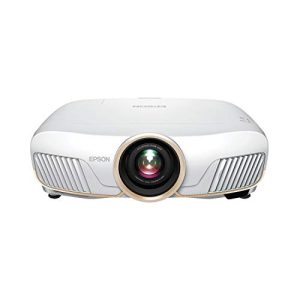
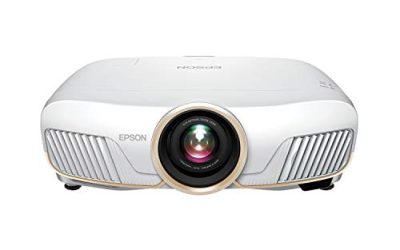
The Home Cinema 2350 is the safe all-rounder for a living room that never goes fully dark. Its 2,800 lumens of color and white brightness keep the picture vivid with lamps on, and the 3-chip 3LCD design gives colors a richness that single-chip models struggle to match at this brightness. Android TV is built in, so streaming apps run without a separate stick, and the 10-watt speaker covers casual viewing in a small room. Low-latency modes also keep it usable for casual gaming between films.
Specs
- 4K PRO-UHD resolution
- 3-chip 3LCD technology
- 2,800 lumens color and white brightness
- HDR10 and HLG support
- Android TV built in
- 10-watt speaker
- Bluetooth connectivity
Best for: Living rooms where the lights stay on during movie night.
Watch out for: The image is at its best on a plain white or light-grey wall, so a textured or colored wall will dull the picture.
BenQ TK710

The TK710 is the laser pick for buyers who want a sharp 4K image and a projector that stays bright for years without a lamp change. Its 3,200 ANSI lumens make it one of the brightest models in this guide, which helps in rooms with ambient light, and the laser light source avoids the fading and replacement costs of a traditional bulb. A 4-millisecond input lag and 240Hz refresh rate also make it the strongest choice here for fast-paced games, while HDR10 and HLG support keep films looking properly graded.
Specs
- 4K HDR laser projection
- 3,200 ANSI lumens brightness
- 4ms input lag
- 240Hz refresh rate
- HDR10 and HLG support
- ARC and eARC support
- Vertical lens shift and 1.3x zoom
- 3D keystone correction
Best for: Bright rooms where the projector doubles as a gaming display.
Watch out for: Laser brightness still needs a dark room for the deepest blacks, so check how the picture looks with your curtains drawn before judging contrast.
XGIMI HORIZON S Pro

The HORIZON S Pro is the smartest 4K projector here, built for buyers who want Dolby Vision films without extra boxes. Its 1,800 ISO lumens suit a dimmed room rather than a sunlit one, but the picture makes up for it with wide color coverage and Dolby Vision support that few rivals at this size offer. The built-in flexible stand tilts the image toward the ceiling or a high wall without stacking books under the unit, and the two Harman Kardon speakers handle dialogue clearly enough that a soundbar can wait.
Specs
- 4K resolution with Dolby Vision
- 1,800 ISO lumens brightness
- 110% BT.2020 color coverage
- Built-in flexible stand
- Intelligent Screen Adaptation
- 2 x 12W Harman Kardon speakers
Best for: Dimmed rooms where Dolby Vision films and a tidy setup matter most.
Watch out for: At 1,800 ISO lumens it is a dim-room projector, so daylight viewing will look washed out without curtains.
Epson EpiqVision Mini EF12

The EF12 is the compact laser projector for small rooms, bedrooms, and anyone who moves the projector between spaces. Its cube shape sits neatly on a nightstand or a shelf, and the laser light source gives a steady 1,000 lumens of color and white brightness without a warm-up wait. Android TV is built in, and the Yamaha-tuned speakers sound fuller than most projectors this size, so a full movie night needs nothing more than a wall and Wi-Fi. The 150-inch maximum image size is generous for a unit this small.
Specs
- Laser light source
- Full HD 1080p resolution
- 1,000 lumens color and white brightness
- HDR support
- Android TV built in
- Sound by Yamaha
- Bluetooth connectivity
- Up to 150-inch image size
Best for: Bedrooms and small rooms where a compact projector lives on a shelf.
Watch out for: The 1,000-lumen output needs a dark room, so plan on drawing the curtains for evening viewing.
Nebula Capsule 3 Laser
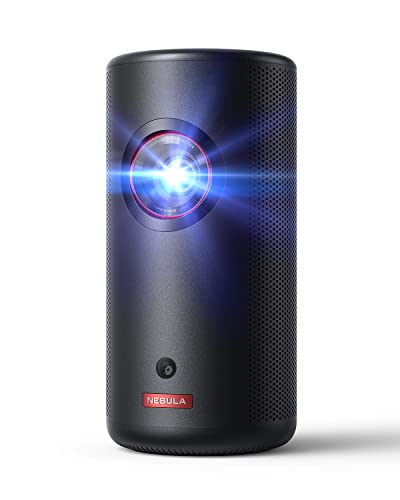
The Capsule 3 Laser is the go-anywhere pick in this guide, a soda-can-sized projector with a battery that frees movie night from the wall socket. Its laser engine produces a 1080p image up to 120 inches, and autofocus keeps the picture sharp even when the projector sits on an uneven surface. Android TV runs streaming apps directly, and the built-in battery lasts about two and a half hours, which covers most films. Wi-Fi and Bluetooth round out a package made for backyards, camping trips, and bedrooms alike.
Specs
- 1080p laser projection
- Smart TV projector with Android TV
- Wi-Fi and Bluetooth
- Autofocus
- Up to 120-inch picture
- Built-in battery with 2.5 hours of playtime
- Dolby Digital audio
- Portable mini design
Best for: Backyard screenings, camping trips, and bedrooms without a fixed setup.
Watch out for: Battery life covers a single film, so longer viewing sessions need the power cable nearby.
Which One Fits Your Situation
Your living room has lamps on during films
Pick the Epson Home Cinema 2350 or the BenQ TK710. Both push well past 2,800 lumens, so the picture stays vivid while the room stays lit. The Epson adds Android TV and a built-in speaker for a simpler setup, while the BenQ brings laser brightness and lower lag for gaming after the film ends.
You have a dark room and want the best film picture
Choose the XGIMI HORIZON S Pro for Dolby Vision and wide color, or the BenQ TK710 if you also play games. The HORIZON S Pro suits pure film watching in a dimmed room, while the TK710 keeps its brightness advantage and handles fast motion better. Either one rewards a room with proper light control.
Your room is small or the projector must move
The Epson EpiqVision Mini EF12 fits a nightstand or a shelf and works well at short distances, while the Nebula Capsule 3 Laser goes further and works anywhere with a wall. Choose the EF12 for a fixed small room with better sound, and the Capsule 3 Laser when the projector travels between rooms or outdoors.
You want the simplest setup possible
Go with the Epson Home Cinema 2350, the XGIMI HORIZON S Pro, or the EF12. All three run Android TV directly, so a film starts with one remote and no extra streaming stick. Add a soundbar later if the built-in speakers feel thin, but none of these needs extra hardware to start watching.
Common Mistakes
- Buying a dim projector for a bright room and blaming the picture quality instead of the light.
- Ignoring throw distance, then finding the image is too large or too small for the available wall.
- Projecting onto a colored or textured wall and wondering why colors look wrong.
- Assuming built-in speakers replace a soundbar in a large living room.
- Forgetting that a battery-powered projector still needs charging between films.
Frequently Asked Questions
How bright should a home projector be?
Brightness depends on room light. A dark bedroom works with 1,000 lumens, but a living room with lamps on needs roughly 2,500 lumens or more to keep colors vivid. Check how much daylight your room gets during your usual viewing hours, then choose a brightness rating above that floor rather than the cheapest model available.
Is 4K worth it for a home projector?
Yes, when the image is large. At 100 inches and above, 4K holds fine detail that 1080p softens, especially in faces and dark scenes. For smaller images under 80 inches, or for a portable projector used casually, 1080p looks sharp enough and costs less. Match the resolution to the screen size you plan to use.
Do I need a screen, or is a wall enough?
A plain white wall works well for casual viewing and for testing a new projector. A dedicated screen improves contrast and color accuracy, especially in rooms with some ambient light. Start with a smooth white wall, and add a screen later if the picture feels washed out or uneven.
Can a home projector replace my TV?
It can for films and casual viewing, particularly in a dark room with a large image. A television still wins for bright daylight viewing, news, and all-day background use. Most buyers keep a TV for daytime and use the projector for evening films, which plays to each display’s strengths.
FAQ
How bright should a home projector be?
Is 4K worth it for a home projector?
Do I need a screen, or is a wall enough?
Can a home projector replace my TV?
More from Amazon
Programs that pair well with the guide above. Offers and eligibility are set by Amazon and may change.
Free shipping on eligible items, Prime Video and more. Eligible new members can start with a free trial.
Start a Prime free trialAd-free music streaming. Eligible new subscribers can start with a free trial.
Try Music Unlimited freeA Prime membership for ages 18-24 with a trial period. Eligibility is set by Amazon.
See Prime for Young AdultsAudiobooks and podcasts to listen to on the go. Eligible new members can start with a free trial.
Try Audible freeAs an Amazon Associate we earn from qualifying purchases.