Our Short List of 3

- Best for: Booths in small rooms, where the stated DSP room tuning and voicing modes tame the low-end build-up a wall creates.
- Woofer: 5-inch class per listing title
- Tuning: DSP room tuning with 25 EQ settings as stated
- Voicing: three modes (Mix, Focus, Create) as stated
- Amplification: bi-amped per captured listing facts

- Best for: DJs whose mixer offers balanced booth outputs, since the stated XLR and TRS inputs connect directly; order two for stereo.
- Woofer: 5-inch per listing title
- Power: 82W Class-D bi-amplified as stated
- Inputs: balanced XLR and 1/4-inch TRS as stated
- Design: nearfield studio monitor per listing class

- Best for: Bedroom booths fed from a controller’s RCA outputs, where the stated near-field pair design fits a small desk at close range.
- Woofer: 3.5-inch per listing title
- Design: near-field powered monitors as titled
- Power: 50W max output power as captured
- Inputs: RCA connectivity as captured
All 5 Picks at a Glance
| Product | Specs | Action |
|---|---|---|
| KRK RP5G5 ROKIT 5 Generation Five (Pair) |
| Check price on Amazon |
| JBL Professional 305P MkII (Single) |
| Check price on Amazon |
| PreSonus Eris 3.5 Studio Monitors (Pair) |
| Check price on Amazon |
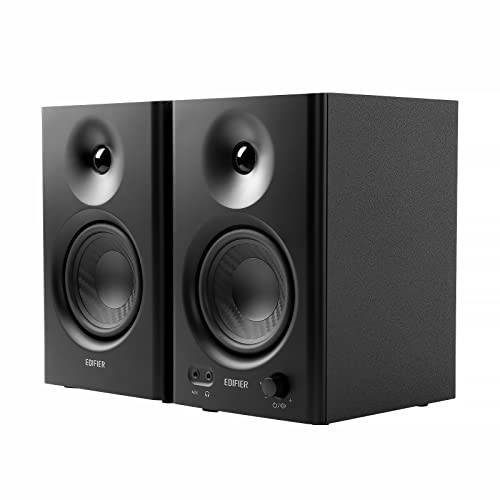 Edifier MR4 Powered Studio Monitor (Black, Pair) |
| Check price on Amazon |
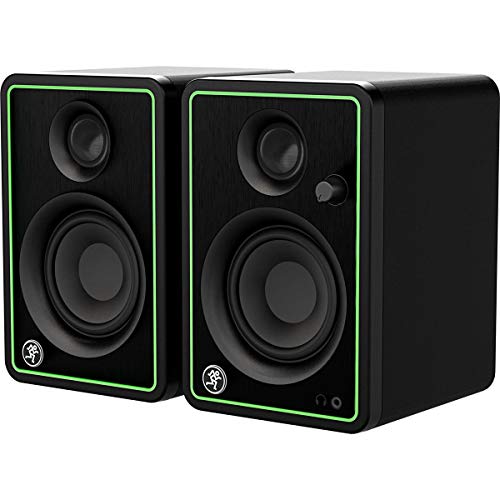 Mackie CR3-X 3.5-Inch Multimedia Monitors (Pair) |
| Check price on Amazon |
Key takeaways
- Five nearfield studio monitors for DJ booths compared on listing facts: woofer sizes, stated voicing controls, input types and pair versus single listings.
No studio monitor listing names DJing, and this guide does not pretend otherwise. The fit is argued from stated facts a booth actually runs on: nearfield design, because a DJ monitor sits at arm’s length and must stay clear at close range; woofer size and stated voicing controls, because the low end has to be audible over a room; and inputs that match mixer outputs. Each pick below records which of those facts its listing states, and the DJ argument is built from those facts alone.
The five picks serve bedroom-booth DJs on compact desks, home-studio DJs who also produce, and booth setups fed from balanced mixer outputs. Every pick was chosen from the names and specifications on its Amazon product page. One discipline matters throughout: listings here mix pairs and singles, and the JBL pick is sold individually, so its entry states that plainly rather than letting a buyer order one box and expect stereo.
Quick Picks
As an Amazon Associate we earn from qualifying purchases.
| Product | Best for | Key spec from title |
|---|---|---|
| KRK RP5G5 ROKIT 5 Generation Five (Pair) | Booths in small rooms, where the stated DSP room tuning and voicing modes tame the low-end build-up a wall creates. | 5-inch woofer, DSP room tuning, three voicing modes |
| JBL Professional 305P MkII (Single) | DJs whose mixer offers balanced booth outputs, since the stated XLR and TRS inputs connect directly; order two for stereo. | 5-inch woofer, 82W Class-D bi-amplified, single |
| PreSonus Eris 3.5 Studio Monitors (Pair) | Bedroom booths fed from a controller’s RCA outputs, where the stated near-field pair design fits a small desk at close range. | 3.5-inch near-field pair, 50W max output stated |
| Edifier MR4 Powered Studio Monitor (Black, Pair) | Desks that split time between DJ practice and everyday listening, since the stated mode switch and three input types serve both. | 4-inch woofer, Monitor/Music mode switch |
| Mackie CR3-X 3.5-Inch Multimedia Monitors (Pair) | The tightest desks, where a compact 3.5-inch pair is what physically fits beside a controller for close-range practice. | 3.5-inch multimedia monitor pair, CR-X series |
How to Choose
Nearfield is the booth’s defining distance
A DJ monitor is heard from arm’s length, not across a studio, and the listings here state nearfield or near-field design on the picks where it matters most. Close-range clarity at moderate volume is the requirement; a speaker voiced to fill a room can sound harsh and bass-heavy at one metre. When a listing states a nearfield design, that is a booth fact. When it does not, judge by woofer size and desk positioning rather than by headline power.
Pair and single listings are mixed, so count the boxes
This shelf sells both ways: four of these listings are pairs, and one, the JBL, is a single monitor whose entry states it outright. The per-listing comparison that ignores this will misprice a stereo setup by a factor of two on the single. Before comparing any two studio monitors, find the sold-as line in the listing (pair, or single unit) and cost the stereo pair you will actually set up.
Voicing controls are stated on two picks, absent on the rest
The KRK states DSP room tuning with 25 EQ settings and three named voicing modes; the Edifier states a Monitor/Music mode switch. The other listings state no voicing control, and this guide does not invent one for them. A booth against a wall, in a corner, or on a resonant desk benefits measurably from stated tuning options, so if your placement is compromised, the voicing lines in the listing should drive the shortlist.
Inputs must match the mixer’s booth output
The stated inputs here run from balanced XLR and TRS on the JBL, through TRS and RCA on the Edifier, to RCA on the Eris pair. DJ mixers and controllers differ in what their booth and master outputs provide, balanced or unbalanced. Match the listing’s stated inputs to your mixer’s stated outputs before ordering, because an adapter chain between mixer and monitor is a hum and failure point a booth does not need.
The 5 Best Options
KRK RP5G5 ROKIT 5 Generation Five (Pair)
- Best for: Booths in small rooms, where the stated DSP room tuning and voicing modes tame the low-end build-up a wall creates.
- Woofer: 5-inch class per listing title
- Tuning: DSP room tuning with 25 EQ settings as stated
- Voicing: three modes (Mix, Focus, Create) as stated
- Amplification: bi-amped per captured listing facts
Booths in small rooms, where the stated DSP room tuning and voicing modes tame the low-end build-up a wall creates.
A single-unit listing of this same model exists, so confirm the live listing is the pair before ordering.
The ROKIT 5 G5 is the voicing-control pick of the group. Its listing states DSP room tuning with 25 EQ settings and three voicing modes named Mix, Focus and Create, on a bi-amped 5-inch powered monitor sold as a pair. For a booth, the stated voicing modes are the working fact: a small room near a wall loads the low end up, and a monitor whose listing states room tuning and switchable voicing gives the DJ a stated tool for taming that instead of moving furniture. The 5-inch woofer class is the largest in this group alongside the JBL.
Watch out for: A single-unit listing of this same model exists, so confirm the live listing is the pair before ordering.
JBL Professional 305P MkII (Single)
- Best for: DJs whose mixer offers balanced booth outputs, since the stated XLR and TRS inputs connect directly; order two for stereo.
- Woofer: 5-inch per listing title
- Power: 82W Class-D bi-amplified as stated
- Inputs: balanced XLR and 1/4-inch TRS as stated
- Design: nearfield studio monitor per listing class
DJs whose mixer offers balanced booth outputs, since the stated XLR and TRS inputs connect directly; order two for stereo.
This listing is one monitor, not a pair: a stereo booth needs two units, and a separate pair listing exists that must not be confused with this one.
The 305P MkII is the balanced-input pick, and it is sold as a single monitor, which this entry states as plainly as its title does. The listing states a 5-inch woofer nearfield design with 82W Class-D bi-amplified power, and balanced XLR and 1/4-inch TRS inputs, the connector pair a DJ mixer’s booth output actually provides. That input set separates it from the RCA-led small pairs below: a mixer with balanced booth outs connects directly, with no adapter chain. Budget and desk space both need doubling in your plans, because stereo takes two of this listing.
Watch out for: This listing is one monitor, not a pair: a stereo booth needs two units, and a separate pair listing exists that must not be confused with this one.
PreSonus Eris 3.5 Studio Monitors (Pair)
- Best for: Bedroom booths fed from a controller’s RCA outputs, where the stated near-field pair design fits a small desk at close range.
- Woofer: 3.5-inch per listing title
- Design: near-field powered monitors as titled
- Power: 50W max output power as captured
- Inputs: RCA connectivity as captured
Bedroom booths fed from a controller’s RCA outputs, where the stated near-field pair design fits a small desk at close range.
A Bluetooth variant of this model is sold under a separate listing; confirm the live listing is this non-Bluetooth pair before ordering.
The Eris 3.5 is the compact home-booth pair. Its title states powered, active near-field monitors for music production, sold as a pair, and the captured facts state a 3.5-inch size with 50W max output power and RCA connectivity. RCA is the honest match for the controllers and mixers at this end of the DJ market, whose outputs are commonly unbalanced, so the connection story is simple: controller to speakers, no adapters. The trade is low-end reach, since a 3.5-inch woofer states its size plainly and a small booth at close range is exactly where that trade works.
Watch out for: A Bluetooth variant of this model is sold under a separate listing; confirm the live listing is this non-Bluetooth pair before ordering.
Edifier MR4 Powered Studio Monitor (Black, Pair)
- Best for: Desks that split time between DJ practice and everyday listening, since the stated mode switch and three input types serve both.
- Woofer: 4-inch, mica diaphragm per listing description
- Tweeter: 1-inch silk dome per listing specifications
- Power: 21W + 21W Class-D per the listing’s specifications block
- Inputs: RCA, TRS and AUX as stated
Desks that split time between DJ practice and everyday listening, since the stated mode switch and three input types serve both.
The White version of this pair is a distinct listing, so confirm the live offer is the Black pair described here before ordering.
The MR4 is the dual-use desk pick. Its listing’s specification block states a 4-inch woofer with a mica diaphragm, a 1-inch silk dome tweeter and 21W plus 21W Class-D power, with RCA, TRS and AUX inputs, and its captured facts include a Monitor/Music mode switch. That switch is the DJ-relevant fact: one voicing for practising and listening, one for checking a recording, on the same pair that lives on the desk all day. The input spread covers controllers, mixers and a phone without swapping cables, which suits a desk that is booth, studio and office in rotation.
Watch out for: The White version of this pair is a distinct listing, so confirm the live offer is the Black pair described here before ordering.
Mackie CR3-X 3.5-Inch Multimedia Monitors (Pair)
- Best for: The tightest desks, where a compact 3.5-inch pair is what physically fits beside a controller for close-range practice.
- Woofer: 3.5-inch per listing title
- Design: multimedia monitors with studio-quality positioning as titled
- Sold as: a pair, as listed
- Series: CR-X per listing title
The tightest desks, where a compact 3.5-inch pair is what physically fits beside a controller for close-range practice.
A newer CR3.5 generation of this line exists under a different listing; confirm the live title reads CR3-X before ordering.
The CR3-X pair is the smallest-footprint leg of the group. Its listing positions the 3.5-inch pair at the multimedia and creator desk, with professional studio-quality sound as the maker’s stated positioning. For a bedroom booth where the speakers share a desk with a controller and a laptop, that compact multimedia positioning is the fit: near-field listening at close range, in the space actually available. It states the least technical detail of the five, and this entry keeps to its stated positioning rather than borrowing figures from its larger siblings in the CR line.
Watch out for: A newer CR3.5 generation of this line exists under a different listing; confirm the live title reads CR3-X before ordering.
Which One Fits Your Situation
A small room with the booth against a wall
Take the KRK ROKIT 5 G5 pair: its stated DSP room tuning, 25 EQ settings and three voicing modes are the tools this group offers for taming a wall-loaded low end. Small rooms exaggerate bass at the listening position, and a stated tuning system is the fix that does not involve rebuilding the room.
A mixer with balanced booth outputs
Take the JBL 305P MkII, twice: its stated XLR and TRS inputs take the balanced feed directly, and the listing is a single, so two units make the stereo pair. Balanced cabling also rejects the hum that long unbalanced runs beside power leads tend to collect in a booth.
A controller and a laptop on a bedroom desk
Take the PreSonus Eris 3.5 pair for its stated RCA connectivity and near-field design, the simple controller-to-speakers path at close range. Most controllers at this level output RCA, so the stated input set meets the gear as it is, with no adapter chain on the desk.
One desk for practice, production and listening
Take the Edifier MR4 pair: the stated Monitor/Music mode switch and the RCA, TRS and AUX input spread cover all three jobs without recabling. A desk that changes roles through the day needs exactly that: one pair of speakers, voiced for the task, fed by whichever source is playing.
Common Mistakes
- Ordering a single JBL 305P MkII and expecting a stereo pair, when its listing sells one monitor and the pair is a separate listing.
- Buying the Bluetooth variant of the Eris 3.5 by mistake, when the pick here is the non-Bluetooth pair under its own listing.
- Mixing generations or colourways at checkout, since the Mackie line has a newer CR3.5 generation and the Edifier pair sells in two colours under separate listings.
- Placing nearfield monitors across the room like party speakers, when their stated design distance is the arm’s-length booth position.
- Assuming a listing names DJ use, when none does; the booth fit has to be argued from nearfield design, woofer size and inputs, as this guide does.
Frequently Asked Questions
Does any of these listings actually name DJing?
No. No studio monitor listing states a DJ use, so the fit in this guide is argued from stated facts: nearfield design for arm’s-length listening, woofer size, stated voicing controls, and inputs that match mixer and controller outputs. Any guide claiming a listing names DJing would be inventing the claim.
Which picks are sold as pairs?
Four of the five: the KRK ROKIT 5 G5, the PreSonus Eris 3.5, the Edifier MR4 and the Mackie CR3-X are pairs as listed. The JBL 305P MkII is a single monitor, so a stereo setup needs two of that listing. Always cost a booth setup per stereo pair, not per listing, when comparing across this shelf.
Which monitor states room tuning?
The KRK ROKIT 5 G5. Its listing states DSP room tuning with 25 EQ settings and three voicing modes (Mix, Focus and Create). The Edifier MR4 states a simpler Monitor/Music mode switch; the other listings state no voicing control. In a small or awkward room, that stated tuning is the difference between adjusting the speaker and rearranging the furniture.
Which pick connects to a balanced mixer output?
The JBL 305P MkII states balanced XLR and 1/4-inch TRS inputs. The Edifier MR4 states TRS among its inputs, and the Eris 3.5 states RCA, which matches the unbalanced outputs common on controllers. Match the monitor’s stated inputs to your mixer’s booth or master outputs before ordering, and the connection is a single cable run.
FAQ
Does any of these listings actually name DJing?
Which picks are sold as pairs?
Which monitor states room tuning?
Which pick connects to a balanced mixer output?
More from Amazon
Programs that pair well with the guide above. Offers and eligibility are set by Amazon and may change.
Free shipping on eligible items, Prime Video and more. Eligible new members can start with a free trial.
Start a Prime free trialAd-free music streaming. Eligible new subscribers can start with a free trial.
Try Music Unlimited freeA Prime membership for ages 18-24 with a trial period. Eligibility is set by Amazon.
See Prime for Young AdultsAudiobooks and podcasts to listen to on the go. Eligible new members can start with a free trial.
Try Audible freeAs an Amazon Associate we earn from qualifying purchases.