Our Short List of 3

- Best for: Creators on tight desks who want a matched Yamaha pair in a single box.
- Design: 2-way bass-reflex powered speaker
- Woofer: 3.5-inch cone
- Tweeter: 0.75-inch dome
- Frequency response: 70Hz to 22kHz (-10 dB)

- Best for: Producers in small rooms who want an honest midrange reference for mixing decisions.
- Brand: Yamaha
- Model number: HS5
- Woofer: 5-inch cone
- Tweeter: 1-inch dome

- Best for: Project studios in medium rooms that need direct low-end information without adding a subwoofer.
- Brand: Yamaha
- Model number: HS7
- Woofer: 6.5-inch cone
- Tweeter: 1-inch dome
All 4 Picks at a Glance
| Product | Specs | Action |
|---|---|---|
| Yamaha HS3 |
| Check price on Amazon |
| Yamaha HS5 |
| Check price on Amazon |
| Yamaha HS7 |
| Check price on Amazon |
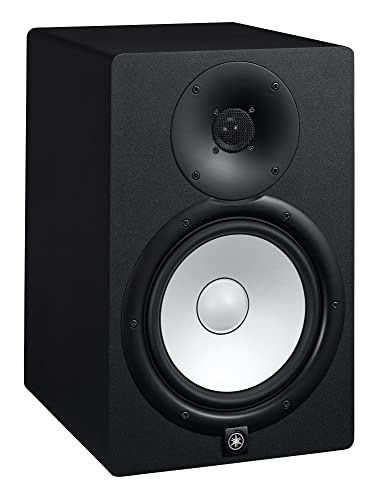 Yamaha HS8 |
| Check price on Amazon |
Key takeaways
- Compare four Yamaha HS studio monitors, from the compact HS3 pair to the HS8, with woofer sizes, power and inputs taken from their Amazon listings.
Choosing a Yamaha studio monitor is really a decision about room size and honesty, not about which cabinet plays loudest. Every model in the HS range shares the same plain, mid-forward voicing, so the genuine question is how much low-frequency information your space can support before the walls start adding their own version of the bass. A buyer who matches woofer size to the room ends up trusting the mixes; a buyer who oversizes the speaker spends months fighting boom that no plug-in caused.
This guide is for home producers, video editors and project-studio owners who have already settled on the Yamaha HS family and need to pick within it. Each model below was selected from the name and specifications on its Amazon listing, including whether it ships as a single cabinet or as a pair.
Quick Picks
As an Amazon Associate we earn from qualifying purchases
| Product | Best for | Key spec from title |
|---|---|---|
| Yamaha HS3 | Tight desks that need a matched stereo pair in the box | 3.5-inch powered studio monitor, pair |
| Yamaha HS5 | Small rooms where an unflattering midrange reference matters most | 5-inch powered studio monitor, 70W bi-amp |
| Yamaha HS7 | Medium rooms that need usable low end without a subwoofer | 6.5-inch powered studio monitor, 95W bi-amp |
| Yamaha HS8 | Treated rooms where the bottom octave has to be judged directly | 8-inch powered studio monitor, 120W bi-amp |
How to Choose
Match the woofer to the room, not to the genre
Woofer diameter decides how far down the speaker can speak honestly, and the room decides whether that reach helps or hurts. The HS3 listing starts at 70Hz and the HS8 at 38Hz, a gap that looks like a simple upgrade until the bigger cabinet is placed in a small untreated bedroom, where its extra low end excites wall reflections and blurs the very detail it was bought to reveal. Measure your listening distance first. A desk against a wall, heard from about a metre away, suits the HS3, HS4-sized or HS5 class of monitor. A room with stands, space behind the speakers and some treatment can support the HS7 or HS8 without the bass turning into guesswork.
Read the sold-as format before anything else
The HS range mixes two different buying formats, and confusing them is the easiest way to order half a stereo system. The HS3 listing is a pair with a unit count of two, one powered cabinet driving its partner through the included speaker cable. The HS5, HS7 and HS8 listings are each a single monitor, so stereo means ordering two of the same model. Check the unit count on the listing you actually open, because bundles and multipacks of the larger models also exist under similar titles. A matched pair bought as two singles should come from the same model and finish, and both boxes should be the standard single-unit listing rather than one single and one bundle variant.
Check the inputs against your source
Connection options split the range into two groups. The HS3 offers combination XLR/TRS phone jacks alongside RCA and stereo mini inputs, so it can take an audio interface, a mixer, a computer or an electronic instrument without adapters. The HS5, HS7 and HS8 keep things stricter, with balanced XLR and TRS phone inputs only, which assumes an interface or mixer with balanced outputs. That difference matters for a first setup: a laptop headphone socket can feed the HS3 through its mini jack, while the larger models really want a proper interface in the chain. Decide which source you will use on day one, then confirm the listing’s stated inputs cover it.
Use the response controls as placement tools
Every HS model here carries rear response controls, and they exist to solve placement problems rather than to flavour the sound. Room Control trims low frequencies when a cabinet sits close to a wall or corner, the position most home studios are forced into, while High Trim adjusts the top end for rooms that sound dull or overly bright. On the HS8 the listing spells out Room Control steps of 0, -2 and -4 dB below 500Hz, which shows how much correction Yamaha expects a boundary placement to need. Treat these switches as part of setup: set them after positioning the speakers, then recheck a familiar track before changing them again.
The 4 Best Options
Yamaha HS3
- Best for: Creators on tight desks who want a matched Yamaha pair in a single box.
- Design: 2-way bass-reflex powered speaker
- Woofer: 3.5-inch cone
- Tweeter: 0.75-inch dome
- Frequency response: 70Hz to 22kHz (-10 dB)
Creators on tight desks who want a matched Yamaha pair in a single box.
The 70Hz lower limit leaves sub-bass unchecked, and output suits close listening rather than filling a room.
The HS3 is the entry point for buyers whose desk is the studio. It arrives as a complete stereo pair, so a video editor or producer working at close range can set up left and right channels in one purchase and hear a proper stereo image straight away. Its compact cabinets fit either side of a laptop or a single display where an HS5 pair would crowd the workspace, and the wider input set means a computer, interface or instrument can all connect without a cable swap. Output is modest, which suits nearfield listening at sensible levels in a small room.
Yamaha HS5
- Best for: Producers in small rooms who want an honest midrange reference for mixing decisions.
- Brand: Yamaha
- Model number: HS5
- Woofer: 5-inch cone
- Tweeter: 1-inch dome
Producers in small rooms who want an honest midrange reference for mixing decisions.
Sold as a single cabinet, so order two for stereo, and balanced inputs assume an audio interface.
The HS5 is the model most buyers picture when they picture this range, and its job is correction rather than comfort. The forward midrange makes vocal balance, guitar placement and low-mid build-up easy to judge, which is why mixes made on it tend to travel well to cars, earbuds and smaller speakers. In a bedroom studio it works best as a deliberate reference: place the pair away from corners, listen at modest volume, and cross-check the lowest notes on headphones. If your finished tracks keep arriving bass-heavy on other systems, this plain presentation is the fix.
Yamaha HS7
- Best for: Project studios in medium rooms that need direct low-end information without adding a subwoofer.
- Brand: Yamaha
- Model number: HS7
- Woofer: 6.5-inch cone
- Tweeter: 1-inch dome
Project studios in medium rooms that need direct low-end information without adding a subwoofer.
A single cabinet per order, and the extra low reach will excite an untreated small room.
The HS7 is the step up for rooms that can support a little more speaker. Its 6.5-inch woofer reaches down to 43Hz on the listing, enough to make kick and bass decisions directly instead of inferring them, while the shared HS voicing keeps the midrange plain and easy to read. That combination suits a medium-sized project room where the speakers can sit on stands with space behind them. It is still a nearfield tool rather than a party speaker, and it rewards the same discipline as the HS5: sensible volume, tweeters at ear height, and patience while you learn how its low end translates.
Yamaha HS8
- Best for: Mix work in treated, medium-sized rooms where the lowest octave must be judged on the monitors.
- Woofer: 8-inch cone woofer
- Tweeter: 1-inch dome tweeter
- Frequency response: 38Hz to 30kHz
- Amplification: 75W LF plus 45W HF bi-amp system, 120W total
Mix work in treated, medium-sized rooms where the lowest octave must be judged on the monitors.
Sold singly with a rear port, so plan for two units, stands and clear space behind each cabinet.
The HS8 serves the buyer who has handled the room first. With an 8-inch cone and a listed response down to 38Hz, it covers the bottom octave that the smaller models leave to headphone checks, so bass decisions can be made on the monitors themselves. The presentation stays unpolished on purpose: problems in a vocal or a crowded low-mid region remain obvious instead of being smoothed into something pleasant. Because the cabinet is rear-ported and physically large, it asks for stands, real clearance from the wall behind it and a listening position far enough back for the drivers to blend.
Which One Fits Your Situation
A desk that doubles as the whole studio
Take the Yamaha HS3. The pair format removes the matching problem entirely, the cabinets leave room for a screen and a keyboard, and the mini and RCA inputs let a laptop connect before an interface enters the budget. You give up deep bass, so keep a headphone check in your routine for the lowest notes, but the stereo image and the honest midrange are present from the first session, which is what a small setup actually needs.
A bedroom where mixes keep coming back bass-heavy
Start with the Yamaha HS5 and change nothing else for the first few projects. Its plain midrange shows you exactly where vocals and guitars sit, and its limited low reach stops the room from flattering bass decisions that fall apart elsewhere. Work at modest volume, keep the cabinets out of the corners, and finish each mix with one pass on headphones. That routine, rather than a bigger speaker, is what corrects the translation problem.
A project room with stands and some treatment
Choose the Yamaha HS7. The room can finally use the extra reach its 6.5-inch woofer provides, so kick and bass levels become decisions you hear rather than estimate. Stands put the tweeters at ear height and give the cabinets the breathing space the smaller desk setups cannot. It keeps the same working character as the HS5, simply with more of the spectrum available at the listening position.
A treated room built around mixing
Build around the Yamaha HS8. Treatment and placement discipline are what unlock its listed reach to 38Hz, letting you judge the bottom octave on the monitors instead of deferring it. The unflattering presentation is the point: nothing in the voicing is designed to make an unfinished mix feel finished. Give the rear ports clearance, set Room Control for your exact placement, and this becomes the reference the rest of your playback checks are measured against.
Common Mistakes
- Ordering one HS5, HS7 or HS8 and expecting stereo, when those listings are single cabinets and only the HS3 ships as a pair.
- Buying the largest woofer for the smallest room, then blaming the speaker for bass build-up that the walls are creating.
- Feeding the balanced-only models from a laptop headphone socket with the wrong cable instead of using an audio interface.
- Placing rear-ported cabinets flush against a wall and never touching the Room Control switch the listing provides for that position.
- Judging the HS voicing as unpleasant during casual listening and returning a monitor that was bought to reveal problems, not hide them.
Frequently Asked Questions
Are Yamaha HS monitors sold as pairs or singles?
It depends on the model, which is why the listing’s unit count matters. The HS3 is listed as a pair with a unit count of two, one powered cabinet driving its partner. The HS5, HS7 and HS8 are each listed as a single monitor, so a stereo setup means ordering two of the same model from the same listing.
Do I need an audio interface to use these monitors?
For the HS5, HS7 and HS8, effectively yes, because their listings state balanced XLR and TRS inputs only. The HS3 is more flexible, adding RCA and stereo mini inputs that accept a computer or instrument directly. Even with the HS3, an interface usually gives cleaner level control later, so treat the direct connection as a starting point rather than the finished chain.
Which HS model is right for a small untreated room?
The HS5 is the usual answer, with the HS3 ahead of it when the desk itself is the constraint. Both limit low-frequency output to what a small space can reproduce honestly, and both carry response controls for boundary placement. The HS7 and HS8 add reach that an untreated small room tends to turn into boom, so bigger is not automatically better here.
Can I add the Yamaha subwoofer to a smaller HS pair later?
The HS range is designed so the smaller monitors can be paired with a matching Yamaha subwoofer when a room and budget allow, extending the low end the HS3 or HS5 cannot reproduce alone. Add it only after placement and response controls are sorted, because a subwoofer amplifies room problems as readily as it fills in missing bass.
FAQ
Are Yamaha HS monitors sold as pairs or singles?
Do I need an audio interface to use these monitors?
Which HS model is right for a small untreated room?
Can I add the Yamaha subwoofer to a smaller HS pair later?
More from Amazon
Programs that pair well with the guide above. Offers and eligibility are set by Amazon and may change.
Free shipping on eligible items, Prime Video and more. Eligible new members can start with a free trial.
Start a Prime free trialAd-free music streaming. Eligible new subscribers can start with a free trial.
Try Music Unlimited freeA Prime membership for ages 18-24 with a trial period. Eligibility is set by Amazon.
See Prime for Young AdultsAudiobooks and podcasts to listen to on the go. Eligible new members can start with a free trial.
Try Audible freeAs an Amazon Associate we earn from qualifying purchases.