Key takeaways
- Compare the best monitors for data science on 4K text sharpness, screen room for notebooks and wide tables, color accuracy and USB-C docking.
The real decision behind a data science monitor is how much of your working surface stays readable at once: a notebook with code cells above and output below, a dataframe with forty columns, and a chart you need to judge by eye. A screen that forces constant scrolling or squinting at scaled text slows every one of those tasks, so resolution and physical size matter more here than the refresh figures that drive gaming picks.

This guide is for analysts, data scientists and machine learning engineers who spend long days in notebooks, SQL tools and BI dashboards, whether on a single laptop or a desk with two machines. Every pick below was chosen from the name and specifications stated on its Amazon listing, with screen size, resolution, panel type and ports checked against that listing rather than against roundups or maker marketing pages.
Quick Picks
As an Amazon Associate we earn from qualifying purchases.
| Product | Best for | Key spec from title |
|---|---|---|
| Dell UltraSharp U2723QE | Laptop-based analysts who want one cable for video, data and charging | 27-inch 4K IPS Black panel with USB-C 90W power delivery |
| Dell UltraSharp U3223QE | Wide dataframes and side-by-side notebook plus chart layouts | 31.5-inch 4K IPS Black panel with USB-C 90W power delivery |
| BenQ PD2705U | Chart and dashboard work where color consistency matters | 27-inch 4K IPS panel with 99% sRGB coverage |
How to Choose
Start With Resolution and Size, Not Refresh Rate
Data work is mostly static text and tables, so pixel density decides how the screen feels after six hours. A 27-inch panel at 3840 x 2160 keeps notebook code and spreadsheet figures crisp at normal viewing distance, while the same resolution stretched across 31.5 inches trades some density for larger on-screen elements. Stepping down to 2560 x 1440 on a 27-inch screen is workable, but small column headers and dense code get noticeably softer. Match the pair together: size and resolution only make sense as a combination, never as separate headline numbers.
Count the Columns Your Work Actually Shows
Screen width is a working tool when your tables run wide. A 31.5-inch 4K display lets a notebook sit beside a full-width dataframe preview without either window shrinking into a scroll box, and a dashboard can stay open next to the query that feeds it. On a 27-inch screen the same layout usually means stacking windows or leaning on a second display. Think about your widest regular view — a feature table, a pivot with many measures, a log stream — and pick the size that shows it whole.
Treat Color Accuracy as a Chart-Reading Feature
Charts communicate through color, so a panel that shifts hues between screen positions or machines makes shared dashboards harder to read consistently. Listings for the monitors here state their color coverage directly, such as 100% sRGB or 99% sRGB, along with a factory Delta E figure on the Dell and BenQ models. Those stated numbers are the ones to compare. Wide coverage with a low Delta E means the red in your heatmap looks like the red a colleague sees, which matters when a chart is the argument.
Let USB-C and the Built-In Hub Replace Your Dock
A monitor with USB-C power delivery turns the display into the docking point: one cable carries the picture, charges the laptop and connects peripherals through the monitor’s USB ports. The Dell models below add an RJ45 Ethernet port and a KVM switch, so a work laptop and a personal machine can share one screen, keyboard and mouse. Before choosing, confirm the wattage figure in the listing covers your laptop’s charging needs, and check that the port mix — DisplayPort, HDMI, USB-A count — matches the machines you actually plug in.
The 3 Best Options
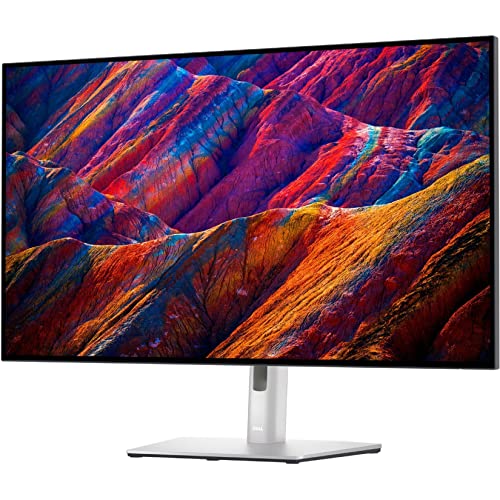
Dell UltraSharp U2723QE
This 27-inch 4K model suits the analyst whose whole setup hangs off one laptop. The IPS Black panel pairs 3840 x 2160 resolution with a 2000:1 contrast ratio, which keeps dark code themes and dense output blocks legible without washing out. USB-C carries video, data and up to 90W of charging, the built-in hub adds Ethernet and four USB-A ports, and a KVM switch lets a second computer share the screen and peripherals. It is the balanced pick: sharp enough for all-day text, big enough for a notebook beside a results pane.
Specs
- Screen size: 27 inches
- Panel: IPS Black
- Resolution: 3840 x 2160
- Refresh rate: 60 Hz
- Response time: 5 ms gray-to-gray
- Brightness: 400 nits
- Contrast ratio: 2000:1
- Color coverage: 100% sRGB, 100% Rec.709, 98% DCI-P3
- HDR: DisplayHDR 400
- Color accuracy: Delta E under 2
- Ports: USB-C with 90W power delivery, DisplayPort 1.4 in and out, HDMI 2.0, RJ45 Ethernet, 4 USB-A ports
- KVM switch: yes
Best for: Laptop-based data work that needs one-cable docking and sharp 4K text
Watch out for: The 60 Hz refresh suits static analysis work; confirm the port layout covers every machine you plan to connect
ASIN: B09TQZP9CL
Dell UltraSharp U3223QE
The 31.5-inch sibling exists for people whose tables refuse to fit. It keeps the same 4K resolution, IPS Black panel and 2000:1 contrast as the 27-inch model, but spreads them over a wider surface, so a notebook, a dataframe preview and a chart can share the screen at readable sizes. The hub grows to five USB-A ports alongside USB-C with 90W power delivery, DisplayPort in and out for chaining a second 4K screen, HDMI and RJ45 Ethernet. Choose it when horizontal room, not pixel density, is your daily bottleneck.
Specs
- Screen size: 31.5 inches
- Panel: IPS Black
- Resolution: 3840 x 2160
- Refresh rate: 60 Hz
- Response time: 5 ms gray-to-gray
- Brightness: 400 nits
- Contrast ratio: 2000:1
- Color coverage: 100% sRGB, 100% Rec.709, 98% DCI-P3
- HDR: DisplayHDR 400
- Color accuracy: Delta E under 2
- Ports: USB-C with 90W power delivery, DisplayPort 1.4 in and out, HDMI 2.0, RJ45 Ethernet, 5 USB-A ports
- KVM switch: yes
Best for: Wide dataframes, long feature tables and notebook-plus-dashboard layouts on one screen
Watch out for: The larger panel needs a deeper desk; the same 4K pixel count is spread wider than on the 27-inch model
ASIN: B09TVZHV4W
BenQ PD2705U
BenQ’s 27-inch 4K entry is aimed at the presentation end of data work, where the chart is the deliverable. The listing states 99% sRGB and 99% Rec.709 coverage with a Delta E of 3 or under and a factory calibration report, which speaks directly to keeping dashboard colors consistent across screens. USB-C with power delivery handles the laptop connection, a KVM switch covers a second machine, and the included Hotkey Puck G2 gives quick physical control over display settings. Built-in speakers round out a tidy desk for calls and walkthroughs.
Specs
- Screen size: 27 inches
- Panel: IPS
- Resolution: 3840 x 2160
- Refresh rate: 60 Hz
- Response time: 5 ms
- Brightness: 250 nits
- Contrast ratio: 1200:1
- Color coverage: 99% sRGB, 99% Rec.709
- Color accuracy: Delta E 3 or under, factory calibration report included
- HDR: HDR10
- Ports: USB-C with power delivery, HDMI 2.0, DisplayPort 1.4
- KVM switch: yes
- Extras: Hotkey Puck G2, built-in speakers
Best for: Analysts who present charts and dashboards and need stated color consistency
Watch out for: Brightness is listed at 250 nits, lower than the Dell models; check the listing’s USB-C wattage against your laptop before ordering
ASIN: B096B3PBFZ
Which One Fits Your Situation
You Run Everything From One Laptop
Pick the Dell UltraSharp U2723QE. One USB-C cable brings the picture, charges the laptop at up to 90W and connects your keyboard, mouse and storage through the monitor’s hub, while the RJ45 port gives the laptop a wired network connection it may not have on its own. The 27-inch 4K panel keeps notebook text sharp, and the desk stays free of a separate dock.
Your Tables and Dashboards Never Fit
Pick the Dell UltraSharp U3223QE. The 31.5-inch screen holds a notebook window, a wide dataframe and a chart at the same time without any of them collapsing into a narrow strip. Five USB-A ports cover drives, dongles and peripherals, and DisplayPort out leaves a path to a second 4K screen later. Measure your desk depth first, because a panel this wide wants room in front of it.
Your Charts Get Shown to Other People
Pick the BenQ PD2705U. When a dashboard leaves your desk and lands in a meeting, the stated 99% sRGB coverage and factory calibration report help the colors your audience sees match the ones you approved. The Hotkey Puck G2 makes switching settings between work modes quick, and the built-in speakers handle call audio without extra hardware on the desk.
You Split Time Between Two Computers
Either Dell model fits, thanks to the built-in KVM switch that moves one keyboard and mouse between two machines sharing the screen. Choose the U2723QE for a compact desk and the U3223QE when the second machine runs the wider workloads. The BenQ also includes a KVM, so it stays in play if color consistency matters more than the Ethernet port and extra USB-A connections the Dell hub provides.
Common Mistakes
- Buying by screen size alone and ignoring resolution, so a large panel ends up showing softer text than the smaller screen it replaced.
- Choosing a high-refresh gaming specification for static notebook and spreadsheet work while giving up the USB-C hub and color figures that matter daily.
- Assuming every USB-C port charges at the same wattage; the listing states the power delivery figure, and a hungry laptop can still drain on a weaker port.
- Skipping the KVM and hub check, then adding a separate dock and switcher that the right monitor would have replaced.
- Placing a 31.5-inch screen on a shallow desk, where the viewing distance makes the edges of wide tables harder to scan.
Frequently Asked Questions
Is 4K resolution worth it for data science work?
For most notebook, SQL and dashboard work, yes. At 27 inches, 3840 x 2160 keeps small code, column headers and axis labels sharp enough to read for hours without scaling everything up and losing workspace. The benefit shrinks if your tools scale poorly, so check how your main applications handle high-density displays before committing.
Should I choose 27 inches or 31.5 inches?
Choose 27 inches when one window dominates and you value the densest text, or when desk space is tight. Choose 31.5 inches when your routine layout is a notebook beside a wide table or dashboard, because the extra width holds more columns at a readable size. Both sizes here carry the same 4K resolution, so the choice is about layout room.
Do I need USB-C with power delivery on the monitor?
Only if a laptop is your main machine. USB-C power delivery lets one cable handle the display signal, laptop charging and the monitor’s USB hub, which removes a separate dock from the desk. Desktop-only setups gain little from it. Always match the wattage stated in the listing against what your laptop requires to charge while working.
Does color accuracy matter if I am not a designer?
It matters whenever charts carry your conclusions. Stated sRGB coverage and a low Delta E figure mean category colors in a plot look the same on your screen, a colleague’s screen and a meeting-room display. Inconsistent color makes heatmaps and multi-series charts harder to compare, so the figures in the listing are worth checking even for purely analytical work.
FAQ
Is 4K resolution worth it for data science work?
Should I choose 27 inches or 31.5 inches?
Do I need USB-C with power delivery on the monitor?
Does color accuracy matter if I am not a designer?
More from Amazon
Programs that pair well with the guide above. Offers and eligibility are set by Amazon and may change.
Free shipping on eligible items, Prime Video and more. Eligible new members can start with a free trial.
Start a Prime free trialAd-free music streaming. Eligible new subscribers can start with a free trial.
Try Music Unlimited freeA Prime membership for ages 18-24 with a trial period. Eligibility is set by Amazon.
See Prime for Young AdultsAudiobooks and podcasts to listen to on the go. Eligible new members can start with a free trial.
Try Audible freeAs an Amazon Associate we earn from qualifying purchases.