Our Short List of 3

- Best for: Everyday gaming on a slim, quiet pad that fits most laptops.
- 4 fans at 1200 RPM
- Supports laptops from 11 to 17 inches
- USB powered
- Slim portable design

- Best for: A permanent desk setup where a solid metal pad with a sensor keeps things cool.
- Dual 120mm fans
- Aluminum panel construction
- Adjustable temperature sensor
- Supports laptops from 10 to 17 inches
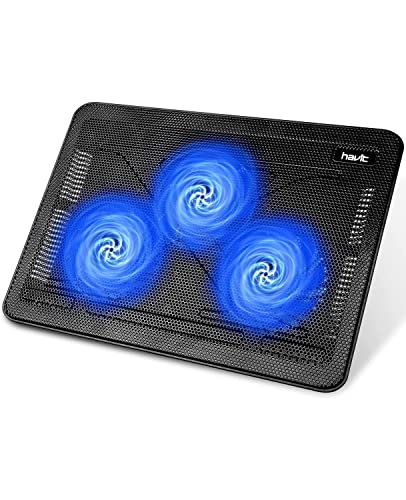
- Best for: A portable pad for travel and a tidy desk with a spare USB port.
- 3 fans with blue LED lighting
- Supports laptops from 15.6 to 17 inches
- Slim portable design
- Metal mesh surface
All 4 Picks at a Glance
| Product | Specs | Action |
|---|---|---|
| KLIM Wind |
| Check price on Amazon |
| Thermaltake Massive TM |
| Check price on Amazon |
| HAVIT HV-F2056 |
| Check price on Amazon |
 IETS GT500 |
| Check price on Amazon |
Our Top Picks
A gaming laptop throttles when its own fans cannot move enough heat, and an external cooling solution is the simplest way to give it room to breathe. A good pad lifts the laptop, feeds cool air into the intakes and pushes hot air away from the chassis, which keeps frame rates steady through long sessions. The four solutions below cover quiet pads, big-fan stands and sealed turbo coolers, and a pad that lifts the base and feeds air into the intakes can turn a throttling machine back into a steady one.
This guide is for gamers whose laptops run hot, loud or slow during long matches, and for anyone who plays on a desk where the machine sits flat and starved of air. It suits dorm rooms, home offices and shared desks where a cooler pad also improves the typing angle. Every product below was chosen from the name and specifications shown on its Amazon page, with fan size, speed and laptop size limits checked against the listing.
Quick Picks
As an Amazon Associate we earn from qualifying purchases
| Product | Best for | Key spec from title |
|---|---|---|
| KLIM Wind | A slim, quiet pad for daily gaming | 4 fans at 1200 RPM, 11 to 17 inch |
| Thermaltake Massive TM | A big aluminum pad with a sensor | Dual 120mm fans, 10 to 17 inch |
| HAVIT HV-F2056 | A slim portable pad for travel | 3 fans, 15.6 to 17 inch, USB powered |
| IETS GT500 | Maximum airflow for hot laptops | 5000 RPM turbo fan, sealed foam |
How to Choose
Fan size and count decide the airflow
Large fans move more air at lower speeds, which is why a single 200mm fan can cool quietly while several small fans must spin faster and louder to match it. Small fans cover a wider area when spread across the pad, which suits laptops with intakes spread along the bottom. Check the fan size and speed on the listing, and match the layout to where your laptop actually draws air in. A pad whose fans sit under solid chassis panels wastes its airflow, so line the fans up with the vents you can see on the underside of your laptop.
A sealed design cools better than an open one
A pad with a foam seal around the laptop base forces air through the intakes instead of letting it escape around the edges, which makes a real difference on hot machines. Open mesh pads still help by lifting the laptop and feeding air upward, but some of that air drifts away unused. If your laptop runs very hot under load, a sealed turbo cooler is the stronger choice. If it only runs warm, an open pad with quiet fans is enough and far simpler to live with. The foam edge also keeps dust out of the intakes, which helps a laptop that already runs hot in a dusty room.
Size, height and noise shape daily use
A pad must fit the laptop it carries, so check the supported size range before ordering. A pad rated for 17 inches holds a 15-inch machine easily, while a pad rated for 15 inches leaves a 17-inch laptop overhanging the edges. Height adjustment matters for typing comfort, since a steeper angle lifts the screen and eases the wrists. Noise matters too: a pad that hums loudly during quiet work will annoy you long before it helps your frame rates. A heavier pad also stays put on the desk, while a light one slides when you type hard.
Power and ports keep the desk tidy
Most cooling pads draw power from a USB port on the laptop, which is simple but costs you a port. A pad with a built-in USB hub gives that port back and adds room for a mouse or a headset. Some turbo coolers need a separate power adapter for full speed, which adds a cable but unlocks far more airflow. Check how the pad powers itself and how many USB ports it offers, so the desk stays tidy. A wall adapter frees the laptop port entirely, which suits a desk where every port already serves a mouse, a headset or a drive.
The 4 Best Options
KLIM Wind
- Best for: Everyday gaming on a slim, quiet pad that fits most laptops.
- 4 fans at 1200 RPM
- Supports laptops from 11 to 17 inches
- USB powered
- Slim portable design
Everyday gaming on a slim, quiet pad that fits most laptops.
Four small fans cannot match a sealed turbo cooler on a very hot machine.
The KLIM Wind is a slim pad with four fans spinning at 1200 RPM, built for laptops from 11 to 17 inches that need steady, quiet cooling. Two rear legs raise the laptop to a comfortable typing angle, while front pegs keep it from sliding forward during play. The pad draws power from a USB port, runs quietly enough for a shared room and has sold in large numbers for years, which makes it a safe first pick for everyday gaming. The four fans spread air across the whole base, so laptops with wide intake grilles get even coverage.
Thermaltake Massive TM
- Best for: A permanent desk setup where a solid metal pad with a sensor keeps things cool.
- Dual 120mm fans
- Aluminum panel construction
- Adjustable temperature sensor
- Supports laptops from 10 to 17 inches
A permanent desk setup where a solid metal pad with a sensor keeps things cool.
The metal panel adds weight, so it suits a desk more than a travel bag.
The Massive TM is an aluminum-panel pad with two 120mm fans and an adjustable temperature sensor that lets you tune the cooling to the load. Its metal surface spreads heat away from the chassis, and the adjustable height settings lift the laptop to a comfortable angle for long sessions. The pad supports laptops from 10 to 17 inches, and its solid build suits a permanent desk setup where the pad stays in place. The sensor reacts as the laptop warms, so the fans speed up only when the load rises and stay quiet during light work.
HAVIT HV-F2056
- Best for: A portable pad for travel and a tidy desk with a spare USB port.
- 3 fans with blue LED lighting
- Supports laptops from 15.6 to 17 inches
- Slim portable design
- Metal mesh surface
A portable pad for travel and a tidy desk with a spare USB port.
Three fans cover less area than a four-fan pad, so check your laptop’s intake layout.
The HV-F2056 is a slim portable pad with three fans, built for laptops from 15.6 to 17 inches that need cooling without bulk. Its metal mesh surface lets air through freely, and two USB ports on the side give back the port the pad uses for power. The pad is light enough to carry in a laptop bag, and its blue LED fans add a subtle glow to a gaming desk without turning it into a light show. The mesh top lets air pass straight through to the intakes, and the slim shape adds little height to the typing position.
IETS GT500
- Best for: Hot-running laptops that need maximum airflow during heavy gaming.
- Turbo fan up to 5000 RPM
- Infinitely variable speed control
- Sealed foam design for rapid cooling
- Dust filter included
Hot-running laptops that need maximum airflow during heavy gaming.
Full speed is loud, so use the dial to match the fan to the load.
The GT500 is a sealed turbo cooler with a single fan that spins up to 5000 RPM, forcing air through the laptop intakes with a foam seal that stops leaks around the edges. A dust filter protects the laptop from debris, and a three-port USB hub keeps peripherals connected. The variable speed dial lets you turn the fan down for quiet work and up for heavy gaming, which makes it the strongest cooling option in this guide for laptops that run very hot. The foam seal adapts to different laptop shapes, so the forced air goes into the vents instead of leaking out around the sides.
Which One Fits Your Situation
For a laptop that runs warm, not hot
Pick the KLIM Wind or the HAVIT HV-F2056, since both are slim, quiet pads that lift the laptop and feed air into the intakes. The KLIM suits a desk where four fans spread the airflow, while the HAVIT suits a bag where portability matters. Either one keeps a warm laptop steady without adding noise. Both stay quiet enough for a room shared with others.
For a laptop that throttles in long matches
Pick the IETS GT500, since its sealed foam and 5000 RPM turbo fan force far more air through the intakes than an open pad. Turn the dial up when a match gets heavy and down when you step away. It suits a machine that drops frames halfway through a session because heat builds up. Turn the dial down between matches so the fan noise drops while the laptop cools.
For a permanent desk setup
Pick the Thermaltake Massive TM, since its aluminum panel and solid build suit a pad that never moves. The temperature sensor lets you tune the fans to the load, and the adjustable height keeps the typing angle comfortable. It suits a home office or gaming desk where the laptop lives in one place. The metal panel spreads heat and the sensor keeps the fans matched to the load.
For gaming on the move
Pick the HAVIT HV-F2056, since its slim shape and light build fit a laptop bag beside the machine it cools. The metal mesh surface is tough enough for travel, and the extra USB port keeps a mouse connected. It suits students and travelers who game in different places each week. The light build adds little weight to the bag, and the mesh surface survives being packed and unpacked daily.
Common Mistakes
- Buying a pad whose fans sit under solid chassis panels instead of the laptop’s air intakes, which wastes the airflow you paid for.
- Running a turbo cooler at full speed all day, when a lower setting would cool just as well with less noise and less wear on the fan.
- Placing the laptop flat on a bed or a soft surface, which blocks the intakes and starves the fans no matter how strong the pad is.
- Choosing a pad rated for a smaller laptop and letting the machine overhang the edges, which leaves part of the base unsupported and the intakes half covered.
- Ignoring dust buildup in the laptop vents, which slowly chokes airflow no matter how strong the pad is, so clean the vents on a regular schedule.
Frequently Asked Questions
Do cooling pads actually lower gaming laptop temperatures?
Yes. A pad lifts the laptop off the desk and feeds cool air into the bottom intakes, which the machine’s own fans then pull through the chassis. Open pads usually drop temperatures by a few degrees, while sealed turbo coolers drop them further. The gain is largest on laptops with bottom intakes.
Is a sealed turbo cooler better than a regular fan pad?
For a very hot laptop, yes. The foam seal forces air through the intakes instead of letting it escape around the edges. A regular pad suits everyday use better, since it is quieter, lighter and simpler. Pick the sealed cooler when throttling is the problem, and the regular pad when warmth is only mild.
Can a cooling pad make a laptop quieter?
Yes, because cooler air lets the laptop fans spin slower. The pad’s own fans add some noise, so the result depends on the pad: a quiet pad with large fans usually wins, while a small-fan pad at full speed may add as much noise as it removes. Use the speed control to find the quietest setting that still cools.
Does a cooling pad help a laptop that already has good cooling?
It still helps, mainly by lifting the laptop off the desk so the bottom intakes breathe freely. The temperature gain is smaller than on a hot-running machine, but the better typing angle and the extra USB ports are useful on their own. Treat it as a comfort upgrade with a cooling bonus.
FAQ
Do cooling pads actually lower gaming laptop temperatures?
Is a sealed turbo cooler better than a regular fan pad?
Can a cooling pad make a laptop quieter?
Does a cooling pad help a laptop that already has good cooling?
More from Amazon
Programs that pair well with the guide above. Offers and eligibility are set by Amazon and may change.
Free shipping on eligible items, Prime Video and more. Eligible new members can start with a free trial.
Start a Prime free trialAd-free music streaming. Eligible new subscribers can start with a free trial.
Try Music Unlimited freeA Prime membership for ages 18-24 with a trial period. Eligibility is set by Amazon.
See Prime for Young AdultsAudiobooks and podcasts to listen to on the go. Eligible new members can start with a free trial.
Try Audible freeAs an Amazon Associate we earn from qualifying purchases.