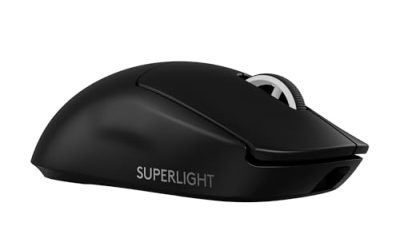
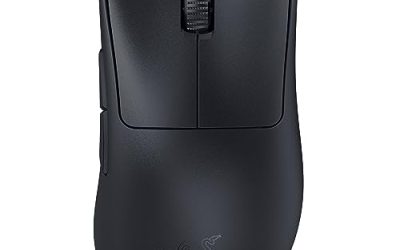
Our Short List of 3

- Sensor: HERO optical, up to 12,000 DPI
- Connection: LIGHTSPEED 2.4 GHz wireless, 1 ms report rate
- Battery: up to 250 hours on 1 AA cell
- Buttons: 6 programmable
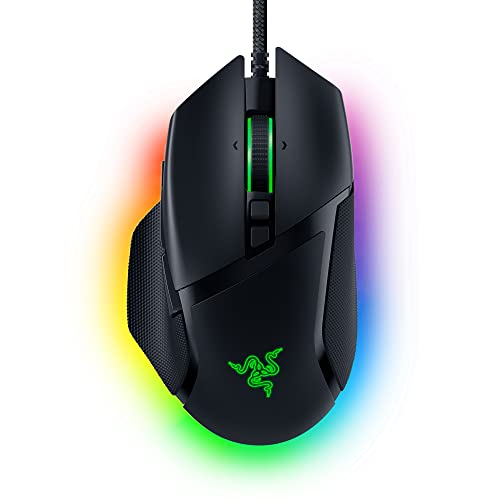
- Sensor: Razer Focus+ optical, up to 26,000 DPI
- Tracking: up to 650 IPS, up to 50 G acceleration
- Buttons: 11 programmable, including multi-function trigger
- Wheel: HyperScroll tilt wheel, free-spin and tactile modes

- Sensor: optical, 200 to 8,000 DPI
- Connection: wired USB, 2.1 m cable
- Buttons: 6 programmable
- Lighting: LIGHTSYNC RGB, three zones
All 4 Picks at a Glance
| Product | Specs | Action |
|---|---|---|
| 1. Logitech G305 LIGHTSPEED (White) |
| Check price on Amazon |
| 2. Razer Basilisk V3 |
| Check price on Amazon |
| 4. Logitech G203 LIGHTSPEED (Lilac) |
| Check price on Amazon |
 5. Corsair Harpoon RGB Pro |
| Check price on Amazon |
Our Top Picks
- Logitech G305 LIGHTSPEED Wireless Gaming Mouse4.6" x 2.4" x 1.5"2.45 x 1.5 x 4.6 inches0.21 poundsCheck on Amazon
- Corsair Harpoon PRO RGB Wired Lightweight FPS/MOBA Gaming2.5"L x 4.5"W4.54 x 2.29 x 1.59 inches0.19 poundsCheck on Amazon
The below-50 band is where gaming mice get honest. There is no room in the engineering for exotic materials or novelty features, so the models that thrive here earn their place with proven sensors, sensible shapes and switches that survive years of daily play. The five picks in this guide come from the biggest names in the category, and each one is a current model with a live Amazon US listing, not a clearance shell or a discontinued design trading on an old reputation.
The spread covers the main ways people actually play. Two picks go wireless on AA cells and run for months between battery swaps, which suits anyone who hates cables and charging docks in equal measure. One is an ergonomic wired mouse with eleven programmable buttons and a dual-mode scroll wheel, aimed at players who bind half their kit to the mouse. One is a small, light wired classic with bright RGB for compact desks and smaller hands. The last is a contoured wired mouse with rubber side grips, built for fast flicks in shooters and MOBAs. Sensor ceilings, weights and shapes differ a lot across the five, so read the shape notes before the spec tables: the right shell matters more than the highest DPI number.
Disclosure: As an Amazon Associate, we earn from qualifying purchases made through links on this page, at no extra cost to you.
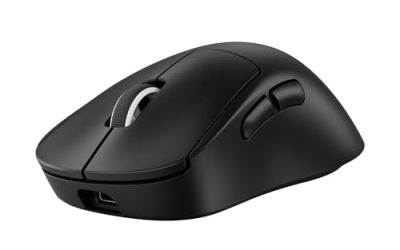
1. Logitech G305 LIGHTSPEED (White)
- Sensor: HERO optical, up to 12,000 DPI
- Connection: LIGHTSPEED 2.4 GHz wireless, 1 ms report rate
- Battery: up to 250 hours on 1 AA cell
- Buttons: 6 programmable
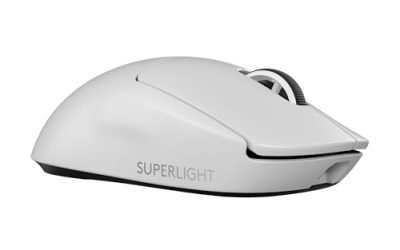
The G305 is the default recommendation in this band for a reason: it pairs Logitech’s HERO sensor with the company’s LIGHTSPEED wireless link, a combination that spent years in far more expensive mice before arriving here. The HERO sensor tracks up to 12,000 DPI while sipping power, and the wireless connection reports at 1 ms, so cursor movement feels as direct as a cable without the drag across the desk. In this white finish it also looks cleaner on a light desk setup than the usual black shells.
Battery strategy is the other half of the appeal. A single AA cell runs the mouse for up to 250 hours of continuous play, which for most people means a battery change a few times a year, and the USB receiver stores inside the body so it cannot get lost between desks. The shell is compact and symmetrical with a gentle hump, suiting claw and fingertip grips and smaller to medium hands, and six programmable buttons cover the essentials. Players who want wireless freedom, a trusted sensor and zero charging routine will find this the easiest pick of the five to live with.
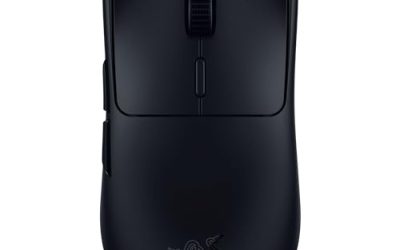
2. Razer Basilisk V3
- Sensor: Razer Focus+ optical, up to 26,000 DPI
- Tracking: up to 650 IPS, up to 50 G acceleration
- Buttons: 11 programmable, including multi-function trigger
- Wheel: HyperScroll tilt wheel, free-spin and tactile modes
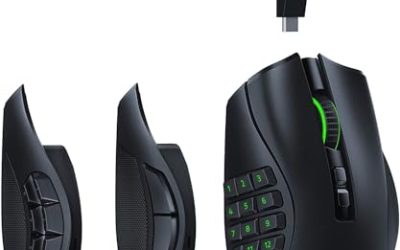
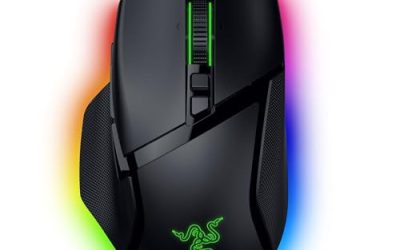
The Basilisk V3 is the pick for players who treat the mouse as a second keyboard. Eleven programmable buttons include Razer’s multi-function trigger, a small clutch by the thumb that can fire a single command or hold a shifted layer of commands, which makes it a natural fit for MMOs, MOBAs and shooters with deep ability wheels. The ergonomic shell has a proper thumb rest, and the shape supports a relaxed palm grip through long sessions without forcing your wrist into an angle.
Its scroll wheel is the standout hardware. The HyperScroll tilt wheel switches between a free-spinning mode that glides through long pages and a tactile notched mode for stepping through weapons one click at a time, and it also clicks left and right for two extra inputs. Underneath, the Focus+ optical sensor tracks up to 26,000 DPI, the main switches are optical Gen-2 units with a 0.2 ms actuation and a 70-million-click lifespan, and eleven Chroma RGB zones include an underglow strip that reacts in supported games. It is wired and heavier than the ultralight crowd, but for button count and wheel design in this band, nothing else here matches it.
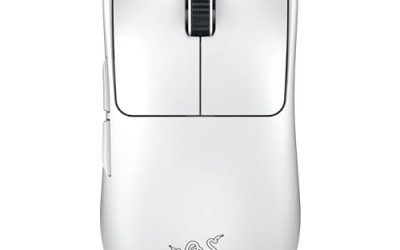
3. SteelSeries Rival 3 Wireless
The Rival 3 Wireless is the endurance pick. Its TrueMove Air sensor was developed with PixArt and tracks up to 18,000 CPI with true 1-to-1 motion, yet the mouse runs for more than 400 hours on a pair of AA cells, because SteelSeries tuned the whole design around low power draw. That makes it a genuine fit-and-forget wireless mouse: no charging cable on the desk, no battery anxiety before a long session, and no performance penalty for choosing convenience.
Flexibility is the second strength. A 2.4 GHz dongle connection handles gaming with a 1,000 Hz polling rate, while Bluetooth 5.0 covers a laptop or tablet for work, so one mouse can serve a gaming desktop and a portable machine. The symmetrical shell is mid-sized and suits claw and fingertip grips, the mechanical switches are rated for 60 million clicks, and the PTFE feet glide cleanly on cloth and hard pads alike. At 106 g with batteries fitted it is not a featherweight, and players chasing the lightest possible flicks should look at the wired picks instead, but as an all-rounder that disappears into your routine, it is hard to beat.
Specs
- Sensor: TrueMove Air optical, up to 18,000 CPI
- Tracking: up to 400 IPS, up to 40 G acceleration
- Connection: 2.4 GHz wireless and Bluetooth 5.0
- Battery: 400+ hours on 2 AA cells
- Buttons: 6 programmable
- Switches: mechanical, rated up to 60 million clicks
- Weight: 106 g with batteries fitted
- Model number: 62521
https://www.amazon.com/dp/B08GB2PF71
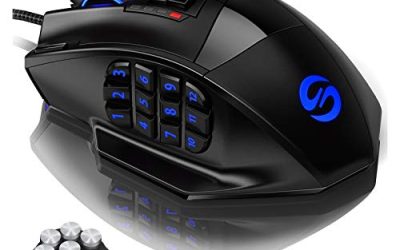
4. Logitech G203 LIGHTSPEED (Lilac)
- Sensor: optical, 200 to 8,000 DPI
- Connection: wired USB, 2.1 m cable
- Buttons: 6 programmable
- Lighting: LIGHTSYNC RGB, three zones
The G203 LIGHTSYNC is the small-mouse classic of this band, and this lilac finish gives a compact setup a bit of colour without any novelty hardware underneath. The shell is a compact symmetrical shape, 116.6 mm long and 85 g, that suits smaller hands and fingertip or claw grips, and it has been refined over years of production, so the clicks feel crisp and the buttons sit exactly where your fingers expect them.
The sensor covers 200 to 8,000 DPI, which is a practical range rather than a headline number: low settings give you fine control for scoped shots, and there is plenty of headroom for high-sensitivity desktop play. Six programmable buttons include the two side buttons most players bind to melee and push-to-talk, and settings save to on-board memory through Logitech’s software, so your layout travels with the mouse. LIGHTSYNC RGB runs a colour wave across three zones and can react to game audio and screen colour. If your hands are on the smaller side, or your desk is tight, this is the most natural fit in the guide, and the wired connection means the mouse is always ready the moment the PC wakes.
5. Corsair Harpoon RGB Pro
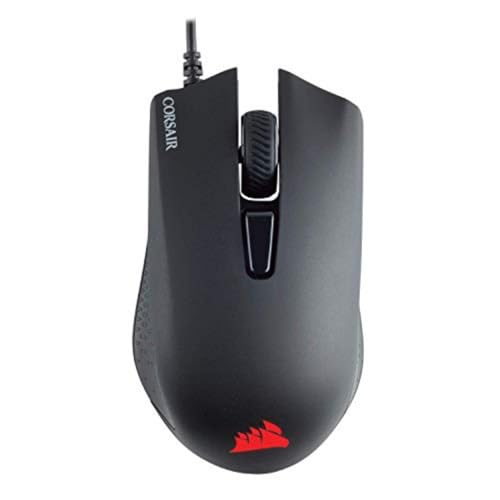
- Sensor: optical, up to 12,000 DPI
- Connection: wired USB, 1,000 Hz polling
- Buttons: 6 programmable
- Switches: Omron, rated for 20 million clicks
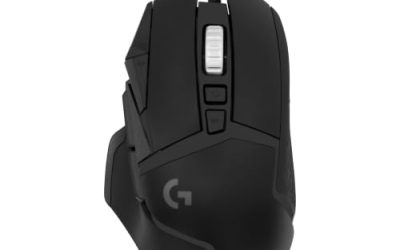
The Harpoon RGB Pro is built around one idea: a light, grippy wired mouse for fast, repeated flicks. It weighs 85 g, and the contoured right-handed shell carries rubber side grips that keep the mouse planted when you lift and reset during quick turns, which is exactly the movement pattern of FPS and MOBA play. The shape favours claw and fingertip grips, and the compact body leaves room on the pad for wide sweeps.
The optical sensor tracks up to 12,000 DPI, which covers every realistic sensitivity setting, and the main buttons use Omron switches rated for more than 20 million clicks, giving a firm, consistent actuation that suits rapid clicking. Six programmable buttons include a top DPI switch for dropping sensitivity on the fly, and Corsair’s iCUE software handles remaps, macros and the single-zone RGB lighting, and can sync that lighting with other Corsair gear on the desk. There is no battery and no wireless hardware to manage: plug it in and it works, on PC, Mac and the consoles the listing names. For players who want a simple, durable wired mouse that stays out of the way, this is the straightforward pick.
How to Choose a Gaming Mouse in This Band
Start with shape, because it decides comfort more than any sensor figure. Measure your hand from wrist to middle fingertip. Hands under about 17 cm usually suit compact shells like the G203, mid-sized hands can use almost anything here, and larger hands that rest the whole palm on the mouse will prefer the Basilisk V3’s longer ergonomic body. Then match the shape to your grip: palm grippers want a full hump that fills the hand, claw grippers want a shorter shell with a defined rear hump, and fingertip players want the lightest, flattest shape they can steer with their fingers alone.
Connection comes next. Wireless in this band is genuinely good now: both wireless picks use gaming-grade 2.4 GHz links with 1,000 Hz polling, and AA power means months between swaps rather than a nightly charge. Wired mice answer with zero battery management and slightly lower weight, though the cable can drag on wide sweeps, which a bungee or a desk edge route mostly solves. Pick based on your desk habits rather than old assumptions about wireless lag.
Treat DPI as a range, not a score. Most players settle between 400 and 3,200 DPI in games, so every sensor here has enormous headroom; what matters is clean tracking at your setting, which all five deliver. Buttons are the last filter. Shooter players rarely need more than six, while MMO and MOBA players who bind abilities, pings and push-to-talk to the mouse will get real value from the Basilisk V3’s eleven. Buy for the games you play weekly, not the ones you might try once.
FAQ
Is a wireless mouse in this band fast enough for competitive shooters?
Yes. The wireless picks here use 2.4 GHz gaming links with a 1 ms report rate and 1,000 Hz polling, the same connection figures as far pricier models. In play, shape and weight will shape your aim far more than any difference between these links and a cable.
How long do the AA-powered mice actually last between battery changes?
The G305 runs up to 250 hours of continuous play on one AA cell, and the Rival 3 Wireless passes 400 hours on two. For a few hours of gaming a day, that works out to months between swaps, and both mice warn you through their software before the cells run low.
How much DPI do you really need for gaming?
Far less than the headline numbers suggest. Most shooter players use 400 to 1,600 DPI and most strategy players stay under 3,200, so the 8,000 DPI ceiling of the smallest pick here already covers normal play with room to spare. A clean sensor at your chosen setting beats a higher maximum you will never use.
What should you check about fit before ordering?
Compare the listed length with your hand size and think about how you hold the mouse now. If your palm rests fully on the shell, choose an ergonomic shape; if only your fingertips touch it, choose a compact symmetrical one. Also check the weight: anything under 90 g feels agile for flicks, while heavier mice feel steadier for slow, tracked aiming.
More from Amazon
Programs that pair well with the guide above. Offers and eligibility are set by Amazon and may change.
Free shipping on eligible items, Prime Video and more. Eligible new members can start with a free trial.
Start a Prime free trialAd-free music streaming. Eligible new subscribers can start with a free trial.
Try Music Unlimited freeA Prime membership for ages 18-24 with a trial period. Eligibility is set by Amazon.
See Prime for Young AdultsAudiobooks and podcasts to listen to on the go. Eligible new members can start with a free trial.
Try Audible freeAs an Amazon Associate we earn from qualifying purchases.