Key takeaways
- Core Count and Thread Count: The Ryzen 7 9800X3D features 8 cores and 16 threads, which is the sweet spot for modern gaming. The Ryzen 9 9950X3D doubles that to 16 cores and 32 threads, making it the clear winner if you stream, render, or run local AI workloads alongside your games.
- 3D V-Cache Placement: AMD shifted the cache below the compute dies for the 9800X3D, allowing higher boost clocks and better thermals. The 9950X3D splits its cache across one CCD, meaning you need to ensure your games are scheduling threads on the cached cores to get the full benefit.
- Platform Longevity: Both processors drop into the AM5 socket and support the latest X870E and B850 motherboards. Pairing your chip with a PCIe 5.0 and Wi-Fi 7 board ensures your system is ready for next-generation NVMe storage and graphics cards.
- Thermals and Cooling: The 9800X3D is famously power-efficient and easy to cool with a mid-range air cooler. The 9950X3D has a higher TDP and will require a premium 360mm or 420mm AIO liquid cooler to maintain peak boost clocks during extended gaming sessions.
- Price-to-Performance Ratio: The 9800X3D delivers unmatched value for a pure gaming build. The 9950X3D commands a premium, but if you need a do-everything desktop that excels at gaming and heavy multitasking, the extra investment pays off.
What's inside
The battle for the best gaming CPU has never been more intense. With AMD’s Zen 5 architecture pushing the boundaries of single-core performance and 3D V-Cache technology reaching new heights, choosing between the Ryzen 9 9950X3D and the Ryzen 7 9800X3D is one of the most difficult decisions a PC gamer will face in 2025. The problem is straightforward: the 9800X3D dominates pure gaming benchmarks, while the 9950X3D offers a hybrid approach that combines massive multi-core productivity headroom with top-tier frame rates. Buyers are left wondering whether they should prioritize raw gaming performance or opt for a versatile processor that can also handle heavy creative workloads without missing a beat.
As an Amazon Associate we earn from qualifying purchases.


This guide breaks down everything you need to know about the latest AMD Ryzen X3D lineup, comparing the 8-core champion against the 16-core powerhouse. We cover single-core speeds, cache hierarchy, thermal behavior, platform compatibility, and overall value so you can make an informed decision. Whether you are building a dedicated AI-ready gaming rig or a workstation that plays hard after hours, we have identified the top processors and motherboard combos to help you build the ultimate AMD AM5 system.
🛒 Best Price Today on Amazon
Prime members get fast, free shipping on everything above, plus member-only deals. New members get a 30-day free trial — cancel anytime.
Watch: Ryzen 9 9950X3D vs 9800X3D: 2026 Showdown — Video Review
How to Choose a Ryzen 9 9950X3D vs 9800X3D
- Core Count and Thread Count: The Ryzen 7 9800X3D features 8 cores and 16 threads, which is the sweet spot for modern gaming. The Ryzen 9 9950X3D doubles that to 16 cores and 32 threads, making it the clear winner if you stream, render, or run local AI workloads alongside your games.
- 3D V-Cache Placement: AMD shifted the cache below the compute dies for the 9800X3D, allowing higher boost clocks and better thermals. The 9950X3D splits its cache across one CCD, meaning you need to ensure your games are scheduling threads on the cached cores to get the full benefit.
- Platform Longevity: Both processors drop into the AM5 socket and support the latest X870E and B850 motherboards. Pairing your chip with a PCIe 5.0 and Wi-Fi 7 board ensures your system is ready for next-generation NVMe storage and graphics cards.
- Thermals and Cooling: The 9800X3D is famously power-efficient and easy to cool with a mid-range air cooler. The 9950X3D has a higher TDP and will require a premium 360mm or 420mm AIO liquid cooler to maintain peak boost clocks during extended gaming sessions.
- Price-to-Performance Ratio: The 9800X3D delivers unmatched value for a pure gaming build. The 9950X3D commands a premium, but if you need a do-everything desktop that excels at gaming and heavy multitasking, the extra investment pays off.
The Best Ryzen 9 9950X3D vs 9800X3Ds Reviewed
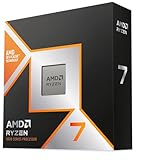
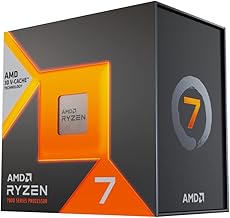
AMD Ryzen 7 9800X3D
This 8-core, 16-thread desktop processor is the undisputed king of pure gaming performance, offering unmatched frame rates and incredibly efficient power consumption. If your PC is strictly for gaming, this is the processor to buy.
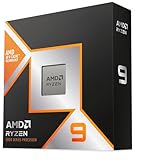
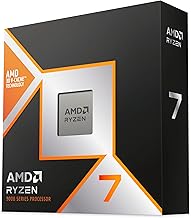
AMD Ryzen 9 9950X3D
The 16-core flagship combines AMD’s 3D V-Cache technology with massive multi-threading capabilities, making it the ultimate hybrid processor for gamers who also stream or run local AI applications. It costs more, but the productivity headroom is unmatched.
AMD Ryzen 9 9950X3D with ASUS ROG Strix X870E-E
This Micro Center combo pairs the flagship 9950X3D with a top-tier X870E motherboard featuring Wi-Fi 7, multiple PCIe 5.0 M.2 slots, and USB4, delivering an AI-ready foundation for a high-end build. It is the best way to future-proof your system from day one.
AMD Ryzen 9 9950X3D with MSI MAG X870E Tomahawk
This bundle mates the 16-core X3D processor with a robust MSI Tomahawk board, offering identical next-gen connectivity like 40Gbps USB-C and DDR5 support at a slightly more aggressive price point. It is the smartest choice for builders who want flagship performance with better overall value.
AMD Ryzen 9 9950X
For gamers who prioritize raw clock speeds and high-refresh-rate gameplay over massive L3 cache, this 16-core, 32-thread unlocked processor is a stellar alternative. It also handles heavy productivity tasks with ease, making it a versatile and highly overclockable chip.
Frequently Asked Questions
Does the 9950X3D support DDR5 memory?
Yes, both the Ryzen 9 9950X3D and the Ryzen 7 9800X3D use the AM5 socket and exclusively support DDR5 memory, allowing you to take advantage of high-speed RAM modules for better gaming performance.
Is the 9800X3D fast enough for 4K gaming?
Absolutely. At 4K resolutions, gaming performance is almost entirely GPU-bound, meaning the 9800X3D provides more than enough processing power to keep even the most powerful graphics cards fully fed with data.
Which processor is better for streaming?
The Ryzen 9 9950X3D is the better choice for content creators and streamers. Its 16 cores and 32 threads effortlessly handle video encoding and multitasking while maintaining high frame rates in your game.
Do I need a new motherboard for these CPUs?
You will need an AM5 motherboard, but not necessarily a new one. Both processors are compatible with X870E, X670E, and B650 motherboards, though a newer X870E board gives you access to USB4 and enhanced PCIe 5.0 lanes right out of the box.
Final Thoughts
Choosing between these two AMD powerhouses ultimately comes down to your primary use case. For the vast majority of gamers, the AMD Ryzen 7 9800X3D remains the smartest and most cost-effective choice on the market. However, if you need a desktop that doubles as a productivity monster and an AI-ready workstation, the AMD Ryzen 9 9950X3D — especially when paired with the ASUS ROG Strix X870E-E motherboard combo — provides an unbeatable blend of extreme gaming performance and massive multi-core muscle.