Key takeaways
- Resolution and Clarity: Determine if your GPU can handle 4K UHD or if a 1440p QHD monitor is the safer bet for high frame rates. Higher resolutions provide sharper images but require significantly more rendering power to maintain smooth framerates.
- Refresh Rate: Look for 240Hz or higher for competitive esports titles where maximum temporal clarity is required. A 165Hz or 180Hz panel is often sufficient for immersive, single-player experiences where visual fidelity matters more than pure competitive advantage.
- Panel Technology: Decide between QD-OLED for superior color volume and peak brightness in ambient light, or WOLED for deeper blacks in dark rooms. Both offer 0.03ms response times that make traditional IPS panels feel sluggish by comparison.
- HDR Performance: Check for VESA DisplayHDR TrueBlack 400 or 500 certification to ensure the monitor can deliver impactful highlights. True per-pixel dimming means OLED displays provide a vastly superior HDR experience compared to edge-lit IPS monitors.
- Connectivity and Ergonomics: Ensure the monitor includes HDMI 2.1 and DisplayPort 1.4a for high-bandwidth next-gen console and PC signals. A height-adjustable stand with tilt and swivel options is essential for achieving proper viewing ergonomics during long gaming sessions.
What's inside
Choosing between OLED and IPS technology is one of the most consequential decisions a PC gamer can make when upgrading their display. OLED panels deliver truly perfect, per-pixel black levels and near-instantaneous response times that IPS panels simply cannot match physically, resulting in zero ghosting and incredible contrast in dark games. However, IPS panels still hold advantages in full-screen sustained brightness, color accuracy stability, and long-term burn-in peace of mind. This makes the choice highly dependent on the types of games you play and your overall budget.
As an Amazon Associate we earn from qualifying purchases.


This guide focuses specifically on the OLED side of that equation, highlighting the top-tier panels currently available. We have selected the best QD-OLED and WOLED monitors on the market to help you make an informed upgrade. From budget-friendly 1440p panels to high-end 4K powerhouses, these picks represent the pinnacle of modern gaming display technology and will help you push your graphics card to its absolute limit.
🛒 Best Price Today on Amazon
Prime members get fast, free shipping on everything above, plus member-only deals. New members get a 30-day free trial — cancel anytime.
Watch: OLED vs IPS Gaming Monitor: 2026 Comparison — Video Review
How to Choose a/an OLED vs IPS Gaming Monitor
- Resolution and Clarity: Determine if your GPU can handle 4K UHD or if a 1440p QHD monitor is the safer bet for high frame rates. Higher resolutions provide sharper images but require significantly more rendering power to maintain smooth framerates.
- Refresh Rate: Look for 240Hz or higher for competitive esports titles where maximum temporal clarity is required. A 165Hz or 180Hz panel is often sufficient for immersive, single-player experiences where visual fidelity matters more than pure competitive advantage.
- Panel Technology: Decide between QD-OLED for superior color volume and peak brightness in ambient light, or WOLED for deeper blacks in dark rooms. Both offer 0.03ms response times that make traditional IPS panels feel sluggish by comparison.
- HDR Performance: Check for VESA DisplayHDR TrueBlack 400 or 500 certification to ensure the monitor can deliver impactful highlights. True per-pixel dimming means OLED displays provide a vastly superior HDR experience compared to edge-lit IPS monitors.
- Connectivity and Ergonomics: Ensure the monitor includes HDMI 2.1 and DisplayPort 1.4a for high-bandwidth next-gen console and PC signals. A height-adjustable stand with tilt and swivel options is essential for achieving proper viewing ergonomics during long gaming sessions.
The Best OLED vs IPS Gaming Monitors Reviewed
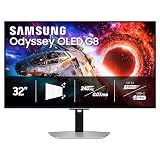
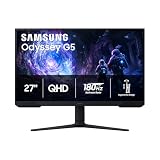
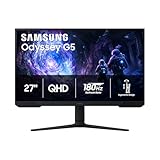
Samsung 27″ Odyssey OLED G5
Featuring a 180Hz refresh rate and a stunning QD-OLED panel, the Odyssey OLED G5 is an excellent entry point into OLED gaming. It offers incredible contrast and color volume, making it a highly attractive upgrade for gamers coming from standard IPS panels.
Samsung 27″ Odyssey OLED G6
The Odyssey OLED G6 steps up to a 240Hz refresh rate while adding a glare-free coating and Pantone validation. This monitor is a top-tier choice for fast-paced competitive titles where every millisecond of visual clarity counts.
MSI MAG 274QP QD-OLED X24
MSI’s MAG 274QP delivers a 240Hz WQHD Quantum Dot OLED experience with robust connectivity including HDMI 2.1. It strikes an excellent balance between price and performance for PC gamers wanting premium specs without paying a premium.
LG 32″ UltraGear 4K OLED (32GX850A-B)
This 32-inch 4K WOLED monster features a unique dual-mode that switches between 4K at 165Hz and 1080p at 330Hz. It is the ultimate, no-compromise display for gamers who want both breathtaking visual fidelity and esports-level refresh rates.
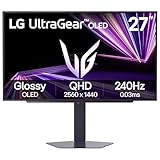
LG 27″ UltraGear QHD OLED (27GX700A-B)
Pushing the boundary of speed, this LG UltraGear offers a blistering 280Hz refresh rate alongside DisplayHDR TrueBlack 500. It is the definitive choice for gamers who demand the absolute highest frame rates without sacrificing OLED-level contrast.
Frequently Asked Questions
Does OLED have worse burn-in than IPS?
Yes, OLED panels are susceptible to permanent burn-in from static elements like taskbars or UI elements, whereas IPS panels are immune. However, modern OLEDs include pixel-shifting and safeguard features to heavily mitigate this risk.
Is OLED better than IPS for gaming?
OLED offers significantly better response times and infinite contrast, making it superior for immersive and fast-paced gaming. IPS remains a solid choice for brighter environments and users worried about static-image retention.
Can a modern GPU handle 4K OLED gaming?
Running modern games at 4K requires a high-end GPU to maintain stable, high refresh rates. If your graphics card struggles at 4K, a 1440p OLED panel like the Odyssey OLED G6 is a much better pairing.
Are 240Hz OLED monitors worth it?
Yes, if you play competitive shooters, the combination of 240Hz and a 0.03ms response time provides unmatched motion clarity. The jump in temporal resolution from a standard IPS panel is immediately noticeable.
Final Thoughts
Upgrading to an OLED gaming monitor is the most significant visual leap you can make for your gaming setup. The Samsung Odyssey OLED G6 is a fantastic mid-range choice for 1440p enthusiasts, while the LG 32″ UltraGear 4K OLED stands as the ultimate high-end option for those wanting maximum versatility.