Key takeaways
- Connection Priority (Latency vs. Mobility): Decide whether you require an ultra-low latency wired connection or an uncompressed wireless signal. Competitive PC players overwhelmingly favor wired USB-C or dedicated 2.4 GHz wireless dongles capable of at least a 500 Hz to 1000 Hz polling rate. Standard Bluetooth connections introduce 8ms to 16ms of jittery input lag, making them unsuitable for competitive environments.
- Layout Ergonomics (Offset vs. Parallel Sticks): Identify your preferred thumbstick arrangement. The Xbox-style asymmetrical (offset) layout places the primary left thumbstick directly under the natural resting position of your left thumb, which suits first-person shooters and driving titles. The PlayStation-style symmetrical (parallel) layout aligns both sticks at the bottom, which many fighting game and precision platformer players prefer for balanced thumb posture.
- Input Architecture (Control Depth Requirements): Determine if your game library requires rear actuation paddles, hair-trigger locks, or remappable face buttons. If you play fast-paced shooters where jumping, sliding, and aiming must happen simultaneously without taking your thumbs off the analog sticks, back paddles are mandatory rather than optional.
What's inside
- Decide These 3 Things First
- Size, Dimensions, and Layout Ergonomics
- Material Quality and Surface Textures
- Internal Construction and Stick Technology
- Comfort and Performance Features for Competitive Play
- Price Tiers and Value Benchmarks
- Warranty Coverage and Module Replaceability
- Delivery, Unboxing, and PC Driver Setup
- Spec Checklist
- Red Flags
- FAQ
Most players entering the esports arena make the same costly mistake: they assume a standard console gamepad plugged into a rig is enough. While an off-the-shelf pad works fine for casual RPGs, competitive PC gaming demands split-second reaction times, pinpoint thumbstick accuracy, and zero hardware degradation over hundreds of hours of intense play. When learning how to choose a pc controller for competitive gaming, relying solely on brand recognition often leads to stick drift, high input lag, and clunky ergonomics that compromise your aim during critical clutches.
- Decide These 3 Things First
- Size, Dimensions, and Layout Ergonomics
- Material Quality and Surface Textures
- Internal Construction and Stick Technology
- Comfort and Performance Features for Competitive Play
- Price Tiers and Value Benchmarks
- Warranty Coverage and Module Replaceability
- Delivery, Unboxing, and PC Driver Setup
- Spec Checklist
- Red Flags
- FAQ
Navigating controller options in 2026 requires looking past flashy RGB lights and focusing on the underlying engineering. Standard membrane switches, potentiometer sticks that wear down over time, and slow 125 Hz polling rates will hold back your mechanical skill. To build a setup that gives you a true edge in first-person shooters, fighting games, or rocket-powered esports, you must evaluate mechanical components, signal latency, and physical adjustments tailored to your exact hand size and grip style.
As an Amazon Associate we earn from qualifying purchases at no extra cost to you. Product prices and availability are accurate as of the date shown and are subject to change.


Decide These 3 Things First
Before diving into individual specs, narrow down your search by locking in three core structural decisions. These foundational choices immediately filter out 70% of the controllers on the market that do not align with your competitive goals.
- Connection Priority (Latency vs. Mobility): Decide whether you require an ultra-low latency wired connection or an uncompressed wireless signal. Competitive PC players overwhelmingly favor wired USB-C or dedicated 2.4 GHz wireless dongles capable of at least a 500 Hz to 1000 Hz polling rate. Standard Bluetooth connections introduce 8ms to 16ms of jittery input lag, making them unsuitable for competitive environments.
- Layout Ergonomics (Offset vs. Parallel Sticks): Identify your preferred thumbstick arrangement. The Xbox-style asymmetrical (offset) layout places the primary left thumbstick directly under the natural resting position of your left thumb, which suits first-person shooters and driving titles. The PlayStation-style symmetrical (parallel) layout aligns both sticks at the bottom, which many fighting game and precision platformer players prefer for balanced thumb posture.
- Input Architecture (Control Depth Requirements): Determine if your game library requires rear actuation paddles, hair-trigger locks, or remappable face buttons. If you play fast-paced shooters where jumping, sliding, and aiming must happen simultaneously without taking your thumbs off the analog sticks, back paddles are mandatory rather than optional.
Size, Dimensions, and Layout Ergonomics
A controller must fit your physical posture as precisely as an ergonomic task chair or competitive gaming mouse. Holding a controller that is too small forces your fingers into a cramped “claw” posture, inducing forearm fatigue within 45 minutes. Conversely, an oversized gamepad causes overextension when reaching for top bumpers or rear paddles.
Standard competitive controllers generally adhere to dimensions between 150 mm to 160 mm in width, 100 mm to 110 mm in depth, and 60 mm to 65 mm in height. Weight plays an equally crucial role in stamina and control:
- Lightweight (190 g – 230 g): Ideal for high-sens twitch movements and extended tournament sessions. Reduced mass minimizes wrist strain during rapid directional shifts.
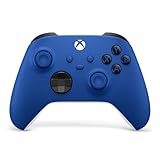
- Medium Weight (235 g – 275 g): The industry sweet spot. Offers a solid, dense feel without dragging down hand speed. Standard pads like the Xbox Wireless Gaming Controller (around 287 g with batteries) sit on the upper end of this tier.
- Heavyweight (280 g – 345 g): Typical for premium modular gamepads with internal metal weight distribution and built-in batteries, such as the Xbox Elite Series 2 Core (approx. 330 g). The added weight provides stability, though it can accelerate hand fatigue over multi-hour sessions.
Select your controller size based on hand length (measured from the base of your palm to the tip of your middle finger). Hands under 6.5 inches perform best on compact frames (around 145 mm width), while hands over 7.5 inches require wider body designs (158 mm+ width) with extended palm grips to prevent pinky finger cramping.
Material Quality and Surface Textures
During high-stress matches, sweat buildup reduces traction, leading to micro-slips on thumbsticks and grip handles. Premier competitive controllers address this through targeted material composition rather than simple smooth plastic molding.
Look for dual-injected rubberized grips or laser-etched micro-dot textures along the rear chassis and side handles. The standard Xbox Wireless Gaming Controller features micro-textured patterns on the bumpers, triggers, and rear case to maintain grip stability. Higher-end models incorporate vulcanized rubber side grips that absorb moisture without peeling over time.
Thumbstick material matters just as much. High-grade controllers use thermoplastic elastomer (TPE) thumbstick caps with raised outer rims to prevent thumb slippage during aggressive directional snaps. Look for anti-friction rings surrounding the stick housings—typically made from self-lubricating POM (polyoxymethylene) polymer—which ensure smooth 360-degree rotations against the controller body without generating fine plastic dust that ruins internal sensors.
Internal Construction and Stick Technology
Internal components dictate how long a controller maintains peak accuracy. Traditional gamepads use mechanical potentiometer thumbsticks, which rely on physical wiper contacts sliding across a resistive track. Over time, friction wears down these tracks, causing physical stick drift within 300 to 500 hours of aggressive gameplay.
To eliminate stick drift, modern competitive controllers utilize two advanced contactless sensor technologies:
- Hall Effect Sensors: Uses permanent magnets and voltage sensors to calculate thumbstick position without physical contact. With no mechanical wear parts, Hall Effect sticks virtually eliminate drift and allow deadzones to be set near 0%.
- TMR (Tunnel Magnetoresistance) Sensors: The latest advancement in magnetic sensing. TMR offers higher spatial resolution, lower power consumption, and greater signal stability than traditional Hall Effect modules, providing hyper-precise micro-aim adjustments in FPS titles. Advanced controllers like the GameSir G7 Pro 8K leverage TMR sticks to offer incredible tracking fidelity.
For face buttons and D-pads, look for mechanical microswitches (similar to those found in high-end gaming mice) rather than conductive rubber pads. Microswitches provide a tactile click with an actuation travel distance of just 0.2 mm to 0.5 mm, compared to 1.2 mm on traditional membrane buttons. This cuts button response times significantly while offering an actuation lifecycle of over 3 million clicks.
Comfort and Performance Features for Competitive Play
Competitive advantage often comes down to hardware customization. When evaluating features, prioritize physical adjustments that directly streamline your in-game mechanics.
Trigger Locks (Stop Mechanisms): Standard trigger travel ranges from 7 mm to 10 mm, which is ideal for modulating acceleration in racing games. However, in shooters, long trigger pulls slow down your rate of fire. Mechanical trigger stops reduce key travel down to 1.5 mm to 2.0 mm, transforming long analog pulls into instant digital mouse clicks.
Rear Remappable Paddles/Buttons: Located on the back of the grip casing, 2 to 4 remappable paddles allow you to execute jump, crouch, reload, or weapon switch commands without taking your right thumb off the aiming stick. Ensure the paddles sit directly under your middle and ring fingers with an actuation force between 80 g and 120 g to prevent accidental misclicks while gripping firmly.
Adjustable Stick Tension: Featured on advanced pads like the Xbox Elite Series 2 Core, adjustable tension lets you alter stick resistance between 50 g and 100 g of force. Higher tension offers greater physical feedback for precise sniper aiming, while lighter tension allows rapid directional flicking.
Price Tiers and Value Benchmarks
Controllers span three distinct price brackets, each reflecting differences in sensor tech, customization, and build materials:
- Budget/Entry Tier ($30 – $60): Standard first-party controllers like the base Xbox Wireless Gaming Controller ($59.99) or entry-level third-party pads. They offer excellent ergonomic shapes, reliable membrane inputs, and basic textured grips, but typically lack rear paddles, hardware trigger locks, or magnetic stick technology.
- Mid-Range / Pro Core Tier ($60 – $100): The value sweet spot for competitive players. Products like the GameSir G7 Pro 8K ($89.99) or specialized textured editions like the Storm Breaker Special Edition ($69.99) fall here. Expect features like high polling rates (500 Hz – 1000 Hz), magnetic/TMR thumbsticks, mechanical face buttons, and wired low-latency performance.
- Premium / Modular Elite Tier ($120 – $200+): Modular flagships such as the Xbox Elite Series 2 Core ($128.99). These offer metal rear paddles, adjustable stick tension, short-throw trigger stops, interchangeable thumbstick caps/D-pads, and comprehensive software suites for custom thumbstick response curves.
Warranty Coverage and Module Replaceability
High-frequency competitive play subjects controllers to intense mechanical stress. Pay close attention to manufacturer warranty terms and modular repairability before purchasing.
Standard controller warranties range from 90 days to 1 year. Premium esports brands often back their hardware for 12 to 24 months, particularly on units with custom internal circuitry. Look for controllers that offer modular thumbstick units or user-replaceable faceplates. If a stick fails or wears down out of warranty, swapping an individual $15 module is vastly superior to replacing a full $150 gamepad.
Delivery, Unboxing, and PC Driver Setup
Out of the box, a PC controller should require zero physical assembly. However, setting up a gamepad for competitive PC use involves critical software and driver steps to unlock maximum performance:
- Cable Specs: Ensure your wired setup includes a detachable, braided USB-C to USB-A cable measuring at least 2.5 meters to 3 meters (8 to 10 feet). Heavy braiding prevents cable kinks and strain damage at the connector head.
- XInput vs. DirectInput Compatibility: Native Windows support relies on the XInput protocol. Ensure your controller operates natively in XInput mode to guarantee instant game recognition without third-party wrapper software.
- Software Footprint: Look for lightweight app support that lets you recalibrate deadzones, map back paddles, adjust vibration intensity, and update firmware directly. Controllers with onboard memory profiles allow you to save your keybinds directly to the hardware, so your settings persist even when plugging into a secondary tournament PC without software installed.
Spec Checklist
| Spec / Feature | Budget Tier ($30 – $60) | Mid-Range Tier ($60 – $100) | Premium Tier ($120 – $200+) |
|---|---|---|---|
| Polling Rate / Latency | 125 Hz (8ms response) | 500 Hz – 1000 Hz (1ms – 2ms) | 500 Hz – 1000 Hz (1ms – 2ms) |
| Thumbstick Tech | Potentiometer (Contact) | Hall Effect or TMR (Magnetic) | Adjustable Tension / Hall Effect |
| Button Actuation | Conductive Rubber Membrane | Tactile Microswitches | Tactile Microswitches / Hybrid |
| Trigger Locks | None (Full Pull Only) | 2-Stage Stop Switches | 3-Stage Short-Throw Locks |
| Rear Paddles | 0 to 2 Fixed Buttons | 2 to 4 Remappable Buttons | 4 Metal Remappable Paddles |
| Weight Range | 200 g – 285 g | 210 g – 260 g | 300 g – 345 g |
| Onboard Memory | None | 1 – 2 Hardware Profiles | 3+ Hardware Profiles |
Red Flags
Avoid controllers that exhibit these clear engineering and feature flaws:
- Unrated or Hidden Polling Rates: If a manufacturer does not publish the polling rate or limits PC connections to 125 Hz, pass on it. High latency creates noticeable input lag on high-refresh-rate PC monitors (144 Hz+).
- Fixed High Deadzones: Controllers with built-in deadzones above 8% to 10% in firmware hide physical stick flaws but prevent subtle micro-aim adjustments in FPS games.
- Awkward Rear Button Placement: Rear buttons placed too close to the center housing force you to break your natural hand grip to press them. Ensure paddles align naturally under your resting finger tips.
- Soft Painted Rubber Grips: Cheap rubberized coatings applied over smooth plastic eventually breakdown, liquefy, or peel off due to palm sweat and skin oils within months. Look for molded or textured rubber instead.
- Lack of Onboard Remapping: Avoid controllers that force custom PC companion software to run continuously in the background just to keep rear paddle keybinds active.
FAQ
Is a wired or wireless controller better for PC esports?
Wired connections via high-speed USB-C are generally preferred for competitive play because they eliminate wireless interference and deliver consistent 1000 Hz polling rates with minimal input jitter. However, modern 2.4 GHz wireless dongles with high-polling-rate protocols offer nearly identical performance. Avoid standard Bluetooth, as its latency is higher and prone to signal dropouts in crowded wireless environments.
What is the difference between Hall Effect and TMR thumbsticks?
Both technologies use non-contact magnetic sensors to eliminate physical wear and stick drift. Standard Hall Effect sensors measure magnetic field intensity across a sensor plane. TMR (Tunnel Magnetoresistance) sensors utilize quantum tunneling tech to measure magnetic changes with significantly higher sensitivity, lower power consumption, and greater positional resolution, resulting in pinpoint micro-aim fidelity on PC setups.
Do back paddles actually give you a competitive advantage?
Yes. Back paddles allow you to map critical face button inputs—such as Jump (A/Cross), Crouch/Slide (B/Circle), or Reload (X/Square)—to fingers resting on the back of the controller. This means you never have to lift your right thumb off the aim stick, allowing you to track targets continuously while jumping, sliding, or performing complex movement techniques.
Why does polling rate matter on a PC controller?
Polling rate, measured in Hertz (Hz), dictates how many times per second the controller sends input updates to your PC. A standard 125 Hz controller sends an update every 8 milliseconds. A 1000 Hz competitive controller updates every 1 millisecond. On a high-refresh-rate gaming monitor (240 Hz or 360 Hz), a higher polling rate results in noticeably smoother crosshair movement, instant button registration, and tighter frame synchronization.