Key takeaways
- What primary game genres will you play? Racing simulators and sports games demand long-throw analog triggers with precise tension for throttle control. Competitive shooters require ultra-fast button actuation, low latency, and back bumpers for jump-shot mechanics. Strategy or cozy games allow for more forgiving response times and basic layouts.
- What is your physical connectivity environment? If you play at a desk situated directly next to your PC tower, a low-latency wired connection or a 2.4GHz wireless dongle placed in an open USB port works best. If you play from a couch ten feet away from a living room media PC, solid 2.4GHz wireless range or Bluetooth 5.3 with wide device compatibility is essential.
- What is your hand size and ergonomic preference? Hand size dictates comfort over multi-hour gaming sessions. Measure from the base of your palm to the tip of your middle finger: if your hand measures under 6.5 inches, compact frames are ideal; for hands measuring 7.5 inches or longer, look for wide-grip designs with deep contouring to prevent hand cramping.
Shopping for a PC gamepad used to be simple: you bought the official console controller, plugged it in via USB, and called it a day. Today, the third-party hardware market has exploded with specialized tech, aggressive pricing, and technical jargon that can confuse even seasoned gamers. Navigating the controller market in 2026 requires looking past surface-level aesthetics like custom paint jobs or RGB lighting rings and focusing instead on performance metrics that directly impact responsiveness and longevity.
The most common mistake buyers make is prioritizing brand recognition or RGB lighting over internal components. Purchasing a controller with standard potentiometer thumbsticks often leads to drift within six to twelve months of heavy use. Another frequent oversight is ignoring input latency; buying a standard Bluetooth gamepad for competitive first-person shooters can introduce up to 20 milliseconds of input lag, making subtle adjustments feel sluggish. By understanding hardware specifications—such as sensor technology, polling rates, microswitch actuation, and wireless protocols—you can select a gamepad that enhances your gameplay and lasts for years.
Our top picks
 8Bitdo Ultimate 2C Wireless Controller for Windows
- Product Group: Video Games
- Binding: Video Game


As an Amazon Associate we earn from qualifying purchases at no extra cost to you. Ratings are shown as listed on Amazon.
Decide These 3 Things First
Before comparing spec sheets and feature lists, narrow your choices by answering three fundamental questions about your gaming setup:
- What primary game genres will you play? Racing simulators and sports games demand long-throw analog triggers with precise tension for throttle control. Competitive shooters require ultra-fast button actuation, low latency, and back bumpers for jump-shot mechanics. Strategy or cozy games allow for more forgiving response times and basic layouts.
- What is your physical connectivity environment? If you play at a desk situated directly next to your PC tower, a low-latency wired connection or a 2.4GHz wireless dongle placed in an open USB port works best. If you play from a couch ten feet away from a living room media PC, solid 2.4GHz wireless range or Bluetooth 5.3 with wide device compatibility is essential.
- What is your hand size and ergonomic preference? Hand size dictates comfort over multi-hour gaming sessions. Measure from the base of your palm to the tip of your middle finger: if your hand measures under 6.5 inches, compact frames are ideal; for hands measuring 7.5 inches or longer, look for wide-grip designs with deep contouring to prevent hand cramping.
Controller Dimensions and Weight Ergonomics
A controller’s physical footprint determines how long you can play before experiencing palm fatigue or wrist strain. Standard PC gamepads typically measure approximately 6.0 x 4.1 x 2.5 inches (152 x 104 x 63 mm). Compact options compress these dimensions down to around 5.4 x 3.8 x 2.1 inches, making them better suited for smaller hands or travel setups.
Weight is equally vital. A solid, comfortable controller generally sits between 190 grams and 280 grams. Ultra-light options, such as the abxylute C6 Wireless Controller (~210g) or the entry-level Logitech G F310 ($15.99 at ~210g wired), reduce wrist strain during marathon sessions. Meanwhile, feature-packed wireless models that include built-in vibration motors, heavy battery packs, and charging contacts (like the 8Bitdo Ultimate 2C or ECHTPower PC Gaming Controller) usually range between 200g and 250g. Anything exceeding 300g can feel heavy over long sessions unless balanced perfectly across ergonomic palm grips.
Joystick Construction and Sensor Type
The thumbstick sensor mechanism is the single most important component for controller longevity. Traditional controllers rely on potentiometer joysticks, which use physical wiper blades sliding across resistive tracks to measure movement. Over time, friction wears down these internal tracks, generating debris that causes stick drift—where your character or camera moves without input.
Modern gamepads utilize Hall Effect joysticks. Hall Effect sensors use permanent magnets and electrical conductors to measure changes in magnetic field strength as the stick moves. Because there is zero physical contact between moving parts, mechanical wear is eliminated, preventing stick drift. Look for controllers offering native Hall Effect joysticks with 12-bit signal sampling, zero-deadzone toggles, and anti-friction rings around the stick necks to guarantee smooth 360-degree rotation.
Polling Rate and Input Latency
Polling rate, measured in Hertz (Hz), dictates how many times per second the controller reports its input data to your PC. A higher polling rate reduces input latency, resulting in faster on-screen response to your button presses and stick movements:
- 125 Hz (8ms delay): Standard for basic Bluetooth connections. Acceptable for turn-based strategy, cozy platformers, and slow-paced RPGs, but inadequate for fast reaction times.
- 250 Hz – 500 Hz (2ms to 4ms delay): Standard for baseline 2.4GHz wireless and wired USB setups. Offers crisp, reliable response times for casual action games and racing titles.
- 1000 Hz (1ms delay): High-performance standard found on competitive models like the 8Bitdo Ultimate 2C ($29.99), abxylute C6 ($27.99), and ECHTPower Wireless ($26.99). A 1000Hz polling rate provides near-instant input delivery over 2.4GHz wireless or wired connections, ideal for competitive first-person shooters and fighting games.
Trigger and Button Mechanism
Action buttons (A, B, X, Y) and directional pads utilize two main switch technologies: conductive rubber membranes or mechanical microswitches. Membrane switches offer a soft, quiet press with roughly 1.2mm to 1.5mm of key travel. Mechanical microswitches utilize mouse-like tactile switches with a shortened travel distance of 0.3mm to 0.7mm. Mechanical switches provide distinct tactile feedback, actuate up to 60% faster, and carry durability ratings of 3 million to 5 million clicks per button.
For triggers (LT/RT or L2/R2), look for analog Hall Effect magnetic sensors rather than simple potentiometer sliders. Long-travel analog triggers featuring 7mm to 9mm of pull distance are essential for precise throttle and brake modulation in racing games. If you frequently play competitive shooters, seek out controllers featuring trigger stops or remappable rear bumpers (like L4/R4 back buttons) that shorten actuation distance to under 1.5mm for rapid hair-trigger firing.
Connectivity, Battery, and Charging Systems
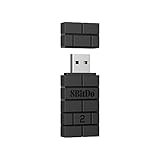
Tri-mode connectivity is the gold standard for versatility on modern PC setups. A versatile controller should offer 2.4GHz wireless (via a dedicated USB dongle), Bluetooth 5.2/5.3 (for multi-device pairing with mobile, Steam Deck, or tablets), and USB-C wired mode (for simultaneous charging and low-latency play).
When evaluating wireless specs, pay close attention to battery capacity and charging solutions:
- Battery Capacity: Internal lithium-ion batteries typically range from 400mAh to 1000mAh. A 400mAh to 600mAh battery yields roughly 12 to 19 hours of continuous playtime when RGB lighting and heavy haptic rumble are disabled.
- Charging Docks: Packages that include a “Place & Charge” dock (such as the ECHTPower setup) streamline your desk layout. Dropping the controller onto a magnetic dock ensures it stays fully charged without causing wear on the USB-C port over time.
Price Tiers and Value Realities
Understanding controller pricing helps align your budget with expected performance features:
- Budget Tier ($15 to $25): Entry-level choices like the Logitech G F310 ($15.99) prioritize basic plug-and-play functionality. Expect wired-only connectivity, traditional potentiometer joysticks, conductive rubber buttons, and basic ergonomic shells.
- Mid-Range Value Tier ($25 to $50): The current market sweet spot. Models in the $26 to $30 range—such as the 8Bitdo Ultimate 2C, abxylute C6, and ECHTPower Wireless—deliver premium specs like 1000Hz polling rates, drift-free Hall Effect sticks, remappable back bumpers, multi-platform Bluetooth/2.4GHz modes, and custom rumble vibration engines.
- Premium Custom Tier ($80 to $200+): Offers modular hardware options like swappable thumbstick modules, adjustable mechanical trigger stops, customizable weight systems, internal audio DAC pass-through jacks, and advanced software customization profiles.
Warranty, Modular Parts, and Build Quality
Build quality directly impacts how well a gamepad withstands daily use. Look for bodies constructed from high-grade ABS plastic with textured matte grips that shed palm sweat. Controllers that incorporate double-injection molded rubber grips stay comfortable longer than smooth glossy shells, which grow slippery during intense play.
Always review manufacturer warranty coverage, which typically spans from 12 to 24 months. Higher quality controllers offer modular replacement parts, allowing you to swap worn rubber thumbstick caps or replace lost USB receivers without needing to purchase an entirely new controller.
Spec Checklist
| Feature Spec | Budget Tier ($15 – $25) | Mid-Range Tier ($25 – $50) | Premium Tier ($80+) |
|---|---|---|---|
| Joystick Type | Standard Potentiometer | Hall Effect (Anti-Drift) | Precision Hall Effect / Swappable |
| Polling Rate | 125 Hz – 250 Hz | Up to 1000 Hz | 1000 Hz+ Low Latency |
| Action Buttons | Rubber Membrane | Membrane or Tactile Switches | Full Mechanical Microswitches |
| Connectivity | Wired USB Only | 2.4GHz + Bluetooth 5.3 + USB-C | Tri-Mode Wireless + Low Latency Dongle |
| Triggers | Standard Analog Sliders | Hall Effect Magnetic Triggers | Hall Effect with Physical Locks/Stops |
| Back Controls | None | 2 Remappable Bumpers (L4/R4) | 4 Dedicated Rear Paddles / Multi-Profiles |
Red Flags
Avoid controllers that exhibit these warning signs during your search:
- Potentiometer Joysticks Above $50: If a gamepad costs over $50 and lacks magnetic Hall Effect sticks, you are paying for brand hype rather than durable hardware.
- Unspecified Polling Rates: Manufacturers that hide their polling rate specifications often cap out at 125Hz, leading to high input latency over wireless connections.
- Bluetooth-Only PC Support: Controllers relying solely on standard Bluetooth without a 2.4GHz USB receiver experience noticeable latency spikes and interference in high-density Wi-Fi environments.
- Non-Standard Micro-USB Charging Ports: Avoid controllers that still use outdated Micro-USB connections. Modern gamepads should always feature universal USB-C ports for fast charging and robust wired reliability.
- Glossy Smooth Grip Plastics: Seamless, untextured plastic handles trap sweat and reduce grip stability during long play sessions.
Frequently Asked Questions
What is the difference between Hall Effect and regular joysticks?
Regular joysticks rely on physical wiper contacts sliding against resistive tracks to register movement, which inevitably wears down over time and causes stick drift. Hall Effect joysticks use contactless magnetic sensors to measure position, preventing physical wear and eliminating stick drift entirely.
Is a 1000Hz polling rate actually noticeable on a controller?
Yes, particularly in high-framerate action games, fighting titles, and competitive shooters. A 1000Hz polling rate reduces input transmission latency down to roughly 1ms (compared to 8ms on a standard 125Hz controller), yielding faster on-screen response and smoother micro-adjustments with thumbsticks.
Are wired controllers still better than wireless for PC gaming?
Modern 2.4GHz wireless controllers with 1000Hz polling rates perform virtually identically to wired connections in terms of input latency. However, wired controllers remain a cost-effective, reliable option because they never require battery recharging and eliminate potential wireless signal interference.
Do I need special drivers to use third-party controllers on Windows?
Most modern third-party controllers feature built-in XInput compatibility, allowing Windows PCs and Steam to recognize them immediately as standard gamepads without requiring extra driver installation. Controllers featuring remappable back buttons or custom lighting may offer optional software packages for advanced configuration.