Key takeaways
- Your primary capture style: Decide whether you need an instantaneous replay buffer (saving the last 30 to 120 seconds of high-impact moments), continuous long-form recording (capturing 2 to 6 hours of uncut sessions), or a hybrid capture-and-streaming solution.
- Your GPU hardware architecture: Check if your machine runs an NVIDIA RTX graphics card (utilizing NVENC), an AMD Radeon card (utilizing AMF), or an Intel ARC card (utilizing QuickSync). Dedicated hardware encoders handle image processing on a separate silicon block, keeping CPU overhead under 4%.
- Your audio pipeline complexity: Determine if you require basic stereo mixdown (game sound and microphone flattened into one track) or multi-bus audio isolation (separate streams for game audio, discord voice chat, microphone input, and desktop notifications).
Capturing smooth, high-fidelity PC gameplay seems simple until you open your output folder and find stuttering frame rates, muffled microphone audio, or a massive 100 GB file that crashes your editing software. Most players start by downloading whatever capture tool pops up first in search results, assuming all screen recorders operate identically. That oversight leads directly to dropped frames during competitive matches, desynced audio tracks that take hours to fix, or recordings locked behind monthly subscription paywalls.
In 2026, learning what to look for in pc game recording software requires evaluating how software interacts directly with your graphics processor, storage drive, and audio interface. The best recording setup operates invisibly in the background, keeping your in-game frame rates stable while preserving pristine visual detail and isolated audio tracks for seamless editing.
Our top picks
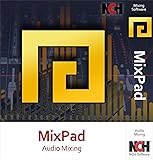
![MixPad Free Multitrack Recording Studio and Music Mixing Software [Download]](https://m.media-amazon.com/images/I/71ltIxIuz1L._SL500_.jpg)
![WavePad Audio Editing Software - Professional Audio and Music Editor for Anyone [Download]](https://m.media-amazon.com/images/I/B1fcLEGCs6S._SL500_.png)
![DeskFX Free Audio Effects & Audio Enhancer Software [PC Download]](https://m.media-amazon.com/images/I/41fXbDohyuS._SL500_.jpg)
![MixPad Multitrack Recording Software for Sound Mixing and Music Production Free [Mac Download]](https://m.media-amazon.com/images/I/51kaO82jYOL._SL500_.jpg)
As an Amazon Associate we earn from qualifying purchases at no extra cost to you. Ratings are shown as listed on Amazon.
Decide These 3 Things First
Before installing any capture utility or adjusting bitrate sliders, clarify these core parameters to eliminate 80% of potential software mismatches:
- Your primary capture style: Decide whether you need an instantaneous replay buffer (saving the last 30 to 120 seconds of high-impact moments), continuous long-form recording (capturing 2 to 6 hours of uncut sessions), or a hybrid capture-and-streaming solution.
- Your GPU hardware architecture: Check if your machine runs an NVIDIA RTX graphics card (utilizing NVENC), an AMD Radeon card (utilizing AMF), or an Intel ARC card (utilizing QuickSync). Dedicated hardware encoders handle image processing on a separate silicon block, keeping CPU overhead under 4%.
- Your audio pipeline complexity: Determine if you require basic stereo mixdown (game sound and microphone flattened into one track) or multi-bus audio isolation (separate streams for game audio, discord voice chat, microphone input, and desktop notifications).
System Footprint and GPU Encoder Integration
Software encoding (using x264 via your CPU) produces crisp visual quality, but it taxes your processor heavily, causing frame rate drops of 15% to 35% in modern CPU-bound gaming titles. High-performance capture software leverages dedicated hardware encoders built directly into modern GPUs.
Look for software that supports direct hardware passthrough. Hardware encoding shifts the video pipeline off your main CPU threads, reducing system performance penalties down to an imperceptible 2% to 5% frame rate impact. Verify that the software reserves less than 350 MB of system RAM while idle and consumes no more than 1.2 GB of VRAM during active 4K recording sessions.
Resolution, Frame Rate, and Bitrate Flexibility
A capable game recorder must support native capture across common display resolutions and refresh rates without forcing awkward spatial scaling. Lower-end tools force video downscaling or lock capture at 30 frames per second (FPS), creating motion blur and visual artifacts in fast-paced shooters or racing games.
Your recording software should offer variable and constant bitrate controls across these specific operational thresholds:
- 1080p at 60 FPS: Target bitrate slider between 15 Mbps and 30 Mbps (generates ~7 to 13.5 GB of file storage per hour).
- 1440p at 60 FPS / 120 FPS: Target bitrate slider between 35 Mbps and 60 Mbps (generates ~16 to 27 GB of file storage per hour).
- 4K at 60 FPS: Target bitrate slider between 80 Mbps and 150 Mbps (generates ~36 to 67.5 GB of file storage per hour).
Ensure the software supports high-frame-rate capture (120 FPS to 240 FPS) if you plan to create ultra-smooth slow-motion edits during post-production.
Multitrack Audio Routing and DSP Support
Audio quality separates amateur clips from professional gameplay videos. Never settle for software that flattens your game audio and your microphone commentary into a single combined audio track. If your game audio is too loud, a flattened track makes it impossible to turn up your voice later in editing.
Ensure your chosen software supports at least 3 to 4 independent stereo audio tracks encoded at 48 kHz / 24-bit PCM or AAC at 320 kbps per channel. This channel separation allows you to send raw game sound to Track 1, your voice microphone to Track 2, and voice chat software to Track 3.
For extensive audio fine-tuning, verify that your capture workflow seamlessly hands off recorded stems to specialized sound utilities. Many creators route multi-channel tracks into software like MixPad Free Multitrack Recording Studio and Music Mixing Software or MixPad Multitrack Recording Software for Sound Mixing and Music Production Free to balance multi-channel game streams. When vocal tracks need noise suppression or equalization, passing isolated tracks into tools like WavePad Audio Editing Software or real-time spatial processors like DeskFX Free Audio Effects & Audio Enhancer Software ensures clean, balanced commentary without touching your underlying gameplay audio.
Buffer Storage and Replay Engine Architecture
If you primarily save highlight clips rather than whole gaming sessions, the software’s replay buffer engine is your most critical feature. The replay engine continuously writes gameplay footage into your system RAM or a designated temporary drive buffer, dumping old footage once the set timeframe expires.
Look for dynamic RAM cache options. A 90-second replay buffer recording at 1080p60 (50 Mbps) consumes roughly 560 MB of system memory. Top-tier software allows you to allocate specific RAM thresholds (e.g., 2 GB to 8 GB) so the replay buffer never hits your storage drive continuously, protecting solid-state drive (SSD) endurance from millions of unnecessary write cycles over time.
Post-Capture Workflow and File Container Support
How recording software packages your completed video file dramatically impacts your editing speed. Avoid software that relies on proprietary video formats or restricts exports strictly to locked compressed formats.
Check for native support of these standard container formats:
- .MKV (Matroska): The safest recording format. If your PC crashes, your power drops, or the game locks up, everything recorded up to the exact millisecond of the crash remains fully readable and uncorrupted.
- .MP4 (MPEG-4 Part 14): Highly compatible for instant upload to social platforms, but prone to total file corruption if the recording session terminates unexpectedly before file headers are written.
- .MOV (QuickTime): Preferred for high-bitrate ProRes or intermediate editing workflows on macOS and professional editing timeline software.
Ideal capture software includes a built-in auto-remuxing feature that records natively in safety-first .MKV and automatically converts the file to .MP4 in under 5 seconds upon stopping the recording.
Pricing Tiers and Software Licensing Models
Game recording software spans three main financial models. Choosing the right tier depends on whether you require built-in editing, real-time streaming, or simple low-overhead local file saving.
- Free / Open-Source Tier ($0): Solutions like OBS Studio offer zero watermarks, unbounded feature customization, and complete multitrack audio isolation, though they require manual setup. Hardware-bundled options (NVIDIA ShadowPlay, AMD Software: Adrenalin Edition) cost $0 and provide lowest system overhead, but feature basic editing options.
- Perpetual License Tier ($30 to $70): Commercial screen recording and lightweight editing suites (such as standalone capture utilities or WavePad Audio Editing Software at $69.99 for post-production audio mastering) provide one-time purchase models. These deliver polished user interfaces, integrated trimming engines, and dedicated technical support without recurring fees.
- Subscription Tier ($5 to $15 / month): Cloud-connected clipping apps offer automated cloud backup, instant link generation, and AI highlights. However, over a 3-year gaming timeline, subscription platforms cost between $180 and $540, making them significantly more expensive long-term.
Update Cadence and Graphics API Compatibility
PC gaming environments update constantly. A software build that captures a DirectX 11 title flawlessly may produce a black screen when launching a modern DirectX 12, Vulkan, or OpenGL game with anti-cheat protections enabled.
Select capture tools from developers that release patch updates at least once every 30 to 60 days. Software updates are required to maintain compatibility with driver releases, major Windows OS updates, and aggressive kernel-level anti-cheat engines (such as Riot Vanguard or Easy Anti-Cheat) that occasionally block unauthorized screen-hooking hooks.
Spec Checklist
Use this specification matrix to evaluate game recording software based on your performance target and production budget:
| Specification Feature | Entry / Budget Tier | Mid-Range / Streaming Tier | Pro / High-Bitrate Tier |
|---|---|---|---|
| Max Capture Quality | 1080p @ 60 FPS | 1440p @ 120 FPS | 4K @ 60–120 FPS / HDR10 |
| Hardware Encoding Support | Basic (CPU / Basic GPU) | Full (NVENC, AMF, QuickSync) | Full + AV1 Hardware Encoding |
| Target Bitrate Cap | Up to 20 Mbps | Up to 80 Mbps | Up to 150+ Mbps (Lossless) |
| Audio Track Separation | Single stereo mix (1 track) | Dual-track (Game + Mic) | Multi-bus (4+ Isolated Tracks) |
| RAM Footprint (Active) | 500 MB – 1.5 GB | 300 MB – 800 MB | Under 400 MB (Optimized) |
| Crash-Proof Recording (.MKV) | Rarely supported | Standard feature | Standard + Auto-Remuxing |
| Licensing Model | Ad-Supported / Watermarked | $30–$70 Perpetual / Open-Source | Perpetual or Pro Creator License |
Red Flags
Avoid software packages that display any of these technical red flags during your evaluation tests:
- Mandatory Visual Watermarks: Any software that imprints a permanent logo over your video unless you upgrade to a paid account.
- Forced Audio Downmixing: Software that forces game audio, discord, and microphone input onto a single track with no track separation toggles.
- Lack of Hardware Encoder Passthrough: Apps that rely exclusively on CPU x264 software encoding, causing severe frame stutters in modern games.
- Proprietary File Locking: Tools that save captures in unreadable custom file containers, forcing you to export through their slow, built-in cloud converter.
- Mandatory Always-On Cloud Account Login: Software that refuses to record local offline single-player games unless you are actively connected to a remote server.
FAQ
Does game recording software lower in-game FPS?
Yes, all game recording software uses system resources, but the performance impact varies dramatically based on your setup. Using software encoding (CPU x264) can reduce frame rates by 15% to 35%. However, using GPU-accelerated hardware encoding (NVIDIA NVENC, AMD AMF, or Intel QuickSync) keeps performance penalties between 2% and 5% on modern systems.
Should I record gameplay in MP4 or MKV format?
You should always record gameplay directly in the .MKV container format. If your game or computer crashes mid-session, an .MKV file retains every frame recorded right up to the crash moment. An .MP4 file becomes entirely unreadable and corrupted if the session stops abruptly before closing file headers. Once finished, instantly convert (remux) your .MKV file to .MP4 for editing software compatibility.
How much drive storage space does 1 hour of gameplay recording take?
File size depends on your selected resolution, frame rate, and target bitrate setting. At 1080p 60 FPS with a standard 20 Mbps bitrate, 1 hour of video consumes approximately 9 GB of storage space. At 1440p 60 FPS at 50 Mbps, 1 hour consumes roughly 22.5 GB. At high-quality 4K 60 FPS at 100 Mbps, expect roughly 45 GB per hour of recorded video.
Why is my recorded microphone audio out of sync with my gameplay video?
Audio desync occurs most frequently when software captures video at a Variable Frame Rate (VFR) while capturing audio at a static sampling rate (like 44.1 kHz instead of 48 kHz). To permanently solve audio drift, set your recording software to force Constant Frame Rate (CFR) video capture, lock your audio system sampling rate to 48 kHz / 24-bit across all devices, and separate game and voice inputs onto independent audio tracks.