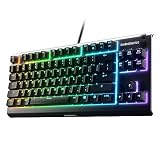
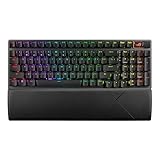
Our Top Picks

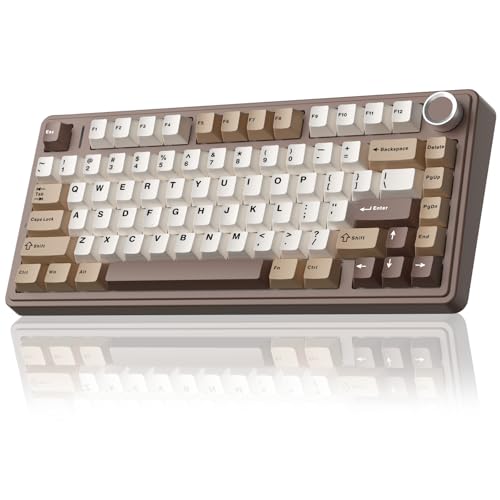


The AULA F75 Pro is the best all-round 75% mechanical keyboard in this group: it offers three connection modes (2.4GHz, Bluetooth 5.0 and USB-C), hot-swappable sockets, pre-lubed linear switches, side-printed PBT keycaps and a metal-style media knob. A 75% keyboard keeps the function row and arrow keys but drops the number pad and squeezes the navigation keys into a narrow column, so it saves desk space without giving up everyday keys. If you want a wired board with a similar feel, the AJAZZ AK820 is the cleaner, simpler alternate.
Quick List
- AULA F75 Pro – best for a wireless 75% board with a knob and hot-swap sockets
- AJAZZ AK820 – best for a wired, hot-swappable 75% board without extra frills
- AULA F75 – best for a wireless, creamy-sounding 75% without extra frills
- Redragon K673 PRO – best for a gasket-mounted wireless board with a scroll knob
- Womier SK80 – best for a wired 75% with a small color display
- Kisnt KN85 – best for a Bluetooth-and-2.4GHz board with a soft, creamy sound
Which One Is Right for You?
| If you… | Choose |
|---|---|
| want a gasket-mounted wireless board with a volume knob | Redragon K673 PRO |
| play at a desk and want a wired connection with no battery | AJAZZ AK820 |
| like a small screen for GIFs and system info | Womier SK80 |
| want the most complete wireless feature set | AULA F75 Pro |
| prefer wireless and a quiet typing feel without a knob | AULA F75 |
| need Bluetooth for switching between devices | Kisnt KN85 |
The biggest split is wired versus wireless. Wired boards such as the AK820 and SK80 avoid batteries and charging, while the tri-mode boards add convenience for laptops, tablets and a desk setup that changes often. Every board here is hot-swappable per its listing, which means you can try different switches later without soldering. Listings do not agree on the exact key count, so treat the layout as 75% rather than a fixed number of keys.
All 6 Picks in Detail
1. AULA F75 Pro – Best Wireless All-Rounder
As an Amazon Associate we earn from qualifying purchases at no extra cost to you.

The F75 Pro is the most fully featured board in the group. The listing names a 75% hot-swappable custom keyboard with a knob, RGB backlight, pre-lubed Reaper switches and side-printed PBT keycaps, and it connects over 2.4GHz, USB-C or Bluetooth 5.0. AULA’s own specifications describe a gasket-style structure with several layers of foam and silicone padding, a 4,000 mAh battery, and about 80 keys.
It suits people who move between a desktop, a laptop and a tablet, and who like to adjust volume with a knob rather than a function key. For competitive play use the 2.4GHz dongle or the cable, since Bluetooth adds latency. The side-printed legends mean the lettering is on the key side, which looks clean with RGB lighting.
- 75% layout, roughly 80 keys per the maker
- Tri-mode: 2.4GHz, Bluetooth 5.0 and USB-C
- Hot-swappable sockets for 3-pin and 5-pin switches
- Pre-lubed Reaper linear switches per the listing
- Battery around 4,000 mAh per the maker; confirm on listing
Pros
- Three connection modes and a multifunction knob
- PBT keycaps and gasket-style damping for a refined sound
Cons
- Battery life drops sharply with the backlight on
- Bluetooth is not ideal for fast-paced games
Compared with the plain AULA F75, it adds the knob and a more upscale feature set, which is the main reason it sits first. If you share a desk between work and play, the quick mode switch lets one keyboard follow you between a laptop and a gaming PC without re-pairing. The knob also doubles as a lighting dial, which is handy when the backlight is the main battery drain. Pre-lubed switches and stabilizers mean the board sounds smooth from the first keystroke, so it is a good pick for a first custom-style keyboard.
2. AJAZZ AK820 – Best Wired Option

The AK820 is a wired 75% board with hot-swappable sockets. The listing labels it a TKL, but the layout is a compact 75% with roughly 82 keys, so do not expect a full tenkeyless block. Manufacturer descriptions of the AK820 family cite a gasket mount with multiple foam layers, a volume knob and PBT keycaps, though the exact wording differs by color and seller, so confirm on the product page.
It suits a desk where you do not need battery life or Bluetooth, and it keeps things simple: one USB-C cable and nothing to charge. It also avoids the lower-latency tradeoffs that wireless dongles can introduce for some players, which matters if you are picky about response.
- 75% compact layout; key count varies by listing, around 82
- Wired USB-C connection only
- Hot-swappable sockets for 3-pin and 5-pin switches
- Gasket-style mounting and knob per maker descriptions; confirm on listing
- Black color, per the listing
Pros
- No battery to charge and no pairing to manage
- Compact desk footprint with full arrow keys
Cons
- No wireless option
- The word TKL in the listing title can confuse buyers
Next to the Womier SK80, it is the plainer wired choice, trading the display for a lower-fuss design. It makes a good pairing for a desk where the keyboard sits behind a monitor stand cable run, since the single cable keeps routing simple. If you later want a different feel, the hot-swap sockets let you try other linear or tactile switches, and the PBT keycaps can be replaced with any standard-profile set. A wired board also avoids the small input delay some wireless dongles add in crowded radio environments.
3. AULA F75 – Best Simple Wireless Board

The standard F75 is the F75 Pro’s quieter sibling. The listing describes a 75% wireless mechanical keyboard with hot-swappable switches, a creamy sound profile, pre-lubed linear switches, 2.4GHz, Type-C and Bluetooth 5.0 connections, and RGB backlighting. The listing name does not mention a knob, so confirm that on the product page if a knob matters to you.
It suits a typist who wants a satisfying, lubed linear feel and wireless freedom without extra features. For gaming it behaves like the Pro on 2.4GHz, and its compact layout leaves plenty of mouse room.
- 75% layout; key count confirm on listing
- Tri-mode: 2.4GHz, Type-C and Bluetooth 5.0
- Hot-swappable switches
- Pre-lubed linear switches per the listing
- RGB backlight; knob not mentioned in the listing name
Pros
- Wireless freedom with a soft, creamy typing feel
- Same connection options as the Pro
Cons
- No stated knob, so volume control uses key combinations
- Battery details are not in the listing name
It is the simpler version of the F75 Pro, and the Pro is the better buy if you want volume control on a dial. On its own the F75 is still a capable board for a student or office setup, because the tri-mode connectivity covers a PC, a laptop and a tablet. Gamers should use the 2.4GHz dongle or the cable and keep Bluetooth for casual use. Its lubed linear switches suit anyone who prefers a smooth keystroke over a bump.
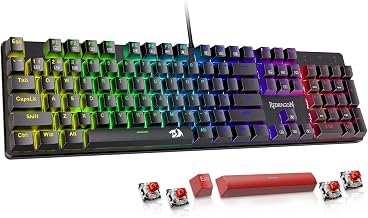
4. Redragon K673 PRO – Best Gasket Board with a Scroll Knob

The K673 PRO is an 81-key wireless gasket keyboard with a scroll knob and RGB lighting. The listing calls it an 81-key board, while many retailers call it 75%, so it is close to the same layout as the others but with one or two keys different. Redragon’s own materials list a 4,000 mAh battery, wired, Bluetooth and 2.4GHz modes, and hot-swap sockets for 3-pin and 5-pin switches.
It suits a gamer who wants a well-known gaming brand with wireless freedom and a knob for volume and lighting. The stock switch is a linear red, which is quiet and smooth, and the gasket structure softens bottoming out.
- 81 keys per the listing; 75%-style compact layout
- Wired, Bluetooth and 2.4GHz modes per the maker
- Gasket-mounted body with sound-absorbing foam
- Hot-swappable sockets
- Scroll knob for media and brightness
Pros
- Established gaming brand with a full mode set
- Knob and gasket mounting in one package
Cons
- Layout differs slightly from a strict 75%
- Stock switches may not please those who want tactile feedback
Compared with the AULA F75 Pro, it is a less customizable sound profile but a similar overall package. A strength of this model is its widespread community: because Redragon sells many boards with the same switch sockets, replacement keycaps and switches are easy to find. Those who like to tinker can start with the stock linears and move to tactile switches later without any soldering.
5. Womier SK80 – Best Board with a Display

The SK80 stands out for its small color multimedia display in the upper corner. The listing describes a 75% gaming keyboard with that display, and the manufacturer family is known for hot-swappable sockets, a gasket-style body and pre-lubed linear switches. The display can show system information, connection state and lighting settings, and some versions can show custom images.
It suits builders who want a feature to look at on a desk, and it is wired, so no battery or pairing. Specifications vary by color, since Womier sells several themed variants, so confirm the exact key count and switch type on the listing.
- 75% layout; around 81 to 82 keys depending on variant
- Wired USB-C connection
- Small color display for status and media
- Hot-swappable sockets per the maker
- Switch type confirm on listing
Pros
- The display adds information and personality
- No wireless complexity
Cons
- Wired only
- Some configuration steps for the display are fiddly
It is the most distinctive board here, and the AJAZZ AK820 is the better choice if you want plain wired simplicity. Keep in mind that the display is a bonus rather than a reason to ignore fundamentals: check the stabilizers, the cable, and that the colorway you choose is the one with the switches you want. Themed variants differ in keycap material and switch color, so read the full listing text rather than relying on the picture.
6. Kisnt KN85 – Best Compact Bluetooth Option

The KN85 is a wireless 75% board with Bluetooth, 2.4GHz and USB-C connections, custom RGB lighting and hot-swappable linear switches. The listing highlights a creamy sound profile, and Kisnt’s own material mentions around 85 keys and a roughly 4,000 mAh battery. Like the others here, it uses a gasket-style build with foam layers.
It suits someone who splits time between a PC and a laptop or tablet, because three Bluetooth channels let you switch quickly. The driver software reportedly works on Windows only and only in certain modes, so check that before you rely on deep customization.
- 75% layout; key count varies, about 85 per the maker
- Bluetooth, 2.4GHz and USB-C modes
- Hot-swappable linear switches
- Custom RGB lighting
- Battery around 4,000 mAh per the maker; confirm on listing
Pros
- Quick switching among several Bluetooth devices
- Soft, muted typing sound
Cons
- Configuration software appears limited to Windows
- Less brand support than the larger names
It sits closest to the plain AULA F75, so the choice usually comes down to availability and which colorway you prefer. It is a sensible second-computer keyboard, since three Bluetooth channels make it easy to jump between a work laptop, a personal laptop and a tablet. If you plan to remap keys heavily, confirm that its software runs on your operating system before you commit, because the maker’s driver is Windows-oriented.
Specs Compared
| Keyboard | Layout / keys | Connectivity | Hot-swap | Switch type | Knob / display |
|---|---|---|---|---|---|
| AULA F75 Pro | 75%, about 80 keys | 2.4GHz, Bluetooth 5.0, USB-C | Yes | Pre-lubed Reaper linear | Knob |
| AJAZZ AK820 | 75%, about 82 keys | Wired USB-C | Yes | Confirm on listing | Knob per maker; confirm on listing |
| AULA F75 | 75%, confirm on listing | 2.4GHz, Type-C, Bluetooth 5.0 | Yes | Pre-lubed linear | Not stated |
| Redragon K673 PRO | 75%-style, 81 keys | Wired, Bluetooth, 2.4GHz | Yes | Linear red per maker | Scroll knob |
| Womier SK80 | 75%, confirm on listing | Wired USB-C | Yes per maker | Confirm on listing | Color display |
| Kisnt KN85 | 75%, about 85 keys per maker | Bluetooth, 2.4GHz, USB-C | Yes | Linear | Not stated |
How We Chose These
This list comes from the keyboards in the current catalog. We compared each listing name against manufacturer descriptions and standard keyboard terminology, looking at layout, connectivity, hot-swap support, switch type, sound-dampening design and extras such as knobs and displays. Listings do not agree on key counts for several of these boards, so we use approximate counts and tell you to confirm on the listing. We did not run our own typing or latency trials, and every claim here is based on stated specifications. Boards were ordered by feature completeness first, then by how simple they are to live with every day.
What to Look For
What 75% actually means
A 75% keyboard keeps nearly all of a full-size board’s functionality in about 75 percent of the width. It retains the F-row, a column of navigation keys and full-size arrow keys, but it removes the number pad. Typical key counts run from about 80 to 85 depending on the maker, which is why you see different numbers across listings. Compared with a TKL, the 75% layout is shorter in width and the keys are packed closer together; compared with a 65%, it keeps the F-row. If you use shortcuts that rely on the function row, a 75% is the compact choice that does not make you give those up.
Hot-swap sockets and switch choice
Hot-swappable boards let you pull switches out and replace them without soldering. Most use sockets that accept 3-pin and 5-pin MX-style switches. Linear switches press smoothly, tactile ones have a bump, and clicky ones add an audible click. Gaming typists often prefer lighter linears around 40 to 50 gram-force. If your board has pre-lubed switches, you may not need to modify anything, but swapping gives you room to tune the feel. Keep a keycap and switch puller handy, and straighten any bent pins before reinstalling a switch.
Wireless modes, battery and latency
Tri-mode boards offer Bluetooth, a 2.4GHz dongle and a wired cable. For gaming, 2.4GHz or wired is the right choice because Bluetooth adds more latency. Battery capacity is listed in mAh, and a 4,000 mAh battery with the backlight off can last for weeks of light use, while bright RGB can cut that to days. A good rule of thumb is to turn the backlight down or off if you want the battery to last, and plug in when you are in a long gaming session.
Gasket mount and sound
A gasket-mounted plate sits on soft pads rather than screwing directly into the case, which gives a softer bottom-out and a more muted sound. Foam layers between the plate and PCB reduce the hollow ping some compact boards produce. These designs usually sound fuller than budget boards without any damping. If you dislike a cushioned feel, a firm top-mount board is closer to a traditional keyboard.
Keycaps, stabilizers and small details
PBT plastic resists the shiny wear that ABS keycaps develop over time, and side-printed legends keep lettering from fading on the top surface. Stabilizers are the small wires that keep long keys such as the spacebar, Enter and Shift level. Pre-lubed stabilizers avoid the rattle that cheaper boards often have, but a rattly spacebar is a common complaint on compact boards, and a few drops of lubricant or a thin strip of foam can fix it. Also look at the cable: a detachable USB-C cable is easier to replace and route than a fixed one. Finally, check whether the board has feet or an adjustable tilt, since a very flat board can feel uncomfortable without a wrist rest.
A worked example
Suppose you game on a desktop and also travel with a laptop. A tri-mode 75% such as the F75 Pro covers both: use the 2.4GHz dongle at your desk and Bluetooth when traveling. If you never leave your desk, a wired board saves the battery question entirely and costs less to keep running. Either way, pick a board with hot-swap sockets so the switches can change with your taste, and keep the receiver in a front USB port for a clean signal.
Questions
Is a 75% keyboard good for gaming?
Yes. The compact width leaves more space for mouse movement, and you keep arrow keys and the function row. The only thing you lose is the number pad, which most games do not use.
What is the difference between 75% and TKL?
A TKL layout has a standard spacing with separate navigation and arrow clusters, while a 75% packs those keys tightly and trims the board. The 75% is narrower and has fewer keys, usually around 80 to 85.
Should I use Bluetooth or 2.4GHz for gaming?
Use 2.4GHz or the cable for gaming. Bluetooth is convenient for office and mobile use, but it introduces more delay and can be less consistent in crowded wireless environments.
Can I change the switches on these boards?
All six listings are described as hot-swappable, so you can change switches with a puller and no soldering. Make sure the replacement switches use a compatible pin layout, usually the standard 3-pin or 5-pin MX style.
Do I need software to use these keyboards?
Not for basic typing. Software is used for remapping keys, macros and lighting, and some of these boards limit it to Windows or to certain connection modes, so check before you buy.
How long does the battery last?
It depends on lighting and mode. With the backlight off, a roughly 4,000 mAh battery can last weeks of light use, but bright RGB shortens that considerably. Treat manufacturer battery numbers as best-case.
Update History
- October 14, 2026 – Initial publication; product set drawn from current catalog listings.
- Check the product page for current specifications and availability before buying.
Sources
- Manufacturer product and specification pages for AULA, AJAZZ, Redragon, Womier and Kisnt
- Retailer listing titles and specification fields