Our Short List of 3

- Best for: high-end 12600K, 12700K and 12900K gaming builds that will be overclocked.
- Socket LGA1700, Intel Z690 chipset, ATX form factor
- Memory: 4x DDR4 DIMM slots
- Power design: 16+1 power stages
- Expansion: PCIe 5.0 x16 SafeSlot
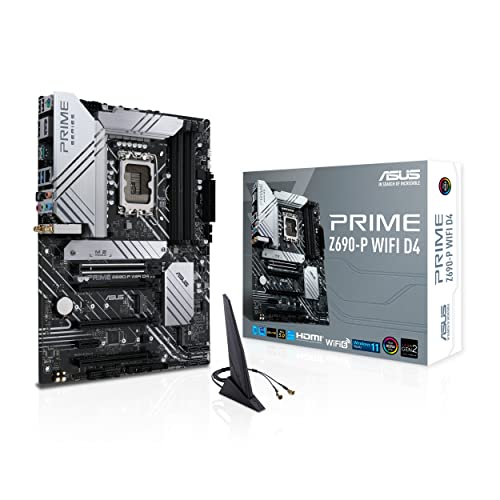
- Best for: mainstream Z690 builds that want WiFi and overclocking headroom without ROG pricing territory.
- Socket LGA1700, Intel Z690 chipset, ATX form factor
- Memory: 4x DDR4 slots, rated up to 5333 (OC) in the listing
- Power design: 14+1 DrMOS power stages
- Expansion: PCIe 5.0 x16 slot
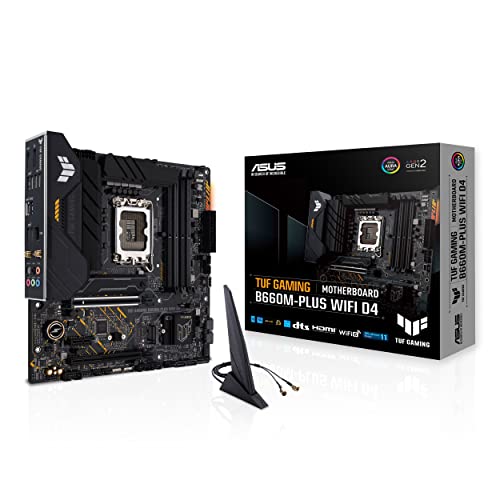
- Best for: compact gaming builds with a 12400F, 12500 or locked 12700.
- Socket LGA1700, Intel B660 chipset, Micro ATX form factor
- Memory: DDR4
- Expansion: PCIe 5.0 x16 slot
- Storage: 2x PCIe 4.0 M.2 slots
All 4 Picks at a Glance
| Product | Specs | Action |
|---|---|---|
| ASUS ROG Strix Z690-A Gaming WiFi D4 |
| Check price on Amazon |
| ASUS Prime Z690-P WiFi D4 |
| Check price on Amazon |
| ASUS TUF Gaming B660M-Plus WiFi D4 |
| Check price on Amazon |
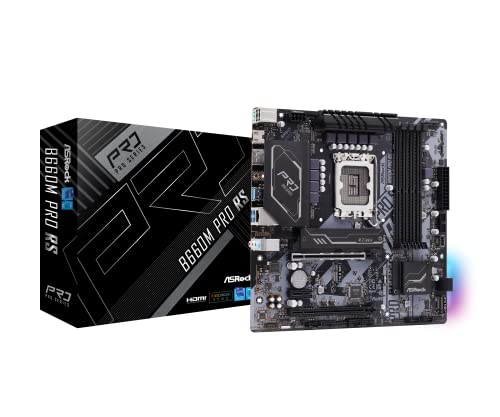 ASRock B660M Pro RS |
| Check price on Amazon |
Key takeaways
- Five Alder Lake motherboards still selling on Amazon US, from the ROG Strix Z690-A to the ASRock B660M Pro RS, compared on chipset, VRM, M.2 and WiFi.
Buying an Alder Lake board in late 2026 is less about chasing the newest platform and more about one practical decision: which LGA1700 board still on sale matches the 12th Gen chip you already own or found cheaply. A Core i9-12900K needs power delivery that a budget board cannot give it, while a Core i5-12400F wastes money on a flagship Z690. Chipset, VRM strength and memory type matter far more than RGB or branding.
This roundup is for builders finishing a 12th Gen system, replacing a failed board, or putting a discounted Alder Lake CPU to work. Every pick is an LGA1700 motherboard with a 600-series chipset, chosen from the name and specifications on its Amazon listing, and every model below is a DDR4 board, so an existing DDR4 kit carries over.
Quick Picks
As an Amazon Associate we earn from qualifying purchases
| Product | Best for | Key spec from title |
|---|---|---|
| ASUS ROG Strix Z690-A Gaming WiFi D4 | Unlocked K-series gaming builds | 16+1 power stages, PCIe 5.0 |
| GIGABYTE Z690 AORUS Elite AX DDR4 | Storage-heavy gaming rigs | Quad PCIe 4.0 M.2 slots |
| ASUS Prime Z690-P WiFi D4 | Mainstream Z690 with WiFi built in | 14+1 DrMOS stages, 3x M.2 |
| ASUS TUF Gaming B660M-Plus WiFi D4 | Compact Micro ATX gaming builds | PCIe 5.0 x16, WiFi 6 |
| ASRock B660M Pro RS | Budget 12100F and 12400F builds | 4 DDR4 slots, 2x M.2 |
How to Choose
Chipset decides whether you can overclock
Z690 is the only chipset in this roundup that unlocks CPU multiplier overclocking, so it is the right partner for a 12600K, 12700K or 12900K. B660 boards such as the TUF B660M-Plus and the ASRock Pro RS still allow memory overclocking through XMP, but the CPU ratio stays locked, which makes them a sensible match for non-K chips like the 12400F or a plain 12700. Paying for Z690 alongside a locked processor buys features you cannot use, while pairing a K chip with B660 leaves performance on the table.
Check the memory suffix before anything else
Alder Lake supports both DDR4 and DDR5, but each motherboard accepts only one of them, and the two are not interchangeable. Board names carry the clue: a D4 suffix, or DDR4 in the title, marks the DDR4 version, and near-identical DDR5 variants often sit one click away in the same listing family. All five boards here are DDR4 models, chosen because DDR4 kits are what most 12th Gen builders already own. Before ordering, match the listing title to your memory kit, because a DDR5 stick will not physically fit a DDR4 slot.
Match the VRM to your processor tier
Power delivery is where cheap boards quietly cap an Alder Lake build. A 12900K under sustained load wants a board with many power stages and real heatsinks, the territory of the ROG Strix Z690-A and its 16+1 stage design. A 12400F sips power by comparison and runs happily on the ASRock B660M Pro RS. Look at the stage count in the listing and whether the VRM wears a proper heatsink, then be honest about your chip: overspending here adds nothing for a locked i5, and underspending throttles an i9.
Count M.2 slots and check the networking
Storage and connectivity separate these boards more than headline features do. The AORUS Elite AX carries four M.2 slots, the ROG Strix also fits four, the Prime Z690-P takes three, and both B660 boards manage two, which is enough for a boot drive plus a game library drive. On networking, four of the five include WiFi 6 and 2.5 gigabit Ethernet; the ASRock Pro RS skips WiFi entirely, so it suits a desk that is already wired. Also confirm a front USB Type-C header if your case has a front Type-C port you want working.
The 5 Best Options
ASUS ROG Strix Z690-A Gaming WiFi D4
- Best for: high-end 12600K, 12700K and 12900K gaming builds that will be overclocked.
- Socket LGA1700, Intel Z690 chipset, ATX form factor
- Memory: 4x DDR4 DIMM slots
- Power design: 16+1 power stages
- Expansion: PCIe 5.0 x16 SafeSlot
high-end 12600K, 12700K and 12900K gaming builds that will be overclocked.
a near-identical DDR5 version exists under a similar name, so confirm the D4 listing before ordering; stock now comes through marketplace sellers, so check the seller and condition.
The Strix Z690-A D4 is the board to build around when the processor is an unlocked K chip and the case has a window. Its 16+1 power stages feed a 12700K or 12900K properly, four M.2 slots swallow a large game library, and the white-and-silver heatsinks give show builds a clean look that most black boards cannot. WiFi 6, Bluetooth 5.2 and a front USB 3.2 Gen 2×2 Type-C header cover the connectivity boxes, and Thunderbolt 4 support is there for fast external drives. It is the premium pick of this group, aimed at builders who plan to keep the platform for years.
GIGABYTE Z690 AORUS Elite AX DDR4
Storage is the reason this AORUS board earns its place. Four NVMe M.2 slots, each running at PCIe 4.0 x4, let you separate a boot drive, a game drive and a capture or project drive without touching SATA cables. The 16+1+2 digital VRM with 70A stages is comfortably strong for any Alder Lake chip, including a 12900K at stock or lightly tuned settings, and the board still offers a PCIe 5.0 x16 slot for a future graphics card. WiFi 6 and 2.5 gigabit Ethernet round out a board aimed at gamers who keep big libraries installed.
Specs
- Socket LGA1700, Intel Z690 chipset, ATX form factor
- Memory: dual channel DDR4
- Power design: 16+1+2 digital VRM with 70A power stages
- Expansion: PCIe 5.0 x16 slot
- Storage: quad NVMe PCIe 4.0 x4 M.2 slots
- Networking: WiFi 6 802.11ax, Bluetooth 5, 2.5GbE LAN
- USB: USB 3.2 Gen 2×2 Type-C
Best for: gaming rigs with three or four NVMe drives and a K-series processor.
Watch out for: availability signals for this board conflict between trackers, so confirm a live offer on the product page before relying on it; it is DDR4 only.
ASIN: B09J6BWK2Z
ASUS Prime Z690-P WiFi D4
- Best for: mainstream Z690 builds that want WiFi and overclocking headroom without ROG pricing territory.
- Socket LGA1700, Intel Z690 chipset, ATX form factor
- Memory: 4x DDR4 slots, rated up to 5333 (OC) in the listing
- Power design: 14+1 DrMOS power stages
- Expansion: PCIe 5.0 x16 slot
mainstream Z690 builds that want WiFi and overclocking headroom without ROG pricing territory.
VRM heatsinks are smaller than on the Strix, so sustained heavy overclocks on a 12900K are better served by the boards above it here.
The Prime Z690-P WiFi D4 covers the Z690 essentials without the gaming-brand styling tax. You still get CPU overclocking support for a K chip, a 14+1 DrMOS power design, three M.2 slots and a PCIe 5.0 x16 slot, plus WiFi 6 and Bluetooth 5.2 that many boards at this tier leave as a paid extra. The plain silver-and-black finish suits office-adjacent builds and workstations that also game after hours. For a 12600K build that does not need four M.2 slots or a showpiece look, this is the balanced Z690 of the group.
ASUS TUF Gaming B660M-Plus WiFi D4
- Best for: compact gaming builds with a 12400F, 12500 or locked 12700.
- Socket LGA1700, Intel B660 chipset, Micro ATX form factor
- Memory: DDR4
- Expansion: PCIe 5.0 x16 slot
- Storage: 2x PCIe 4.0 M.2 slots
compact gaming builds with a 12400F, 12500 or locked 12700.
B660 does not allow CPU multiplier overclocking, so skip it for a K chip; the Micro ATX layout leaves fewer expansion slots than the ATX boards above.
For a compact gaming PC built around a locked chip, the TUF B660M-Plus WiFi D4 is the sweet spot of this list. The Micro ATX board keeps a PCIe 5.0 x16 slot for the graphics card, two PCIe 4.0 M.2 slots for storage, WiFi 6 and 2.5 gigabit LAN, so a 12400F or 12700 build gives up nothing that matters in daily gaming. TUF boards also carry a reputation for sensible layouts and durable components, which suits a machine that will be moved to LAN nights or a student room. It drops into smaller cases that full ATX boards cannot.
ASRock B660M Pro RS
- Best for: lowest-cost sensible builds around the Core i3-12100F or i5-12400F at a wired desk.
- Socket LGA1700, Intel B660 chipset, Micro ATX form factor
- Memory: 4x DDR4 DIMM slots
- Expansion: PCIe 4.0 x16 slot
- Storage: 2x M.2 slots
lowest-cost sensible builds around the Core i3-12100F or i5-12400F at a wired desk.
there is no WiFi on this board, so plan on Ethernet or add an adapter; B660 also means no CPU overclocking later.
The B660M Pro RS is the honest budget route into Alder Lake. It keeps the things a 12100F or 12400F build actually needs: four DDR4 slots so a cheap two-stick kit can grow later, a PCIe 4.0 x16 slot that runs any current graphics card at full speed, two M.2 slots, and both HDMI and DisplayPort outputs for troubleshooting or a no-GPU starter build. What it trims is equally clear: no WiFi module and no premium extras. For a wired desk and a value processor, that trade is exactly right, and the money saved belongs in the graphics card.
Which One Fits Your Situation
You bought a discounted 12700K or 12900K
Start with the ROG Strix Z690-A Gaming WiFi D4. Its 16+1 stage power delivery is built for sustained unlocked loads, and Z690 is the only chipset here that lets the K chip overclock. The AORUS Elite AX DDR4 is the alternative if you also want four M.2 slots filled. Avoid the B660 boards for this chip tier; they would run the processor but waste what you paid for.
You are building a compact 12400F gaming PC
Take the ASUS TUF Gaming B660M-Plus WiFi D4. A locked i5 cannot use Z690 overclocking, so the TUF’s B660 chipset costs you nothing, while its Micro ATX size fits smaller cases and it still includes WiFi 6, a PCIe 5.0 graphics slot and two fast M.2 slots. It is the most balanced board in this roundup for the most popular Alder Lake chip.
You are keeping your DDR4 kit and several NVMe drives
The GIGABYTE Z690 AORUS Elite AX DDR4 fits this brief best. All five boards here accept DDR4, but the AORUS pairs that with four PCIe 4.0 M.2 slots, so an existing stack of drives moves over without adapters or SATA fallbacks. Check the live offer before ordering, because availability reports for this particular board have been inconsistent.
You need the cheapest credible board for a 12100F
Choose the ASRock B660M Pro RS and put the savings toward the GPU. For an entry chip at a wired desk, its four memory slots, PCIe 4.0 x16 slot and dual M.2 layout cover the fundamentals, and the missing WiFi is a fair trade. If the build later moves away from a router, a simple USB WiFi adapter closes the gap.
Common Mistakes
- Ordering the DDR5 namesake of a DDR4 board, or the reverse; the two memory types are physically incompatible, so match the D4 or DDR4 wording in the listing title to your kit.
- Pairing an unlocked K processor with a B660 board and expecting overclocking, when only Z690 unlocks the CPU multiplier on this platform.
- Assuming every LGA1700 board includes WiFi; the ASRock B660M Pro RS does not, and the WiFi versions are separate listings.
- Forgetting that these are discontinued 2021-2022 boards now sold largely by marketplace sellers, so the seller, condition and return terms deserve a look before checkout.
- Skipping the BIOS check when reusing a board for a later LGA1700 chip, since early BIOS versions may need an update before a newer processor will boot.
Frequently Asked Questions
Does an Alder Lake board also work with 13th and 14th Gen Intel chips?
Generally yes, because 13th and 14th Gen desktop processors share the LGA1700 socket and run on 600-series boards after a BIOS update. The catch is the update itself: the board may need a working 12th Gen chip installed before it will accept the newer BIOS. Check the CPU support list on the manufacturer’s page for the exact model and minimum BIOS version.
Can I reuse my DDR4 memory on any of these boards?
Yes, all five boards in this roundup are DDR4 models, which is exactly why they were picked for builders carrying a kit over. The warning is about the wider market: many of these same board names also exist in DDR5 versions, and DDR4 and DDR5 sticks use different slots. Match the listing title, not just the model family name.
Is B660 enough for gaming, or do I need Z690?
For a locked processor such as the 12400F or 12700, B660 is enough, because gaming performance comes from the chip and graphics card, and memory XMP still works. Z690 becomes necessary when you own an unlocked K chip and want to overclock it, or when you want extras such as four M.2 slots and stronger power delivery for a 12900K.
Why buy an Alder Lake board now instead of a newer platform?
The honest reason is value: 12th Gen processors and DDR4 memory sell for far less than current parts, and a build around a 12400F or a discounted 12700K still plays games well. A board from this list makes sense when you already own the chip or the RAM, or found them cheaply. If you are starting from scratch with no parts on hand, compare a newer platform before committing.
FAQ
Does an Alder Lake board also work with 13th and 14th Gen Intel chips?
Can I reuse my DDR4 memory on any of these boards?
Is B660 enough for gaming, or do I need Z690?
Why buy an Alder Lake board now instead of a newer platform?
More from Amazon
Programs that pair well with the guide above. Offers and eligibility are set by Amazon and may change.
Free shipping on eligible items, Prime Video and more. Eligible new members can start with a free trial.
Start a Prime free trialAd-free music streaming. Eligible new subscribers can start with a free trial.
Try Music Unlimited freeA Prime membership for ages 18-24 with a trial period. Eligibility is set by Amazon.
See Prime for Young AdultsAudiobooks and podcasts to listen to on the go. Eligible new members can start with a free trial.
Try Audible freeAs an Amazon Associate we earn from qualifying purchases.