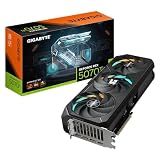
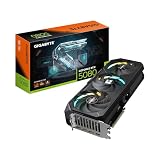
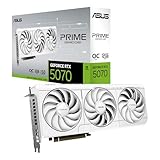
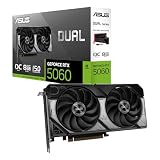
Key takeaways
- Top value picks: Radeon RX 6600, Radeon RX 7600, GeForce RTX 3060 12GB, GeForce RTX 4060. Usually $200-$300 and draw 130-165W.
- Why they work: They hit 80-120 fps at ultra 1080p without exposing the CPU bottleneck, support AV1 decoding and modern features, and do not require a PSU upgrade in most prebuilt systems.
- Avoid: RTX 4070 and above, RX 7800 XT and above. You will see 0-15% higher fps versus an RTX 4060 at 1080p in CPU-bound titles like Valorant, CS2, and Starfield, so the extra cost is wasted unless you plan a CPU upgrade within months.
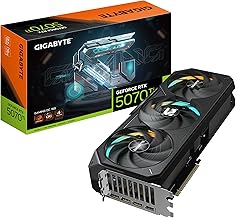
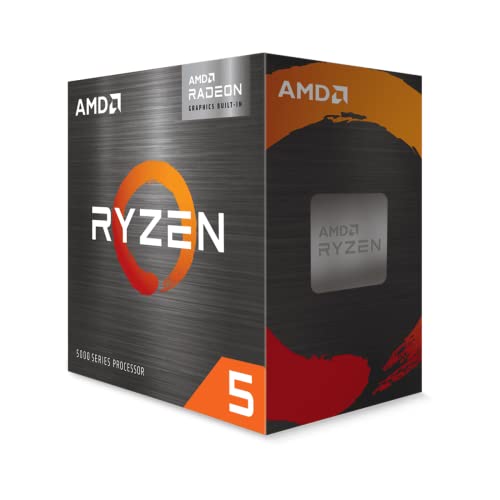
The best graphics cards for Ryzen 5 processors are the Radeon RX 7600, GeForce RTX 4060, and Radeon RX 7700 XT for most Ryzen 5 5600 / 7600 systems at 1080p and 1440p, while Ryzen 5 3600 and older CPUs are best paired with an RX 6600, RTX 4060, or RX 7600 to avoid CPU bottlenecks, and newer Ryzen 5 7600 / 9600X can handle up to an RTX 4070 Super, RX 7800 XT, or RTX 5070 for high-refresh 1440p without wasting GPU potential.
Choosing by resolution and CPU generation matters more than just buying the fastest card you can afford. A Ryzen 5 2600 will bottleneck an RTX 4070 at 1080p in many games, while a Ryzen 5 7600 will not. Power supply headroom and VRAM also change the value equation quickly in 2026.
Our top picks


As an Amazon Associate we earn from qualifying purchases at no extra cost to you. Ratings are shown as listed on Amazon.
Quick Decision Matrix: Match Your Ryzen 5 to the Right GPU Tier
Use this table to find your CPU generation and target resolution, then see the ideal GPU class, bottleneck risk, and VRAM target.
| Ryzen 5 Generation | Target Resolution / Refresh | Recommended GPU Class | Bottleneck Risk at 1080p | Ideal VRAM |
|---|---|---|---|---|
| Ryzen 5 1600 / 2600 / 2600X (Zen/Zen+) | 1080p 60-75Hz | Radeon RX 6600, RX 7600, GeForce RTX 3060, RTX 4060 | High with anything above RTX 4060 Ti | 8GB |
| Ryzen 5 3600 / 3600X / 3500X (Zen 2) | 1080p 144Hz / 1440p 60Hz | RTX 4060, RX 7600 XT, RX 6700 XT, RTX 4060 Ti | Moderate with RX 7700 XT or higher | 8GB – 12GB |
| Ryzen 5 5600 / 5600X / 5600G (Zen 3) | 1080p 144Hz+ / 1440p 60-144Hz | RTX 4060 Ti, RX 7700 XT, RX 6800, RTX 4070 | Low to Moderate | 12GB preferred for 1440p |
| Ryzen 5 7600 / 7600X / 8500G / 8600G (Zen 4) | 1440p 144Hz+ / 4K 60Hz | RX 7700 XT, RX 7800 XT, RTX 4070 Super, RTX 5070 | Low | 12GB – 16GB |
| Ryzen 5 9600 / 9600X (Zen 5) | 1440p 165Hz+ / 4K 60-120Hz | RX 7800 XT, RTX 4070 Super, RTX 5070, RX 7900 GRE | Very Low | 12GB – 16GB |
If you are on Zen, Zen+, or Zen 2 and play at 1080p, you get more frames per dollar by staying in the RX 7600 / RTX 4060 class than by buying a 16GB high-end card your CPU cannot feed. On Zen 3 and newer, especially at 1440p, the CPU has enough headroom to justify 12GB+ cards.
Best Graphics Cards for Ryzen 5 by Generation
1. For Ryzen 5 1600, 2600, and 2600X: Stay Efficient at 1080p
These CPUs have lower IPC and clock speeds than modern Ryzen 5s and run on PCIe 3.0. At 1080p, the CPU, not the GPU, will limit frame rates in esports and open-world games if you go too high.
- Top value picks: Radeon RX 6600, Radeon RX 7600, GeForce RTX 3060 12GB, GeForce RTX 4060. Usually $200-$300 and draw 130-165W.
- Why they work: They hit 80-120 fps at ultra 1080p without exposing the CPU bottleneck, support AV1 decoding and modern features, and do not require a PSU upgrade in most prebuilt systems.
- Avoid: RTX 4070 and above, RX 7800 XT and above. You will see 0-15% higher fps versus an RTX 4060 at 1080p in CPU-bound titles like Valorant, CS2, and Starfield, so the extra cost is wasted unless you plan a CPU upgrade within months.
2. For Ryzen 5 3600 and 3600X: The 1080p High-Refresh and Entry 1440p Zone
Zen 2 closed much of the IPC gap and handles PCIe 4.0 on B550/X570. It can still bottleneck top-tier GPUs at 1080p, but less severely.
- Top value picks: GeForce RTX 4060 Ti 8GB/16GB, Radeon RX 7600 XT 16GB, Radeon RX 6700 XT / RX 6750 XT. Usually $280-$400.
- Why they work: Strong 1080p 144Hz performance and capable 1440p 60-90Hz. The 16GB RX 7600 XT is useful if you play texture-heavy games like Hogwarts Legacy or Alan Wake 2 at 1440p, where 8GB cards start to spill VRAM.
- Upgrade path: If you plan to move to a Ryzen 5 5600 or 7600 soon, an RX 7700 XT is justifiable, but expect a 10-20% CPU bottleneck at 1080p until you upgrade.
3. For Ryzen 5 5600, 5600X, and 5600G: The Sweet Spot for 1440p
Zen 3 is still highly competitive in 2026. With DDR4-3200 to 3600 and low latency, the 5600/X has enough single-thread performance to drive mid-high GPUs at 1440p without significant bottlenecking.
- Top value picks: Radeon RX 7700 XT 12GB, GeForce RTX 4070 12GB, Radeon RX 6800 16GB. Usually $350-$550.
- Why they work: At 1440p the load shifts to the GPU, so bottleneck risk drops sharply. These cards deliver 90-130 fps in most AAA titles at high/ultra 1440p and benefit from the 5600X’s IPC. The 12GB+ VRAM buffer prevents stuttering in 2024-2026 titles that now regularly exceed 8GB at 1440p ultra.
- Note for 5600G users: The 5600G only supports PCIe 3.0 x8 for the GPU. Avoid PCIe 4.0 x8 cards like the RX 7600 if you use PCIe 3.0, as performance loss is 3-8% at 1080p. Stick to PCIe 4.0 x16 or x16-capable cards like the RX 6700 XT / 7700 XT / RTX 4060 Ti where possible.
4. For Ryzen 5 7600, 7600X, 8600G, 9600 and 9600X: No-Compromise 1440p and Entry 4K
Zen 4 and Zen 5 have high boost clocks, DDR5 support, and PCIe 5.0/4.0. They can feed any current mid-range and upper-mid GPU at 1080p and 1440p, and even push 4K 60Hz well.
- Top value picks: Radeon RX 7800 XT 16GB, GeForce RTX 4070 Super 12GB, GeForce RTX 5070 12GB, Radeon RX 7900 GRE 16GB. Usually $450-$650.
- Why they work: These CPUs keep 1% lows high, which is critical for smooth high-refresh gaming. At 1440p ultra they pair with 16GB cards for future-proofing, and at 4K they are fast enough that the GPU is almost always the limit, which is exactly what you want.
- 4K consideration: Only choose this tier if you actually play at 4K. At 1080p, an RX 7800 XT or RTX 5070 is overkill unless you target 240Hz+ esports.
Power Budget Worked Calculation: Will Your PSU Handle the Upgrade?
GPU TDP alone does not tell you PSU requirements. You need to calculate total 12V load and leave 20-30% headroom for transient spikes and capacitor aging.
Use this formula: PSU Required = (CPU PPT + GPU Board Power + 50W for board/fans/storage) / 0.75 . The divisor accounts for keeping load at ~75% of PSU capacity for efficiency and silence.
Example 1: Ryzen 5 5600 + RX 7700 XT system
- Ryzen 5 5600 PPT: 76W
- RX 7700 XT board power: 245W
- Motherboard, RAM, NVMe, fans: ~50W
- Total DC load = 76 + 245 + 50 = 371W
- Required PSU = 371 / 0.75 = 495W, so a quality 550W PSU is the minimum, 650W is ideal for quiet operation
- Connectors needed: 2x 8-pin PCIe. Most 550W+ units include this
Example 2: Ryzen 5 7600X + RTX 4070 Super system
- Ryzen 5 7600X PPT: 90W (can peak to ~95W with PBO)
- RTX 4070 Super board power: 220W
- Other components: ~50W
- Total DC load = 90 + 220 + 50 = 360W
- Required PSU = 360 / 0.75 = 480W, so a quality 650W PSU is recommended because Nvidia transient spikes can briefly exceed 300W. A 550W unit will run but with less headroom
- Connectors needed: 1x 16-pin (12VHPWR) or 2x 8-pin via adapter, check PSU cables
If your current PSU is a group-regulated 450-500W unit from a prebuilt, prioritize an RTX 4060 (115W) or RX 7600 (165W) instead of an RX 7800 XT. They can often run on that PSU without replacement, saving you $70-$110.
Bottleneck Risk Explained: Why Resolution Changes Everything
A bottleneck is not a fixed pairing. The same CPU and GPU will be CPU-limited at 1080p and GPU-limited at 4K in the same game. Ryzen 5 CPUs show bottlenecks most at 1080p low settings where frame rates exceed 200 fps.
- 1080p: CPU matters most. A Ryzen 5 3600 + RTX 4070 can be 25-35% slower than a Ryzen 5 7600 + RTX 4070 in CPU-heavy games at 1080p ultra.
- 1440p: Balanced. The GPU works harder, so even a Ryzen 5 5600 can keep up with an RX 7800 XT in most titles with less than 10% loss versus a newer CPU.
- 4K: GPU matters most. Almost any Ryzen 5 from 3600 onward can pair with an RTX 4070 Super or RX 7900 GRE at 4K without meaningful CPU limitation.
To check your own system, monitor GPU utilization. If GPU usage is consistently 95-100% at your target settings, you are GPU-limited and balanced. If GPU usage sits at 70-85% while CPU usage on one or two cores is near 100% and frame rates do not increase when lowering graphics settings, you are CPU-limited and a stronger GPU will not help much.
VRAM and Settings: How Much Do You Actually Need in 2026?
VRAM requirements scale with resolution and texture quality, not just GPU power. In 2026, many AAA ports allocate well beyond 8GB at ultra.
- 1080p ultra: 8GB is the minimum, 12GB comfortable. Enables ultra textures + ray tracing without streaming stutter.
- 1440p ultra: 12GB is the practical minimum for new releases. 8GB cards like the RTX 4060 Ti 8GB must drop texture quality to high in games like The Last of Us Part I and Horizon Forbidden West to avoid 1% low drops.
- 4K: 12GB absolute minimum, 16GB recommended. The RX 7800 XT and RX 7900 GRE with 16GB age better here than 12GB cards.
Concrete settings fix if you are VRAM-limited on an 8GB card at 1440p: Set Textures from Ultra to High (saves 1.5-2.5GB), turn off or set to Low Ray Traced Global Illumination (saves 800MB-1.2GB), and enable DLSS Quality or FSR Quality. You retain ~95% of visual quality while staying under 8GB and restoring smooth frametimes, which is preferable to keeping ultra textures and suffering hitching.
For power-limited cases, enable frame rate caps. Capping to 60 fps at 1440p or 144 fps at 1080p on a 7600/5600 system can reduce GPU power by 30-50W versus uncapped, lowering noise and temperatures with no perceived smoothness loss on a matching refresh rate monitor.
Value and Platform Notes Before You Buy
- PCIe lane check: Some budget cards (RX 7600, RTX 4060) use PCIe 4.0 x8. On B450/A320 or with a Ryzen 5 5600G (PCIe 3.0), you lose 5-10% performance at 1080p versus PCIe 4.0. On B550/X570/B650 with Zen 3 and newer, the penalty is under 2%.
- CPU upgrade cost vs. GPU downgrade: A Ryzen 5 5600 is usually $120-$180 and drops into any AM4 board with a BIOS update, instantly reducing bottleneck for your existing GPU. Often cheaper than buying a lower-tier GPU to hide the bottleneck.
- Resale balance: Pairings that are balanced at 1440p hold resale value best. An RTX 4060 Ti or RX 7700 XT with a Ryzen 5 5600/X is an easy bundle to resell as a 1440p system, while an overkill GPU with an old Ryzen 5 2600 is harder to sell without parting out.
Frequently Asked Questions
Is an RTX 4060 enough for a Ryzen 5 5600X at 1440p?
Yes for 60-75Hz at high settings and esports at 144Hz, but it is a 1080p-first card. For consistent 100+ fps at ultra 1440p in AAA games, step up to an RTX 4060 Ti, RX 7700 XT, or RTX 4070. The 5600X can easily handle those faster cards.
Should I buy 8GB or 12GB/16GB for a Ryzen 5 system in 2026?
Buy 8GB only if you primarily play at 1080p and keep textures at high. For 1440p or to keep the card for 3+ years, 12GB is the safer minimum. 16GB cards like the RX 7600 XT 16GB, RX 7800 XT, and RX 7900 GRE give more headroom for texture packs and mods.
Do I need DDR5 for Ryzen 5 7600 or 9600X?
Yes. AM5 requires DDR5. Budget for DDR5-5600 to DDR5-6000 CL30, which is the sweet spot for Zen 4 and Zen 5. DDR5-6000 typically gives 3-7% more fps than DDR5-4800 with a Ryzen 5 7600X.
Will a Ryzen 5 3600 bottleneck an RTX 5070?
At 1080p, yes significantly, often 20-35% in CPU-bound games. At 1440p the gap shrinks to 10-15%, and at 4K it is minimal. If you own a 3600 and want an RTX 5070, plan a CPU upgrade to a Ryzen 5 5600 or move to AM5 soon to get full value.