Our Short List of 3
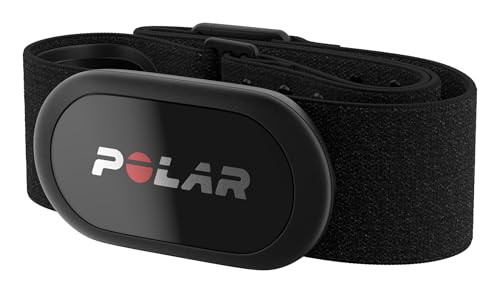
- Best for: Athletes who train with several devices and want stored sessions without a phone nearby.
- Connectivity: Bluetooth, ANT+, and 5 kHz
- Waterproof up to 30 m
- Battery life: 400 hours from a CR2025 button cell, included
- Internal memory for multiple hours of stored data

- Best for: Garmin watch owners who run, swim, or train indoors and want running dynamics alongside heart rate.
- Connectivity: ANT+ and Bluetooth Low Energy
- Captures running dynamics: vertical oscillation, ground contact time, stride length, and vertical ratio
- Stores heart rate data during swimming and sends it to a compatible Garmin watch afterwards
- Computes pace and distance for treadmill or indoor track workouts

- Best for: Runners, cyclists, and class-goers who prefer an armband over a chest strap.
- Optical heart rate armband worn on the forearm
- Connectivity: Bluetooth and ANT+
- Rechargeable battery lasting up to 30 hours (lower of the two figures shown on the listing)
- Water-resistant design
All 5 Picks at a Glance
| Product | Specs | Action |
|---|---|---|
| Polar H10 Heart Rate Monitor Chest Strap |
| Check price on Amazon |
| Garmin HRM-Pro Plus Premium Chest Strap Heart Rate Monitor |
| Check price on Amazon |
| Wahoo TICKR FIT Heart Rate Monitor Armband |
| Check price on Amazon |
 Polar H9 Heart Rate Sensor |
| Check price on Amazon |
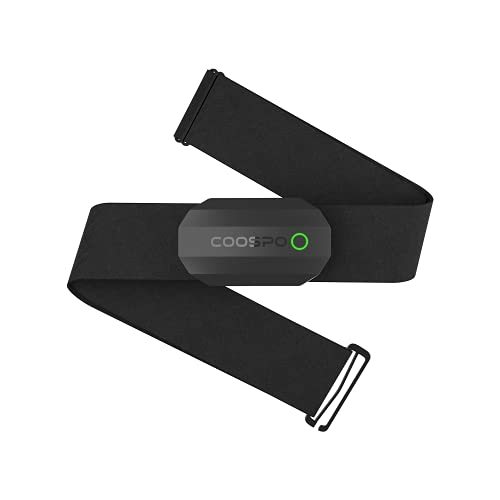 COOSPO H808S Bluetooth Heart Rate Monitor Chest Strap |
| Check price on Amazon |
Key takeaways
- Compare five heartrate monitors for training, from chest straps to optical armbands, with connectivity, battery life, and fit checked against Amazon listings.
A wrist watch can guess at your pulse, but a dedicated heartrate monitor is built for one job: keeping a steady read while you move. The real decision is not which monitor looks most impressive on a spec sheet. It is whether you want a chest strap that sits against your skin, an armband that slides onto your forearm, or a sensor that stores a session when your phone stays in a locker. Each form fits a different kind of training, and each one connects to a different mix of watches, bike computers, and apps.
This guide is for runners, cyclists, gym regulars, and indoor training fans who want live heart rate data during a workout rather than a daily summary afterwards. Every monitor below is a dedicated heart rate device, either a chest strap or an optical armband, and every detail comes from the name and specifications on its Amazon listing. Pick the form first, then match the connections and battery routine to the gear you already own.
Quick Picks
As an Amazon Associate we earn from qualifying purchases.
| Product | Best for | Key spec from title |
|---|---|---|
| Polar H10 Heart Rate Monitor Chest Strap | Multi-device training with stored sessions | ANT + Bluetooth, waterproof HR sensor |
| Garmin HRM-Pro Plus Premium Chest Strap Heart Rate Monitor | Runners who want running dynamics | Captures running dynamics, ANT+ and BLE |
| Wahoo TICKR FIT Heart Rate Monitor Armband | Training without a chest strap | Bluetooth/ANT+ optical heart rate armband |
| Polar H9 Heart Rate Sensor | Straightforward chest-strap training | ANT + Bluetooth waterproof HR sensor |
| COOSPO H808S Bluetooth Heart Rate Monitor Chest Strap | App-based training across many platforms | ANT+ BLE HR monitor, IP67 waterproof, 300H battery life |
How to Choose
Chest strap or armband
A chest strap reads from electrodes against your torso, and that placement is the reason serious runners and cyclists keep coming back to it. The strap stays put, keeps contact through sweat, and pairs with watches, bike computers, and gym equipment without fuss. An armband reads from the forearm with an optical sensor, so there is nothing to tighten around your chest and nothing to lift your shirt to fit. Armbands suit people who find chest straps irritating or who simply prefer a band they can pull on in seconds. Choose the strap for the steadiest read during hard intervals, and choose the armband when comfort and quick fitting matter more than anything else.
Connections that match your gear
A monitor is only useful if it talks to the devices you already train with, so check the wireless standards before anything else. Bluetooth connects to a phone or a watch, while ANT+ connects to bike computers, gym machines, and many watches at the same time. A monitor with both standards covers far more setups than one with a single radio, and some models can hold more than one Bluetooth connection. That matters when you want the same live read on a watch and a phone app. Check the apps and equipment on the product page, confirm your watch or bike computer appears there, and treat a monitor with one standard as a narrower fit for a mixed setup.
Battery routine and stored sessions
Chest straps usually run on a coin cell that lasts for months, while rechargeable armbands need a charger every few weeks of regular use. Neither routine is better on its own; the question is which one you will actually keep up with. A coin cell means no charging cable and no dead sensor before a morning run, but it also means keeping a spare cell at home. A rechargeable unit means plugging in after sessions, so check how the charging works and whether the cable is included in the box. Some sensors also store a session internally and send it to your watch later, which helps when you swim or train without a phone nearby.
Fit, strap care, and water use
A heartrate monitor only works when it stays in contact with your skin, so fit deserves as much attention as the electronics. Chest straps come in sizes, and a strap that is too loose will slide and drop the signal halfway through a set. Check the size range on the listing, measure your chest, and confirm the strap is washable, since sweat builds up fast. Armbands need two band sizes in the box or an adjustable band that covers your forearm. Water ratings also vary: some straps are built for swimming, while others are only rated against sweat and splashes. Read the listing for the exact water rating before taking any monitor into a pool.
The 5 Best Options
Polar H10 Heart Rate Monitor Chest Strap
- Best for: Athletes who train with several devices and want stored sessions without a phone nearby.
- Connectivity: Bluetooth, ANT+, and 5 kHz
- Waterproof up to 30 m
- Battery life: 400 hours from a CR2025 button cell, included
- Internal memory for multiple hours of stored data
Athletes who train with several devices and want stored sessions without a phone nearby.
Check the strap size before ordering, since the listing sells separate sizes, and keep a spare CR2025 cell at home so a flat battery never cancels a session.
The Polar H10 is the chest strap for people who train across several devices and want one sensor to cover all of them. It connects through Bluetooth, ANT+, and 5 kHz, so it pairs with phones, watches, bike computers, and gym equipment in the same week. Internal memory stores a session when no connected device is nearby, and the Polar Pro strap uses improved electrodes with silicone dots to hold contact through hard efforts. The waterproof build suits swimmers as well as runners, and the long coin-cell life means charging never interrupts a training routine.
Watch out for: Check the strap size before ordering, since the listing sells separate sizes, and keep a spare CR2025 cell at home so a flat battery never cancels a session.
Garmin HRM-Pro Plus Premium Chest Strap Heart Rate Monitor
- Best for: Garmin watch owners who run, swim, or train indoors and want running dynamics alongside heart rate.
- Connectivity: ANT+ and Bluetooth Low Energy
- Captures running dynamics: vertical oscillation, ground contact time, stride length, and vertical ratio
- Stores heart rate data during swimming and sends it to a compatible Garmin watch afterwards
- Computes pace and distance for treadmill or indoor track workouts
Garmin watch owners who run, swim, or train indoors and want running dynamics alongside heart rate.
The running dynamics and running power features need a compatible Garmin watch, so confirm your watch model on the listing before buying.
The Garmin HRM-Pro Plus is the strap for runners who already train with a Garmin watch and want more than a live pulse number. It captures running dynamics such as vertical oscillation, ground contact time, stride length, and vertical ratio, and it can supply running power on a compatible Garmin watch. It stores heart rate during swimming or other activities out of range of your watch, then sends the data to the watch when the activity ends. Pace and distance for treadmill or indoor track workouts come from the strap itself, and all-day activity tracking covers steps, calories, intensity minutes, and heart rate through the Garmin Connect app.
Watch out for: The running dynamics and running power features need a compatible Garmin watch, so confirm your watch model on the listing before buying.
Wahoo TICKR FIT Heart Rate Monitor Armband
- Best for: Runners, cyclists, and class-goers who prefer an armband over a chest strap.
- Optical heart rate armband worn on the forearm
- Connectivity: Bluetooth and ANT+
- Rechargeable battery lasting up to 30 hours (lower of the two figures shown on the listing)
- Water-resistant design
Runners, cyclists, and class-goers who prefer an armband over a chest strap.
The battery needs regular charging, so build a charging habit after sessions, and confirm the armband size against your forearm before ordering.
The Wahoo TICKR FIT is the pick for anyone who wants heart rate data without wearing anything around the chest. It sits on the forearm as an optical armband, reads heart rate and calorie burn live, and pairs with fitness apps, smartphones, and GPS bike computers through Bluetooth and ANT+. Two adjustable bands come in the box, small and large, so the fit covers most forearms. A visible LED shows the connection status, and the rechargeable battery means no coin cells. The listing shows two battery figures, 30 hours in the description and 35 in the details table, so plan around the lower figure of 30 hours.
Watch out for: The battery needs regular charging, so build a charging habit after sessions, and confirm the armband size against your forearm before ordering.
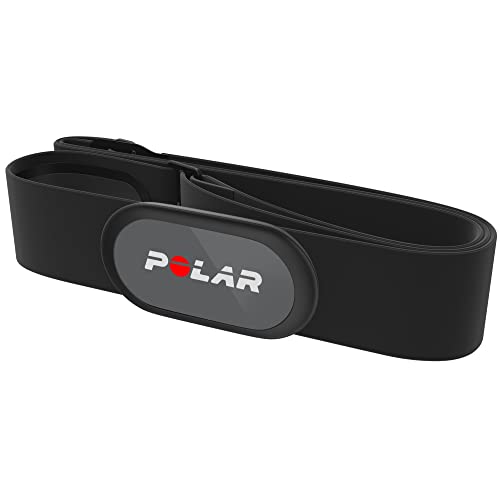
Polar H9 Heart Rate Sensor
- Best for: Gym and road training with a phone or watch nearby, where a simple chest strap is enough.
- Connectivity: Bluetooth and ANT+
- Chest placement with a soft textile strap
- Battery life: 400 hours from a CR2025 button cell
- Waterproof design
Gym and road training with a phone or watch nearby, where a simple chest strap is enough.
Without internal memory, the sensor cannot record a session on its own, so keep your phone or watch in range for the whole workout.
The Polar H9 covers the essentials of chest-strap training without the extras that push other straps into a different class. It pairs through Bluetooth and ANT+, reads from the chest, and runs for hundreds of hours on one coin cell, so the routine is simple: fit the strap, pair it, and train. The soft chest strap is machine-washable, and the waterproof design handles sweat and rain without a second thought. It has no internal memory, so a connected phone or watch needs to stay in range during the session. For gym sessions, indoor cycling, and runs with a phone or watch along, that trade keeps the setup straightforward.
Watch out for: Without internal memory, the sensor cannot record a session on its own, so keep your phone or watch in range for the whole workout.
COOSPO H808S Bluetooth Heart Rate Monitor Chest Strap
- Best for: App-based training across many platforms, from indoor cycling apps to outdoor running apps.
- Connectivity: Bluetooth 4.0 and ANT+
- Waterproof rating: IP67
- Battery life: 300 hours
- Adjustable soft chest strap fits 65 to 95 cm
App-based training across many platforms, from indoor cycling apps to outdoor running apps.
Confirm your chest measurement against the 65 to 95 cm strap range, and confirm your app appears on the listing before relying on it for a session.
The COOSPO H808S is the chest strap for training that jumps between apps and devices. It connects through Bluetooth 4.0 and ANT+, pairs with fitness apps such as Polar Beat, Wahoo Fitness, Strava, Zwift, Peloton, and DDP Yoga, and works with GPS bike computers from several brands. The IP67 waterproof rating covers sweat and rain, and the battery runs for 300 hours before the cell needs replacing. The adjustable soft chest strap fits a 65 to 95 cm chest, and the sensor reads heart rate in real time so you can adjust effort during a workout rather than reviewing it afterwards.
Watch out for: Confirm your chest measurement against the 65 to 95 cm strap range, and confirm your app appears on the listing before relying on it for a session.
Which One Fits Your Situation
You train with several watches, apps, and machines
Pick the Polar H10. Its Bluetooth, ANT+, and 5 kHz connections cover phones, watches, bike computers, and gym equipment in one sensor, and the internal memory keeps a session safe when no device is in range. The waterproof build and long coin-cell life mean the same strap works for running, swimming, and gym days without a change of routine.
You run with a Garmin watch and want form data
Pick the Garmin HRM-Pro Plus. It feeds running dynamics and running power to a compatible Garmin watch, stores heart rate during swims, and measures pace and distance on a treadmill. The twelve-month replaceable battery keeps the routine simple, and the all-day activity tracking ties each session into the wider picture in the Garmin Connect app.
You dislike chest straps but still want live data
Pick the Wahoo TICKR FIT. The optical armband sits on the forearm, pairs through Bluetooth and ANT+, and comes with two band sizes in the box. It suits classes, gym sessions, and runs where a chest strap feels restrictive, and the rechargeable battery means no coin cells to keep track of.
You want a simple strap for gym and road sessions
Pick the Polar H9 or the COOSPO H808S. The H9 keeps the setup minimal with a soft washable strap and a 400-hour coin cell, while the H808S adds wider app compatibility and a 300-hour battery for training that moves between platforms. Either one works when a phone or watch stays nearby to record the session.
Safety Notes
These monitors are fitness accessories, not medical devices, and their readings are training data rather than a basis for diagnosis or treatment. Follow the care guidance on each listing: rinse or wash textile straps as directed, replace coin cells with the type the listing names, and charge rechargeable units with the cable supplied in the box. Check the water rating on the listing before taking a monitor into a pool, and stop using a strap that causes skin irritation. If you have a heart condition or a health concern, talk to a clinician before starting a new training routine.
Common Mistakes
- Buying a chest strap in the wrong size and wondering why the signal drops mid-workout.
- Choosing a monitor with only one wireless standard and finding it cannot pair with a bike computer or gym machine.
- Picking a sensor with no internal memory and leaving the phone behind during a swim or a run.
- Ignoring the water rating and taking a sweat-rated strap into a pool.
- Forgetting that a rechargeable armband needs charging, then starting a session with a flat battery.
Frequently Asked Questions
Do I need a chest strap, or is an armband enough?
An armband is enough for most gym sessions, classes, and steady runs, since it reads from the forearm and is quick to fit. A chest strap suits hard intervals, racing, and training where the read needs to stay steady through sweat and fast movement. If you have tried an armband and found the signal wanders during sprints, a chest strap is the next step.
Will these monitors work with my phone and watch?
Most of them pair through Bluetooth with phones and watches, and the chest straps here also use ANT+ for bike computers and gym equipment. Check the listing for your exact watch, app, or bike computer before buying, since compatibility varies by model. A monitor that lists both Bluetooth and ANT+ covers the widest mix of gear.
How long does the battery last on a heartrate monitor?
Chest straps in this guide run on a replaceable coin cell for 300 to 400 hours or up to 12 months, depending on the model, so the cell lasts for months of regular training. Rechargeable armbands need charging after a set number of hours, with the Wahoo TICKR FIT rated at 30 hours. Keep a spare coin cell at home or charge the armband after sessions.
Can I swim with a heartrate monitor?
It depends on the model and its water rating. The Polar H10 is waterproof up to 30 m and the Garmin HRM-Pro Plus stores heart rate during swimming, while other monitors are only rated against sweat and splashes. Read the water rating on the listing before taking any monitor into a pool, and check whether it stores data underwater or needs a watch nearby.
FAQ
Do I need a chest strap, or is an armband enough?
Will these monitors work with my phone and watch?
How long does the battery last on a heartrate monitor?
Can I swim with a heartrate monitor?
More from Amazon
Programs that pair well with the guide above. Offers and eligibility are set by Amazon and may change.
Free shipping on eligible items, Prime Video and more. Eligible new members can start with a free trial.
Start a Prime free trialAd-free music streaming. Eligible new subscribers can start with a free trial.
Try Music Unlimited freeA Prime membership for ages 18-24 with a trial period. Eligibility is set by Amazon.
See Prime for Young AdultsAudiobooks and podcasts to listen to on the go. Eligible new members can start with a free trial.
Try Audible freeAs an Amazon Associate we earn from qualifying purchases.