Key takeaways
- Compare the best heart rate monitors for training, from chest straps to an optical armband, with specs from Amazon listings and tips for picking your fit.
Choosing a heart rate monitor comes down to one decision: how much do you trust the number on the screen during a hard workout. A chest strap reads the electrical signal of your heart, while an optical sensor on your arm reads blood flow through the skin, and the two approaches behave differently when you sprint, climb, or swim. Getting the wrong type means noisy data exactly when training zones matter most.
This guide is for runners, cyclists, gym regulars, and swimmers who train with heart rate zones and want numbers they can act on. The five monitors below were chosen from names and specifications on their Amazon pages, covering chest straps, an optical armband, and a low-cost strap for buyers who want solid data without a premium badge.
Quick Picks
As an Amazon Associate we earn from qualifying purchases
| Product | Best for | Key spec from title |
|---|---|---|
| Polar H10 | Runners and cyclists who want the most accurate chest-strap reading | Bluetooth, ANT+ and 5 kHz connections |
| Garmin HRM-Pro Plus | Garmin watch owners who want running dynamics | Running dynamics and 12-month battery |
| Wahoo TICKR | Indoor cyclists and app users who pair several devices | Three simultaneous Bluetooth connections |
| Polar Verity Sense | Swimmers and lifters who dislike chest straps | Optical sensor on arm or temple |
| COOSPO H808S | Budget buyers who want a long-lasting strap | 300-hour battery on a coin cell |
How to Choose
Chest Strap or Optical Sensor
A chest strap measures the electrical signal from your heart, so it reacts fast when effort changes and stays steady during intervals. An optical sensor shines light through the skin and reads blood flow, which works well for steady efforts but can lag or drift when you sprint, grip a bar, or move your arm. If your training lives in heart rate zones, with sharp intervals and short recoveries, a chest strap is the safer pick. If a strap across your chest bothers you, an optical armband trades a little responsiveness for comfort. Decide which trade you accept before comparing brands, because no strap fixes a sensor type that fights your sport.
Connectivity That Matches Your Gear
A monitor is only useful if it talks to the screen you actually watch while training. Most chest straps broadcast over Bluetooth and ANT+, which covers phones, watches, bike computers, and gym equipment. Dual Bluetooth channels matter when you run a watch and a phone app at the same time, and ANT+ matters for older bike computers and treadmills. Check the app list too: Zwift, Peloton, Strava, and Polar Beat each accept different sensors, and a strap that pairs with your watch may still refuse your favorite app. Buy the monitor that fits the devices already on your wrist and handlebars, not the one with the longest spec sheet.
Battery Life and Charging Habits
Battery style shapes how a monitor fits your routine more than most buyers expect. Coin-cell straps run for hundreds of hours and ask for a battery swap once or twice a year, which suits people who train daily and never want to think about charging. Rechargeable sensors need a cable every few weeks, and a dead sensor on race morning is a real risk if you forget. Look at the stated battery life alongside how often you train: a strap rated for 400 hours lasts a heavy trainer about a year, while a 30-hour rechargeable armband needs charging after a few long weeks. Pick the habit you will actually keep.
Fit, Comfort, and Water Use
A heart rate monitor only works when it stays in contact with your skin, so fit decides accuracy as much as the sensor does. Chest straps need to sit snug below the chest muscles, with moistened electrodes at the start of a session, and a strap that slides during burpees or push-ups will drop readings at the worst moment. Optical armbands need a firm fit on the upper or lower arm, tight enough that the sensor cannot bounce. Water ratings matter too: a strap rated for swimming keeps recording laps, while a splash-rated strap is fine for sweat and rain but not for the pool. Try the fit on before you judge the data.
The 5 Best Options
Polar H10
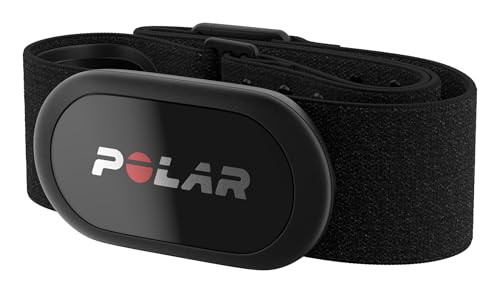
The Polar H10 is the chest strap other straps get measured against, and it earns that place with accuracy rather than extras. It reads the electrical signal of the heart through the Polar Pro strap, with improved electrodes, a buckle, and silicone dots that keep it from shifting mid-workout. Bluetooth, ANT+, and 5 kHz connections cover phones, watches, and gym equipment, and two Bluetooth links can run at once. The strap is machine-washable, the sensor is waterproof to 30 meters, and internal memory stores one session for swims or phone-free runs.
- Specs:
- Connectivity: Bluetooth, ANT+ and 5 kHz, two simultaneous Bluetooth connections
- Waterproof: 30 m
- Battery: CR2025 button cell, 400 hours
- Strap: Polar Pro textile strap, machine-washable, improved electrodes with silicone dots
- Memory: internal memory for one training session
- Dimensions: 2.59 x 1.29 x 0.4 in; weight 0.12 kg
- Best for: runners and cyclists who want the most accurate chest-strap reading
- Watch out for: the strap band wears faster than the sensor pod, so expect a replacement band over time
ASIN: B07PM54P4N
Garmin HRM-Pro Plus

The Garmin HRM-Pro Plus is the strap to buy when you already train inside the Garmin world and want more than a heart rate number. It transmits real-time heart rate and heart rate variability over ANT+ and Bluetooth Low Energy, and it captures running dynamics such as vertical oscillation, ground contact time, stride length, and vertical ratio. It also computes pace and distance for treadmill workouts and stores heart rate data during swims, sending it to your watch when the session ends. Activity tracking covers steps, calories, intensity minutes, and all-day heart rate through Garmin Connect.
- Specs:
- Connectivity: ANT+ and Bluetooth Low Energy
- Running dynamics: vertical oscillation, ground contact time, stride length, vertical ratio
- Swim storage: stores heart rate data during swimming, syncs after the session
- Activity tracking: steps, calories, intensity minutes, all-day heart rate via Garmin Connect
- Battery: replaceable battery, 12 months
- Weight: 52 g; part number 010-13118-00
- Best for: Garmin watch owners who want running dynamics and swim storage
- Watch out for: several running-dynamics features only work with a compatible Garmin watch
ASIN: B0B3PNFK9H
Wahoo TICKR
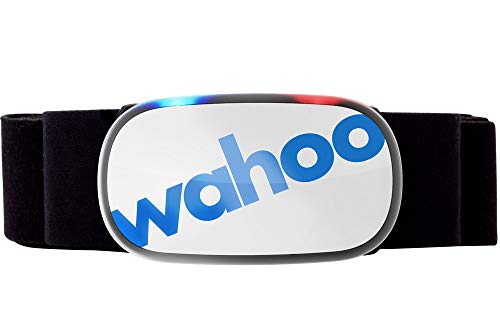
The Wahoo TICKR is the slim, simple chest strap for indoor training, where the screen in front of you matters more than a screen on your wrist. Its integrated sensor and strap design keeps the pod from sliding, and dual-band Bluetooth and ANT+ connect to phones, watches, and bike computers. Three simultaneous Bluetooth connections let a phone, a watch, and an app all listen at once, which is exactly what Zwift and Peloton sessions need. Two LED lights show connection and heartbeat at a glance, and the coin-cell battery runs for over 500 hours, so charging never enters the routine.
- Specs:
- Connectivity: Bluetooth and ANT+, three simultaneous Bluetooth connections
- Battery: CR2032 coin cell, over 500 active hours
- Water rating: IPX7, waterproof up to 5 ft
- Weight: 1.7 oz (48 g) with strap
- LEDs: top display lights for connection status and heartbeat
- App support: works with over 50 apps, including Zwift and Peloton
- Best for: indoor cyclists and app users who pair several devices at once
- Watch out for: no built-in memory, so it cannot record a swim without a connected watch
ASIN: B08819V67W
Polar Verity Sense

The Polar Verity Sense is the pick for anyone who hates chest straps but still wants training-grade heart rate data. Its optical sensor sits on the upper or lower arm, or clips to swimming goggles, leaving the chest and wrist free. Dual Bluetooth channels and ANT+ broadcast live heart rate to watches, phones, and gym equipment, and internal memory records up to 600 hours of training for sessions without a connected device. At 19 grams it nearly disappears on the arm, the rechargeable battery runs for 30 hours, and the sensor is waterproof to 50 meters for pool work.
- Specs:
- Sensor: optical 6-LED heart rate sensor, arm or temple placement
- Connectivity: two simultaneous Bluetooth connections and ANT+
- Battery: rechargeable lithium-ion, 30 hours
- Memory: internal memory for up to 600 hours of heart rate training
- Waterproof: 50 m
- Weight: 19 g; part number 920110147; 2-year manufacturer warranty
- Included: sensor, armband, swimming goggle clip, pouch, charging unit
- Best for: swimmers and lifters who dislike chest straps
- Watch out for: optical readings can lag during rapid intensity changes, such as sprint starts
ASIN: B0C5D7HW9D
COOSPO H808S
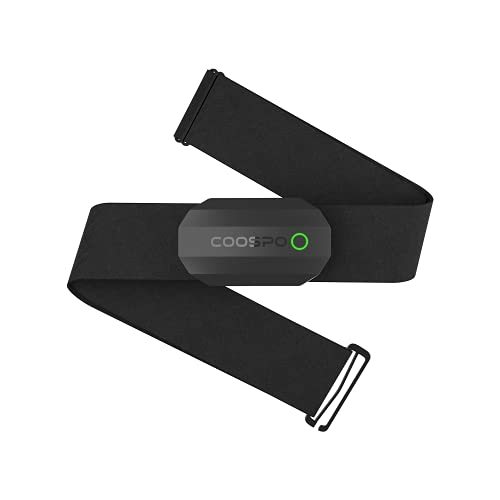
The COOSPO H808S is the budget strap that keeps the essentials and drops the extras. It pairs over Bluetooth 4.0 and ANT+ with phones, watches, and bike computers, and it works with Strava, Zwift, Peloton, Wahoo Fitness, and Polar Beat. The 15-gram sensor runs for 300 hours on a replaceable CR2032 cell, and the IP67 rating covers sweat and rain, though the listing says not to use it for swimming. An LED light and a beep confirm the working state, so you know it is connected before the warm-up ends.
- Specs:
- Connectivity: Bluetooth 4.0 and ANT+
- Battery: CR2032 replaceable, 300 hours
- Water rating: IP67, do not use in swimming
- Weight: 15 g; dimensions 2.36 x 1.37 x 0.59 in
- Status: LED light and beep confirm working state
- App support: pairs with Strava, Zwift, Peloton, Wahoo Fitness, Polar Beat
- Best for: budget buyers who want a long-lasting strap
- Watch out for: electrodes must be moistened before each session, and the strap needs replacing about every 6 months
ASIN: B07R8741CN
Which One Fits Your Situation
You Run Intervals and Race
Pick the Polar H10. Interval training punishes slow sensors, and the H10 reads the electrical signal of the heart, so it reacts the moment effort changes instead of lagging behind. Its Bluetooth, ANT+, and 5 kHz connections cover a watch, a phone, and gym equipment at once, and internal memory stores one session when you leave the phone behind. The 400-hour battery means it is ready on race morning without a charging check.
You Train Inside the Garmin World
Pick the Garmin HRM-Pro Plus. It feeds running dynamics, swim storage, and all-day activity tracking straight into Garmin Connect. The 12-month battery removes charging from the routine entirely, and the stored swim data means pool sessions land on your watch without a phone on the deck. Just confirm your Garmin watch supports running dynamics before you buy, since those features are the main reason to choose this strap.
You Ride Indoors on Zwift or Peloton
Pick the Wahoo TICKR. Indoor sessions live or die by the connection to the app, and the TICKR holds three Bluetooth links at once, so a phone, a watch, and the training app can all listen without dropping each other. The slim integrated strap stays put through long trainer rides, the LEDs confirm pairing before you clip in, and the 500-hour battery outlasts a full season of indoor miles.
You Hate Chest Straps
Pick the Polar Verity Sense. The optical armband keeps your chest free and your wrist free, which matters for lifters, grapplers, and swimmers who find a strap distracting. It records up to 600 hours internally, so phone-free sessions still count, and the 50-meter rating covers pool work. Accept that optical readings can lag on sprint starts, and wear it snug on the upper arm for the steadiest signal.
Common Mistakes
- Buying a wrist watch for zone training when a chest strap would react faster to intervals
- Pairing a strap with a watch but never checking whether your training app accepts it
- Wearing a chest strap dry, which causes dropped readings until sweat builds up
- Choosing a splash-rated strap for swim training and losing data in the pool
- Ignoring battery style and finding a rechargeable sensor dead on race morning
Frequently Asked Questions
Is a chest strap more accurate than a wrist monitor?
A chest strap usually reads faster and steadier than a wrist monitor because it measures the electrical signal of the heart directly. A wrist or arm sensor reads blood flow through the skin, which can lag during sprints and drift when the arm moves. For zone training and intervals, the chest strap is the safer choice, while an optical armband is fine for steady efforts and comfort.
Can one heart rate monitor connect to a watch and a phone at once?
Many modern straps can. The Polar H10 runs two Bluetooth links at once, the Polar Verity Sense runs two Bluetooth channels plus ANT+, and the Wahoo TICKR holds three Bluetooth connections. Check the listing for dual Bluetooth or ANT+ support before you buy, and confirm that your watch and your training app both accept the monitor you choose.
Do heart rate monitors work for swimming?
Some do, some do not. The Polar H10 and Polar Verity Sense are waterproof to 30 and 50 meters, and the Garmin HRM-Pro Plus stores heart rate during swims and syncs afterward. The Wahoo TICKR and the COOSPO H808S are splash-rated only, so they suit sweat and rain but not pool laps. Match the water rating to your sport before you decide.
How long does a heart rate monitor battery last?
It depends on the battery type. Coin-cell straps run for hundreds of hours: the Wahoo TICKR lasts over 500 hours, the Polar H10 lasts 400 hours, and the Garmin HRM-Dual, a related model, is rated for 3.5 years. Rechargeable sensors need charging every few weeks, with the Polar Verity Sense rated for 30 hours per charge. Pick the routine you will actually maintain.
FAQ
Is a chest strap more accurate than a wrist monitor?
Can one heart rate monitor connect to a watch and a phone at once?
Do heart rate monitors work for swimming?
How long does a heart rate monitor battery last?
More from Amazon
Programs that pair well with the guide above. Offers and eligibility are set by Amazon and may change.
Free shipping on eligible items, Prime Video and more. Eligible new members can start with a free trial.
Start a Prime free trialAd-free music streaming. Eligible new subscribers can start with a free trial.
Try Music Unlimited freeA Prime membership for ages 18-24 with a trial period. Eligibility is set by Amazon.
See Prime for Young AdultsAudiobooks and podcasts to listen to on the go. Eligible new members can start with a free trial.
Try Audible freeAs an Amazon Associate we earn from qualifying purchases.