Our Short List of 3

- Best for: Twins in two rooms who need both feeds visible at once on the biggest screen here.
- Display: 6-inch IPS split screen
- Cameras: 2 included, pan-tilt-zoom
- Connection: No WiFi, 2.4GHz FHSS
- Battery: Up to 30 hours in VOX/ECO mode

- Best for: Parents who want split-screen viewing plus a built-in night light on each camera.
- Display: 5-inch HD split screen
- Cameras: 2 included
- Connection: No WiFi, no internet needed
- Battery: 4000mAh parent unit battery
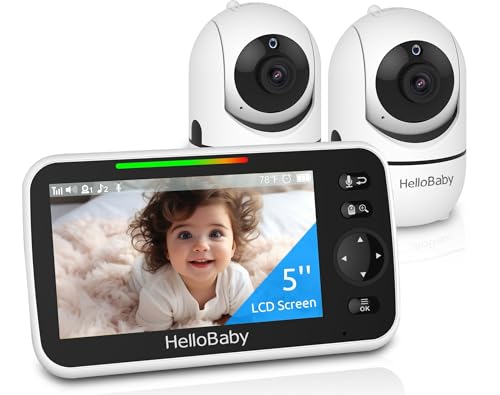
- Best for: Twins sharing one nursery, where one large view beats two small split tiles.
- Display: 5-inch IPS screen, single view with switching
- Cameras: 2 included, pan-tilt-zoom
- Connection: No WiFi
- Battery: Up to 30 hours
All 5 Picks at a Glance
| Product | Specs | Action |
|---|---|---|
| HelloBaby HB6560-2 |
| Check price on Amazon |
| Babysense HD S2 |
| Check price on Amazon |
| HelloBaby HB6550-2 |
| Check price on Amazon |
 VTech VM901-2HD |
| Check price on Amazon |
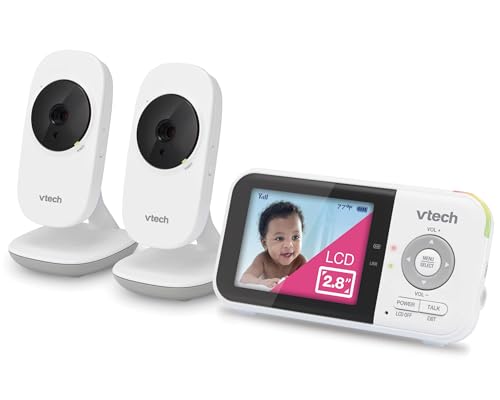 VTech VM819-2 |
| Check price on Amazon |
Key takeaways
- Two cameras, one screen: compare split-screen and app baby monitors built for twins, with range, battery and night vision from the listings.
This guide is about baby monitors for twin babies — two-camera video systems that let you watch both children from one parent unit or one app. It is not about computer displays or dual-monitor desk setups. The real decision with twins is not picture sharpness on its own. It is whether both cribs stay visible at the same time, without swapping between two separate monitors, two apps, and two chargers through the night.
Every pick below ships with two cameras in the box, or is sold as a two-camera set on its Amazon listing. The shortlist covers split-screen no-WiFi systems for parents who want a dedicated screen, one WiFi model for phone viewing away from home, and a compact option for smaller homes. Specs come from the product titles and listing details on Amazon, so check the exact set name before ordering.
Quick Picks
As an Amazon Associate we earn from qualifying purchases
| Product | Best for | Key spec from title |
|---|---|---|
| HelloBaby HB6560-2 | Twins in two rooms, side by side | 6-inch IPS split screen, 2 cameras |
| Babysense HD S2 | Split screen plus a camera night light | 5-inch HD split screen, 2 cameras |
| HelloBaby HB6550-2 | One large view with tap switching | 5-inch screen, 2 pan-tilt-zoom cameras |
| VTech VM901-2HD | Checking in from a phone away from home | 1080p cameras, 5-inch HD screen, free app |
| VTech VM819-2 | Smaller homes and simple controls | 2.8-inch screen, 2 cameras, 19-hour battery |
How to Choose
Split Screen, Scan, or Single View Switching
How the two feeds reach your eyes matters more than any other choice here. A true split screen keeps both cribs visible side by side at once, which suits twins who settle at different times. Scan or patrol modes cycle between cameras on a timer, so one child is always off screen for a few seconds. Single-view switching shows one room large and clear, and you tap to jump to the other. None of these is wrong, but they feel very different at 3 a.m., so match the display mode to how often you actually need both views together.
No WiFi FHSS or a WiFi App System
Four of the five picks here use a direct 2.4GHz FHSS link between camera and parent unit. Nothing travels through your router, no account is needed, and the monitor keeps working during an internet outage. The trade-off is range: you can only watch from inside the stated coverage area. A WiFi system such as the VTech VM901-2HD adds phone viewing from anywhere and app alerts, at the cost of setup, passwords, and dependence on your home network. For twins in one house, most parents are served by the simpler link; frequent travellers lean the other way.
Screen Size and Parent Unit Battery
Dividing a screen in half shrinks each crib view, so size stops being a luxury on a twin setup. A 6-inch display gives each feed noticeably more room than a 5-inch one, and a 2.8-inch screen is best treated as a single-view device. Battery claims need the same care. Listings quote their longest figures in VOX or ECO modes, where the screen sleeps until sound wakes it. Continuous viewing drains any of these units far sooner, so compare the mode named beside each battery figure rather than the headline number alone.
Camera Movement, Night Vision, and Room Coverage
Twins rarely stay centred in frame, and cribs placed at angles punish a fixed camera. Remote pan and tilt let you re-aim from the parent unit without entering the room and waking anyone. Check the stated pan and tilt ranges on the listing, and confirm infrared night vision is included, since most twin checks happen in the dark. Two-way talk, lullabies, and a room temperature readout appear across this group; treat them as useful extras, and let display mode, link type, and camera movement decide the shortlist first.
The 5 Best Options
HelloBaby HB6560-2
- Best for: Twins in two rooms who need both feeds visible at once on the biggest screen here.
- Display: 6-inch IPS split screen
- Cameras: 2 included, pan-tilt-zoom
- Connection: No WiFi, 2.4GHz FHSS
- Battery: Up to 30 hours in VOX/ECO mode
Twins in two rooms who need both feeds visible at once on the biggest screen here.
The listing caps this system at two cameras, so there is no third-camera path if a sibling arrives later.
If both cribs must stay on screen together, this is the most direct answer in the group. Its 6-inch IPS display is the largest here, which matters once the picture is split in two, and the listing describes side-by-side viewing of two rooms with no switching. Both cameras pan and tilt remotely, the link avoids WiFi entirely, and the stated battery figure stretches across a full night in VOX or ECO use. Parents with twins in separate rooms, or one crib and one play area, get the clearest two-feed view from this set.
Babysense HD S2
- Best for: Parents who want split-screen viewing plus a built-in night light on each camera.
- Display: 5-inch HD split screen
- Cameras: 2 included
- Connection: No WiFi, no internet needed
- Battery: 4000mAh parent unit battery
Parents who want split-screen viewing plus a built-in night light on each camera.
Confirm the set name says HD S2 with 2 cameras, because Babysense sells other screen sizes under similar names.
Babysense builds its twin case around a 5-inch HD split screen and cameras that do more than watch. Each camera carries an adjustable night light, and the set adds lullabies and white noise style soothing features described on the listing, which can help settle one twin without opening the nursery door. The 4X zoom helps when a crib sits far from its camera. Like the HelloBaby above, it runs on a private link with no WiFi or internet needed, keeping setup to pairing two cameras with one parent unit.
HelloBaby HB6550-2
- Best for: Twins sharing one nursery, where one large view beats two small split tiles.
- Display: 5-inch IPS screen, single view with switching
- Cameras: 2 included, pan-tilt-zoom
- Connection: No WiFi
- Battery: Up to 30 hours
Twins sharing one nursery, where one large view beats two small split tiles.
This model does not show both cameras at the same time; if simultaneous viewing is essential, choose the HB6560-2 instead.
This set takes the opposite display approach to its HB6560 sibling. Instead of splitting the 5-inch IPS screen, it shows one room large and switches between the two cameras with a tap or automatically. For twins sharing one nursery, that larger single view can be easier to read than two small tiles, and both cameras still pan, tilt, and zoom remotely to follow each crib. The listing quotes up to 30 hours of battery, a temperature readout, and eight lullabies, making it a strong shared-room pick where simultaneous viewing matters less.
VTech VM901-2HD
- Best for: Parents who need to check both twins from a phone while someone else is at home.
- Display: 5-inch HD IPS screen
- Cameras: 2 included, 1080p FHD, pan-tilt-zoom
- Connection: Smart WiFi with free app, plus parent unit
- Viewing: Split-screen on parent unit and app
Parents who need to check both twins from a phone while someone else is at home.
Remote viewing depends on your home WiFi and the app, so a router outage removes the away-from-home view.
VTech’s two-camera set is the only WiFi option here, and it exists for parents who leave the house while twins sleep. Two 1080p cameras feed both a 5-inch HD parent unit at home and a free phone app, with split-screen viewing, remote pan-tilt-zoom, and sound and motion detection notifications described on the listing. At home it behaves like the other sets in this guide; away from home, the app keeps both rooms reachable. That flexibility suits working parents and homes with regular evening childcare help.
VTech VM819-2
- Best for: Smaller homes and grandparents’ houses where portability beats screen size.
- Display: 2.8-inch screen
- Cameras: 2 included
- Connection: No WiFi, secure FHSS transmission
- Battery: Up to 19 hours
Smaller homes and grandparents’ houses where portability beats screen size.
The 2.8-inch screen is small for side-by-side viewing, so expect to rely on switching between cameras.
Not every twin home needs a large split screen. The VM819-2 pairs two cameras with a compact 2.8-inch parent unit that is easy to carry from room to room, and its listing quotes up to 19 hours of battery with the screen on. The cameras cover the basics twins require: night vision, a temperature sensor, lullabies, and two-way audio over a secure FHSS link with no WiFi. In a flat or a small house where both cribs sit close together, that simplicity is the appeal, and the small screen is the honest compromise.
Which One Fits Your Situation
Twins in Separate Rooms
Separate rooms make simultaneous viewing the priority, because walking between two doors all night defeats the point of a monitor. Choose a true split screen: the HelloBaby HB6560-2 for the largest divided view, or the Babysense HD S2 if a camera night light helps in each room. Place one camera per crib, confirm both feeds hold at your bedroom distance, and keep the parent unit plugged in beside the bed for the longest nights.
Twins Sharing One Nursery
A shared nursery changes the maths. One wide view often covers both cribs, and a larger single picture is easier to interpret half asleep than two narrow tiles. The HelloBaby HB6550-2 fits this layout well, since its two pan-tilt-zoom cameras can each be aimed at one crib while the screen shows one large feed at a time. You still get a dedicated camera per child, without paying attention to a split-screen layout you rarely need.
You Work Evenings or Travel
When someone else handles bedtime, remote access becomes the deciding feature. The VTech VM901-2HD is the pick here: its app shows both cameras away from home, while the 5-inch parent unit stays with whoever is in the house. Set up app alerts for sound and motion so your phone stays quiet unless a twin stirs, and keep the home unit charged for the person on duty.
A Compact Home or a Second Location
For a flat, a small house, or a monitor that lives at a grandparent’s home, the VTech VM819-2 keeps things simple. Its small parent unit travels easily, the two cameras pair over a private link with no accounts to manage, and the battery figure covers a full day of naps and an evening. Accept the small screen as the trade-off, and switch between cameras rather than splitting the view.
Common Mistakes
- Buying two separate single-camera monitors, which leaves you juggling two parent units, two apps, and two chargers instead of one two-camera system.
- Assuming every two-camera set shows both feeds at once, when some models switch between cameras or cycle on a timer rather than splitting the screen.
- Comparing battery figures without checking the mode, since the longest numbers are quoted in VOX or ECO modes with the screen asleep.
- Mounting both cameras before checking the view, then discovering a crib rail or wardrobe blocks half of one child’s frame.
- Picking a WiFi model for a home with unreliable internet, or a no-WiFi model when you actually need to check in from work.
Frequently Asked Questions
Can one baby monitor really show twins at the same time?
Yes, if the model offers a true split screen. The HelloBaby HB6560-2 and Babysense HD S2 in this guide display both camera feeds side by side on one parent unit. Other two-camera sets switch between feeds or cycle through them on a timer, which still covers both children but never shows the pair together. Check the display wording on the listing before buying.
Do twins need two cameras if they share a room?
Usually, yes, once the cribs sit apart. A single camera can cover two cribs only when both fit clearly in one frame with each child’s face visible. Separate cameras let you aim one at each crib and zoom independently. The HelloBaby HB6550-2 suits this layout, pairing two pan-tilt-zoom cameras with one large single view that switches between them.
Is a no-WiFi monitor or a WiFi monitor better for twins?
For most homes, a no-WiFi FHSS system is simpler: it pairs out of the box, needs no account, and keeps working when the internet drops. A WiFi model such as the VTech VM901-2HD earns its place when you need phone viewing away from home. The right answer depends on where you will watch from, not on which connection sounds more advanced.
How long will the parent unit battery last overnight?
Listings quote their best figures in VOX or ECO modes, where the screen wakes on sound. On that basis, the HelloBaby sets here quote up to 30 hours and the VTech VM819-2 up to 19 hours with the screen on. Continuous video viewing shortens any of these considerably, so keeping the parent unit plugged in overnight remains the safest routine for twin parents.
FAQ
Can one baby monitor really show twins at the same time?
Do twins need two cameras if they share a room?
Is a no-WiFi monitor or a WiFi monitor better for twins?
How long will the parent unit battery last overnight?
More from Amazon
Programs that pair well with the guide above. Offers and eligibility are set by Amazon and may change.
Free shipping on eligible items, Prime Video and more. Eligible new members can start with a free trial.
Start a Prime free trialAd-free music streaming. Eligible new subscribers can start with a free trial.
Try Music Unlimited freeA Prime membership for ages 18-24 with a trial period. Eligibility is set by Amazon.
See Prime for Young AdultsAudiobooks and podcasts to listen to on the go. Eligible new members can start with a free trial.
Try Audible freeAs an Amazon Associate we earn from qualifying purchases.