Key takeaways
- A segment-by-segment ranking of projector companies — Epson, BenQ, Optoma, Sony, JVC, LG, Samsung, XGIMI and Anker Nebula — for home theater, gaming, business and portable use.
As an Amazon Associate we earn from qualifying purchases.
Choosing a projector usually starts with the wrong question. Most buyers ask which single model is best, when the more useful question is which company is best at the kind of projection they actually need. A brand that dominates bright classrooms is not automatically the brand that builds the finest dark-room cinema projector, and a company famous for premium home theater may have almost nothing to offer someone who wants a projector that fits in a backpack.
That is why this ranking is organized by segment rather than as one flat list. Below you will find separate rankings for home theater, gaming, business and education, and portable and smart projectors, followed by a profile of each major company, the technology it is known for, and the type of buyer it serves best. The orderings are based on published product lines, signature technologies, and how consistently each brand appears in specialist roundups and reviews from outlets such as ProjectorCentral, What Hi-Fi?, RTINGS, and PCMag — not on a single laboratory test and not on any claim that one company wins everywhere.
Affiliate disclosure: This article contains affiliate links. If you buy through a link on this page, the site may earn a commission at no extra cost to you. Product selections are based on published specifications and listing information, not on commissions.
One caution: market position is easy to exaggerate. Where this article calls a company a long-standing volume leader, that reflects how industry trackers such as PMA Research and Futuresource Consulting have consistently described Epson in published summaries. This article does not invent precise share figures, because those change by region, quarter, and whether units or revenue are counted. Treat the rankings as a qualitative guide, not audited sales data.
The Ranking at a Glance
| Segment | First choice | Strong alternatives | Why the leader leads |
|---|---|---|---|
| Premium home theater | JVC | Sony, Epson | Native contrast and black levels from D-ILA panels |
| Mainstream home theater | Epson | BenQ, Optoma | Broad 3LCD lineup, equal color and white brightness |
| Gaming | BenQ | Optoma, Epson | Dedicated gaming lines, low input lag, high refresh modes |
| Business and education | Epson | BenQ, ViewSonic | Bright lineups, wide service networks, installation range |
| Ultra-short-throw and laser TV | Samsung | LG, Epson, Hisense | Premiere line and mainstream TV-brand distribution |
| Portable and smart | XGIMI | Anker Nebula, Samsung | Auto-setup, built-in streaming, compact lifestyle designs |
| Value and entry level | Optoma | BenQ, ViewSonic | Aggressive DLP pricing for the specifications offered |
Read the table as a starting map, not a verdict. The sections below explain where each ranking comes from — and where it breaks down.
How the Companies Were Ranked
Four criteria shaped every ranking. First, depth of lineup: several credible models, or one aging flagship? Second, signature technology: something distinctive, such as Epson’s 3LCD panels, JVC’s D-ILA devices, or Sony’s SXRD panels. Third, consistency in independent coverage across successive generations. Fourth, support and longevity: projectors need lamps, filters, firmware, and warranty support for years.
A single headline specification was deliberately not a criterion. Brightness is measured differently across brands, contrast claims mix native and dynamic figures that are not comparable, and resolution labels mix native panels with pixel-shifting. Ranking on spec-sheet arithmetic would reward the boldest marketing, not the strongest product line.
Home Theater Ranking
For a dedicated, light-controlled theater room, the ranking is JVC first, Sony second, and Epson third — but the order flips as soon as the room changes.
JVC earns the top spot for purist home theater because of its D-ILA technology, a reflective panel design that reviewers consistently credit with the deepest native black levels and highest native contrast in consumer projection. For film viewing in a dark room, black level is the foundation everything else sits on: it determines how convincing night scenes look and how much depth HDR highlights have. JVC’s higher-end lines also offer features theater builders value, such as lens memories for constant-height widescreen setups. The trade-off is focus: JVC is a specialist, its range is concentrated at the premium end, and it is not the brand to look at for a bright living room or a classroom.
Sony sits second with its SXRD panels, another reflective technology, and a long history in both consumer and professional cinema projection. Sony’s home theater strength most often cited in reviews is native 4K resolution combined with strong motion handling and image processing, including on its laser models such as the VPL-XW series that What Hi-Fi? and other outlets have kept in their top lists. If native 4K detail matters more to you than the absolute deepest blacks, Sony is a defensible first choice, and many buyers will reasonably swap the top two places.
Epson ranks third for dedicated theaters but first for everyone else. Its Home Cinema and Pro Cinema lines use 3LCD panels with pixel-shifting to reach 4K-class detail, and models such as the Home Cinema 5050UB have been long-running favorites in roundups because they combine strong contrast for the class, flexible motorized lens adjustment, and brightness that still works when some ambient light creeps in. Epson’s laser flagships extend that formula upward. In a multipurpose living room rather than a blacked-out room, Epson is usually the safer recommendation, which is why it also leads the mainstream table above.
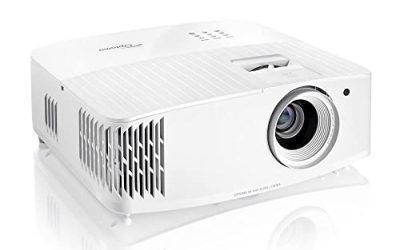
BenQ and Optoma complete the mainstream home theater picture with single-chip DLP models. BenQ’s CinematicColor tuning and factory color calibration are its calling cards, and its home cinema lines are frequently praised for accurate color out of the box. Optoma competes hardest on value, offering 4K DLP and laser models that undercut comparable rivals, which makes it a common recommendation when the theater budget is fixed.
Gaming Ranking
Gaming reverses several home theater priorities. Contrast still matters, but input lag and refresh rate matter more, and brightness matters because few people game in total darkness.
BenQ ranks first for gaming, and this is the least controversial ranking in this article. BenQ was among the first major brands to build dedicated gaming projector lines rather than adding a game mode as an afterthought, and its X series and gaming-oriented TK models publish input lag figures down to the low single digits in milliseconds at high-refresh 1080p modes, with 4K gaming at standard refresh rates also well supported according to BenQ’s own specifications. Specialist coverage of gaming projectors returns to BenQ more consistently than to any other brand, and its models add practical touches such as game-specific picture modes and console-friendly setup.
Optoma ranks second, close behind and often ahead on value. Its gaming lines have long emphasized the same combination — low input lag, high refresh support at 1080p, and 4K models at accessible positions in the range — and Optoma models regularly appear alongside BenQ in gaming roundups. Buyers choosing between the two are usually choosing between BenQ’s color tuning and gaming polish and Optoma’s sharper pricing for similar headline specifications.
Epson ranks third for gaming. Its recent Home Cinema models have improved input lag substantially compared with older generations and work well for casual and console gaming, especially in brighter rooms where 3LCD color brightness helps. Competitive players who count milliseconds, however, still tend to land on the DLP brands first. Sony and JVC, for all their cinema excellence, do not build gaming-first lines, and Samsung and LG gaming performance varies by model rather than being a brand-wide strength. ViewSonic deserves an honorable mention here: its PX series has offered high-refresh gaming models that punch above their position in the range, even if the brand’s overall projector footprint is smaller.
Business and Education Ranking
In meeting rooms and classrooms, the priorities are brightness in lit spaces, reliability over thousands of hours, easy maintenance, and a range that stretches from small portable units to large-venue installation projectors.
Epson ranks first, and by the widest margin of any segment in this article. Its business and education catalog is the deepest in the industry, spanning compact classroom models, short-throw and interactive projectors for teaching, and high-brightness installation lines, all built on 3LCD with equal white and color brightness — a genuine advantage when slides and spreadsheets must stay legible under fluorescent light. Industry trackers have described Epson as the long-running volume leader in projectors overall for many years, and its education and business presence is a large part of why.
BenQ ranks second on the strength of its business and education DLP lines, smart meeting-room models with wireless presentation features, and a strong education presence in many markets. ViewSonic ranks third, with a broad education catalog and interactive display ecosystem that schools often buy into as a package. Optoma’s ProScene installation range and Panasonic’s professional lines matter for large venues and rental, but for the typical office or school buyer, the first three names cover most shortlists.
Portable and Smart Ranking
The portable segment barely existed a decade ago in its current form. It was created by newer companies that treated the projector as a lifestyle gadget: automatic focus and keystone correction, built-in streaming platforms, integrated speakers, and in some cases a battery.
XGIMI ranks first. The Chinese company built its name on smart projectors such as the Horizon and MoGo lines, combining DLP picture quality with automatic setup features — auto-focus, auto-keystone, and screen alignment — and built-in Google TV or Android TV streaming. In portable and lifestyle roundups, XGIMI is the brand that appears most consistently at the top, and it has pushed upward into brighter living-room models while keeping its setup simplicity.
Anker Nebula ranks second. Nebula is the projector arm of Anker, a company known for chargers and audio, and that consumer-electronics heritage shows in products such as the Capsule series of soda-can-sized portables and the larger Cosmos line: tidy industrial design, simple setup, and streaming built in. For genuinely grab-and-go projection — a bedroom ceiling, a garden wall, a hotel room — Nebula’s smallest models are among the most frequently recommended by reviewers.
Samsung ranks third on the strength of The Freestyle, its small lifestyle projector with auto-setup and its Tizen smart platform, backed by a TV giant’s distribution and support. LG’s CineBeam portable lines are a close alternative. The traditional brands play a smaller role here: Epson and BenQ both sell portable models, and BenQ’s GV and GP series are credible, but neither treats lifestyle portability as its identity the way XGIMI and Nebula do.
Ultra-Short-Throw and Laser TV
Ultra-short-throw projectors sit inches from the wall and produce a television-sized image. Samsung’s The Premiere line and LG’s CineBeam models brought TV-brand polish, smart platforms, and mainstream distribution to the category. Epson’s EpiqVision Ultra LS800 line is the 3LCD contender, frequently cited for brightness and low input lag that also suits casual gaming. Hisense, which markets its L series as Laser TV packages sold with matched screens, is the other major force. Shortlist those four companies first and treat everyone else as a challenger.
Company Profiles
Epson — the all-segment benchmark
Epson, part of Seiko Epson Corporation in Japan, is the benchmark against which other projector companies are measured. Every projector it sells uses 3LCD technology, which splits light through three LCD panels so that color brightness equals white brightness — the figure Epson publishes as Color Light Output. There is no spinning color wheel and therefore no rainbow effect, the brief color fringing some viewers see on single-chip DLP models. Its lines cover home cinema, gaming-capable living-room models, ultra-short-throw, education, business, and large-venue installation, which no rival matches in breadth. Weaknesses: its 4K home models use pixel-shifting rather than native 4K panels, and its gaming lag, while improved, trails the best DLP gaming lines.
BenQ — the gaming and color-tuning specialist
BenQ, the Taiwanese brand, built its projector reputation on single-chip DLP, careful color tuning under its CinematicColor banner, and an early, serious commitment to gaming. Its range spans the TK and W home cinema series, the X gaming series, business and education lines, and the GV portable series. BenQ models are repeatedly praised in reviews for accurate color out of the box and for published, verifiable gaming specifications. Weaknesses: as a DLP brand, rainbow effect is a consideration for sensitive viewers, and its premium home theater ceiling sits below the JVC and Sony flagships for pure black level.
Optoma — the value-focused DLP challenger
Optoma, a subsidiary of Taiwan’s Coretronic group, competes by delivering DLP specifications — 4K resolution, laser light sources, low gaming lag — at positions in the range where rivals charge more, and by maintaining an unusually wide catalog from pico portables to ProScene installation models. It is a first stop for value-driven home theater and gaming buyers and for schools and businesses buying in quantity. Weaknesses: its sheer catalog size can be confusing, model turnover is fast, and its color tuning and processing are less often singled out for praise than BenQ’s.
Sony — native 4K cinema pedigree
Sony brings two assets no rival can copy: SXRD, its own reflective panel technology, and decades of professional cinema heritage through its digital cinema projectors used in commercial theaters. Its home line concentrates on premium native 4K laser models for dedicated rooms, with image processing derived from its television and cinema businesses. Weaknesses: the range is narrow and premium-focused, there is no meaningful Sony presence in business, education, or portable projection, and gaming is not a design priority.
JVC — the black-level reference
JVC, part of Japan’s JVCKenwood group, is the cinephile’s reference brand. Its D-ILA panels deliver the native contrast that reviewers consistently place at the top of consumer projection, and its flagship lines add high-end features such as 8K pixel-shifting input and precision lens systems. JVC does almost nothing else in projection — no portables, no classroom lines — and that single-mindedness is exactly why it leads the premium theater ranking. Weaknesses: a narrow, premium range and little to offer buyers outside dedicated theater rooms.
LG — the television giant’s second screen
LG’s CineBeam line applies the company’s television strengths — webOS smart platform, tidy design, strong retail presence — to projection, with credible entries in portable, living-room 4K, and ultra-short-throw categories. LG is rarely the enthusiast’s first pick in any single segment, but it is often the easiest quality projector to buy, set up, and get serviced. Weaknesses: lineups change with television product cycles, and dedicated home theater depth is limited compared with Epson or BenQ.
Samsung — laser TV and lifestyle reach
Samsung’s projector business mirrors its television strategy: The Premiere ultra-short-throw line for living rooms that want a very large screen without a ceiling mount, and The Freestyle for portable lifestyle use, both running the Tizen platform familiar from its TVs. Distribution, marketing, and support are Samsung-scale advantages. Weaknesses: the traditional long-throw home theater and gaming segments are essentially absent from its range, so theater builders will look elsewhere.
XGIMI — the smart projector pioneer
XGIMI, founded in Chengdu, China, is the company most responsible for defining the modern smart projector: DLP image quality, automatic focus and alignment, built-in streaming, and speakers good enough that no extra hardware is needed. Its Horizon line anchors living rooms and its MoGo line anchors portability. Weaknesses: brightness on the portable models suits dark rooms best, and its long-term support network outside its home market is still maturing compared with the Japanese and Korean giants.
Anker Nebula — portability as a consumer gadget
Nebula applies Anker’s consumer-electronics playbook — compact design, simple setup, sensible pricing tiers — to projectors, from the Capsule series that made truly pocketable projection popular to the Cosmos line for bedrooms and small living rooms. It is a brand for people who would never ceiling-mount anything. Weaknesses: its brightest models still trail conventional home projectors for large screens in lit rooms, and it has no presence in installation, business, or premium theater segments.
How to Choose a Company, Not Just a Model
Start with your room and main use, find the segment table that matches, and take its top two or three companies as your shortlist. Then check technology fit: if you notice rainbow artifacts on DLP, lean toward Epson’s 3LCD or the reflective panels from Sony and JVC; if you game competitively, lean toward BenQ or Optoma and verify the published input lag for the exact model and resolution you will play at. Next, check the practicalities brand choice controls — warranty terms, lamp or light-source replacement path, and service options — because a projector is a five-to-ten-year purchase. Finally, compare specific models only within that shortlist.
The honest summary is that there is no single best projector company. There is a best company for a dark theater, for gaming, for a classroom, and for a backpack — and they are four different names. Knowing which question you are asking is most of choosing well.
More from Amazon
Programs that pair well with the guide above. Offers and eligibility are set by Amazon and may change.
Free shipping on eligible items, Prime Video and more. Eligible new members can start with a free trial.
Start a Prime free trialAd-free music streaming. Eligible new subscribers can start with a free trial.
Try Music Unlimited freeA Prime membership for ages 18-24 with a trial period. Eligibility is set by Amazon.
See Prime for Young AdultsAudiobooks and podcasts to listen to on the go. Eligible new members can start with a free trial.
Try Audible freeAs an Amazon Associate we earn from qualifying purchases.