Key takeaways
- What genres do you play most? If your gaming library consists of competitive first-person shooters, fighting games, or high-speed racing simulators, a high polling rate (500Hz to 1000Hz) is crucial for frame-perfect inputs. If you primarily play cozy farming simulators, turn-based RPGs, or third-person action-adventure games, a standard 125Hz to 250Hz rate is indistinguishable from higher speeds and will save you hours of battery life.
- How is your physical desk space organized? A desk crowded with a wireless router, wireless gaming headset, wireless mouse, and wireless keyboard creates a noisy 2.4GHz environment. Pushing a gamepad to a 1000Hz polling rate in a crowded radio-frequency environment can actually cause packet loss, leading to stuttering inputs that feel worse than a stable, lower polling rate.
- What is your tolerance for charging intervals? High polling rates demand significant processing power from the controller’s internal chip. If you do not want to plug your controller in every other day, you should opt for a model that allows you to toggle the polling rate down to 250Hz or 500Hz for casual play sessions.
For years, console and PC gamers alike accepted a simple truth: if you wanted a responsive, lag-free gaming experience, you plugged your controller in. Wireless gamepads were convenient for sofa gaming, but they introduced a subtle, mushy delay that competitive players couldn’t tolerate. That delay is largely dictated by the polling rate—the frequency with which your controller sends input data to your PC.
When learning how to choose polling rate for pc wireless gamepad, many shoppers fall into the trap of chasing the highest number on the box. In the current market, manufacturers heavily advertise “1000Hz” speeds. However, buying a controller based solely on this metric is a mistake. High polling rates can severely degrade wireless battery life, overload older CPU threads, and introduce wireless interference issues if your gaming desk is cluttered with other wireless peripherals. To get the best performance for your specific home setup, you need to understand how polling rate interacts with connection protocols, hardware lifespan, and battery capacity.
Our top picks
 GameSir G7 Pro Wired Controller for Xbox
- Product Group: Video Games
- Binding: CD-ROM
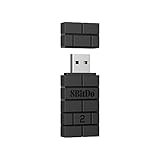
 8Bitdo Ultimate 2C Wireless Controller for Windows
- Product Group: Video Games
- Binding: Video Game
| Product | Key specs | Amazon rating | |
|---|---|---|---|
| GameSir G7 Pro Wired Controller for Xbox | Product Group: Video Games Binding: CD-ROM | 4.3★ | Check price |
| 8Bitdo Ultimate 2C Wireless Controller for Windows | Product Group: Video Games Binding: Video Game | 4.6★ | Check price |
 Wireless PC Gaming Controller Wireless PC Gaming Controller | – | Check price | |
 8Bitdo Ultimate 2C Wireless Controller for Windows 8Bitdo Ultimate 2C Wireless Controller for Windows | Product Group: Video Games Binding: Video Game | 4.1★ | Check price |
As an Amazon Associate we earn from qualifying purchases at no extra cost to you. Ratings are shown as listed on Amazon.
Decide These 3 Things First
Before diving into the technical specifications of individual gamepads, you must clarify how you intend to use the controller within your living space or home office. Answering these three questions first will immediately narrow down your options:
- What genres do you play most? If your gaming library consists of competitive first-person shooters, fighting games, or high-speed racing simulators, a high polling rate (500Hz to 1000Hz) is crucial for frame-perfect inputs. If you primarily play cozy farming simulators, turn-based RPGs, or third-person action-adventure games, a standard 125Hz to 250Hz rate is indistinguishable from higher speeds and will save you hours of battery life.
- How is your physical desk space organized? A desk crowded with a wireless router, wireless gaming headset, wireless mouse, and wireless keyboard creates a noisy 2.4GHz environment. Pushing a gamepad to a 1000Hz polling rate in a crowded radio-frequency environment can actually cause packet loss, leading to stuttering inputs that feel worse than a stable, lower polling rate.
- What is your tolerance for charging intervals? High polling rates demand significant processing power from the controller’s internal chip. If you do not want to plug your controller in every other day, you should opt for a model that allows you to toggle the polling rate down to 250Hz or 500Hz for casual play sessions.
1. Connection Protocol and Polling Rate Limits
The polling rate of a controller is measured in Hertz (Hz), which indicates how many times per second the controller reports its position and button states to your PC. A 125Hz rate reports every 8 milliseconds (ms), 250Hz reports every 4ms, 500Hz reports every 2ms, and 1000Hz reports every 1ms.
However, these speeds are strictly limited by how the controller connects to your PC. Standard Bluetooth connections are generally capped at 125Hz to 250Hz due to bandwidth and latency overhead. If you want a true 500Hz or 1000Hz wireless experience, you must use a controller that includes a dedicated 2.4GHz USB dongle. As we look at the gamepad landscape in 2026, high-performance wireless controllers use proprietary 2.4GHz protocols to bypass the latency limitations of Bluetooth, delivering near-wired performance directly to your desktop.
2. Battery Capacity and Power Consumption
There is a direct, linear relationship between your gamepad’s polling rate and its battery consumption. When a controller transmits data 1,000 times a second, its internal transmitter and microcontroller run at maximum capacity, generating minor heat and draining the battery rapidly.
A standard wireless controller equipped with a 500mAh to 600mAh battery can easily last 30 to 40 hours on a standard 125Hz Bluetooth connection. However, when switched to a 1000Hz rate via a 2.4GHz dongle, that same battery life can plummet to just 8 to 12 hours. If you prefer a low-maintenance setup, look for controllers with larger batteries (800mAh to 1000mAh) or those that include a convenient magnetic charging dock. A charging dock ensures the controller is always topped off between sessions, mitigating the battery-drain penalty of high polling rates.
3. Controller Weight, Form Factor, and Ergonomics
A controller’s internal components, including the battery size and rumble motors, dictate its overall physical weight. Ergonomics and weight are critical for preventing wrist fatigue during long gaming sessions. When choosing a controller, balance the need for a large battery (which supports high polling rates) with physical comfort:
- Lightweight Controllers (180g to 220g): These models are highly agile and comfortable for small hands but often feature smaller batteries (around 350mAh to 500mAh). If run at 1000Hz, you will need to charge them frequently.
- Standard Controllers (220g to 260g): This is the sweet spot for most players. These dimensions (typically around 6 x 4 x 2.5 inches) accommodate a decent 600mAh to 800mAh battery, offering a balanced feel and respectable battery life at 500Hz.
- Heavy/Premium Controllers (260g to 330g): These controllers often feature thick plastic housings, rubberized grips, metal accent parts, and large 1000mAh+ batteries. They feel exceptionally solid and can sustain 1000Hz polling rates for 15+ hours, but the added weight can cause wrist strain if your hands are resting unsupported.
4. Joystick and Trigger Technology (Hall Effect vs. Potentiometer)
A high polling rate is useless if the physical sensors inside your controller are inaccurate or prone to degradation. Traditional controllers use carbon-film potentiometers for their joysticks and triggers. Over time, these physical contacts wear down, causing “stick drift”—where the controller registers movement even when you aren’t touching the sticks.
To truly benefit from a 500Hz or 1000Hz polling rate, prioritize controllers equipped with Hall Effect joysticks and triggers. Hall Effect sensors use magnets and electrical conductors to measure position without any physical contact. Because there is no friction, these sensors virtually never wear out (often rated for over 5 million cycles) and do not develop drift. When paired with a 1000Hz polling rate, Hall Effect sensors provide incredibly smooth, micro-accurate inputs that translate instantly to your screen.
5. Price Tiers and Value Propositions
The market for PC wireless gamepads has changed dramatically, making high polling rates highly accessible even on a tight budget. Understanding what you get at each price tier prevents you from overpaying for features you do not need:
- Budget Tier ($25 to $40): In this range, you can find excellent entry-level controllers (such as the 8BitDo Ultimate 2C) that offer Hall Effect sticks and a genuine 1000Hz polling rate over a 2.4GHz wireless connection. However, these models usually lack premium features like rubberized grips, swappable parts, or advanced configuration software.
- Mid-Range Tier ($45 to $80): This tier introduces superior build quality, larger battery capacities (up to 1000mAh), integrated charging docks, and remappable back buttons. Controllers in this range offer the best balance of longevity, performance, and extra features.
- Premium Tier ($90 to $180+): Premium controllers cater to enthusiasts and competitive players. They feature mechanical microswitch buttons (which feel like a clicky mouse), adjustable trigger stops, swappable thumbstick tension, and highly customizable software profiles to fine-tune your polling rate, dead zones, and vibration intensity.
6. Warranty and Customer Support
Because gamepads are subjected to continuous physical wear, button mashing, and occasional drops, the manufacturer’s warranty is a critical factor. When buying a controller, look closely at the warranty duration. Budget brands often offer only a basic 30-day or 90-day return window. Established brands typically provide a 1-year limited warranty. Given that wireless chips and internal microcontrollers running at high polling rates can occasionally suffer from firmware corruption or connection instability, a robust 12-month warranty ensures your investment is protected.
Spec Checklist
Use this quick-reference table to match your performance needs with the appropriate controller specifications:
| Specification | Budget Setup | Mid-Range Setup | Premium Setup |
|---|---|---|---|
| Wireless Polling Rate | 125Hz to 250Hz | 250Hz to 500Hz | 1000Hz (True 1ms) |
| Connection Type | Bluetooth 5.0 / Wired | 2.4GHz Dongle / Bluetooth | Proprietary Ultra-Low Latency 2.4GHz |
| Joystick Type | Standard Potentiometer | Hall Effect (Anti-Drift) | Premium Hall Effect with customizable tension |
| Battery Capacity | 350mAh – 500mAh | 600mAh – 800mAh | 1000mAh+ or Charging Dock Included |
| Weight | 180g – 210g | 220g – 250g | 260g – 320g (Adjustable weights) |
| Target Price | $25 – $40 | $45 – $80 | $90 – $180+ |
Red Flags
When shopping for a wireless PC gamepad, look out for these misleading marketing tactics and design flaws:
- “1000Hz Polling Rate over Bluetooth”: This is a physical and technical impossibility under standard Bluetooth protocols. If a manufacturer claims 1000Hz speeds without requiring a 2.4GHz USB dongle or a wired connection, they are misrepresenting their specs.
- No Polling Rate Toggle in Software: Avoid controllers that force a permanent 1000Hz polling rate without any way to lower it. If you cannot drop the rate to 250Hz or 500Hz, you will be forced to deal with rapid battery drain even during casual, slow-paced games.
- Lightweight Controllers with “High-Capacity” Claims: If a controller weighs under 200 grams but claims to have a 1000mAh battery and a 40-hour lifespan at 1000Hz, the numbers do not add up. High-capacity lithium batteries have physical weight; extremely light controllers always feature smaller, shorter-lived batteries.
- Unbranded 2.4GHz Dongles: Ensure the USB dongle is compact and well-shielded. Cheap, oversized dongles can overheat during high-frequency data transmission, leading to sudden disconnections in the middle of a game.
FAQ
Does a 1000Hz polling rate actually make a difference in casual PC gaming?
For casual games like cozy simulators, turn-based RPGs, or puzzle games, a 1000Hz polling rate offers no noticeable benefit. The difference in input delay between 125Hz (8ms) and 1000Hz (1ms) is only critical in fast-paced, competitive scenarios where split-second reactions matter. For casual gaming, setting your controller to 250Hz is ideal, as it provides a smooth experience while drastically extending your battery life.
Can I run a wireless controller at 1000Hz on a Steam Deck or Nintendo Switch?
Most console operating systems and handheld consoles like the Nintendo Switch are hard-coded to poll controllers at lower rates (typically 125Hz). Even if you connect a 1000Hz-capable wireless controller to a Nintendo Switch, the console will downsample the inputs to its native limit. True high-polling-rate performance is currently only fully supported on Windows PCs and high-end Linux desktop environments.
Why does my wireless gamepad experience lag even when set to 500Hz or 1000Hz?
This is almost always caused by wireless signal interference. High polling rates require a clean, uninterrupted line of sight between the USB dongle and the controller. If your dongle is plugged into the back of a metal PC tower, or if it is sitting right next to a Wi-Fi router or wireless headset transmitter, the signal will drop packets. Try using a USB extension cable to bring the dongle closer to your controller on your desk.
Is a wired controller always better than a 1000Hz wireless controller?
Historically, yes. However, modern 2.4GHz wireless protocols have advanced to the point where the latency difference is virtually imperceptible to the human hand. A high-quality wireless controller running on a clean 1000Hz connection will feel identical to a wired connection. The only remaining advantage of a wired controller is that it never needs to be charged and is entirely immune to wireless signal interference.