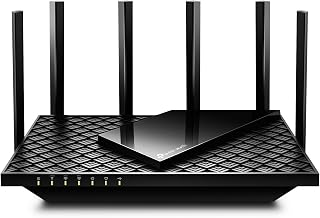
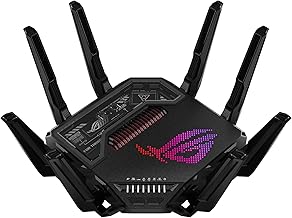
Our Top Picks
 NETGEAR Nighthawk Pro Gaming 6-Stream WiFi 6 RouterExtra Large11.61 x 7.87 x 2.51 inches1.32 poundsCheck on Amazon

As an Amazon Associate, we earn from qualifying purchases made through links on this page.
NETGEAR’s Nighthawk line is the part of the company’s router range aimed at people who push their home network hard: gaming PCs and consoles that need a stable, low-latency connection, households streaming 4K video in several rooms at once, and homes with multi-gig fiber plans that a basic ISP router cannot keep up with. Every model in this roundup is a genuine Nighthawk, from the current WiFi 7 flagships down to the dedicated Pro Gaming model with DumaOS software.
The five routers below cover the realistic buying situations. If you have a multi-gig internet plan and WiFi 7 devices, the RS700S sits at the top of the range. The RS300 brings tri-band WiFi 7 to smaller homes. The RAXE500 and RAXE300 are the WiFi 6E models, still the sensible choice if your phones, laptops and consoles top out at WiFi 6E. The XR1000 is the gaming specialist: older WiFi 6 hardware, but with traffic controls none of the others match. All five are standalone routers, not mesh systems, so each one is judged on its own radios, ports and coverage.
What to look for in a Nighthawk router
WiFi generation and bands. WiFi 7 (802.11be) adds 320 MHz channels on the 6 GHz band and Multi-Link Operation, which lets a compatible device use two bands at once. WiFi 6E (802.11ax) also has a 6 GHz band, but with 160 MHz channels and no Multi-Link Operation. A tri-band design matters because the 6 GHz band stays clear of the congestion on 2.4 GHz and 5 GHz, which is where older neighbors’ networks pile up. Dual-band models like the XR1000 rely on software, not spectrum, to keep gaming traffic smooth.
Match the ports to your internet plan. A router with only gigabit ports caps a faster fiber plan at the port, no matter how quick the WiFi is. For plans above 1 Gbps, look for a 2.5 Gbps or 10 Gbps internet port. Wired gaming PCs also benefit: a 2.5 Gbps or 10 Gbps LAN port keeps a desktop or a home server from becoming the bottleneck during game downloads and local file transfers.
Coverage and device counts are manufacturer figures. The square-foot figures quoted below come from NETGEAR’s own listings and assume favorable conditions. Thick walls, floors and metal appliances cut real range. Device counts describe how many connections the hardware is designed to handle, and they matter in smart homes where dozens of low-bandwidth gadgets sit on the 2.4 GHz band alongside your gaming gear.
Gaming software. Most Nighthawks use the Nighthawk app and a standard set of QoS tools. The XR1000 is the exception: it runs DumaOS, built by Netduma specifically for gaming, with a geo-filter that limits which game servers you connect to and a traffic controller that reserves bandwidth per device. If server selection and ping control are your priority, that software is the reason to pick it over faster hardware.
Security subscriptions. NETGEAR Armor, powered by Bitdefender, and NETGEAR Smart Parental Controls are built into these routers, but continued use after any included period requires a paid subscription. Factor that into the long-term cost if those features are part of your plan, and note that basic firewall, WPA3 encryption and guest networks work without one.
1. NETGEAR Nighthawk RS700S — the WiFi 7 flagship

See the NETGEAR Nighthawk RS700S on Amazon
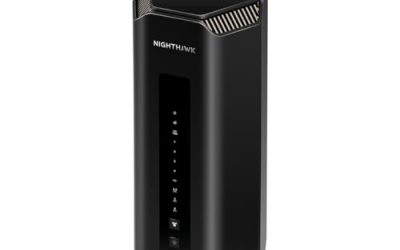
The RS700S (model RS700S-100NAS) is the fastest standalone router in the Nighthawk range. It is a tri-band WiFi 7 router rated BE19000: up to 11.5 Gbps on the 6 GHz band, 5.8 Gbps on 5 GHz and 1.4 Gbps on 2.4 GHz, using 320 MHz channels and 4K-QAM modulation. Twelve streams, Multi-Link Operation and a quad-core 2.6 GHz processor with 2 GB of RAM keep it composed when many devices are active at once. NETGEAR rates coverage at up to 3,500 square feet and up to 200 connected devices.
The wired side is what separates it from most rivals. The internet port runs at 10 Gbps, so it can take a multi-gig fiber plan without a bottleneck, and there is a second 10 Gbps LAN port for a gaming PC or NAS, plus four gigabit LAN ports and a USB 3.0 port for ReadySHARE storage. NETGEAR Armor is included for the first year on this model.
Who it is for: households on multi-gig fiber with WiFi 7 phones and laptops, large homes that need one powerful router rather than a mesh kit, and anyone who wants a wired 10 Gbps path to a gaming rig.
Limitations to know: it is a standalone router with no mesh expansion, so a very large or awkwardly shaped home may still have dead spots. Only WiFi 7 clients can use the 320 MHz channels and Multi-Link Operation; older devices connect at their own lower speeds. Armor and parental controls move to a paid subscription after the included period, and the tower chassis needs open shelf space for ventilation.
2. NETGEAR Nighthawk RS300 — tri-band WiFi 7 for mid-size homes

See the NETGEAR Nighthawk RS300 on Amazon
The RS300 (model RS300-100NAS) is the step-down WiFi 7 model, and for many homes it is the sweet spot in the range. It is a tri-band BE9300 router rated at up to 9.3 Gbps combined: 5.8 Gbps on 6 GHz, 2.9 Gbps on 5 GHz and 0.7 Gbps on 2.4 GHz. It keeps the key WiFi 7 features, including 320 MHz channels on the 6 GHz band and Multi-Link Operation, and NETGEAR rates it for up to 2,500 square feet and up to 100 devices.
Ports are generous for the class: a 2.5 Gbps internet port, two 2.5 Gbps LAN ports and two gigabit LAN ports, plus a USB 3.0 port. That means a gaming PC and a console or NAS can both sit on multi-gig wired connections while the router handles a 2 Gbps-class internet plan. A quad-core 2.0 GHz processor runs the system.
Who it is for: apartments and mid-size homes on gigabit or 2 Gbps plans, gamers who want WiFi 7 and a clear 6 GHz band without paying for the flagship, and households with a mix of streaming, work calls and gaming.
Limitations to know: the 5 GHz band is a 2.9 Gbps configuration, so WiFi 6 and 6E devices that cannot use 6 GHz get less headroom than on the RS700S. Coverage is rated lower, at 2,500 square feet, and there is no 10 Gbps port, so it is not the pick for internet plans faster than 2.5 Gbps.
3. NETGEAR Nighthawk RAXE500 — the WiFi 6E flagship

See the NETGEAR Nighthawk RAXE500 on Amazon
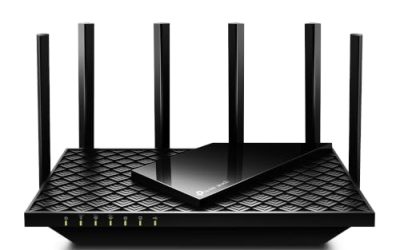
The RAXE500 (model RAXE500-100NAS) was NETGEAR’s first WiFi 6E router and remains its top 6E model. It is a tri-band AXE11000 design rated at up to 10.8 Gbps: 4.8 Gbps on the 6 GHz band, 4.8 Gbps on 5 GHz and 1.2 Gbps on 2.4 GHz, across twelve streams. Eight external antennas fold out from the winged chassis, and a 1.8 GHz quad-core processor with 1 GB of RAM drives the radios. NETGEAR rates coverage at up to 3,500 square feet and up to 60 devices.
For wired connections there is a configurable 2.5 Gbps multi-gig port that can serve as the internet connection or as a fast LAN link, four gigabit LAN ports, and two USB 3.0 ports, more USB connectivity than the newer RS models provide. NETGEAR Armor and Smart Parental Controls are built in, managed through the Nighthawk app.
Who it is for: homes whose fastest devices are WiFi 6E rather than WiFi 7, large households that need the strong 5 GHz performance for many simultaneous streams and game sessions, and users who want two USB ports for shared storage or a printer.
Limitations to know: WiFi 6E cannot use 320 MHz channels or Multi-Link Operation, so WiFi 7 clients connect as 6E clients. There is only one multi-gig port, so you cannot feed a faster-than-gigabit internet plan and a multi-gig wired device at full speed at the same time. The wide winged chassis takes up more shelf space than the RS towers.
4. NETGEAR Nighthawk RAXE300 — WiFi 6E at a mid-range step
See the NETGEAR Nighthawk RAXE300 on Amazon
The RAXE300 (model RAXE300-100NAS) brings the 6 GHz band down to a mid-range model. It is a tri-band AXE7800 router rated at up to 7.8 Gbps: 4.8 Gbps on 5 GHz, 2.4 Gbps on 6 GHz and 0.6 Gbps on 2.4 GHz, across eight streams. NETGEAR rates coverage at up to 2,500 square feet and up to 40 devices, which fits apartments and smaller houses well.
The port layout mirrors the RAXE500 in miniature: one 2.5 Gbps port that can be assigned to the internet connection or the LAN, four gigabit LAN ports (two of which support link aggregation for a NAS), and one USB 3.0 port. A 1.7 GHz quad-core processor handles routing, and setup runs through the Nighthawk app.
Who it is for: gamers in apartments or small homes who want a dedicated, uncongested 6 GHz band for a WiFi 6E laptop or console, and households upgrading from WiFi 5 that want a clear step up without flagship pricing tiers.
Limitations to know: the 6 GHz band runs at 2.4 Gbps, half the width of the RAXE500’s, so a single 6E device gets less peak throughput. The 40-device capacity figure is the lowest here alongside the XR1000 class of hardware, which matters in gadget-heavy homes. Renewed versions of this model circulate under separate listings, so check the condition field on the product page before ordering if you want a new unit.
5. NETGEAR Nighthawk XR1000 — the DumaOS gaming specialist
See the NETGEAR Nighthawk XR1000 on Amazon
The XR1000 (model XR1000-100NAS) is the Pro Gaming entry in the line, and its hardware tells only half the story. It is a dual-band WiFi 6 router rated AX5400, up to 5.4 Gbps combined (4.8 Gbps on 5 GHz and 0.6 Gbps on 2.4 GHz) across six streams, with four external antennas, a triple-core 1.5 GHz processor, four gigabit LAN ports, one gigabit WAN port and a USB 3.0 port.
What sets it apart is DumaOS 3.0. Its geo-filter lets you draw a radius or pick regions so matchmaking only connects you to nearby game servers. The QoS engine can prioritize a console or PC automatically when it detects game traffic, the traffic controller caps how much bandwidth any single device can consume, and there is a gaming dashboard that shows ping and network activity in real time, plus hybrid VPN support for routing specific devices through a VPN.
Who it is for: competitive players on gigabit-or-slower plans who care more about which servers they reach and how stable their ping is than about raw WiFi speed, and households where one person’s downloads keep ruining another person’s matches.
Limitations to know: it is dual-band only, with no 6 GHz band, so WiFi 6E and WiFi 7 devices fall back to 5 GHz. Every port is gigabit, which makes it a poor match for internet plans faster than 1 Gbps. It is an older design than the other routers here, and current Amazon stock is largely third-party and renewed units, so check the seller and condition on the listing.
Comparison table
| Model | WiFi class | Bands | Rated speed | Fastest port | Coverage (NETGEAR figure) | Standout feature |
|---|---|---|---|---|---|---|
| RS700S | WiFi 7 | Tri-band | BE19000, up to 19 Gbps | 10 Gbps WAN and LAN | Up to 3,500 sq ft | Fastest Nighthawk, dual 10 Gbps ports |
| RS300 | WiFi 7 | Tri-band | BE9300, up to 9.3 Gbps | 2.5 Gbps | Up to 2,500 sq ft | WiFi 7 with two 2.5 Gbps LAN ports |
| RAXE500 | WiFi 6E | Tri-band | AXE11000, up to 10.8 Gbps | 2.5 Gbps | Up to 3,500 sq ft | 12 streams, two USB 3.0 ports |
| RAXE300 | WiFi 6E | Tri-band | AXE7800, up to 7.8 Gbps | 2.5 Gbps | Up to 2,500 sq ft | 6 GHz band in a mid-range model |
| XR1000 | WiFi 6 | Dual-band | AX5400, up to 5.4 Gbps | 1 Gbps | Smaller homes | DumaOS geo-filter and gaming QoS |
FAQ
Is a Nighthawk router also a modem?
No. Every model in this roundup is a router only, so it connects to the modem or fiber ONT your internet provider supplies. If your provider gave you a combined gateway, you can usually put it in bridge mode and let the Nighthawk handle routing and WiFi.
Do I need WiFi 7, or is WiFi 6E enough?
WiFi 7 helps if you own WiFi 7 phones or laptops and have a fast internet plan, thanks to 320 MHz channels and Multi-Link Operation on the RS700S and RS300. If your fastest devices are WiFi 6E, the RAXE500 and RAXE300 use the same 6 GHz band and will serve them just as well today.
Which Nighthawk is best for competitive gaming?
For wired play on a gigabit plan, the XR1000’s DumaOS geo-filter and QoS give you control over server selection and traffic priority that the faster models lack. If you game over WiFi on a WiFi 6E or WiFi 7 device, the clear 6 GHz band on the RS300 or RAXE300 usually matters more than software controls.
Can one Nighthawk replace a mesh system?
The RS700S and RAXE500 are rated for up to 3,500 square feet, which covers many single-story and two-story homes from a central spot. Nighthawk routers do not form a mesh with each other, so for long, multi-floor or thick-walled homes a mesh system or a wired access point may still cover better than any single router.
What do NETGEAR Armor and Smart Parental Controls cost to keep?
Both are subscription services after any included or trial period ends. The routers’ core functions, including WPA3 security, guest networks and QoS, keep working without a subscription; Armor adds threat protection and the parental controls add content filtering and usage reports.
Conclusion
Pick the RS700S if you have a multi-gig plan and WiFi 7 devices and want the strongest single Nighthawk NETGEAR sells. Choose the RS300 for the same WiFi 7 foundation in a smaller home. The RAXE500 remains the WiFi 6E flagship for big households, the RAXE300 is its sensible mid-range counterpart, and the XR1000 trades raw speed for DumaOS gaming controls that competitive players will genuinely use. Match the router to your internet plan’s port speed first, then to the WiFi generation your devices actually support, and any of the five will be a clear step up from a basic provider router.
More from Amazon
Programs that pair well with the guide above. Offers and eligibility are set by Amazon and may change.
Free shipping on eligible items, Prime Video and more. Eligible new members can start with a free trial.
Start a Prime free trialAd-free music streaming. Eligible new subscribers can start with a free trial.
Try Music Unlimited freeA Prime membership for ages 18-24 with a trial period. Eligibility is set by Amazon.
See Prime for Young AdultsAudiobooks and podcasts to listen to on the go. Eligible new members can start with a free trial.
Try Audible freeAs an Amazon Associate we earn from qualifying purchases.