Key takeaways
- Compare the best 61 key keyboards: portable 61-key pianos with touch response, hundreds of tones and USB-MIDI for learning, practice and live performance.
Sixty-one keys is the sweet spot for a first keyboard: five octaves cover most songs a beginner will learn, the instrument stays light enough to carry, and the price stays within reach of a learner who is not yet sure how far the hobby will go. The real decision is not the number of keys but how they feel under your fingers, how many sounds the keyboard offers, and whether it connects to a computer or a tablet for lessons. A keyboard that sounds good and feels right gets played every day, and that is what turns a beginner into a player.
This guide is for new players choosing a first 61-key keyboard, parents buying for a child, and hobbyists returning to music after years away. Every keyboard below is a musical keyboard with 61 piano-style keys, chosen from the names and specifications on its Amazon page, with the key feel, tone count and connectivity that decide whether a first keyboard stays fun long enough to learn on.
Quick Picks
As an Amazon Associate we earn from qualifying purchases
| Product | Best for | Key spec from title |
|---|---|---|
| Casio CT-X700 | A 61-key arranger with hundreds of sounds | 61 touch-responsive keys, 600 tones, 195 rhythms, AiX sound |
| Yamaha PSR-E273 | A simple 61-key starter for first lessons | 61 keys, 384 voices, 32-note polyphony, power adapter sold separately |
| Casio CT-S400 | A light 61-key keyboard for travel and practice | 61 touch-responsive keys, 600 tones, 200 rhythms, pitch bend wheel |
| Alesis Melody 61 MKII | A complete 61-key starter kit | 61 piano-style keys, 300 sounds, 300 rhythms, stand and bench included |
How to Choose
Key feel and touch response
Touch response is the feature that separates a toy from an instrument, because it lets a soft press sound quiet and a hard press sound loud. All four keyboards here have touch-responsive keys, but the feel differs: the Casio models have a light, fast action that suits quick practice, while the Alesis keys feel firmer under the fingers. Try to play the same simple melody on any keyboard you can reach in a shop, and notice whether the keys return quickly after each press. A keyboard with stiff or sluggish keys makes practice tiring, and a beginner who tires early practices less.
Tones, rhythms and polyphony
Tones are the sounds a keyboard can make, and rhythms are the backing patterns it plays along with, and both matter more than they first appear. A large tone library keeps practice interesting, because a learner can switch from piano to strings to synth without buying anything new. Polyphony is the number of notes the keyboard can sound at once, and a low count cuts notes off when a chord overlaps a melody. The Casio models lead here with 600 tones each, while the Yamaha offers 384 voices and the Alesis offers 300 sounds, so match the library to how much variety the player wants.
Connectivity and lessons
A modern keyboard should connect to the devices a learner already owns, because apps and online lessons do most of the teaching now. USB-MIDI lets the keyboard talk to a computer, a tablet or a phone, so lesson apps can follow the notes being played and point out mistakes. A headphone jack matters just as much, because it lets a beginner practice late at night without waking the house. Check the listing for the exact ports, and confirm whether a power adapter is included, since the Yamaha ships without one and needs either the adapter or batteries.
Size, weight and what is included
A 61-key keyboard is meant to move, so weight and width decide where it can go. The lightest models here weigh under ten pounds, which suits a player who carries the keyboard to lessons or to a friend’s house, while the Alesis kit trades portability for completeness, with a stand, a bench, headphones and a microphone in the box. Measure the space where the keyboard will live, because 61 keys still need more than three feet of width. A kit saves a beginner from buying a stand and a bench separately, but a bare keyboard suits a player who already owns them.
The 4 Best Options
Casio CT-X700

The CT-X700 is the most complete arranger keyboard here, with 600 tones and 195 rhythms driven by Casio’s AiX sound engine, which gives the piano and string sounds more depth than the price suggests. The 61 full-size touch-responsive keys feel quick and light, and the USB-MIDI port connects the keyboard to a computer or a tablet for lessons and recording. An AC adapter comes in the box, so the keyboard plays straight out of the packaging, and the headphone jack allows quiet practice. It is the pick for a learner who wants the widest sound library and the most room to grow without buying a second keyboard.
Specs
- 61 full-size touch-responsive keys
- 600 tones and 195 rhythms
- AiX sound engine
- Class-compliant USB-MIDI
- 1/4 inch headphone out
- AC adapter included
Best for: A learner who wants the widest sound library
Watch out for: The deep tone menu takes time to learn, so a total beginner should start with the piano voice before exploring the rest.
Yamaha PSR-E273
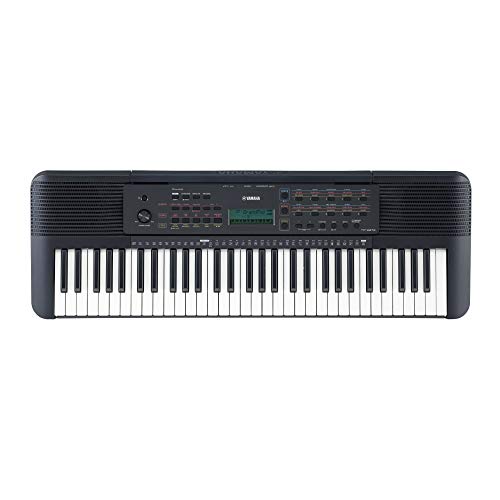
The PSR-E273 is the simplest keyboard here, and that simplicity is its strength for a first-time player. The 61 keys respond to touch, the 384 voices cover piano, organ, strings and synth, and the built-in lesson functions walk a beginner through songs step by step. It is a Yamaha, so the piano voice sounds clean and the build feels solid, and the compact body fits a small room or a desk. The power adapter is sold separately, so budget for the adapter or a set of batteries, and check the listing before ordering, since the keyboard alone will not play without power.
Specs
- 61 keys with touch response
- 384 voices and 17 drum kits
- 32-note polyphony
- Built-in lesson functions
- Power adapter sold separately
Best for: A simple first keyboard for structured lessons
Watch out for: The adapter is not in the box, so the keyboard needs the Yamaha adapter or batteries before it will play.
Casio CT-S400

The CT-S400 is the lightest and most portable keyboard here, weighing under ten pounds, which makes it the pick for a player who carries the instrument to lessons or to a friend’s house. The 61 full-size touch-responsive keys sit under a pitch bend wheel, and the AiX sound engine drives 600 tones and 200 rhythms, with a bass-reflex speaker system that sounds bigger than the slim case suggests. USB-MIDI connects to the Chordana Play app, and the headphone jack keeps practice private. It is the most modern-feeling keyboard here, and the slim case fits in a car or on a crowded desk.
Specs
- 61 full-size touch-responsive keys
- 600 tones and 200 rhythms
- Pitch bend wheel
- AiX sound engine
- USB-MIDI with Chordana Play app support
- Weighs under 10 pounds
Best for: A light keyboard for travel and app-based practice
Watch out for: The slim speakers suit a bedroom, but a larger room may need headphones or an external speaker for full volume.
Alesis Melody 61 MKII

The Alesis Melody 61 MKII is the only complete kit here, and it is the pick for a beginner who owns nothing yet. The box holds the 61-key keyboard, a stand, a bench, headphones, a microphone, a music rest and a power adapter, so the first lesson can start the day the box arrives. The keyboard itself offers 300 sounds and 300 rhythms, with layering and split modes that let two sounds play at once or divide the keys between two players. It is the heaviest option here because of the kit, but the headphones mute the speakers for private practice, which matters in a shared home.
Specs
- 61 piano-style keys
- 300 built-in sounds and 300 rhythms
- 40 demo songs
- Stand, bench, headphones and microphone included
- Power adapter included
- Layering and split modes
Best for: A complete starter kit with stand, bench and headphones
Watch out for: The kit takes more space than a bare keyboard, and the stand and bench need assembly before the first lesson.
Which One Fits Your Situation
A first keyboard for a child
The Alesis Melody 61 MKII is the pick for a child, because the kit includes everything and the headphones keep practice quiet. The stand and bench set the right height, and the 300 sounds keep a young player curious. The Yamaha PSR-E273 is the backup when the room is small and the kit is too much.
Learning with an app or online lessons
The Casio CT-S400 leads for app-based learning, because USB-MIDI connects to the Chordana Play app and the light body moves to wherever the tablet sits. The CT-X700 is the second choice, with the same USB-MIDI connection and a larger tone library for players who outgrow the app.
A hobbyist returning to music
The Casio CT-X700 suits a returning player, because the 600 tones and 195 rhythms offer more to explore than a basic starter. The pitch bend and the arranger features reward a player who already reads music, and the AiX sound engine makes the piano voice worth sitting down for.
A small room or a shared home
The Casio CT-S400 fits a small room best, because it is the lightest and slimmest keyboard here, and the headphone jack keeps practice private. The Yamaha PSR-E273 is the quiet second pick, with a compact body and a clean piano voice that sounds good at low volume.
Common Mistakes
- Buying a keyboard without checking whether the power adapter is included, then finding it will not play.
- Choosing by tone count alone and ignoring how the keys feel under the fingers.
- Skipping the headphone jack, then discovering practice has to stop when the house sleeps.
- Picking an 88-key keyboard for a small room, when 61 keys cover most beginner songs.
- Forgetting to measure the width, then finding the keyboard does not fit the desk or the stand.
Frequently Asked Questions
Is 61 keys enough for a beginner?
Yes, 61 keys cover five octaves, which is enough for almost every song a beginner learns in the first two years. Advanced classical pieces need the full 88-key range, but a learner who reaches that level will know it and can upgrade then. Starting with 61 keys keeps the instrument light, portable and affordable.
Do I need weighted keys to learn piano?
Weighted keys feel closer to a real piano, but they are not required to learn notes, chords and rhythm. All four keyboards here have touch-responsive keys, which is the feature that matters most at the start, because it teaches dynamics. A beginner can learn properly on touch-responsive keys and move to weighted keys later if piano becomes the focus.
What is the difference between tones and rhythms?
Tones are the sounds the keyboard makes, such as piano, strings or synth, while rhythms are backing patterns that play drums and bass along with you. A large tone library gives more sounds to explore, and rhythms turn solo practice into a band session. The Casio models lead on both counts, with 600 tones each.
Can I connect a 61-key keyboard to a computer?
Yes, if the keyboard has USB-MIDI, which all four models here offer in some form. A USB cable connects the keyboard to a computer, a tablet or a phone, so lesson apps can follow the notes and recording software can capture the performance. Check the listing for the exact port before ordering, since older models may need an adapter.
FAQ
Is 61 keys enough for a beginner?
Do I need weighted keys to learn piano?
What is the difference between tones and rhythms?
Can I connect a 61-key keyboard to a computer?
More from Amazon
Programs that pair well with the guide above. Offers and eligibility are set by Amazon and may change.
Free shipping on eligible items, Prime Video and more. Eligible new members can start with a free trial.
Start a Prime free trialAd-free music streaming. Eligible new subscribers can start with a free trial.
Try Music Unlimited freeA Prime membership for ages 18-24 with a trial period. Eligibility is set by Amazon.
See Prime for Young AdultsAudiobooks and podcasts to listen to on the go. Eligible new members can start with a free trial.
Try Audible freeAs an Amazon Associate we earn from qualifying purchases.