Our Short List of 3

- Wi-Fi: Wi-Fi 7, dual band, BE5000
- Coverage: Up to 6,600 square feet, 3-pack
- Ports: 2 x 2.5G per unit
- AI features: AI roaming, AI-driven mesh

- Wi-Fi: Wi-Fi 6, dual band, AX3000
- Coverage: Up to 6,500 square feet, 3-pack
- Devices: Up to 150
- Ports: 3 Gigabit per unit

- Wi-Fi: Wi-Fi 6E, tri-band
- Bands: 2.4GHz, 5GHz, 6GHz
- Ports: 2.5G Ethernet
- Mesh: eero mesh system, add nodes as needed
All 3 Picks at a Glance
| Product | Specs | Action |
|---|---|---|
| TP-Link Deco BE25 |
| Check price on Amazon |
| TP-Link Deco X55 |
| Check price on Amazon |
| eero Pro 6E |
| Check price on Amazon |
Our Top Picks
The best AI mesh routers use AI-driven mesh technology to learn the home network and steer each device to the strongest node without manual tuning. AI mesh is the feature that separates these systems from ordinary mesh: the system watches the network environment, the client quality, and the usage habits of the household, then adjusts routing, band steering and roaming on its own. The result is a single network name across the whole home, with devices handed off between nodes as their owners move from room to room, and with dead zones filled without the owner touching a setting.
This guide covers three AI mesh systems: the TP-Link Deco BE25, the TP-Link Deco X55, and the eero Pro 6E. All three advertise AI-driven mesh, roaming and optimisation, and they differ in Wi-Fi generation, band count, coverage and management style. The BE25 leads on Wi-Fi 7 and modern features, the X55 leads on value and proven coverage, and the eero Pro 6E leads on simplicity and the 6GHz band. Two of the three ASINs were confirmed fresh in this round through Amazon search results, and the third comes from a prior-batch verification. Every one of them needs a live check before publishing, because no product page could be opened in this round.
How to Choose
1. What AI mesh actually does
AI-driven mesh is not a single feature, and the label means different things on different systems. On the Deco systems, AI-driven mesh means the system learns the network environment, the client quality and the user behaviour, then adjusts routing and roaming automatically. On the eero system, the mesh uses machine learning to optimise routing between nodes. In practice, the benefit is the same: the network adapts to the home rather than needing manual channel and band choices. Treat any AI claim without a list of behaviours as marketing, and check the listing for the specific features: AI roaming, self-healing, band steering, and automatic optimisation.
2. Wi-Fi generation: 6, 6E or 7
Wi-Fi 6 is the baseline for mesh, with OFDMA and MU-MIMO for many devices at once. Wi-Fi 6E adds a 6GHz band, which is cleaner and faster but shorter in range, and it suits nodes in the same room or one room away. Wi-Fi 7 adds wider channels, multi-link operation and lower latency, and it suits households with the newest phones, laptops and consoles. The X55 is Wi-Fi 6, the eero Pro 6E is Wi-Fi 6E, and the BE25 is Wi-Fi 7. Choose the generation for the devices in the home: a household of Wi-Fi 6 devices gains little from a Wi-Fi 7 system today, while a household buying new devices will use the newer generation for years.
3. Coverage and node count
Mesh coverage is given in square feet for the pack, and the figure assumes open rooms and a typical layout. Thick walls, multiple floors and metal objects all reduce it. The X55 three-pack covers up to 6,500 square feet, the BE25 three-pack covers up to 6,600 square feet, and a single eero Pro 6E covers a flat or a small house, with more nodes added for larger homes. Count the rooms and the floors before choosing the pack size, and place the nodes no more than two rooms apart, because a node that cannot hear the main unit cannot help the devices near it.
4. Backhaul: wired or wireless
Backhaul is the link between the mesh nodes, and it decides how fast the far nodes can serve their devices. A wired Ethernet backhaul gives the full speed of the connection to every node, and it is the best choice where cables exist. A wireless backhaul shares the Wi-Fi bands with the devices, which is simpler but slower, and tri-band systems help by giving the backhaul its own band. The BE25 and the X55 both support wired backhaul over their Gigabit and 2.5G ports, and the eero Pro 6E supports wired backhaul over its 2.5G port. If the house has Ethernet in the walls, use it; if not, favour a tri-band system for the wireless backhaul.
5. Roaming and handoff
Roaming is the handoff of a device from one node to another as its owner moves, and a good mesh system does it without dropping a call or a stream. AI roaming, which the Deco systems advertise, steers the device to the strongest node before the signal degrades, rather than waiting for it to drop. Check the roaming behaviour in the listing and in the app, because a mesh system that holds onto a weak node is worse than a single strong router. Walk the house with a video call running after setup, and watch for the moment the handoff happens.
6. Management, security and subscriptions
Mesh systems are managed through an app, and the app decides how much control the household gets. The Deco app offers setup, guest networks, parental controls and HomeShield security, with some advanced features behind a subscription. The eero app offers simple setup, automatic updates and eero Secure controls, also with subscription tiers for the full feature set. Check which features are free and which need a subscription before buying, because a mesh system whose best features are paid extras costs more over time than the box suggests.
Top Picks
TP-Link Deco BE25
- Wi-Fi: Wi-Fi 7, dual band, BE5000
- Coverage: Up to 6,600 square feet, 3-pack
- Ports: 2 x 2.5G per unit
- AI features: AI roaming, AI-driven mesh
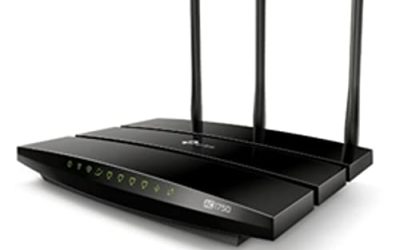
The TP-Link Deco BE25 is the best modern AI mesh router in this guide. It is a Wi-Fi 7 mesh system with BE5000 speeds, dual-band operation, AI roaming, VPN client and server support, multi-link operation, and 2.5G ports for wired backhaul. The three-pack covers up to 6,600 square feet and supports a large number of devices, and the Wi-Fi 7 radios suit households buying new phones, laptops and consoles. It is the newest system here, and the one with the longest useful life ahead of it.
Key specs:
Who it is for: households buying a mesh system to last for years, with new Wi-Fi 7 devices and a large home to cover. It suits a family with many devices, a home office, and a gaming setup that benefits from multi-link operation and low latency.
Caveats: Wi-Fi 7 devices are still new, so a household of Wi-Fi 6 devices will not use the full capability today. The BE25 is dual-band rather than tri-band, so the wireless backhaul shares bands with the devices. This ASIN was confirmed fresh in this round through an Amazon listing in the search results; the product page itself could not be opened, so confirm the pack size and current availability on the listing before ordering.
TP-Link Deco X55
- Wi-Fi: Wi-Fi 6, dual band, AX3000
- Coverage: Up to 6,500 square feet, 3-pack
- Devices: Up to 150
- Ports: 3 Gigabit per unit
The TP-Link Deco X55 is the best value AI mesh router in this guide. It is a Wi-Fi 6 mesh system with AX3000 speeds, dual-band operation, AI-driven mesh with seamless roaming, and three Gigabit ports per unit. The three-pack covers up to 6,500 square feet and supports up to 150 devices, and the system has been sold for years, so its behaviour is well documented. It is the pick for households that want proven AI mesh coverage without paying for Wi-Fi 7.
Key specs:
Who it is for: larger homes and multi-storey houses that want whole-home Wi-Fi 6 with AI-driven roaming, at a proven and affordable step. It suits families with many devices, smart home hardware, and a console or a streaming box in a far room.
Caveats: it is Wi-Fi 6 rather than 6E or 7, so it has no 6GHz band and no multi-link operation. The dual-band design means the wireless backhaul shares bands with the devices, so a wired backhaul helps where cables exist. This ASIN was confirmed fresh in this round through several independent sources agreeing on the same code; the Amazon product page itself could not be opened, so confirm the pack size and current availability on the listing before ordering.
eero Pro 6E
- Wi-Fi: Wi-Fi 6E, tri-band
- Bands: 2.4GHz, 5GHz, 6GHz
- Ports: 2.5G Ethernet
- Mesh: eero mesh system, add nodes as needed
The eero Pro 6E is the pick for households that want the simplest AI mesh system with a 6GHz band. It is a tri-band Wi-Fi 6E mesh router with a 6GHz band, a 2.5G Ethernet port, and an app-managed setup with automatic updates. A single unit covers a flat or a small house, and additional units extend the mesh to larger homes, with the system optimising routing between nodes on its own. The tri-band layout gives the wireless backhaul a cleaner path than a dual-band system.
Key specs:
Who it is for: households that want a mesh system that manages itself, with a 6GHz band for clean, fast connections near the nodes. It suits larger homes where the nodes sit in different rooms, and households that prefer an app over a web interface.
Caveats: confirm whether the listing is the single unit or a multi-pack, because a conflicting ASIN, B0CGYJ328Z, appears in the prior notes for a different pack size. The eero system is app-managed, which suits most households but gives less manual control than the Deco interface. This ASIN comes from a prior-batch verification rather than a fresh search in this round, so it needs a live check before publishing.
Comparison Table
| System | Wi-Fi | Bands | Coverage, 3-pack | Ports per unit | AI mesh |
|---|---|---|---|---|---|
| Deco BE25 | Wi-Fi 7, BE5000 | Dual | Up to 6,600 sq ft | 2 x 2.5G | AI roaming |
| Deco X55 | Wi-Fi 6, AX3000 | Dual | Up to 6,500 sq ft | 3 x Gigabit | AI-driven mesh |
| eero Pro 6E | Wi-Fi 6E, tri-band | Tri | Add nodes as needed | 2.5G Ethernet | Mesh optimisation |
Which One Is Right for You?
For most households buying mesh today, take the TP-Link Deco X55 first: proven AI-driven mesh, whole-home coverage, and three Gigabit ports per unit at a sensible step. For households buying for the future with new devices, take the Deco BE25, because Wi-Fi 7, AI roaming and 2.5G ports give it the longest useful life. For households that want the simplest setup with a 6GHz band, take the eero Pro 6E, and add nodes as the home grows.
If the house has Ethernet in the walls, use wired backhaul, because it gives every node the full speed of the connection. If the house has no Ethernet, favour the tri-band eero for the wireless backhaul, or place the Deco nodes no more than two rooms apart. If the household is mostly Wi-Fi 6 devices, the X55 is enough; if new Wi-Fi 7 devices are arriving, the BE25 is the better long-term buy.
Frequently Asked Questions
What does AI mesh actually do?
AI-driven mesh means the system learns the network environment, the client quality and the usage habits of the household, then adjusts routing, band steering and roaming on its own. In practice, the benefit is a network that adapts to the home without manual channel and band choices, and devices that are steered to the strongest node before the signal degrades.
Is Wi-Fi 7 worth it for a mesh system?
It depends on the devices in the home. Wi-Fi 7 adds wider channels, multi-link operation and lower latency, and it suits households with the newest phones, laptops and consoles. A household of Wi-Fi 6 devices gains little from a Wi-Fi 7 system today, but the system will serve for years as new devices arrive.
How many mesh nodes do I need?
Count the rooms and the floors, and place the nodes no more than two rooms apart, because a node that cannot hear the main unit cannot help the devices near it. A three-pack covers a typical large home, a single unit covers a flat or a small house, and additional nodes extend the mesh to larger homes. Start with the pack that matches the floor area, then add a node only where the signal is weak.
Should I use wired or wireless backhaul?
A wired Ethernet backhaul gives the full speed of the connection to every node, and it is the best choice where cables exist. A wireless backhaul shares the Wi-Fi bands with the devices, which is simpler but slower, and tri-band systems help by giving the backhaul its own band. If the house has Ethernet in the walls, use it; if not, favour a tri-band system for the wireless backhaul.
Disclosure: As an Amazon Associate, we may earn from qualifying purchases.
FAQ
Which One Is Right for You?
What does AI mesh actually do?
Is Wi-Fi 7 worth it for a mesh system?
How many mesh nodes do I need?
Should I use wired or wireless backhaul?
More from Amazon
Programs that pair well with the guide above. Offers and eligibility are set by Amazon and may change.
Free shipping on eligible items, Prime Video and more. Eligible new members can start with a free trial.
Start a Prime free trialAd-free music streaming. Eligible new subscribers can start with a free trial.
Try Music Unlimited freeA Prime membership for ages 18-24 with a trial period. Eligibility is set by Amazon.
See Prime for Young AdultsAudiobooks and podcasts to listen to on the go. Eligible new members can start with a free trial.
Try Audible freeAs an Amazon Associate we earn from qualifying purchases.