Our Short List of 3
All 4 Picks at a Glance
| Product | Specs | Action |
|---|---|---|
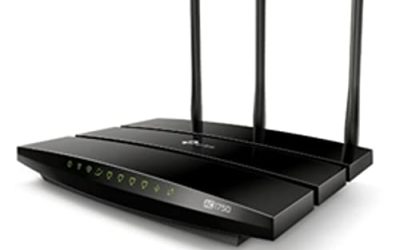
 1. TP-Link Archer AX6000 | Check price on Amazon | |
 2. TP-Link Archer AX73 | Check price on Amazon | |
 3. TP-Link Archer AXE75 | Check price on Amazon | |
 4. TP-Link Archer AX55 | Check price on Amazon |
Our Top Picks
- TP-Link AXE5400 Tri-Band WiFi 6E RouterWiFi 6E, Tri-Band AXE540012.91 x 10.43 x 4.72 inches1.5 poundsCheck on Amazon
The best coverage Archer routers gigabit buyers should look at are TP-Link Archer models that pair a gigabit wired backbone with strong Wi-Fi coverage, so every room gets a fast connection and every wired device gets the full speed of the internet plan. Archer is TP-Link’s main router line, and its Wi-Fi 6 and Wi-Fi 6E models are built for homes with many devices, large floor plans and a gigabit internet connection that a weaker router would waste.
Coverage and gigabit speed are two different jobs. Coverage depends on the radio design, the antennas and the placement of the router, while gigabit speed depends on the wired ports and the processor that moves traffic between them. A router can have excellent Wi-Fi and still bottleneck a gigabit plan if its ports or its processor cannot keep up, so the picks below were chosen for both: strong coverage and a wired path that can actually carry gigabit traffic.
This guide explains how to judge an Archer router for coverage and gigabit use, then covers four models that fit different home sizes and budgets. Every pick is a complete router, not a mesh node or an accessory, and each one is still listed on Amazon US.
How to Choose
1. Gigabit ports on every wired connection
A gigabit router must have gigabit Ethernet ports, not just a gigabit WAN port. Check that the LAN ports are gigabit as well, because a single fast WAN port with slower LAN ports will bottleneck wired devices. A 2.5 gigabit port is a bonus for a fast NAS or a multi-gig internet plan, but it is not required for a standard gigabit plan.
2. Wi-Fi generation and band support
Wi-Fi 6 handles many devices far better than Wi-Fi 5, thanks to OFDMA and MU-MIMO, while Wi-Fi 6E adds the 6 GHz band for less congestion. For a gigabit plan with dozens of devices, Wi-Fi 6 is the minimum worth buying, and Wi-Fi 6E is worth the extra cost when your phones and laptops support the 6 GHz band.
3. Coverage range and antenna design
Manufacturers quote coverage in square feet, but walls, floors and building materials change the real figure. External high-gain antennas, beamforming and a strong amplifier matter more than a quoted number. For a large home, plan on a router with strong radios or a mesh-ready design rather than trusting a single coverage claim.
4. Processor and memory
A gigabit connection with many devices needs a capable processor and enough memory to handle NAT, QoS and security features at full speed. A weak processor will slow the connection when features like parental controls or traffic prioritisation are turned on, so favour models with a modern multi-core chip.
5. Mesh and OneMesh support
TP-Link’s OneMesh lets a compatible Archer router pair with a range extender to widen coverage without creating a second network name. If your home has dead zones, a router with OneMesh support gives you a simple upgrade path that a non-mesh router does not.
6. Security and parental controls
Built-in security features, automatic firmware updates and usable parental controls matter for a router that guards the whole home network. Check that the model receives regular firmware updates and that its companion app offers the controls you need without a subscription for basic features.
7. USB ports and extra features
A USB port turns a router into a simple file or media server and allows a printer to be shared across the network. It is not essential for coverage or speed, but it adds value, especially on a router that will serve a home office as well as a family.
Top Picks
1. TP-Link Archer AX6000
The TP-Link Archer AX6000 is a Wi-Fi 6 router with eight streams and a 2.5 gigabit WAN port, which makes it the strongest pick in this group for a gigabit plan with many devices. Its eight external antennas and beamforming push Wi-Fi into rooms that weaker routers leave behind, and the 2.5 gigabit port leaves headroom for a faster plan later.
It has eight gigabit LAN ports, so a wired PC, console, NAS and TV can all connect at full gigabit speed without a separate switch. The processor handles heavy traffic well, and the USB ports allow storage sharing. It suits a large home with a gigabit plan, many devices and several wired connections.
The main caveat is its size and its cost, which sit above the other picks. It is more router than a small flat needs, and its 2.5 gigabit port only helps when the modem or the plan supports it. For a large home with a gigabit connection, though, it is the most capable Archer in this group.
2. TP-Link Archer AX73
The TP-Link Archer AX73 is a Wi-Fi 6 router with six streams and strong coverage for a medium to large home. Its six antennas and high-power amplifiers give it a long reach, and its gigabit ports carry a full gigabit plan without bottlenecking wired devices.
It supports OneMesh, so a compatible extender can widen coverage later without a new network name. The USB 3.0 port allows media sharing, and the HomeShield security features cover the basics. It suits a family home with a gigabit plan, several streaming TVs and a mix of wired and wireless devices.
The caveat is that it has no 2.5 gigabit port, so it cannot carry a multi-gig plan, and its Wi-Fi 6 radios are slower than the AX6000 on paper. In practice, for a gigabit plan, the difference is small, and the AX73 costs far less while covering a similar area.
3. TP-Link Archer AXE75
The TP-Link Archer AXE75 is a Wi-Fi 6E router that adds the 6 GHz band to the Archer line, which makes it the best pick for a home with newer phones and laptops that support 6 GHz. The extra band reduces congestion in flats and dense neighbourhoods where the 2.4 GHz and 5 GHz bands are crowded.
It has gigabit ports throughout, six streams and OneMesh support, so coverage can be extended with a compatible extender. The 6 GHz band gives compatible devices a clean, fast channel, while older devices continue to use the 5 GHz and 2.4 GHz bands without any change.
The caveat is that the 6 GHz band has a shorter range than 5 GHz and is blocked more easily by walls, so its benefit is greatest in the same room as the router. Devices that lack 6 GHz support gain nothing from it, so check your devices before paying extra for Wi-Fi 6E.
4. TP-Link Archer AX55
The TP-Link Archer AX55 is a Wi-Fi 6 router with four streams and gigabit ports, and it is the budget pick in this group. It delivers the core Archer experience, strong Wi-Fi 6 performance and full gigabit wired speed, at a cost well below the larger models.
It supports OneMesh for later coverage expansion, has a USB 3.0 port and covers a small to medium home well. It suits a flat or a small house with a gigabit plan, a handful of devices and a budget that does not stretch to the larger Archer models.
The caveat is its four-stream design, which handles fewer simultaneous devices than the six- and eight-stream picks, and its coverage range is shorter. In a large home with many devices it will show its limits, but for a smaller home it carries a gigabit plan without wasting money.
Comparison Table
| Router | Wi-Fi | Streams | WAN Port | LAN Ports | Best For |
|---|---|---|---|---|---|
| TP-Link Archer AX6000 | Wi-Fi 6 | 8 | 2.5 gigabit | 8 x gigabit | Large homes, many devices |
| TP-Link Archer AX73 | Wi-Fi 6 | 6 | Gigabit | 4 x gigabit | Medium to large homes |
| TP-Link Archer AXE75 | Wi-Fi 6E | 6 | Gigabit | 4 x gigabit | Crowded areas, 6 GHz devices |
| TP-Link Archer AX55 | Wi-Fi 6 | 4 | Gigabit | 4 x gigabit | Small homes and budgets |
Which One Is Right for You?
For a large home with a gigabit plan and many devices, the Archer AX6000 is the most capable pick, with eight streams, eight LAN ports and a 2.5 gigabit WAN port for future plans. For a medium to large home where cost matters, the Archer AX73 covers a similar area for less money and is the best all-round choice. For a flat or a dense neighbourhood with newer devices, the Archer AXE75 adds the clean 6 GHz band. For a small home or a tight budget, the Archer AX55 carries a gigabit plan without paying for capacity you will not use.
Place the router centrally, high up and away from thick walls and metal objects, because placement affects coverage more than any specification. A well-placed AX55 can outperform a poorly placed AX6000, so spend a few minutes on placement before judging the range.
Frequently Asked Questions
What makes an Archer router good for gigabit coverage?
A good Archer router for gigabit coverage pairs gigabit Ethernet ports with strong Wi-Fi 6 radios, so wired devices get full gigabit speed and wireless devices get a strong signal across the home. Look for gigabit LAN ports, a capable processor and external antennas with beamforming, and check that the model supports OneMesh if you may need to extend coverage later.
Do I need Wi-Fi 6E for a gigabit plan?
No. Wi-Fi 6 is enough to carry a gigabit plan, and Wi-Fi 6E mainly helps in crowded areas by adding the 6 GHz band. Buy Wi-Fi 6E when your devices support 6 GHz and your neighbours’ networks crowd the 5 GHz band; otherwise, a Wi-Fi 6 Archer costs less and performs just as well.
How many devices can an Archer router handle?
It depends on the model. A four-stream router like the AX55 handles a small home with a dozen devices comfortably, while a six- or eight-stream router like the AX73 or AX6000 handles dozens of devices, including phones, TVs, consoles and smart home gear, without slowing down. Wi-Fi 6 features such as OFDMA help all of these models serve many devices at once.
Where should I place my Archer router for the best coverage?
Place it centrally in the home, on a shelf or table at about chest height, away from thick walls, metal cabinets and large appliances. Avoid placing it inside a closed cabinet or on the floor, and keep it away from the microwave and other sources of interference. A central, elevated position gives the best coverage for the least effort.
Disclosure: As an Amazon Associate, we may earn from qualifying purchases.
FAQ
Which One Is Right for You?
What makes an Archer router good for gigabit coverage?
Do I need Wi-Fi 6E for a gigabit plan?
How many devices can an Archer router handle?
Where should I place my Archer router for the best coverage?
More from Amazon
Programs that pair well with the guide above. Offers and eligibility are set by Amazon and may change.
Free shipping on eligible items, Prime Video and more. Eligible new members can start with a free trial.
Start a Prime free trialAd-free music streaming. Eligible new subscribers can start with a free trial.
Try Music Unlimited freeA Prime membership for ages 18-24 with a trial period. Eligibility is set by Amazon.
See Prime for Young AdultsAudiobooks and podcasts to listen to on the go. Eligible new members can start with a free trial.
Try Audible freeAs an Amazon Associate we earn from qualifying purchases.