Our Short List of 3
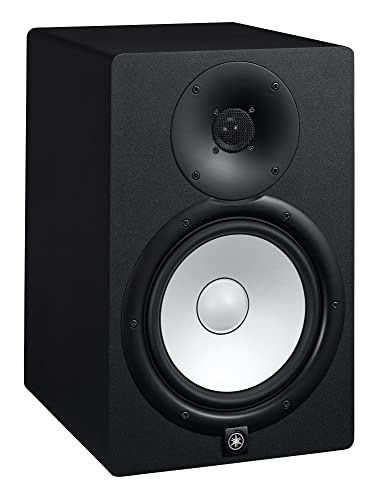
- Best for: Mix engineers in treated rooms who want low-mid problems exposed, not softened.
- Woofer: 8-inch cone woofer
- Tweeter: 1-inch dome tweeter
- Frequency response: 38Hz to 30kHz
- Amplification: 75W LF plus 45W HF bi-amp system, 120W total

- Best for: Producers mixing down-tuned guitars in rooms where speakers sit close to walls.
- Woofer: 8-inch woven-composite low-frequency driver
- Tweeter: 1.25-inch ultra-low-mass silk-dome high-frequency transducer
- Waveguide: EBM waveguide, 120 degrees horizontal by 60 degrees vertical
- Frequency response: 35Hz to 20kHz

- Best for: Desk-based producers mixing heavy music close to a wall.
- Woofer: 8-inch low-frequency transducer
- Tweeter: 1-inch high-frequency transducer
- Frequency response: 45Hz to 20kHz
- Amplification: 112W total, dual Class-D
All 5 Picks at a Glance
| Product | Specs | Action |
|---|---|---|
| Yamaha HS8 |
| Check price on Amazon |
| PreSonus Eris Studio 8 |
| Check price on Amazon |
| JBL Professional 308P MkII |
| Check price on Amazon |
 Kali Audio LP-6 V2 |
| Check price on Amazon |
 Yamaha HS5 |
| Check price on Amazon |
Key takeaways
- Five studio monitors for mixing metal, compared on headroom, transient detail and low-mid control, with every spec taken from the Amazon listing.
Mixing metal is not really a loudness decision, even though the music itself is loud. The real decision is whether your monitors stay honest when everything arrives at once: double-kick patterns under palm-muted guitars, a bass guitar fighting for the same low-mid space, and cymbals that punish any tweeter roughness. A speaker that compresses, smears transients or flatters the low end will push you toward mixes that fall apart on other systems.
This guide is for guitarists, producers and home engineers mixing heavy music in bedrooms, spare rooms and small project studios. Every pick below is a powered studio monitor whose Amazon listing states the driver size, amplification and controls quoted here, and the metal angle is judged on headroom, transient clarity and control of the low-mid region where heavy guitars collide.
Quick Picks
As an Amazon Associate we earn from qualifying purchases.
| Product | Best for | Key spec from title |
|---|---|---|
| Yamaha HS8 | Treated rooms where low-mid honesty matters most | 8-inch cone woofer with 120W bi-amp system |
| PreSonus Eris Studio 8 | Down-tuned guitars and deep stated low reach | 8-inch woven-composite driver, 140W Class AB |
| JBL Professional 308P MkII | Desks near walls that need boundary compensation | 8-inch woofer with Boundary EQ and Slip Stream port |
| Kali Audio LP-6 V2 | Transient detail and headroom in mid-sized rooms | 6.5-inch powered monitor, 80W and 115dB max SPL |
| Yamaha HS5 | Small rooms where midrange clarity beats bass depth | 5-inch powered studio monitor, 70W bi-amp |
How to Choose
Protect Your Headroom Before Anything Else
Metal mixes carry extreme crest factors: a kick drum transient or a snare hit sits far above the average level of the track around it. A monitor running near its limit rounds those peaks off, and you start making compression and limiting decisions against distortion the speaker added, not the recording. Compare the amplification and maximum output figures stated in each listing, then leave working room above your normal listening level. The Kali listing in this guide states its dynamic headroom figure outright, which makes that judgement easier than guessing from wattage alone.
Judge the Low-Mid Region, Not Just the Bass Depth
Most metal mixing problems live between the bottom of the rhythm guitars and the top of the bass guitar, where mud builds up fast. A monitor can reach impressively low on paper and still blur that crossover zone, leaving you unable to tell which instrument owns which frequency. Forward, unflattered midrange presentation matters more here than sub-bass extension. Look for room controls that trim output under the low-mid band, because desk and wall placement inflates exactly that region in small rooms, and check the stated crossover point where the woofer hands over to the tweeter.
Match Woofer Size to Tunings and Room Size
Extended-range and down-tuned guitars push real musical content lower than standard tuning, so woofer size decides whether you hear those fundamentals or only their harmonics. An 8-inch driver states reach into the mid-thirties or forties in these listings, enough to judge seven-string and drop-tuned parts directly. In a small untreated bedroom, though, that output mostly excites the room itself. A 5-inch nearfield at close distance can be the more truthful tool there, as long as you accept checking the lowest octave on headphones before you finish.
Read the Port and Placement Controls Carefully
Where a cabinet vents changes how it behaves in the rooms metal producers actually have. Rear-ported models need clear space behind them, and pushed against a wall they gain a low-end lift that hides the mud you bought monitors to expose. Front-ported designs tolerate tighter placement, and boundary or acoustic space switches cut the build-up that remains. Before ordering, picture each speaker’s exact position: on stands behind a desk, on the desk itself, or near a corner. Then pick the control set that matches that position rather than the longest feature list.
The 5 Best Options
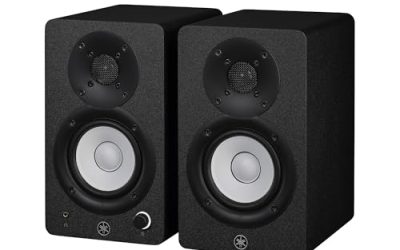
Yamaha HS8
- Best for: Mix engineers in treated rooms who want low-mid problems exposed, not softened.
- Woofer: 8-inch cone woofer
- Tweeter: 1-inch dome tweeter
- Frequency response: 38Hz to 30kHz
- Amplification: 75W LF plus 45W HF bi-amp system, 120W total
Mix engineers in treated rooms who want low-mid problems exposed, not softened.
Sold as a single rear-ported speaker, so allow for two units, stands and space behind each cabinet.
The HS8 is the reference pick for metal mixers with a treated, medium-sized room. Its presentation keeps the midrange plainly exposed, which is where rhythm guitar density, bass guitar growl and low-mid congestion have to be separated, and the 8-inch cone states reach low enough to judge drop-tuned fundamentals directly. Yamaha fits a restrained control set, level plus Room Control and High Trim switches, suited to rooms already handled with placement and treatment. The cabinet is rear-ported and sold singly, so stands and wall clearance belong in the plan from the start.
PreSonus Eris Studio 8
- Best for: Producers mixing down-tuned guitars in rooms where speakers sit close to walls.
- Woofer: 8-inch woven-composite low-frequency driver
- Tweeter: 1.25-inch ultra-low-mass silk-dome high-frequency transducer
- Waveguide: EBM waveguide, 120 degrees horizontal by 60 degrees vertical
- Frequency response: 35Hz to 20kHz
Producers mixing down-tuned guitars in rooms where speakers sit close to walls.
The wide waveguide makes for a broad cabinet, so measure desk or stand tops before ordering a pair.
Choose the Eris Studio 8 when your material lives below standard tuning and your room cannot give speakers much distance from the wall. The listing states the deepest low-frequency reach in this group, and the front-firing port is less sensitive to the surface behind the cabinet than a rear vent. A dedicated midrange tuning control is rare at this level and directly useful for metal, because it lets you adjust the region where guitars and bass overlap. The EBM waveguide spreads the image across a wide listening area, helpful when you track and mix from shifting positions.
JBL Professional 308P MkII
- Best for: Desk-based producers mixing heavy music close to a wall.
- Woofer: 8-inch low-frequency transducer
- Tweeter: 1-inch high-frequency transducer
- Frequency response: 45Hz to 20kHz
- Amplification: 112W total, dual Class-D
Desk-based producers mixing heavy music close to a wall.
Its stated low-frequency limit is the highest of the 8-inch picks, so the deepest sub content still needs a headphone check.
The 308P MkII answers the most common metal-bedroom problem: an 8-inch monitor that has to live on a desk against a wall. Boundary EQ is built to restore a more neutral low-frequency response in that position, countering the lift that turns palm-muted parts into indistinct rumble. The Image Control Waveguide keeps the stereo picture stable while you lean between guitar, keyboard and screen, and the Slip Stream port is designed to keep low-frequency output clean at higher levels. A sensitivity switch accepts either studio interfaces or consumer-level sources without a gain mismatch.
Kali Audio LP-6 V2
- Best for: Mixers in mid-sized rooms who push dynamic, transient-heavy material.
- Woofer: 6.5-inch optimized paper driver
- Tweeter: 1-inch textile dome
- Amplification: 80W bi-amped Class-D, 40W LF plus 40W HF
- Frequency range listed: 47Hz–21kHz
Mixers in mid-sized rooms who push dynamic, transient-heavy material.
Each cabinet is deep and heavy for a desk item, so confirm stand ratings and shelf depth before ordering two.
The LP-6 V2 is the headroom pick for mid-sized rooms. Kali’s listing states a maximum SPL of 115dB and spells out a generous dynamic headroom figure, with clean output held well above normal monitoring levels, which is exactly what fast kick work and snare transients demand. The second-generation design also lowers self-noise, so quiet intros and edit gaps stay free of hiss at the listening position. Eight rear DIP switches handle boundary compensation plus low and high trims, giving repeatable settings when each cabinet sits in a different position, and the front port keeps placement forgiving.
Yamaha HS5
- Best for: Small rooms and close listening distances where midrange clarity decides the mix.
- Woofer: 5-inch cone woofer
- Tweeter: 1-inch dome tweeter
- Amplification: 70W bi-amp system, 45W LF plus 25W HF
- Frequency response: 54Hz to 30kHz
Small rooms and close listening distances where midrange clarity decides the mix.
Content below the stated response stays hidden, so check drop-tuned lows and kick sub energy on headphones.
The HS5 is the small-room reality check. Its 5-inch woofer cannot state the low reach of the bigger cabinets here, yet its forward midrange presentation exposes guitar balance, vocal level and low-mid congestion with a clarity that suits dense arrangements. In a tight bedroom where an 8-inch pair would overload the space, that honesty at close distance produces mixes that travel better than a boomy low end ever will. Room Control and High Trim switches give basic correction for placement near walls or in bright rooms, and the balanced inputs suit a standard interface setup.
Which One Fits Your Situation
You Mix in a Treated Room and Want Translation First
Take the Yamaha HS8. Nothing in its presentation is designed to make a dense mix feel finished before it is, so decisions about guitar layering, bass level and low-mid carving hold up on other systems. The Room Control switch handles the last placement compromise, and the 8-inch reach covers extended-range parts without help. This is the pair to build a room around when the space can support it.
Your Guitars Are Down-Tuned and Your Desk Touches the Wall
The PreSonus Eris Studio 8 fits that combination. Its stated low reach is the deepest here, the front port tolerates your placement, and the midrange tuning control addresses the exact band where low-tuned guitars smear into the bass. Use the Acoustic Space settings after positioning, then recheck a familiar heavy mix before trusting the new balance.
You Track and Mix at One Crowded Desk
Pick the JBL Professional 308P MkII. Boundary EQ exists for your layout, the waveguide forgives the leaning and reaching that a working desk involves, and the sensitivity switch keeps levels sane whether the feed comes from an interface or a consumer source. You trade away the deepest stated bass of the group and gain a speaker that behaves where you actually sit.
Your Room Is Small and Your Budget of Space Is Smaller
Start with the Yamaha HS5 and a headphone check for the lowest octave. At close range its midrange honesty tells you more about a metal mix than an oversized cabinet exciting every wall in the room. If the room later grows, the Kali Audio LP-6 V2 is the natural step up, adding stated headroom and deeper reach while keeping a front port and per-cabinet DIP settings.
Common Mistakes
- Judging monitors by low-frequency reach alone, then discovering the low-mid region where metal mixes actually fail stays blurred.
- Mixing at high volume on speakers with little headroom, so the cabinets compress kick and snare transients before your plug-ins ever see them.
- Placing rear-ported cabinets flat against a wall and then cutting bass in the mix to fight a lift the room created.
- Buying one cabinet and assuming a pair is included, when every monitor in this guide is listed as a single speaker.
- Carving the bass guitar out of the low mids on small monitors without a headphone check, leaving extended-range parts thin on full-range systems.
Frequently Asked Questions
Do I need 8-inch monitors for mixing metal?
Not automatically. An 8-inch woofer states reach that covers down-tuned fundamentals directly, which helps in rooms large enough to support it. In a small untreated bedroom, a 5-inch nearfield at close distance often gives a clearer picture of guitar and bass balance. Choose by room first, then confirm the lowest octave on headphones either way.
How much headroom does a metal mix actually need?
Enough that peaks never reach the monitor’s limit at your working level. Fast kick patterns and snare hits sit far above average level, so a speaker working near maximum rounds them off and misleads your compression choices. The Kali listing states its dynamic headroom figure directly; with other models, compare stated output and amplification, then monitor at a moderate, consistent level.
Should metal mixes be checked loud or quiet?
Both, for different reasons. Moderate volume reveals low-mid congestion and balance problems most clearly, and it protects your ears across long sessions. Short louder passes expose whether transients survive and whether the low end holds together, while quiet checks reveal which elements truly carry the arrangement. If a mix only works at one level, something in the balance is wrong.
Can I mix metal on one monitor and a subwoofer later?
Start with a matched stereo pair, because panning, layered guitar width and reverb placement are stereo decisions that a single cabinet cannot show you. A subwoofer can extend a system in a treated room, but in a small space it usually adds placement problems faster than information. Every pick here is sold singly, so order two of the same model first.
FAQ
Do I need 8-inch monitors for mixing metal?
How much headroom does a metal mix actually need?
Should metal mixes be checked loud or quiet?
Can I mix metal on one monitor and a subwoofer later?
More from Amazon
Programs that pair well with the guide above. Offers and eligibility are set by Amazon and may change.
Free shipping on eligible items, Prime Video and more. Eligible new members can start with a free trial.
Start a Prime free trialAd-free music streaming. Eligible new subscribers can start with a free trial.
Try Music Unlimited freeA Prime membership for ages 18-24 with a trial period. Eligibility is set by Amazon.
See Prime for Young AdultsAudiobooks and podcasts to listen to on the go. Eligible new members can start with a free trial.
Try Audible freeAs an Amazon Associate we earn from qualifying purchases.