Our Short List of 3
All 4 Picks at a Glance
| Product | Specs | Action |
|---|---|---|
 Optoma UHD38x | Check price on Amazon | |
 Optoma UHZ36 | Check price on Amazon | |
 ViewSonic PX701-4K | Check price on Amazon | |
 Epson Home Cinema 2350 | Check price on Amazon |
Our Top Picks
A live music set is more than sound. A large image behind the band can carry lyrics, album art, looping visuals, and light-driven graphics that give the room a focal point. The best projectors for music performance handle that job without washing out under stage lighting, without lagging behind the beat, and without demanding a complicated setup in a venue where time is short.
This guide focuses on bright 4K projectors that suit music performance work. Each pick throws a large image, keeps colors vivid in rooms with ambient light, and connects easily to a laptop, media player, or console running visuals. None of them replaces a sound system. A projector is a visual instrument here, and it works best when the audio runs through a proper PA or powered speakers while the projector handles the picture.
Before choosing, think about the room. A small club with low lighting needs less brightness than a hall with windows and house lights. A band that plays short sets in different rooms needs a portable unit that can be placed on a table and lined up in minutes. A group with a fixed rehearsal space or a regular venue can mount a projector on the ceiling and leave the alignment alone. The four models below cover those situations, from the brightest lamp model in the group to a laser model built for long, repeated use.
What to Look For
Brightness comes first for music performance. Stage lights, moving heads, and house lights all compete with the projected image. A projector with 2,800 lumens can look strong in a dark room, while a model with 4,000 lumens holds color and detail far better when the lights are up. Look at the lumen figure the maker lists, and remember that a brighter image also lets you use a larger screen without the picture going pale.
Image size and throw distance come next. A projector that reaches 300 inches can fill a stage backdrop or a hall wall, but it needs enough distance from the screen to do it. Check the throw ratio and the zoom range before you commit to a spot in the room. Short throw models suit tight stages, while a standard throw model suits a projector placed at the back of a hall or on a rear shelf.
Resolution and color matter because the audience watches the image for an entire set. A 4K image keeps text sharp, so lyrics stay readable from the back rows, and fine lines in artwork stay clean at large sizes. HDR support helps bright highlights and dark scenes sit together in one frame, which matters for music videos and animated loops with strong contrast. A wide color range keeps skin tones, stage backdrops, and brand colors looking natural rather than flat.
Motion handling is easy to overlook, yet it decides whether visuals stay in time with the music. A low input lag figure means the image follows the laptop or media player with little delay, so a visual hit lands with the drum hit. A high refresh figure helps fast-moving loops and camera pans stay smooth instead of juddering. For a set built around timed visuals, look for a lag figure under 20 ms and a refresh figure of 120 Hz or higher where the listing gives one.
Sound routing deserves a plan of its own. Some projectors carry a built-in speaker that works for rehearsal or a small room, but a live show needs audio from a separate system. Check for a 3.5 mm audio output, an optical audio output, or Bluetooth audio support so the sound can go to the PA while the picture stays on the projector. A projector with HDMI ARC can also pass audio back to a soundbar or receiver in a fixed setup.
Setup flexibility saves time on the night. Lens shift lets you move the image up or down without moving the projector. Keystone correction squares up an image when the projector sits at an angle. Four-corner adjustment and warping tools help when the surface is not a flat screen, such as a curved wall or a draped backdrop. A 1.1x or 1.3x zoom gives room to fine-tune the image size from a fixed mounting point.
Light source life affects how often the projector needs attention. A lamp model with 15,000 hours of lamp life can run for years of regular sets, while a laser model with 30,000 hours in eco mode can run even longer with no lamp change. Laser models also hold brightness more evenly over time, which helps a venue that runs the same projector several nights a week.
Connectivity should match the gear you already own. Two HDMI inputs let you keep a laptop and a media player connected at once, so switching between a lyric file and a visual loop takes a single button press. A powered USB port can run a streaming dongle without a separate power cable. Wi-Fi and a built-in smart platform help in a rehearsal room, while a wired HDMI connection is the safer choice on a live stage.
Optoma UHD38x
The Optoma UHD38x leads this group on brightness, and brightness is the quality that matters most when stage lights are on. Its listing gives 4,000 lumens, a 4K UHD image, and a 240 Hz refresh figure, with input lag listed at 4.2 ms at 1080p and 16 ms at 4K UHD. That combination suits a band that runs timed visuals, lyric slides, and music videos through a laptop and wants the picture to stay in step with the sound.
A large image is part of the appeal. The UHD38x can project up to 300 inches, and its listing gives a 120-inch image from about 13.1 feet away. That size turns a plain wall into a stage backdrop, and it keeps lyrics readable from the back of a hall. HDR10 and HLG support help the image hold detail in bright and dark areas at once, which matters when visuals mix bold graphics with dark backgrounds.
Setup tools are straightforward. The projector has a 1.1x manual zoom and vertical keystone correction of plus or minus 40 degrees, so a tabletop placement at a slight angle can still give a square image. Dual HDMI 2.0 inputs let a laptop and a media player stay connected together, and a USB power output can run a streaming dongle. The lamp life is listed at up to 15,000 hours, which covers years of regular sets before a lamp change becomes a concern.
There are limits to note. The UHD38x uses a lamp rather than a laser, so brightness will fade gradually over the lamp life. It has no lens shift, so placement needs more care than a model with vertical and horizontal shift. The built-in sound is modest, so plan on routing audio to the PA through the 3.5 mm audio output or the optical audio output. Used as a visual unit with a separate sound system, it is the strongest pick in this group for lit rooms and large images.
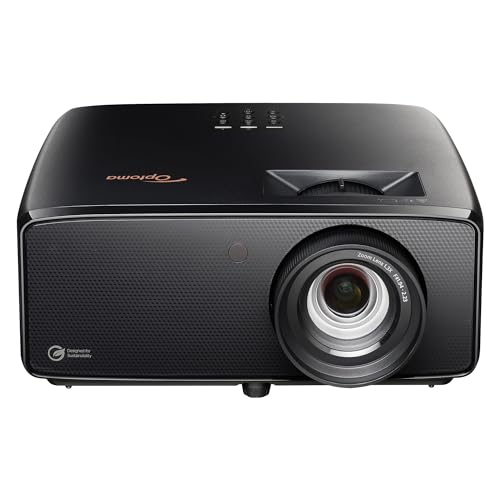
Optoma UHZ36
The Optoma UHZ36 is the laser pick in this group, and its laser light source is the reason to choose it. Its listing gives 3,500 lumens, a 4K UHD image, and a DuraCore laser rated for up to 30,000 hours in eco mode. A venue that runs shows several nights a week will value a light source that needs no lamp change and holds brightness evenly over a long working life.
Filmmaker Mode is a useful extra for music performance. It preserves the frame rate, color, and aspect ratio of the source material, so a music video or a filmed concert clip looks the way its makers intended. HDR support and PureEngine image processing help with detail and motion, and the listing gives a 15W built-in speaker for rehearsal or small-room use. The image range runs from 28 inches to 300 inches, so the same unit can serve a small practice room and a large hall wall.
Connectivity covers the usual live-show sources. Two HDMI 2.0 inputs accept a laptop, a media player, or a console, and one HDMI input supports ARC for audio pass-through. A USB-A power output can run a dongle, and a 12V trigger can tie the projector into a fixed installation. Auto vertical keystone correction and a 1.3x zoom make placement simpler than on a fixed-lens model, and the compact body is easy to carry between rooms.
The UHZ36 is not a gaming-first model, and its listing gives no low-lag gaming figure, so a set built around fast, timed visual triggers may suit the UHD38x better. Its brightness sits below the UHD38x, so a very bright hall may need more light control. For a regular venue, a rehearsal space, or a band that plays the same room often, the laser life and steady brightness make it a strong long-term choice.
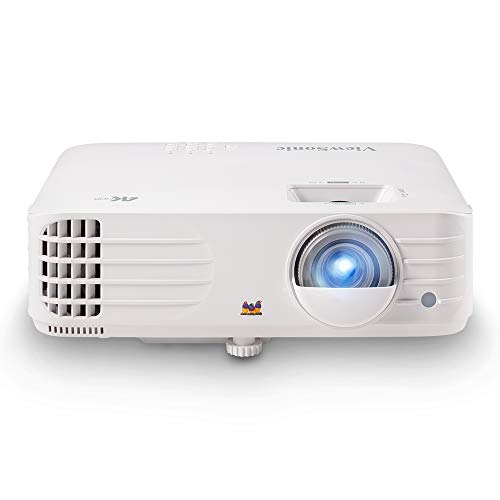
ViewSonic PX701-4K
The ViewSonic PX701-4K is a versatile middle pick that balances brightness, motion handling, and setup tools. Its listing gives 3,200 ANSI lumens, a true 4K UHD image, a 240 Hz refresh figure, and input lag listed at 4.2 ms. HDR and HLG support help the image keep detail in mixed lighting, and the SuperColor system is built to widen the color range in bright and dark rooms alike.
Setup flexibility is a strength here. Auto keystone and four-corner adjustment square up the image quickly, and a warping tool helps when the projection surface is curved. The 1.1x optical zoom gives room to adjust image size from a fixed spot, and the image can run from 30 inches to 300 inches. Dual HDMI inputs accept a laptop and a media player at once, and a powered USB output can run a wireless dongle such as a Chromecast or a Fire TV stick without an extra cable.
Lamp life is listed at up to 20,000 hours in SuperEco+ mode, which is a long working life for a lamp model. The projector weighs 6.2 pounds, so it can travel in a gear bag between venues, and its black body sits quietly on a table or a shelf at the back of a room. The listing gives room-filling sound from the built-in speaker, but a live show will still sound better through a separate PA, with audio routed from the source or from the projector audio output.
The PX701-4K has no built-in smart platform, so a streaming stick or a laptop is needed for app-based content. Its brightness sits below the two Optoma models above, so a hall with strong house lighting may need the lights lowered during visual-heavy songs. For a band that moves between rooms and wants a bright, fast, and flexible projector, it is a well-rounded pick.
Epson Home Cinema 2350
The Epson Home Cinema 2350 is the most living-room-friendly pick in this group, and it suits small venues, rehearsal rooms, and acoustic sets where the lighting stays low. Its listing gives 2,800 lumens of color and white brightness, a 4K PRO-UHD image, and true 3-chip 3LCD technology, which displays the full color signal in every frame and avoids the color breakup that can appear on some single-chip designs.
Android TV is built in, so lyrics, music videos, and streaming apps can run without a separate device. The listing gives a 10W bass-reflex speaker and Bluetooth audio support for connecting a soundbar or headphones, which helps in a rehearsal room where a full PA is not set up. HDR10 and HLG support help the image hold detail, and the low latency mode is listed at under 20 ms, which keeps visuals close to the beat.
Placement is flexible. Vertical lens shift of plus or minus 60 percent lets the image move up or down without moving the projector, and the manual focus and zoom help with fine-tuning. Two HDMI inputs are included, with one supporting ARC, so a laptop and a media player can stay connected together. The compact body and 9-pound weight make it easy to place on a table or a bookshelf.
Brightness is the main limit. At 2,800 lumens, the Home Cinema 2350 is the dimmest model in this group, so it suits dark rooms and small stages better than bright halls. A band that plays lit venues should choose a brighter model above. For a small room, a house concert, or a rehearsal space where the lights stay low, its color quality, built-in streaming, and flexible placement make it a good fit.
Comparison Table
| Projector | Brightness | Resolution | Light Source | Max Image | Built-in Sound |
|---|---|---|---|---|---|
| Optoma UHD38x | 4,000 lumens | 4K UHD | Lamp, up to 15,000 hours | 300 inches | Audio outputs for external sound |
| Optoma UHZ36 | 3,500 lumens | 4K UHD | Laser, up to 30,000 hours in eco mode | 300 inches | 15W speaker |
| ViewSonic PX701-4K | 3,200 ANSI lumens | 4K UHD | Lamp, up to 20,000 hours in SuperEco+ mode | 300 inches | Built-in speaker |
| Epson Home Cinema 2350 | 2,800 lumens | 4K PRO-UHD | Lamp, 3-chip 3LCD | Large screen from a short distance | 10W speaker, Bluetooth audio |
Frequently Asked Questions
How bright should a projector be for a live music set?
Brightness needs to match the lighting in the room. In a dark room, 2,800 lumens can look strong and colorful. In a room with house lights, windows, or stage lighting, 3,200 lumens or more holds up better, and 4,000 lumens gives the most headroom for large images. A larger image spreads the same light over more area, so a big backdrop needs more brightness than a small screen in the same room. If the venue keeps lights up during the set, choose the brightest model the budget allows and keep the screen as small as the room permits.
Can one projector show lyrics and visuals at the same time?
One projector shows one image at a time, so lyrics and visuals need to share the same frame or switch between sources. A common setup runs a laptop with presentation or VJ software that layers lyrics over a visual loop, then sends the combined image to the projector through HDMI. A projector with two HDMI inputs can also switch between a laptop running lyrics and a media player running visuals, though the switch takes a moment. For a smooth show, build the lyric and visual layers into a single feed before the set begins, and rehearse the transitions with the band.
Do I need a separate sound system with a projector for a show?
Yes, for any live show beyond a small rehearsal room. A built-in projector speaker can carry sound for practice or a quiet acoustic set, but it cannot fill a hall or compete with drums and amplified instruments. Route audio from the laptop or media player to the PA, or use the projector audio output, optical audio output, or Bluetooth audio support to send sound to powered speakers. Keep the audio path separate from the video path in your setup notes, so a cable change on one side does not break the other.
How to Choose
Match the projector to the room first, then to the set. A bright hall with a large backdrop calls for the Optoma UHD38x, with its 4,000 lumens and fast motion handling. A regular venue that runs shows night after night calls for the Optoma UHZ36, with its laser light source and long working life. A band that moves between rooms and needs flexible setup will get the most from the ViewSonic PX701-4K, with its keystone, warping, and powered USB port. A small room, a house concert, or a rehearsal space with low lighting suits the Epson Home Cinema 2350, with its color quality, built-in streaming, and lens shift.
Check the throw distance before buying. Measure the distance from the planned projector spot to the screen or wall, and confirm that the image size you want fits that distance with the zoom range given. Confirm the HDMI inputs match your sources, and confirm the audio output matches your PA. Run a full rehearsal with the exact laptop, cables, and visual files you plan to use on the night, and keep a spare HDMI cable in the gear bag. A projector that is bright, well placed, and fed by a single clean video feed will hold the room through the whole set.
Disclosure: As an Amazon Associate, we may earn a commission from qualifying purchases made through links in this article, at no additional cost to you.
FAQ
How bright should a projector be for a live music set?
Can one projector show lyrics and visuals at the same time?
Do I need a separate sound system with a projector for a show?
More from Amazon
Programs that pair well with the guide above. Offers and eligibility are set by Amazon and may change.
Free shipping on eligible items, Prime Video and more. Eligible new members can start with a free trial.
Start a Prime free trialAd-free music streaming. Eligible new subscribers can start with a free trial.
Try Music Unlimited freeA Prime membership for ages 18-24 with a trial period. Eligibility is set by Amazon.
See Prime for Young AdultsAudiobooks and podcasts to listen to on the go. Eligible new members can start with a free trial.
Try Audible freeAs an Amazon Associate we earn from qualifying purchases.