Our Short List of 3
All 4 Picks at a Glance
| Product | Specs | Action |
|---|---|---|
 Gigabyte M28U | Check price on Amazon | |
 Gigabyte M32U | Check price on Amazon | |
 Acer Nitro XV282K | Check price on Amazon | |
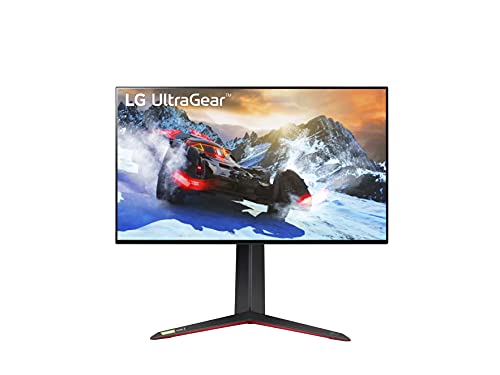 LG UltraGear 27GP950-B | Check price on Amazon |
Key takeaways
- best 4k gaming monitors under 300: five 4K gaming monitors compared for sharpness, refresh rate, HDMI 2.1 and input lag.
The best 4k gaming monitors under 300 pair a sharp 4K panel with a fast refresh rate, so games look crisp and feel responsive on the same screen. A 4K gaming monitor in this bracket has to do two jobs at once: render fine detail at 3840 by 2160, and keep motion smooth at high refresh rates with low input lag. This guide compares five 4K gaming monitors that fit this bracket, from 27-inch desk screens to a 32-inch model for a larger setup, with panel type, refresh rate, HDMI 2.1 and response time covered for each one. Every pick below is a complete monitor, and each one links to its Amazon listing so you can confirm the exact model, current availability, and specifications before ordering.
A 4K gaming monitor used to mean a flagship screen, but the bracket below now includes 144Hz and faster panels with HDMI 2.1, which is what modern consoles and graphics cards need for 4K at 120Hz. The trade-off in this bracket is usually panel type or HDR strength rather than resolution: IPS panels give wide viewing angles and accurate colour, VA panels give deep contrast, and HDR in this bracket is useful rather than spectacular. What matters most is the combination of resolution, refresh rate and input lag, since a 4K panel that feels slow is a poor gaming screen no matter how sharp it looks. The five picks below are ranked for that combination.
How to Choose
Resolution and sharpness
A 4K panel at 3840 by 2160 shows four times the pixels of a 1080p panel, which makes text, HUD elements and distant detail in games visibly sharper. On a 27-inch screen the pixel density is high enough that individual pixels disappear at a normal desk distance, while a 32-inch screen trades a little density for a larger image. Check that the monitor is a true 4K panel and not a lower-resolution panel with upscaling, and remember that a graphics card or console must be able to drive 4K at a good frame rate to make the most of it.
Refresh rate
Refresh rate decides how smooth motion feels. A 144Hz panel refreshes more than twice as often as a 60Hz panel, which makes fast camera movement and tracking smoother, while a 160Hz panel adds a little more headroom. For competitive play, a high refresh rate matters as much as resolution, and for story-driven games it makes panning and movement feel calmer. Match the refresh rate to your hardware: a console that outputs 120Hz needs a panel that accepts it, and a PC needs a graphics card that can push frames near the panel refresh rate at 4K.
HDMI 2.1 and console play
HDMI 2.1 is the port that matters for modern consoles, since it carries 4K at 120Hz with variable refresh rate. A monitor with HDMI 2.1 lets a console owner use the full 4K 120Hz mode, while a monitor with only HDMI 2.0 caps the console at 4K 60Hz or 1440p 120Hz. Check the HDMI version on the listing and the number of HDMI 2.1 ports, since a monitor with one such port still needs a switch or a cable swap for a second console. DisplayPort is the PC connection to check alongside HDMI, and a DisplayPort 1.4 input covers 4K at high refresh rates on a PC.
Panel type
IPS panels give wide viewing angles and consistent colour, which suits a desk where you sit squarely in front of the screen and care about colour in games. VA panels give deeper blacks and stronger contrast, which suits dark games and moody scenes, but viewing angles are narrower. In this bracket, IPS is the common choice for gaming, and VA appears on curved and larger models. Pick the panel type that matches your room: IPS for a bright room and shared viewing, VA for a dark room and deep contrast.
Response time and input lag
Response time decides how clean fast motion looks, and input lag decides how quickly your actions reach the screen. A fast IPS panel with a one-millisecond-class response time keeps ghosting low in fast games, while a slow panel smears motion even at a high refresh rate. Input lag matters for competitive play, so look for a game mode that bypasses extra processing. The picks below are chosen for fast response times in their class, and each one has a game mode for low-latency play.
HDR
HDR in this bracket adds brighter highlights and more detail in bright and dark scenes, but it is not the same as flagship HDR. A monitor with HDR600 gives a visible step up from standard dynamic range, while lower HDR tiers are a smaller improvement. Check the HDR tier in the listing and treat it as a bonus rather than the main reason to buy, since resolution, refresh rate and input lag matter more for gaming. A monitor with good HDR is a plus for story-driven games and streaming, and a minor factor for competitive play.
Size and desk fit
Size decides how much of your view the game fills. A 27-inch screen is the standard desk size for 4K gaming, since it keeps pixel density high and fits a normal desk. A 32-inch screen gives a larger image for a deeper desk or a living-room setup, but it needs more space and a longer viewing distance. Measure your desk depth before choosing, and check the stand footprint and VESA mount support if you plan to use an arm. A monitor that is too large for the desk forces you to sit too close, which hurts more than it helps.
Top Picks
Gigabyte M28U
The Gigabyte M28U is the all-round pick for 4K gaming in this bracket, with a 28-inch IPS panel, 144Hz refresh rate and HDMI 2.1. The 4K resolution keeps text and distant detail sharp, while the 144Hz refresh rate and fast response time keep motion clean in fast games. HDMI 2.1 carries 4K at 120Hz from a modern console, and DisplayPort 1.4 covers high refresh rates on a PC. The M28U is a strong fit for a desk where one monitor serves both PC and console gaming, and its KVM switch is a handy extra for a desk with two machines.
Who it is for: gamers who want one 4K monitor for PC and console play, with HDMI 2.1 and a fast IPS panel. The main caveat is HDR: the M28U has useful HDR rather than flagship HDR, so treat it as a bonus. Confirm the listing shows the standard M28U, not the Arm Edition, since the two ship under close names and the stand differs.
ASUS TUF Gaming VG28UQL1A
The ASUS TUF Gaming VG28UQL1A is the fast-refresh pick for 4K gaming, with a 28-inch IPS panel at 144Hz and HDMI 2.1. The panel keeps motion smooth at high refresh rates, and the fast response time keeps ghosting low in competitive games. HDMI 2.1 supports 4K at 120Hz from a console, and the monitor has the game modes and variable refresh rate support that competitive players look for. The TUF build is made for long sessions, with a sturdy stand and a menu that puts the gaming settings first.
Who it is for: competitive players who want 4K sharpness without giving up refresh rate. The main caveat is that this model is a gaming-first screen, so colour accuracy out of the box is tuned for games rather than photo work, and a calibration pass helps if you also edit images. Confirm the listing shows the VG28UQL1A, since ASUS sells several TUF 28-inch models under close names.
Gigabyte M32U
The Gigabyte M32U is the large-screen pick for 4K gaming, with a 32-inch IPS panel at 144Hz and HDMI 2.1. The larger screen fills more of your view, which suits story-driven games and a deeper desk, while the 144Hz refresh rate and fast response time keep motion smooth. HDMI 2.1 carries 4K at 120Hz from a console, and the KVM switch suits a desk with a PC and a second machine. The M32U is the pick for gamers who want the biggest 4K image in this bracket without giving up refresh rate.
Who it is for: gamers with a deep desk who want a large 4K image for immersive play. The main caveat is size: a 32-inch screen needs a longer viewing distance, so measure your desk before buying, and confirm the listing shows the standard M32U rather than the Arm Edition. HDR is useful rather than flagship, so treat it as a bonus.
Acer Nitro XV282K
The Acer Nitro XV282K is the sharp-and-fast pick for 4K gaming, with a 28-inch IPS panel at 144Hz and HDMI 2.1. The panel keeps text and HUD elements crisp, while the high refresh rate and fast response time keep motion clean in fast games. HDMI 2.1 supports 4K at 120Hz from a console, and DisplayPort covers high refresh rates on a PC. The Nitro line is built for gaming first, with game modes and variable refresh rate support, and the 28-inch size fits a standard desk without crowding it.
Who it is for: gamers who want a compact 4K gaming screen with HDMI 2.1 and a fast panel. The main caveat is the model suffix: confirm the listing shows the KVbmiipruzx model, since Acer sells the XV282K in several variants with different suffixes. Check the listing for the exact model before ordering.
LG UltraGear 27GP950-B
The LG UltraGear 27GP950-B is the premium-panel pick for 4K gaming, with a 27-inch Nano IPS panel at 144Hz, overclockable higher, and HDMI 2.1. The Nano IPS panel gives wide viewing angles and strong colour, while the high refresh rate and fast response time keep motion smooth. HDMI 2.1 carries 4K at 120Hz from a console, and the monitor has the game modes and variable refresh rate support that competitive players expect. The 27-inch size keeps pixel density high, which suits a desk where you sit close to the screen.
Who it is for: gamers who want the strongest colour and sharpness in a 27-inch 4K gaming screen. The main caveat is availability: this is an older premium model, so confirm the listing shows the 27GP950-B and that the listing is active before ordering. Confirm also that the listing is the 27GP950-B and not the 27GN950-B, since the two models share a similar name.
Comparison Table
| Product | Size | Panel | Refresh rate | HDMI 2.1 | Best for |
|---|---|---|---|---|---|
| Gigabyte M28U | 28-inch | IPS | 144Hz | Yes | PC and console, one monitor |
| ASUS TUF VG28UQL1A | 28-inch | IPS | 144Hz | Yes | Competitive play |
| Gigabyte M32U | 32-inch | IPS | 144Hz | Yes | Large, immersive image |
| Acer Nitro XV282K | 28-inch | IPS | 144Hz | Yes | Compact desk, fast play |
| LG UltraGear 27GP950-B | 27-inch | Nano IPS | 144Hz, overclockable higher | Yes | Colour and sharpness |
Which One Is Right for You?
Choose the Gigabyte M28U if you want one 4K monitor for PC and console gaming with HDMI 2.1. Choose the ASUS TUF VG28UQL1A if competitive play matters most and you want a gaming-first screen. Choose the Gigabyte M32U if you have a deep desk and want the largest 4K image in this bracket. Choose the Acer Nitro XV282K if you want a compact 28-inch screen with HDMI 2.1 for a standard desk. Choose the LG UltraGear 27GP950-B if colour and sharpness matter most and you want a premium Nano IPS panel. In every case, confirm the exact model on the listing before ordering, and check that your console or graphics card can drive 4K at a high refresh rate.
Frequently Asked Questions
What should I look for in the best 4k gaming monitors under 300?
Look for a true 4K panel, a refresh rate of 144Hz or higher, HDMI 2.1 for console play, and a fast response time with low input lag. Panel type matters too: IPS suits most desks, while VA suits dark rooms. HDR is a bonus in this bracket rather than the main reason to buy, and size should match your desk depth.
Is HDMI 2.1 important for a 4K gaming monitor?
Yes, HDMI 2.1 matters for modern consoles, since it carries 4K at 120Hz with variable refresh rate. A monitor with only HDMI 2.0 caps a console at 4K 60Hz, so a console owner should treat HDMI 2.1 as essential. PC gamers can use DisplayPort 1.4 for high refresh rates at 4K, but HDMI 2.1 still matters if a console shares the desk.
Is a 27-inch or 32-inch 4K monitor better for gaming?
A 27-inch screen keeps pixel density high and fits a standard desk, which suits most gamers. A 32-inch screen gives a larger, more immersive image but needs a deeper desk and a longer viewing distance. If your desk is shallow, a 27-inch or 28-inch screen is the safer choice, while a deep desk suits a 32-inch model.
Can a 4K monitor at 144Hz work for competitive games?
Yes, a 4K panel at 144Hz works well for competitive games when the response time is fast and input lag is low. The high refresh rate keeps motion smooth, and a game mode that bypasses extra processing keeps latency down. Your graphics card or console must be able to push frames near the panel refresh rate at 4K to make the most of it, so check your hardware before buying.
Disclosure: As an Amazon Associate, we may earn from qualifying purchases.
FAQ
Which One Is Right for You?
What should I look for in the best 4k gaming monitors under 300?
Is HDMI 2.1 important for a 4K gaming monitor?
Is a 27-inch or 32-inch 4K monitor better for gaming?
Can a 4K monitor at 144Hz work for competitive games?
More from Amazon
Programs that pair well with the guide above. Offers and eligibility are set by Amazon and may change.
Free shipping on eligible items, Prime Video and more. Eligible new members can start with a free trial.
Start a Prime free trialAd-free music streaming. Eligible new subscribers can start with a free trial.
Try Music Unlimited freeA Prime membership for ages 18-24 with a trial period. Eligibility is set by Amazon.
See Prime for Young AdultsAudiobooks and podcasts to listen to on the go. Eligible new members can start with a free trial.
Try Audible freeAs an Amazon Associate we earn from qualifying purchases.