Our Short List of 3
All 4 Picks at a Glance
| Product | Specs | Action |
|---|---|---|
 Optoma UHD38x True 4K UHD Gaming Projector | Check price on Amazon | |
 ViewSonic PX701-4K UHD 4K Projector | Check price on Amazon | |
 Epson Home Cinema 2350 4K PRO-UHD Smart Gaming Projector | Check price on Amazon | |
 Optoma UHZ36 4K UHD Laser Home Theater Projector | Check price on Amazon |
Our Top Picks
Playing PC games on a projector changes the feel of a game in a way no monitor can match. A race car sliding through a night circuit, a squad pushing through a dark corridor, or a hero crossing a ruined city all land differently when the image fills a wall. The four projectors in this guide are all listed on Amazon US, and each one states its gaming figures plainly: input lag, refresh rate, and resolution. Those three numbers decide whether a projector suits fast competitive play or slow cinematic play, and they matter far more than any single brightness figure.
Every pick below draws a 4K image at 3840 by 2160 pixels. Two reach it by DLP pixel shifting and one by 3LCD pixel shifting from 1080p panels, as the article states per pick. Input lag runs from 4.2 milliseconds at 1080p on the two gaming-first models to under 20 milliseconds on the Epson, and the laser pick carries no low-latency gaming mode at all, which the article states plainly in its section. Brightness runs from 2,800 to 4,000 lumens, and every pick covers at least a 100-inch image, with the largest reaching 300 inches.
A projector also asks more of the room than a monitor does. You need throw distance between the lens and the wall, a surface or screen that stays flat, and a room that can go dim when the game gets dark. The sections below explain what to weigh before you buy, then walk through each model in turn, with the lag, refresh, and resolution figures stated per pick.
What to Look For
Input lag comes first. Lag is the delay between pressing a key or moving a mouse and seeing the result on screen, and it matters more than any other single figure for gaming. A lag figure under 20 milliseconds suits most PC play, from story-driven adventures to online shooters. A lag figure of 4.2 milliseconds at 1080p suits competitive play, where a fast reaction decides the round. Lag changes with resolution and refresh rate, so read the figure for the mode you will actually use: the two gaming-first models in this guide list 4.2 milliseconds at 1080p with a high refresh rate and a higher figure at 4K.
Refresh rate is the second figure to check. A projector that runs 1080p at 120Hz or 240Hz gives fast games a smoother look than one locked to 60Hz, and it pairs well with a gaming PC that can sustain high frame rates. The two gaming-first models run 1080p at 240Hz and 4K at 60Hz, while the Epson runs 1080p at 120Hz and 4K at 60Hz. If your library leans toward competitive shooters, the high-refresh 1080p mode is the one to chase, and the PC has to hold the frame rate there, since a 240Hz mode shows nothing extra when the PC only draws 60 frames each second.
Resolution decides how sharp the image looks on a large screen. A 4K image measures 3840 by 2160 pixels, and it shows its strength on screens above 100 inches, where individual pixels would otherwise become visible. The DLP models in this guide build their 4K image by pixel shifting, which shifts each pixel to produce the on-screen image, while the Epson builds its 4K PRO-UHD image by shifting 1080p panels. Both approaches produce a 3840 by 2160 image on screen, and the listing language says so.
Brightness, measured in lumens, decides how well the image holds up with lamps on or daylight coming through curtains. The models below range from 2,800 to 4,000 lumens, and the brighter units keep colors vivid in rooms that never get fully dark. If the room has windows without curtains, put the brighter models at the top of your shortlist.
Throw distance decides where the projector can live. All four picks are standard-throw models, which need several feet between the lens and the wall. The brightest pick throws a 120-inch image from about 13 feet away, so a shelf at the back of a room or a ceiling mount suits it. Measure the room before you settle on a model, and remember that lens shift and keystone correction make placement far more forgiving than a fixed lens would. Only the Epson carries vertical lens shift here, while the others rely on keystone correction and zoom.
Light source shapes running costs and upkeep. Lamp-based models need a replacement lamp after thousands of hours, while a laser light source lasts far longer and holds its brightness more evenly over time. The brightest pick lists lamp life up to 15,000 hours, and the laser pick lists laser life up to 30,000 hours. Built-in audio matters too: a 10-watt speaker covers casual play, while the 15-watt speaker in the laser pick can carry a whole evening without external speakers. Even so, every built-in speaker here is a backup to a soundbar or external speakers when the game deserves full sound.
Smart platforms and connectivity finish the checklist. Android TV is built into the Epson, so it streams without a stick, while the other three need a streaming stick or box. Dual HDMI inputs let a PC and a console stay connected at once, and a USB port that powers a dongle keeps the setup tidy.
What to Look For in Each Pick
The four sections below state input lag, refresh rate, and resolution for each model, plus brightness, throw, light source, and audio. The order runs from the strongest gaming figures to the weakest, with the laser pick last because it carries no low-latency gaming mode.
Optoma UHD38x True 4K UHD Gaming Projector
The UHD38x is the strongest gaming pick in this guide on the figures available, and it leads on brightness as well. The listing gives it 4,000 lumens, a true 4K UHD image at 3840 by 2160, and an Enhanced Gaming Mode that cuts input lag to 4.2 milliseconds at 1080p with a 240Hz refresh rate. At 4K the lag figure rises to 16 milliseconds, which is still quick enough for most play, and the listing pairs 1080p at 120Hz or 4K at 60Hz with current consoles. A PC that can hold 240 frames each second at 1080p gets the smoothest image this guide can give, while a PC that plays at 4K gets the sharpest image at 60Hz. HDR10 and HLG support add brighter whites and deeper black levels, and the eight-segment color wheel keeps colors vivid during fast camera movement.
The lamp light source lists life up to 15,000 hours, and the unit weighs 10.1 pounds. Dual HDMI 2.0 inputs take a PC and a console at once, with a 3.5mm audio output and an optical audio output for external sound. The image runs from 33 to 300 inches, with a 120-inch image from about 13 feet away, and a 1.1x zoom plus vertical keystone correction helps square the image on the wall. There is no smart system built in, so a streaming stick or box is needed for apps, and a USB port powers a dongle.
Evidence for this pick is the freshest in the guide. The Amazon product page was opened and read, with the ASIN field confirming B0BGVGDB72 and the listing confirming the 4.2-millisecond lag figure, the 240Hz refresh rate, and the 4,000-lumen brightness. A listing tracker checked on November 26, 2026 showed the model in stock on Amazon, and a mirror checked eight hours before that showed a new unit in stock and fulfilled by Amazon. That is the strongest evidence in this guide.
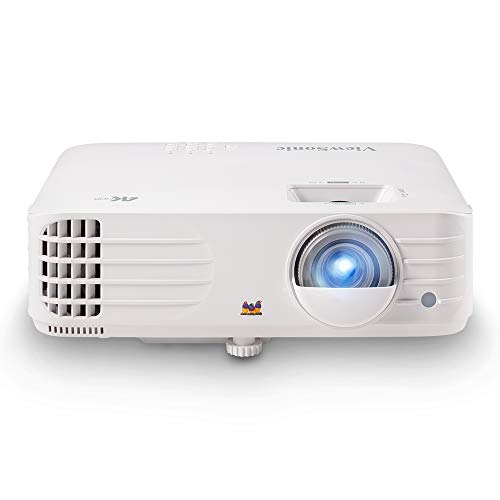
ViewSonic PX701-4K UHD 4K Projector
The PX701-4K matches the lead pick on the gaming figures that matter most. The listing gives it a true 4K UHD image at 3840 by 2160, a 240Hz refresh rate, and a 4.2-millisecond input lag figure at 1080p, with HDR and HLG support. An independent measurement put 4K lag near 17 milliseconds, so the 4K mode is a touch slower than the lead pick’s 16-millisecond figure, and owners report a little more lag at 4K than at the high-refresh 1080p mode. For competitive play, run it at 1080p with the high refresh rate; for cinematic play, run it at 4K and accept the slower response.
Brightness is 3,200 lumens, which is lower than the lead pick’s 4,000 but still bright enough for a room with lamps on. The listing gives a 1,000,000 to 1 contrast figure as a maker figure, auto keystone, four-corner adjustment, and a warping tool for curved screens, which the lead pick does not list. A 1.1x optical zoom and dual HDMI inputs cover placement and connections, and a powered USB port runs a streaming dongle, since there is no smart system built in. The unit weighs 6.2 pounds, which makes it the lightest pick in this guide and the easiest to move between rooms. The image runs from 30 to 300 inches.
Evidence for this pick is fresh. The Amazon product page surfaced in an exact-ASIN search with the ASIN field confirming B08L9SM2DK and the listing stating “Is Discontinued By Manufacturer: No”. A listing tracker checked on November 26, 2026 showed the model in stock on Amazon, and a second tracker checked the same day listed it at Amazon.
Epson Home Cinema 2350 4K PRO-UHD Smart Gaming Projector
The Home Cinema 2350 is the only 3LCD pick in this guide, and the only one with streaming built in. The listing gives it a 4K PRO-UHD image, 2,800 lumens of color brightness and 2,800 lumens of white brightness, HDR10 and HLG support, and input lag under 20 milliseconds, with 1080p gaming at 120Hz or 4K gaming at 60Hz. The 4K PRO-UHD image is built by shifting 1080p panels, which the listing’s own footnote describes as resolution enhancement that shifts each pixel to produce the on-screen image.
The 3LCD design runs red, green, and blue through three separate chips rather than a spinning color wheel, so the image stays free of rainbow artifacts during fast camera movement. Android TV is built in, so Twitch, YouTube, and streaming apps run without a stick, and a 10-watt speaker covers casual play. A 1.62x zoom and vertical lens shift make placement the most flexible in this guide, and the unit weighs 9 pounds. The lamp light source needs a replacement eventually, which the laser pick avoids, and the listing gives no separate lag figure for 4K mode, so competitive players should read the under-20-millisecond figure as the number for 1080p play and confirm the 4K figure on the listing.
Evidence for this pick was conflicting and is worth stating plainly. The Amazon product page crawl from 253 days ago showed an empty buy box alongside a “50+ bought in past month” badge, which is why an earlier batch flagged this ASIN as the weakest in its set. The most recent evidence wins here: a listing tracker checked on November 26, 2026 showed the model in stock on Amazon, a second tracker checked four hours before that listed it at Amazon, and a roundup updated the same morning listed it on Amazon. Confirm a new unit and a live buy box on the listing before you order, since the older crawl shows how quickly the buy box can empty.
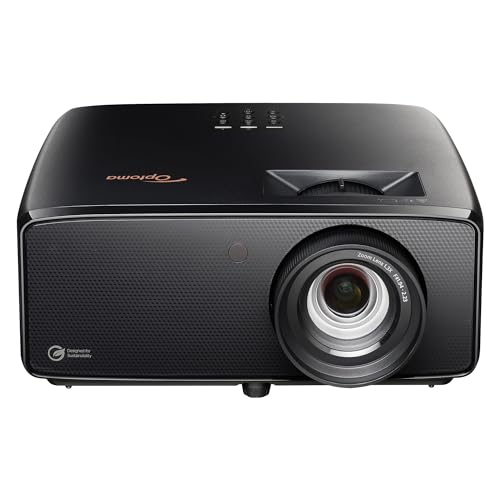
Optoma UHZ36 4K UHD Laser Home Theater Projector
The UHZ36 is the laser pick in this guide, and it is the weakest gaming pick by design. The listing gives it a 4K UHD image at 3840 by 2160, 3,500 lumens from a DuraCore laser, HDR support, Filmmaker Mode, and a 15-watt speaker. The laser light source lists life up to 30,000 hours, so there are no lamp swaps, and the picture runs from 50 to 300 inches. Filmmaker Mode turns off motion smoothing for movies, and MEMC smooths sports. The listing also gives a 1,500,000 to 1 contrast figure as a maker figure.
What the listing does not give is a low-latency gaming mode. Optoma’s own comparison chart lists no gaming mode for this model, and a roundup updated November 23, 2026 states that plainly. That makes the UHZ36 the pick for a bright room where movies and sports matter most and games are slow-paced, not the pick for twitch shooters where every millisecond counts. There is no smart system built in, so a streaming stick or box is needed, and the listing gives no input lag figure at all. If low lag is the reason for buying, one of the first three picks fits better.
Evidence for this pick is recent but thinner on gaming proof. The Amazon product page surfaced in an exact-ASIN search with the ASIN field confirming B0GGVZW2X2. A listing index checked on November 20, 2026 showed the model in stock at check, and a tracker checked the same week listed it at Amazon. Click this one first before you order, since it carries the weakest gaming evidence in the guide and the oldest stock signal of the four.
Comparison Table
| Projector | Resolution | Brightness | Input lag | Refresh rate | Light source |
|---|---|---|---|---|---|
| Optoma UHD38x | 4K UHD, 3840 x 2160 | 4,000 lumens | 4.2 ms at 1080p, 16 ms at 4K | 240 Hz | Lamp, up to 15,000 hours |
| ViewSonic PX701-4K | 4K UHD, 3840 x 2160 | 3,200 lumens | 4.2 ms at 1080p | 240 Hz | Lamp |
| Epson Home Cinema 2350 | 4K PRO-UHD, pixel shift | 2,800 lumens | Under 20 ms | 120 Hz at 1080p | Lamp |
| Optoma UHZ36 | 4K UHD, 3840 x 2160 | 3,500 lumens | No gaming mode listed | 60 Hz at 4K | Laser, up to 30,000 hours |
Frequently Asked Questions
What input lag is low enough for PC games on a projector?
A lag figure under 20 milliseconds suits most PC play, from story-driven adventures to online shooters. A lag figure of 4.2 milliseconds at 1080p suits competitive play, where a fast reaction decides the round. Lag changes with resolution and refresh rate, so read the figure for the mode you will actually use: the two gaming-first models in this guide list 4.2 milliseconds at 1080p with a high refresh rate and a higher figure at 4K.
Is 4K or 1080p better for PC gaming on a projector?
It depends on the game and the PC. 4K at 60Hz gives the sharpest image for cinematic adventures and role-playing games, where detail matters more than raw speed. 1080p at 120Hz or 240Hz gives the smoothest motion for competitive shooters, where the frame rate decides how the game feels. The PC has to sustain the frame rate in either mode: a 240Hz mode shows nothing extra when the PC only draws 60 frames each second, and a 4K mode needs a PC that can hold 60 frames each second at that resolution. The two gaming-first models in this guide cover both modes, so you can switch by game.
Do I need a dark room for a gaming projector?
A dark or dim room gives the best image on every pick in this guide, and brightness does not replace it. A brighter projector holds up better with lamps on or daylight coming through curtains, and the 4,000-lumen lead pick is the strongest here for a room that never gets fully dark. Even so, a dark scene in a bright room washes out on any projector. If the room has windows, add curtains or plan evening sessions, and put the brighter models at the top of your shortlist when the room cannot go dark.
How to Choose
Begin with the game type. Competitive players should take the Optoma UHD38x or the ViewSonic PX701-4K, because both list 4.2 milliseconds of lag at 1080p with a 240Hz refresh rate, and the UHD38x adds the brighter image. Players who split time between games and movies should take the Epson Home Cinema 2350, because Android TV is built in, the 3LCD image stays free of rainbow artifacts, and the under-20-millisecond lag figure covers most play. Buyers who want a laser and a bright room should take the Optoma UHZ36, with the plain warning that it lists no low-latency gaming mode, so it suits slow-paced games better than twitch shooters.
Then match the room. Measure the throw distance before you order, since all four picks are standard-throw models that need several feet between the lens and the wall. A shelf at the back of the room or a ceiling mount suits them, and the Epson’s lens shift gives the most placement freedom. Confirm the exact model number on the listing, confirm the buy box shows a new unit, and confirm the listing is the standalone projector rather than a bundle.
Disclosure: As an Amazon Associate, we may earn a commission from qualifying purchases made through links in this article, at no additional cost to you.
FAQ
What input lag is low enough for PC games on a projector?
Is 4K or 1080p better for PC gaming on a projector?
Do I need a dark room for a gaming projector?
More from Amazon
Programs that pair well with the guide above. Offers and eligibility are set by Amazon and may change.
Free shipping on eligible items, Prime Video and more. Eligible new members can start with a free trial.
Start a Prime free trialAd-free music streaming. Eligible new subscribers can start with a free trial.
Try Music Unlimited freeA Prime membership for ages 18-24 with a trial period. Eligibility is set by Amazon.
See Prime for Young AdultsAudiobooks and podcasts to listen to on the go. Eligible new members can start with a free trial.
Try Audible freeAs an Amazon Associate we earn from qualifying purchases.