Our Short List of 3

- Best for: Meeting rooms and classrooms where slides are shown with the lights on.
- 3,600 lumens color brightness and 3,600 lumens white brightness
- XGA resolution with 3-chip 3LCD technology
- Dynamic contrast ratio up to 15,000:1
- 1x HDMI port

- Best for: Budget classrooms and small offices showing large-text slides.
- 4,000 lumens brightness
- SVGA resolution
- SuperColor technology for a wider color range
- Vertical keystone correction

- Best for: Widescreen PowerPoint decks in conference rooms and training spaces.
- WXGA resolution with DLP technology
- 4,000 lumens brightness
- Contrast ratio of 20,000:1
- Dual HDMI and VGA inputs
All 5 Picks at a Glance
| Product | Specs | Action |
|---|---|---|
| Epson EX3280 |
| Check price on Amazon |
| ViewSonic PA503S |
| Check price on Amazon |
| BenQ MW560 |
| Check price on Amazon |
 Epson VS260 |
| Check price on Amazon |
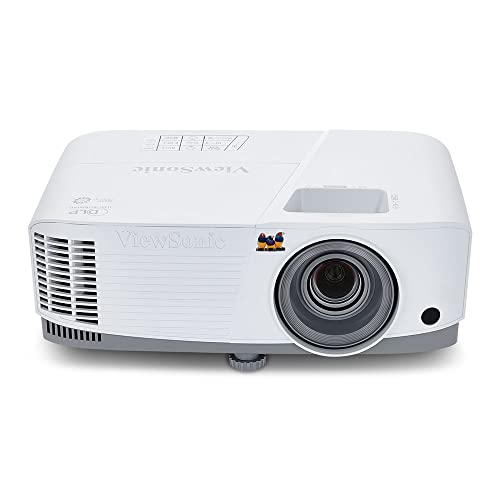 ViewSonic PA503W |
| Check price on Amazon |
Key takeaways
- Find the best projectors for PowerPoint presentations, with bright lamps, sharp text, and simple laptop connections for classrooms and meeting rooms.
A PowerPoint deck lives or dies on readability. Small fonts, thin chart lines, and pale accent colors all turn to mush when a projector is too dim or too soft, and a room full of people will not wait while you fiddle with cables. A dim image forces the audience to squint, and a soft one turns numbers into guesses. The right projector keeps every bullet legible from the back row, even with the lights on, and connects to a laptop in seconds.
This guide focuses on business and classroom projectors built for exactly that job. Every pick below delivers high brightness for lit rooms, a native resolution that keeps text crisp, and straightforward HDMI connectivity, so your slides look the way they did on your laptop screen.
Quick Picks
As an Amazon Associate we earn from qualifying purchases
| Product | Best for | Key spec from title |
|---|---|---|
| Epson EX3280 | Bright meeting rooms | 3,600 lumens, XGA, 3-chip 3LCD |
| ViewSonic PA503S | Budget classrooms | 4,000 lumens, SVGA, SuperColor |
| BenQ MW560 | Widescreen slides | 4,000 lumens, WXGA, DLP |
| Epson VS260 | Portable presentations | 3,300 lumens, XGA, 3-chip 3LCD |
| ViewSonic PA503W | Widescreen on a budget | 4,000 lumens, WXGA, vertical keystone |
How to Choose
Brightness for Lit Rooms
Brightness is the first number to check, because PowerPoint is almost always shown with the lights on. Look for at least 3,000 lumens for a small meeting room, and 3,500 lumens or more for a classroom or a space with windows and overhead lighting. Manufacturers quote color brightness and white brightness separately on some models, and both matter: a projector with high white brightness but weak color output will wash out charts and colored headings. Lamp models hold up well here, and their brightness figures are measured to a standard, so you can compare models fairly. If your room cannot be darkened at all, treat brightness as the deciding factor and let other features follow.
Resolution and Text Sharpness
Resolution decides whether small text stays readable. SVGA at 800 by 600 is workable for large bullet points in a small room, but text gets fuzzy as the image grows. XGA at 1024 by 768 is the safer minimum for typical decks, since it keeps body text and table numbers crisp at common screen sizes. WXGA at 1280 by 800 adds a widescreen 16:10 frame that matches modern laptops, so slides fill the screen without black bars or stretched images. Full HD is nicer still, but it is not required for slides, and it usually costs more. Match the projector to the size of your text rather than chasing the highest number on the box.
Throw Distance and Room Size
Throw distance is the space between the projector and the screen, and it decides whether the image fits your room at all. A standard-throw projector needs roughly 10 to 12 feet to fill a 100-inch screen, which suits most classrooms and conference rooms. Short-throw models work from a few feet away and are handy in small rooms or where people walk in front of the lens. Check the throw ratio and the supported screen size range before buying, and measure your room rather than guessing. Ceiling mounting changes the math too, since the mount position is fixed. A zoom lens and keystone correction give you room to adjust when the placement is not perfect.
Connectivity and Setup
A presentation projector should connect to any laptop without extra adapters. HDMI is the essential port, and a second HDMI input is useful when a room has both a podium laptop and a guest device. VGA still appears on older laptops and installed room systems, so its presence is a bonus rather than a requirement. Wireless display support, including Miracast on some models, lets presenters share slides from a laptop or phone without a cable, which helps when several people present. Built-in speakers save you from carrying a separate speaker for short clips, though they will not fill a large hall. Simple menus and a remote with a blank-screen button round out a setup that stays out of your way.
The 5 Best Options
Epson EX3280
- Best for: Meeting rooms and classrooms where slides are shown with the lights on.
- 3,600 lumens color brightness and 3,600 lumens white brightness
- XGA resolution with 3-chip 3LCD technology
- Dynamic contrast ratio up to 15,000:1
- 1x HDMI port
Meeting rooms and classrooms where slides are shown with the lights on.
It has no built-in wireless, so wireless presenting needs a separate streaming device. Confirm it is still sold before buying.
The Epson EX3280 is a strong default choice for meeting rooms where the lights stay on. Its 3-chip 3LCD design produces 3,600 lumens of both color and white brightness, so colored charts and white slide backgrounds hold up equally well instead of one washing out the other. XGA resolution keeps body text and spreadsheet numbers legible at typical conference-room screen sizes, and the single HDMI port covers the standard laptop connection. It is compact and light enough to move between rooms, and the built-in speaker handles short audio clips without extra gear.
Watch out for: It has no built-in wireless, so wireless presenting needs a separate streaming device. Confirm it is still sold before buying.
ViewSonic PA503S
- Best for: Budget classrooms and small offices showing large-text slides.
- 4,000 lumens brightness
- SVGA resolution
- SuperColor technology for a wider color range
- Vertical keystone correction
Budget classrooms and small offices showing large-text slides.
SVGA resolution softens small fonts on larger screens, so keep body text generous. Confirm it is still sold before buying.
The ViewSonic PA503S is a straightforward budget option for classrooms and small offices that need a bright image above all else. Its 4,000-lumen lamp cuts through ambient light, and the SVGA resolution suits large bullet points, headings, and simple diagrams. SuperColor technology aims for a wider color range, which helps charts and highlighted text stand out on screen. Vertical keystone correction straightens the image when the projector sits on a table below the screen, and the HDMI input takes the standard laptop connection. It is a no-frills machine, and that is exactly the point for a room that just needs slides to be visible.
Watch out for: SVGA resolution softens small fonts on larger screens, so keep body text generous. Confirm it is still sold before buying.
BenQ MW560
- Best for: Widescreen PowerPoint decks in conference rooms and training spaces.
- WXGA resolution with DLP technology
- 4,000 lumens brightness
- Contrast ratio of 20,000:1
- Dual HDMI and VGA inputs
Widescreen PowerPoint decks in conference rooms and training spaces.
It is a lamp projector, so plan for eventual lamp replacement with heavy use. Confirm it is still sold before buying.
The BenQ MW560 is the pick for presenters whose decks are built in widescreen, since its WXGA resolution matches the 16:10 frame of most modern laptops. That means slides fill the screen edge to edge instead of floating inside black bars, and widescreen charts and timelines keep their proportions. The DLP lamp delivers 4,000 lumens, which is plenty for a lit conference room, and the 20,000:1 contrast ratio helps text stay distinct from the background. Dual HDMI and VGA inputs cover both new and older laptops, auto keystone correction squares up the image quickly, and SmartEco stretches lamp life when full brightness is not needed.
Watch out for: It is a lamp projector, so plan for eventual lamp replacement with heavy use. Confirm it is still sold before buying.
Epson VS260
- Best for: Trainers and presenters who carry their projector between rooms and sites.
- 3,300 lumens color brightness and 3,300 lumens white brightness
- XGA resolution with 3-chip 3LCD technology
- Dynamic contrast ratio of 15,000:1
- HDMI port
Trainers and presenters who carry their projector between rooms and sites.
At 3,300 lumens it is a step dimmer than the brightest picks here, so very large sunlit rooms are a stretch. Confirm it is still sold before buying.
The Epson VS260 is the most portable projector in this lineup, built for people who present in different rooms every week. It uses the same 3-chip 3LCD approach as its larger sibling, with 3,300 lumens of color and white brightness that keeps slides readable in well-lit spaces. XGA resolution handles typical deck text cleanly, and the compact body slips into a laptop bag alongside the power cable and remote. HDMI covers the laptop connection, the built-in speaker covers short clips, and the 15,000:1 contrast ratio keeps text distinct. It is a practical companion for trainers, sales staff, and teachers who move between sites.
Watch out for: At 3,300 lumens it is a step dimmer than the brightest picks here, so very large sunlit rooms are a stretch. Confirm it is still sold before buying.
ViewSonic PA503W
- Best for: Small businesses and classrooms running widescreen decks on a budget.
- 4,000 lumens brightness
- WXGA resolution of 1280 x 800
- HDMI input
- Vertical keystone correction
Small businesses and classrooms running widescreen decks on a budget.
The built-in speaker is modest, so add external audio for video-heavy sessions. Confirm it is still sold before buying.
The ViewSonic PA503W pairs widescreen resolution with a budget-friendly brief, making it a sensible fit for small businesses and classrooms that run modern widescreen decks. Its WXGA panel shows 1280 by 800 pixels, so slides built for a laptop screen map across without cropping or distortion. The listing quotes 4,000 lumens, which keeps text readable with the lights on, and vertical keystone plus a 1.1x optical zoom make placement forgiving on a table or a shelf. HDMI takes the laptop connection, and the ceiling-mount option suits rooms where the projector stays put. It covers the fundamentals without asking for a premium.
Watch out for: The built-in speaker is modest, so add external audio for video-heavy sessions. Confirm it is still sold before buying.
Which One Fits Your Situation
Small Meeting Room
For a room seating up to a dozen people, the Epson EX3280 fits well. Its 3,600 lumens handle the overhead lights, XGA keeps text sharp at a 60 to 80-inch image, and the compact body sits on a side table. One HDMI cable from the table laptop is all the setup it needs, and the built-in speaker covers the occasional clip. Place it roughly 8 to 10 feet from the screen for a comfortable image size.
Classroom or Training Room
Classrooms need brightness first, and both the ViewSonic PA503S and the BenQ MW560 deliver 4,000 lumens. Choose the PA503S when the budget is tight and the slides use large text, and choose the MW560 when the material is widescreen or packed with charts, since its WXGA panel and dual HDMI inputs suit a shared teaching station. Either way, mount the projector or fix its position, because a daily setup routine wastes teaching time and invites cable accidents.
Presenting on the Go
If you present at client sites or rented venues, portability matters as much as brightness. The Epson VS260 is the lightest option here and the easiest to pack with a laptop, and its 3,300 lumens still cope with typical lit rooms. Bring your own HDMI cable and extension cord, since venue setups vary, and arrive early to check the throw distance. A small portable screen is worth carrying too, because not every room has a clean white wall.
Widescreen Decks on a Budget
Presenters who build every deck in widescreen should pick a WXGA projector so slides are not letterboxed. The ViewSonic PA503W is the budget route, with 4,000 lumens and a 16:10 image that matches a laptop screen. The BenQ MW560 is the step up, adding dual HDMI, auto keystone, and a longer lamp-saving mode for rooms that run all day. Either one keeps widescreen charts, timelines, and split layouts looking the way they were designed.
Common Mistakes
- Buying a dim home-theater or mini projector and expecting it to survive a lit meeting room.
- Picking SVGA resolution for decks packed with small text, tables, or fine chart labels.
- Ignoring throw distance and discovering the image does not fit the wall or screen.
- Assuming every projector has wireless display built in, then finding no cable-free option on the day.
- Forgetting audio: built-in speakers suit short clips, but a full video session needs external sound.
Frequently Asked Questions
How many lumens do I need for PowerPoint in a lit room?
Aim for at least 3,000 lumens in a small meeting room and 3,500 lumens or more in a classroom or a room with windows. Brightness is what keeps text readable when the lights stay on, which is the normal setup for PowerPoint. Below that level, pale text and thin chart lines wash out, and the audience strains to follow along.
Is XGA resolution enough for PowerPoint slides?
Yes, XGA at 1024 by 768 is enough for most decks, since PowerPoint text and tables are usually large and high-contrast. It keeps body text and numbers legible at typical conference-room screen sizes. WXGA is better for widescreen decks, and SVGA only suits large bullet points in small rooms.
Do I need wireless connectivity for presentations?
No, a wired HDMI connection is the reliable default and works with any laptop. Wireless display is a convenience for rooms where several people present in turn, since it removes cable swapping. If your projector lacks it, a small streaming device plugged into the HDMI port adds the same ability.
Can I use a home-theater projector for PowerPoint?
You can, but it is often the wrong tool. Home-theater models are tuned for dark rooms and rich video, so their brightness may fall short with the lights on, and their color tuning favors movies over crisp text. A business projector with high lumens and a sharp native resolution will serve slides better for the same effort.
FAQ
How many lumens do I need for PowerPoint in a lit room?
Is XGA resolution enough for PowerPoint slides?
Do I need wireless connectivity for presentations?
Can I use a home-theater projector for PowerPoint?
More from Amazon
Programs that pair well with the guide above. Offers and eligibility are set by Amazon and may change.
Free shipping on eligible items, Prime Video and more. Eligible new members can start with a free trial.
Start a Prime free trialAd-free music streaming. Eligible new subscribers can start with a free trial.
Try Music Unlimited freeA Prime membership for ages 18-24 with a trial period. Eligibility is set by Amazon.
See Prime for Young AdultsAudiobooks and podcasts to listen to on the go. Eligible new members can start with a free trial.
Try Audible freeAs an Amazon Associate we earn from qualifying purchases.