Our Short List of 3
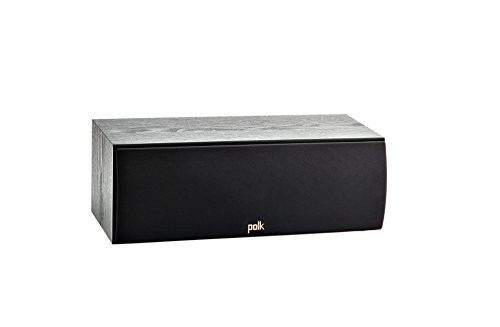
- Best for: First home theaters on a tight budget.
- Two 5.25-inch Dynamic Balance composite woofers
- 1-inch silk dome tweeter
- 100 watts power handling
- 6 ohms impedance
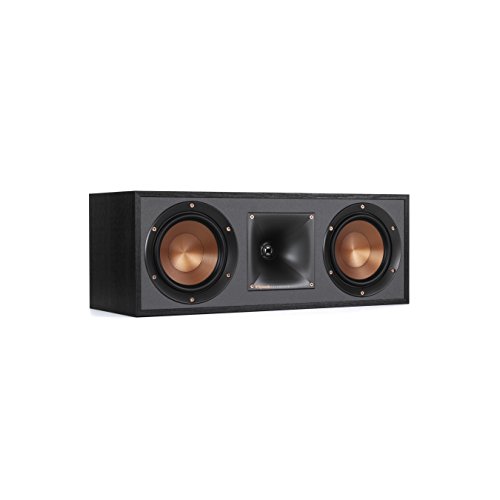
- Best for: Large rooms and loud movie nights.
- Two 5.25-inch spun-copper IMG woofers
- 1-inch aluminum LTS tweeter with 90-degree by 90-degree Tractrix horn
- 95 dB sensitivity at 2.83 volts at 1 meter
- Frequency response 89 Hz to 21 kHz

- Best for: Small shelves and small rooms.
- Two 4-inch mica-reinforced cellular woofers
- 1-inch super tweeter
- Frequency response 55 Hz to 25 kHz
- 145 watts maximum input power
All 4 Picks at a Glance
| Product | Specs | Action |
|---|---|---|
| Polk Audio T30 |
| Check price on Amazon |
| Klipsch R-52C |
| Check price on Amazon |
| Sony SSCS8 |
| Check price on Amazon |
 ELAC Debut 2.0 C5.2 |
| Check price on Amazon |
Key takeaways
- Find the best center speakers for clear movie dialogue, from compact Sony and Polk models to horn-loaded Klipsch picks, and match one to your room today.
Dialogue carries a movie, and the center channel carries the dialogue. When voices sound muffled, buried under music, or hard to follow from the side of the couch, the problem is usually not the receiver but the center speaker doing the work. A good center channel keeps speech clear at normal volume, anchors voices to the screen, and blends with the left and right speakers so the front of the room sounds like one system instead of three boxes.
This guide compares four center speakers that fit different rooms and budgets, from a compact Sony that tucks under a small television to a horn-loaded Klipsch built for larger spaces. Each pick was chosen from the name and specifications shown on its Amazon page, and every model below is a passive speaker that connects to an AV receiver with speaker wire. The right choice depends on your shelf space, your receiver, and how loud your room gets.
Quick Picks
As an Amazon Associate we earn from qualifying purchases
| Product | Best for | Key spec from title |
|---|---|---|
| Polk Audio T30 | Tight budgets | Dual 5.25-inch woofers, 100 watts |
| Klipsch R-52C | Large rooms | 95 dB sensitivity, Tractrix horn |
| Sony SSCS8 | Small shelves | Dual 4-inch woofers, 55 Hz to 25 kHz |
| ELAC Debut 2.0 C5.2 | Wall-adjacent placement | Front-firing ports, 35,000 Hz tweeter |
How to Choose
Match the Center to Your Front Speakers
A center channel should sound like it belongs with the speakers on either side of it. When the center uses a different tweeter material or a very different voicing, voices can change character as they move across the screen, which is distracting during dialogue-heavy scenes. The simplest path is to stay inside one product family, so a Polk center pairs with Polk left and right speakers, and a Klipsch center pairs with Klipsch fronts. If you already own front speakers, look for a center from the same brand and series first, and only branch out when that series offers nothing that fits your shelf.
Measure the Shelf Before You Buy
Center speakers are wide, and the best-sounding model is useless if it does not fit. Measure the width, depth, and height of the shelf or stand under your television, and compare those numbers with the speaker’s listed dimensions before ordering. Leave a little clearance on each side for airflow and for the grille, and check the depth twice, since a speaker that overhangs the front edge looks untidy and can tip forward. Height matters too: a tall center can block the bottom of the screen or the television’s infrared sensor, so confirm the clearance with a tape measure, not a guess.
Check Sensitivity and Power Handling
Sensitivity tells you how loud a speaker plays from a given amount of amplifier power, and it matters more than raw wattage for most rooms. A high-sensitivity design, near 95 dB, produces strong volume from a modest receiver, while a lower-sensitivity speaker needs more power to reach the same level. Power handling sets the ceiling: a speaker rated for 100 watts suits a small or medium room, while a 400-watt peak rating suits a larger space played loud. Match both figures to your receiver’s output and your room size, and remember that a speaker never needs its maximum rating to sound good.
Mind the Port and the Placement
Many center speakers vent through a port, and where that port sits decides how close the speaker can live to a wall. A rear-firing port needs several inches of open space behind the cabinet, or the bass turns boomy and the dialogue loses clarity. A front-firing port is far more forgiving and lets the speaker sit inside a shelf or against a wall without choking the low end. Sealed designs are the most flexible of all. Check the port location on the listing before you buy, and plan the placement around it rather than discovering the problem after the speaker arrives.
The 4 Best Options
Polk Audio T30
- Best for: First home theaters on a tight budget.
- Two 5.25-inch Dynamic Balance composite woofers
- 1-inch silk dome tweeter
- 100 watts power handling
- 6 ohms impedance
First home theaters on a tight budget.
The rear port needs clearance from the wall, so it does not suit a shallow enclosed shelf.
The Polk T30 is the straightforward entry point for a first home theater, and it earns its place with a simple formula: two 5.25-inch woofers, a 1-inch silk dome tweeter, and a wooden cabinet that fits a standard media shelf. Dialogue comes through clearly at ordinary volumes, and the speaker timbre-matches the rest of the Polk T-Series, so adding matching bookshelf or tower speakers later keeps the front of the room sounding consistent. It is a passive design, so it connects to an AV receiver with speaker wire and needs no power outlet of its own.
Watch out for: The rear port needs clearance from the wall, so it does not suit a shallow enclosed shelf.
Klipsch R-52C
- Best for: Large rooms and loud movie nights.
- Two 5.25-inch spun-copper IMG woofers
- 1-inch aluminum LTS tweeter with 90-degree by 90-degree Tractrix horn
- 95 dB sensitivity at 2.83 volts at 1 meter
- Frequency response 89 Hz to 21 kHz
Large rooms and loud movie nights.
At 18.75 inches wide and 7.6 inches deep, it needs a genuine shelf, not a slim floating console.
The Klipsch R-52C is built for rooms where dialogue has to cut through action scenes and reach the far end of a long couch. Its 95 dB sensitivity means an ordinary receiver drives it to strong volume without strain, and the 1-inch aluminum tweeter sits behind a Tractrix horn that keeps voices aimed at the listener instead of scattering around the room. Dual 5.25-inch spun-copper woofers handle the midrange with authority, and the 400-watt peak rating leaves plenty of headroom for loud passages. It is the largest cabinet in this guide, so measure the shelf first.
Watch out for: At 18.75 inches wide and 7.6 inches deep, it needs a genuine shelf, not a slim floating console.
Sony SSCS8
- Best for: Small shelves and small rooms.
- Two 4-inch mica-reinforced cellular woofers
- 1-inch super tweeter
- Frequency response 55 Hz to 25 kHz
- 145 watts maximum input power
Small shelves and small rooms.
The 4-inch woofers cannot move as much air as the 5.25-inch designs, so very large rooms may want a bigger center.
The Sony SSCS8 is the compact pick for small shelves and modest rooms, and it fits where wider centers cannot. Its 2-way, 3-driver layout pairs dual 4-inch woofers with a 1-inch super tweeter, and the mica-reinforced woofer cones keep dialogue clean even when the soundtrack gets busy. The cabinet is narrow enough to tuck under most televisions, and it pairs naturally with Sony’s matching floorstanding and bookshelf models if you build out a full surround system later. For a small room, its 145-watt maximum input is more than enough.
Watch out for: The 4-inch woofers cannot move as much air as the 5.25-inch designs, so very large rooms may want a bigger center.
ELAC Debut 2.0 C5.2
- Best for: Wall-adjacent shelves and enclosed media consoles.
- 1-inch cloth dome tweeter, response up to 35,000 Hz
- Two 5.25-inch woven aramid fiber woofers
- Frequency response 55 Hz to 35 kHz
- 120 watts maximum output power
Wall-adjacent shelves and enclosed media consoles.
At 21.3 inches wide and 18.3 pounds, it needs a sturdy shelf with real width.
The ELAC Debut 2.0 C5.2 is the pick for buyers who need to place a center speaker against a wall or inside a bookshelf. Its front-firing ports let you push the cabinet close to a boundary without muddying the bass, which rear-ported rivals cannot claim. Inside, a 1-inch cloth dome tweeter reaches up to 35,000 Hz behind a waveguide that controls directivity, while dual 5.25-inch woven aramid fiber woofers handle the vocal range with stiff, well-damped cones. The braced MDF cabinet keeps vibration down, and the 8-ohm impedance asks little of a modest receiver.
Watch out for: At 21.3 inches wide and 18.3 pounds, it needs a sturdy shelf with real width.
Which One Fits Your Situation
Small Room, Small Television
The Sony SSCS8 fits this room best. Its narrow cabinet tucks under a small television without blocking the screen, and the dual 4-inch woofers deliver clear dialogue at the volumes a small room actually uses. Pair it with Sony’s matching bookshelf models if you expand later, and keep the receiver volume moderate, since a small room needs clarity far more than raw output.
Large Room, Loud Movies
The Klipsch R-52C is the right tool for a large room. Its high sensitivity turns modest receiver power into real volume, and the horn-loaded tweeter keeps dialogue intelligible at the far end of a long couch. Give it a solid shelf with enough depth, and let a subwoofer handle the deepest bass so the center can focus on voices.
Shelf Against the Wall
The ELAC C5.2 wins when the shelf sits against a wall or inside a console. Its front-firing ports keep the bass clean where a rear-ported speaker would boom, and the waveguide tweeter holds dialogue steady for listeners sitting off to the side. Measure the shelf width first, since this is the widest cabinet in the guide.
First Home Theater on a Budget
The Polk T30 is the sensible starting point. It costs less than the others while delivering clear dialogue and a timbre match to the rest of the Polk T-Series, so future upgrades stay inside one family. Spend the savings on a decent receiver or a subwoofer, and upgrade the center later only if your room outgrows it.
Common Mistakes
- Buying a center speaker without measuring the shelf width, depth, and height first.
- Mixing a center from one brand family with front speakers from a very different one.
- Pushing a rear-ported center flat against the wall and wondering why dialogue sounds boomy.
- Choosing the biggest center for a small room instead of the one that fits the space.
- Forgetting that a passive center needs an AV receiver, since it has no built-in amplifier.
Frequently Asked Questions
Does the center speaker really matter more than the left and right speakers?
For movies and television, yes. The center channel carries most of the dialogue, so a weak center makes every conversation hard to follow, even when the front speakers sound fine. Music uses the left and right speakers more, but film and TV put the center to work constantly.
Can I use a center speaker from a different brand than my front speakers?
You can, but the result is often uneven, since voices can change character as they move across the screen. Staying inside one product family keeps the timbre consistent. If you must mix brands, choose a center with a similar tweeter type to your front speakers.
Do I need a subwoofer with a center speaker?
Not always. A good center handles dialogue on its own, and small rooms often sound fine without a subwoofer. A subwoofer helps with explosions, music, and deep effects, so add one when the room is large or when you want real low-end impact.
Why does dialogue sound muffled even with a good center speaker?
Placement is the usual cause. A center buried inside a closed cabinet, pushed against a wall with a rear port, or aimed at the floor will sound muffled no matter how good the drivers are. Pull it to the front edge of the shelf, angle it toward ear height, and rerun your receiver’s calibration.
FAQ
Does the center speaker really matter more than the left and right speakers?
Can I use a center speaker from a different brand than my front speakers?
Do I need a subwoofer with a center speaker?
Why does dialogue sound muffled even with a good center speaker?
More from Amazon
Programs that pair well with the guide above. Offers and eligibility are set by Amazon and may change.
Free shipping on eligible items, Prime Video and more. Eligible new members can start with a free trial.
Start a Prime free trialAd-free music streaming. Eligible new subscribers can start with a free trial.
Try Music Unlimited freeA Prime membership for ages 18-24 with a trial period. Eligibility is set by Amazon.
See Prime for Young AdultsAudiobooks and podcasts to listen to on the go. Eligible new members can start with a free trial.
Try Audible freeAs an Amazon Associate we earn from qualifying purchases.