Key takeaways
- Performance Gap: The 5070 Ti generally offers a 12-18% performance uplift over the standard 5070. Assess whether this jump justifies the price difference for the games and resolutions you play.
- Cooling Solution: Look for triple-fan designs with large heatsinks. Models like the MSI Gaming Trio or ASUS TUF series maintain lower temperatures, allowing the GPU to sustain boost clocks longer under load.
- Power and Clearance: Verify your power supply has sufficient wattage and the correct PCIe 5.0 power cables. Also, measure your case clearance, as some high-end 5070 Ti models exceed 3.2 slots in thickness and 330mm in length.
- Factory Overclocks: While factory overclocked models offer slightly higher out-of-the-box performance, the real-world frame difference between a standard and OC model is usually negligible. Do not pay a large premium for a minor clock speed increase.
- Warranty and Support: Prioritize brands with strong customer service and clear warranty terms. ASUS TUF models, for example, offer a 3-year warranty and feature military-grade components, providing excellent long-term reliability.
NVIDIA’s RTX 5070 and 5070 Ti occupy the competitive mid-range flagship tier, offering excellent 1440p and entry-level 4K gaming performance. The core challenge buyers face is that the 5070 Ti commands a premium over the base 5070 for a measurable but sometimes marginal performance gain. Additionally, the market is flooded with multiple AIB partner variants featuring different cooling solutions, factory overclocks, and price tags, making it difficult to determine which specific model offers the best value for your specific build and budget.
Our top picks




As an Amazon Associate we earn from qualifying purchases at no extra cost to you. Ratings are shown as listed on Amazon.
This guide compares the best RTX 5070 vs 5070 Ti graphics cards available right now. We focus on cooling efficiency, noise levels, factory overclock headroom, build quality, and overall value to help you decide whether the 5070 or 5070 Ti is the right architectural choice, and which specific AIB model best suits your system.
🛒 Best Price Today on Amazon
Prime members get fast, free shipping on everything above, plus member-only deals. New members get a 30-day free trial — cancel anytime.
Watch: RTX 5070 vs 5070 Ti: Which to Buy in 2026? — Video Review
How to Choose an RTX 5070 vs 5070 Ti
- Performance Gap: The 5070 Ti generally offers a 12-18% performance uplift over the standard 5070. Assess whether this jump justifies the price difference for the games and resolutions you play.
- Cooling Solution: Look for triple-fan designs with large heatsinks. Models like the MSI Gaming Trio or ASUS TUF series maintain lower temperatures, allowing the GPU to sustain boost clocks longer under load.
- Power and Clearance: Verify your power supply has sufficient wattage and the correct PCIe 5.0 power cables. Also, measure your case clearance, as some high-end 5070 Ti models exceed 3.2 slots in thickness and 330mm in length.
- Factory Overclocks: While factory overclocked models offer slightly higher out-of-the-box performance, the real-world frame difference between a standard and OC model is usually negligible. Do not pay a large premium for a minor clock speed increase.
- Warranty and Support: Prioritize brands with strong customer service and clear warranty terms. ASUS TUF models, for example, offer a 3-year warranty and feature military-grade components, providing excellent long-term reliability.
The Best RTX 5070 vs 5070 Tis Reviewed
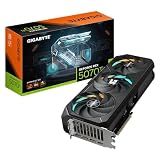
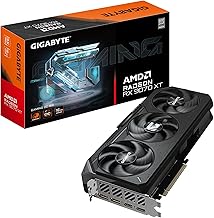
GIGABYTE RTX 5070 Ti Gaming OC 16G
This card is an excellent all-around contender. The WINDFORCE cooling system keeps the GDDR7 memory and chipset well-regulated, and the factory overclock provides a slight, reliable bump in frame rates for 1440p ultra gaming.
MSI RTX 5070 Ti Gaming Trio OC
The Gaming Trio OC is a premium offering known for its exceptional acoustic tuning. Its robust heatsink and triple-fan array deliver incredibly low noise levels even during sustained 4K gaming sessions, making it ideal for quiet builds.
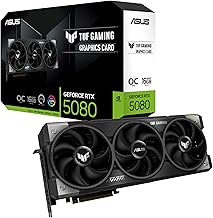
ASUS TUF Gaming RTX 5070 Ti OC Edition
ASUS’s TUF line prioritizes durability. With military-grade components, a protective PCB coating, and a 3.125-slot design for maximum surface area, it is a reliable workhorse that excels in thermal consistency.
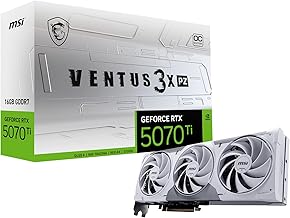
MSI RTX 5070 Ti Ventus 3X PZ OC
This card provides the most aggressive value in the 5070 Ti lineup. It features a no-nonsense design and a slightly lower boost clock, but maintains the full Blackwell architecture performance, making it a cost-effective entry point into the Ti tier.
PNY GeForce RTX 5070 Ti Epic-X ARGB OC
The Epic-X ARGB OC is tailored for enthusiasts who want aesthetics alongside performance. With a 2640 MHz boost clock and customizable lighting, it offers top-tier factory speeds without sacrificing thermal efficiency.
Frequently Asked Questions
What is the main difference between the RTX 5070 and 5070 Ti?
The primary differences lie in the core count, boost clocks, and memory bandwidth. The 5070 Ti has more CUDA cores and faster memory speeds, resulting in better performance for demanding titles and higher frame rates at 1440p and 4K resolutions.
Is the RTX 5070 Ti worth the extra money over the 5070?
It depends on your monitor’s resolution and refresh rate. If you are playing at 1440p with a high refresh rate or pushing into 4K, the 5070 Ti’s extra horsepower is worth it. For standard 1080p or casual 1440p gaming, the base 5070 remains a strong, economical choice.
Do I need a new power supply for a 5070 Ti?
Most 5070 Ti models recommend a power supply of 700W or higher. You should also ensure your power supply supports the PCIe 5.0 standard, as these cards require the newer 16-pin power connector for optimal and safe operation.
Can the RTX 5070 Ti handle 4K gaming?
Yes, the 5070 Ti is highly capable of 4K gaming, especially with NVIDIA’s DLSS 4 technology enabled. While you may need to tweak settings in the most demanding AAA titles, it provides a smooth and reliable 4K experience across the majority of modern games.
Final Thoughts
Choosing between the RTX 5070 and 5070 Ti ultimately depends on your resolution and refresh rate goals. For peak 1440p and reliable 4K performance, the 5070 Ti is the superior choice. Among the AIB models, the ASUS TUF Gaming RTX 5070 Ti OC Edition stands out for its unmatched durability and cooling. If you prioritize acoustics, the MSI RTX 5070 Ti Gaming Trio OC is an excellent option. Finally, for value-focused builders, the MSI RTX 5070 Ti Ventus 3X PZ OC delivers the core Ti performance without a bloated price tag.