Key takeaways
- GPU Performance: If you’re running an RTX 4060 or RX 7600 XT, 1440p is the sweet spot; reserve 4K for RTX 4080 or RX 7900 XTX-class cards that can maintain high frame rates at native resolution.
- Refresh Rate vs. Resolution: Competitive shooters benefit more from 160Hz+ at 1440p, while story-driven and open-world titles shine at 4K 60-120Hz where detail matters more than raw speed.
- Panel Type: Fast IPS or OLED panels deliver the best balance of color accuracy and response times; avoid budget VA panels if ghosting in fast-paced games bothers you.
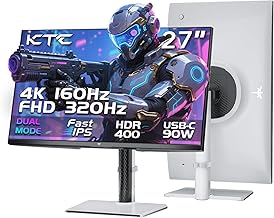
- Dual-Mode Flexibility: Some 4K monitors offer a dual-mode feature that switches to 1080p at 320Hz, letting you trade resolution for refresh rate when jumping between AAA and competitive titles.
- Connectivity and Ergonomics: Ensure HDMI 2.1 and DisplayPort 1.4 ports for full bandwidth, and look for height-adjustable stands or VESA mounting so you can position the screen for long, comfortable sessions.
What's inside
Choosing between a 1440p and a 4K gaming monitor is one of the biggest decisions PC builders face today. Push 4K and you get stunning image clarity, but it demands a powerful graphics card just to hold 60 FPS in modern AAA titles. Stick with 1440p and you can hit high refresh rates far more affordably, yet you might feel you’re leaving visual fidelity on the table when you’ve spent big on a top-tier GPU.
As an Amazon Associate we earn from qualifying purchases.




This guide cuts through the marketing noise to help you make the right call for your rig, your budget, and the games you actually play. We’ve selected six standout 27-inch monitors spanning both resolutions, with refresh rates from 144Hz up to 160Hz and beyond, so you can match your display to your hardware without compromise.
🛒 Best Price Today on Amazon
Prime members get fast, free shipping on everything above, plus member-only deals. New members get a 30-day free trial — cancel anytime.
Watch: 1440p vs 4K Gaming Monitor: 2026 Guide — Video Review
How to Choose a 1440p vs 4K Gaming Monitor
- GPU Performance: If you’re running an RTX 4060 or RX 7600 XT, 1440p is the sweet spot; reserve 4K for RTX 4080 or RX 7900 XTX-class cards that can maintain high frame rates at native resolution.
- Refresh Rate vs. Resolution: Competitive shooters benefit more from 160Hz+ at 1440p, while story-driven and open-world titles shine at 4K 60-120Hz where detail matters more than raw speed.
- Panel Type: Fast IPS or OLED panels deliver the best balance of color accuracy and response times; avoid budget VA panels if ghosting in fast-paced games bothers you.
- Dual-Mode Flexibility: Some 4K monitors offer a dual-mode feature that switches to 1080p at 320Hz, letting you trade resolution for refresh rate when jumping between AAA and competitive titles.
- Connectivity and Ergonomics: Ensure HDMI 2.1 and DisplayPort 1.4 ports for full bandwidth, and look for height-adjustable stands or VESA mounting so you can position the screen for long, comfortable sessions.
The Best 1440p vs 4K Gaming Monitors Reviewed
KTC 27″ QHD 144Hz (H27T27S)
A budget-friendly 1440p entry that nails the essentials: 144Hz, FreeSync and G-Sync support, HDR10, and an IPS panel with solid color reproduction. It’s an ideal pairing for mid-range GPUs that excel at 2K without breaking a sweat.
Amzfast 27″ 4K 160Hz Dual-Mode
This dual-mode standout runs 4K at 160Hz for gorgeous single-player visuals or drops to 1080p at 320Hz for competitive play, making it a versatile choice for gamers who want both worlds on one display. The fast IPS panel and HDR400 round out a compelling package.
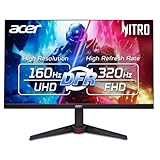
Acer Nitro 27″ QHD 180Hz (KG271U)
With a 180Hz refresh rate and a lightning-fast 0.5ms response time, this 1440p IPS monitor is built for esports. FreeSync, 95% DCI-P3 coverage, and built-in speakers make it a strong all-rounder for the price.
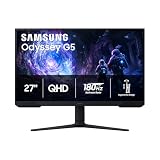
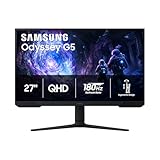
Samsung Odyssey G5 27″ QHD 180Hz
Samsung’s curved QHD display delivers 180Hz, 1ms response, and HDR10 along with gaming-centric features like Black Equalizer and Virtual Aim Point. The height-adjustable stand and sleek design are a bonus for gamers who want immersion without sacrificing speed.
ASUS TUF Gaming 27″ 4K 160Hz (VG27UQ1A)
Asus pairs a 4K 160Hz panel with G-Sync compatibility, Extreme Low Motion Blur Sync, and 95% DCI-P3 for a premium 4K gaming experience. A three-year warranty and DisplayWidget software utility add long-term value and convenience.
Frequently Asked Questions
Is 4K noticeably better than 1440p on a 27-inch monitor?
Yes, 4K offers a significant pixel density advantage at 27 inches, resulting in sharper text, finer textures, and crisper detail in games. The difference is most visible in visually rich titles like RPGs and open-world adventures.
Can a mid-range GPU handle 4K gaming?
Most mid-range GPUs struggle to maintain playable frame rates at native 4K without heavy upscaling. Cards like the RTX 4070 can manage 4K with DLSS, but for consistently smooth high-refresh gameplay, 1440p remains the more practical choice.
What is dual-mode on a gaming monitor?
Dual-mode monitors can switch between a high-resolution mode like 4K 160Hz and a lower-resolution mode like 1080p 320Hz. This gives you flexibility to optimize for visual fidelity in single-player games or raw speed in competitive shooters.
Does response time matter more at 1440p or 4K?
Response time matters equally at both resolutions, but its impact is more noticeable at higher refresh rates. A 1ms response time is ideal for fast-paced competitive gaming regardless of resolution, helping reduce motion blur and ghosting.
Final Thoughts
For most gamers, the Acer Nitro 27″ QHD 180Hz hits the sweet spot of speed, price, and performance at 1440p. If you have the GPU horsepower for 4K, the ASUS TUF Gaming 27″ 4K 160Hz and the Amzfast dual-mode monitor are our top recommendations for stunning visuals without sacrificing refresh rate.