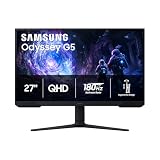
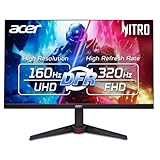
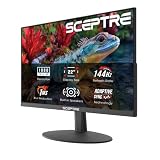
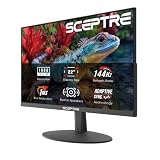
Key takeaways
- Resolution and Size: Match pixel density to your desk and GPU. 1080p suits 22–24 inch panels, while 1440p shines at 27 inches. Going 4K under $500 is possible but often means sacrificing refresh rate and panel quality.
- Refresh Rate: 144Hz is the solid baseline for smooth gaming in 2026, but 240Hz options are now common in this budget. Pick 240Hz only if your GPU can consistently push those frames at your chosen resolution.
- Panel Type: IPS offers the best color accuracy and viewing angles. VA delivers deeper blacks and higher contrast, ideal for dark-room gaming. Curved VA panels add immersion at typical desk distances.
- Response Time and Sync: Look for 1ms MPRT or 0.5ms GtG for sharp motion. Ensure support for Adaptive Sync, FreeSync Premium, or G-SYNC Compatible to prevent screen tearing without input lag penalties.
- Ergonomics and Connectivity: A height-adjustable stand and VESA mount compatibility go a long way for long sessions. Verify you have the right HDMI and DisplayPort versions for your GPU, plus any speakers or USB hub extras you want.
What's inside
Finding a great gaming monitor under $500 in 2026 means navigating a crowded field of high-refresh panels, wide color gamuts, and aggressive marketing claims. The good news is that this price bracket has matured significantly — you no longer have to settle for a basic 1080p 60Hz display. Today’s sub-$500 market includes 1440p IPS screens hitting 240Hz, curved VA panels with 4000:1 contrast ratios, and even feature-packed ultrawide options. The challenge is separating genuinely strong gaming performance from spec-sheet fluff.
As an Amazon Associate we earn from qualifying purchases.




This guide cuts through the noise. We have selected six monitors that deliver real value at or below the $500 mark, covering everything from budget-friendly 1080p 144Hz picks to 1440p 240Hz IPS powerhouses. Whether you prioritize motion clarity, color accuracy, contrast, or ergonomics, there is a strong match here. Below you will find a practical buying guide, concise expert reviews of the top five, and answers to the most common questions buyers ask.
🛒 Best Price Today on Amazon
Prime members get fast, free shipping on everything above, plus member-only deals. New members get a 30-day free trial — cancel anytime.
Watch: Best Gaming Monitor Under $500 — Video Review
How to Choose a Gaming Monitor Under $500 (2026)
- Resolution and Size: Match pixel density to your desk and GPU. 1080p suits 22–24 inch panels, while 1440p shines at 27 inches. Going 4K under $500 is possible but often means sacrificing refresh rate and panel quality.
- Refresh Rate: 144Hz is the solid baseline for smooth gaming in 2026, but 240Hz options are now common in this budget. Pick 240Hz only if your GPU can consistently push those frames at your chosen resolution.
- Panel Type: IPS offers the best color accuracy and viewing angles. VA delivers deeper blacks and higher contrast, ideal for dark-room gaming. Curved VA panels add immersion at typical desk distances.
- Response Time and Sync: Look for 1ms MPRT or 0.5ms GtG for sharp motion. Ensure support for Adaptive Sync, FreeSync Premium, or G-SYNC Compatible to prevent screen tearing without input lag penalties.
- Ergonomics and Connectivity: A height-adjustable stand and VESA mount compatibility go a long way for long sessions. Verify you have the right HDMI and DisplayPort versions for your GPU, plus any speakers or USB hub extras you want.
The Best Gaming Monitor Under $500 (2026)s Reviewed
ArcticPro 22 Inch 144Hz FHD Monitor
A compact, budget-friendly IPS option with a 144Hz refresh rate and 105% sRGB coverage. Its frameless, ultra-slim design and solid 4000:1 contrast make it an excellent entry pick for smaller desks or secondary builds.
SANSUI 32 Inch Curved 240Hz
This 1500R curved VA panel combines a high 240Hz refresh rate with 1ms MPRT for competitive motion clarity at 1080p. The metal stand and included DP cable round out a surprisingly premium package for the price.
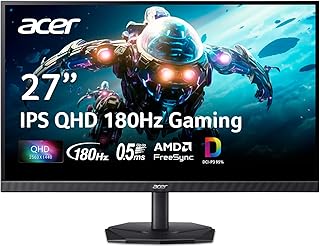
Acer Nitro 27 QHD IPS 240Hz XV272U
Standout 1440p IPS performance with a 0.5ms response time, HDR400, and a fully ergonomic stand. AMD FreeSync Premium and built-in speakers make this the most complete all-rounder in the roundup.
KTC 27 Inch Curved 1440P 144Hz H27S5C
Immersive 1500R curvature, HDR400, and a deep 4000:1 contrast ratio give this VA panel strong cinematic appeal. It is a smart choice for gamers who want rich visuals at a steady 144Hz without straining the wallet.
KTC 27 Inch 240Hz QHD H27E6S
A fast IPS 1440p panel reaching 275Hz in a sleek white chassis with built-in speakers. Full ergonomic control including pivot and height adjustment makes it ideal for streamers and sim racers who need flexible mounting.
Frequently Asked Questions
Is 1080p still worth it under $500 in 2026?
Absolutely. 1080p at 144Hz or 240Hz remains competitive for esports titles and is a great fit for budget GPUs. If you play fast-paced games like VALORANT or CS2, a high-refresh 1080p panel can outperform a lower-refresh 1440p display.
Should I choose IPS or VA for gaming?
IPS is better for color-critical work and wide viewing angles, while VA offers deeper blacks and higher contrast. For single-player and atmospheric games, VA is excellent. For competitive multiplayer, IPS is generally the safer pick due to more consistent pixel response.
Is 240Hz noticeable over 144Hz?
Yes, but the difference is most visible in fast, competitive titles. Casual gamers may not notice a dramatic leap, but esports players will appreciate the reduced motion blur and lower input latency. Ensure your GPU can maintain high frame rates.
Do I need HDR on a monitor under $500?
DisplayHDR 400 is the common certification in this range, and it provides modest brightness gains rather than true HDR impact. Treat it as a bonus feature rather than a primary buying factor — contrast, refresh rate, and panel type matter more here.
Final Thoughts
For most buyers, the Acer Nitro 27 QHD IPS 240Hz XV272U is the top pick thanks to its unbeatable balance of resolution, refresh rate, and ergonomics. Competitive gamers on a tighter budget should consider the SANSUI 32 Curved 240Hz, while the KTC 27 240Hz QHD H27E6S stands out for anyone wanting a high-performance 1440p IPS panel with premium styling and full adjustability.