Key takeaways
- Explore the best audio speakers for rich home listening, with bookshelf and tower picks, clear vocals, and deep bass for music and movies in any room.
A good pair of speakers changes how a room feels. Music gains warmth and space, film dialogue becomes easier to follow, and a quiet evening with a record feels like an occasion rather than background noise. The four speakers in this guide were chosen because they each bring something distinct to a living room, from a coaxial driver that images beautifully to a classic three-way design that has stayed in production for a decade. A well-chosen pair can stay with you for years, moving from one room to another as your home changes.

All four are passive bookshelf speakers, which means they need a separate amplifier or receiver, and each one rewards careful placement and a good source. The sections that follow explain how to judge them on driver design, sensitivity, and room fit, and how to match one of them to the way you listen, so the pair you buy sounds right in your room.
As an Amazon Associate we earn from qualifying purchases
Quick Picks
Our Short List of 3
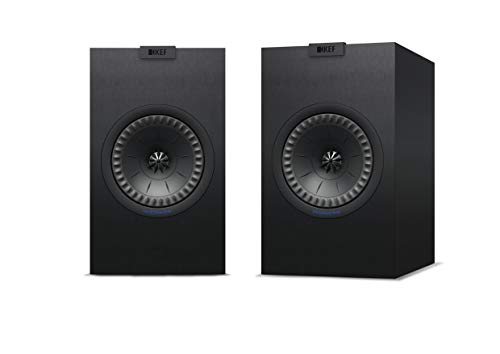
- Best for: Precise imaging, clear vocals, and detailed acoustic music.
- 5.25-inch Uni-Q driver with 1-inch tweeter at the centre
- 86 dB sensitivity
- 8 ohm impedance
- 10 to 100 watts recommended amplifier power
- Best for: Warm, full music listening over long sessions.
- 6.5-inch aramid-fibre woofer
- 1-inch silk dome tweeter
- 87 dB sensitivity
- 6 ohm impedance

- Best for: Versatile home listening and building a matching home theatre.
- 3-way design with 3 drivers per speaker
- 5.12-inch woofer and 1-inch tweeter
- 100 watts maximum input power
- 6 ohm impedance
All 4 Picks at a Glance
| Product | Specs | Action |
|---|---|---|
| KEF Q150 |
| Check price on Amazon |
| ELAC Debut 2.0 B6.2 |
| Check price on Amazon |
| Sony SSCS5 |
| Check price on Amazon |
 Polk T15 |
| Check price on Amazon |
How to Choose
Understand the driver layout
A bookshelf speaker’s sound starts with its drivers, and the layout shapes how it presents music. The KEF Q150 uses a Uni-Q coaxial driver that places the tweeter in the centre of the woofer, which creates a single point of sound and a precise image. The ELAC B6.2 and the Polk T15 use a conventional two-way layout with a separate woofer and tweeter, a proven recipe for warm, balanced sound. The Sony SSCS5 adds a dedicated midrange driver, so vocals and instruments each get their own voice. No layout is best for everyone, so choose the one whose strengths match your listening habits.
Check sensitivity and power needs
Sensitivity tells you how loud a speaker plays from a given amount of amplifier power, and it matters more than the wattage figure on the box. A speaker with high sensitivity, such as the KEF Q150, will play loudly even from a modest amplifier, while a less sensitive speaker needs more power to reach the same volume. Check the sensitivity figure and the recommended power range on the listing, then match them to the amplifier you already own. A small amplifier driving an efficient speaker will sound better than a large amplifier straining to drive an insensitive one.
Consider the room and the placement
Bookshelf speakers need room to breathe, and their placement shapes the sound as much as their drivers do. A rear-ported speaker needs space behind the cabinet so the port can work, while a front-ported or sealed design is more forgiving near a wall. Place the pair at ear level, roughly as far apart as you sit from them, and angle them slightly toward your listening position. Small rooms reward compact speakers that do not overpower the space, while large rooms need bigger drivers and more power to fill the air. Judge every pick against your own space.
Think about what you will connect
Passive speakers need an amplifier or a receiver, so check what you already own before you buy. A stereo amplifier suits a simple two-speaker music setup, while an AV receiver suits a home theatre that may grow to five or seven speakers over time. Check the speaker’s impedance, usually 6 or 8 ohms, and confirm your amplifier can drive that load. If you plan to add a subwoofer later, check that your amplifier has a subwoofer output or a pre-out. A speaker that matches your existing system will sound better than a mismatched pair that needs new electronics.
The 4 Best Options
KEF Q150
- Best for: Precise imaging, clear vocals, and detailed acoustic music.
- 5.25-inch Uni-Q driver with 1-inch tweeter at the centre
- 86 dB sensitivity
- 8 ohm impedance
- 10 to 100 watts recommended amplifier power
Precise imaging, clear vocals, and detailed acoustic music.
The rear port needs space from the wall, so do not push the cabinet flush against it or the bass turns muddy.
The KEF Q150 is the imaging champion of this guide, thanks to its Uni-Q driver that places a 1-inch tweeter at the centre of a 5.25-inch woofer. That coaxial layout creates a single point of sound, so the image stays stable even when you move around the room, and vocals sit in the centre with rare clarity. The rear port extends the low end for a speaker of this size, and the magnetic grille keeps the front clean. It is an 8-ohm speaker that plays well with modest amplifiers, and its detailed, open presentation suits acoustic music, jazz, and dialogue-heavy films.
Watch out for: The rear port needs space from the wall, so do not push the cabinet flush against it or the bass turns muddy.
ELAC Debut 2.0 B6.2
- Best for: Warm, full music listening over long sessions.
- 6.5-inch aramid-fibre woofer
- 1-inch silk dome tweeter
- 87 dB sensitivity
- 6 ohm impedance
Warm, full music listening over long sessions.
The 6-ohm impedance needs an amplifier rated for 6-ohm loads, so check your receiver before you connect them.
The ELAC Debut 2.0 B6.2 is the warmest-sounding speaker in this guide, with a 6.5-inch aramid-fibre woofer that gives music a full, rounded foundation and a 1-inch silk dome tweeter that keeps the highs smooth and never harsh. Its larger woofer moves more air than the other speakers here, so bass feels present even without a subwoofer, and the presentation stays relaxed through long sessions. The front port makes it more forgiving near a wall than a rear-ported design. If you listen for hours, the B6.2 is the comfortable, musical pick.
Watch out for: The 6-ohm impedance needs an amplifier rated for 6-ohm loads, so check your receiver before you connect them.
Sony SSCS5
- Best for: Versatile home listening and building a matching home theatre.
- 3-way design with 3 drivers per speaker
- 5.12-inch woofer and 1-inch tweeter
- 100 watts maximum input power
- 6 ohm impedance
Versatile home listening and building a matching home theatre.
The 6-ohm rating needs an amplifier that supports 6-ohm speakers, and the rear port needs clearance from the wall.
The Sony SSCS5 has been a favourite for years because its three-way design gives each part of the music its own driver, with a 5.12-inch woofer for the lows, a dedicated midrange, and a 1-inch tweeter for the highs. That layout keeps vocals clear and instruments distinct, and the speaker handles orchestral music and film soundtracks with an even, honest balance. It is a 6-ohm speaker rated for up to 100 watts, and it pairs well with matching Sony centre and surround speakers. If you want a proven, versatile speaker, the SSCS5 is the reliable choice.
Watch out for: The 6-ohm rating needs an amplifier that supports 6-ohm speakers, and the rear port needs clearance from the wall.
Polk T15
- Best for: Affordable home theatre sound in a small room.
- 5.25-inch Dynamic Balance woofer
- 0.75-inch tweeter
- 100 watts maximum power handling
- 8 ohm impedance
Affordable home theatre sound in a small room.
Bass is modest, so a subwoofer helps for films with deep low-frequency effects and action scenes.
The Polk T15 is the most affordable speaker in this guide, and it brings genuine home theatre sound. Its 5.25-inch Dynamic Balance driver and 0.75-inch tweeter deliver clear dialogue and a lively presentation that suits films and television, while the keyhole mount lets you hang it on a wall or place it on a shelf. Rated for up to 100 watts at 8 ohms, it works with almost any receiver or amplifier, and its compact size fits a bedroom or a small living room. It will not match the refinement of the KEF or the ELAC, but it beats built-in television sound.
Watch out for: Bass is modest, so a subwoofer helps for films with deep low-frequency effects and action scenes.
Which One Fits Your Situation
A listener who loves acoustic music
If your evenings revolve around acoustic music, jazz, or classical recordings, the KEF Q150 is the speaker that will reward you most, with a precise image and vocals that sound present and natural. Place the pair at ear level, angle them toward your chair, and give the rear ports room to breathe, and the Q150 will reward careful placement.
A music lover who listens for hours
If you listen for hours at a time and want a speaker that stays comfortable, the ELAC Debut 2.0 B6.2 is the best fit, with a warm, full sound that never turns harsh. Its larger woofer fills a room without a subwoofer, and the front port makes placement forgiving.
A household building a home theatre
If you are starting a home theatre and want speakers that can grow into a full system, the Sony SSCS5 is the smart foundation, because it matches Sony’s centre and surround speakers. Start with a pair for stereo, add the matching centre channel for dialogue, and the system will grow without replacing what you already own.
A small room on a tight budget
If your room is small and your budget is tighter still, the Polk T15 delivers the biggest improvement for the least money, with clear dialogue, lively sound, and a size that fits a shelf or a wall. Pair it with a modest receiver and you will have a home theatre that punches well above its cost.
Common Mistakes
- Buying passive speakers without an amplifier, then discovering they are silent until a receiver or amp is added, and you cannot test them.
- Pushing a rear-ported speaker flush against the wall, which chokes the port and makes the bass sound muddy and boomy, and the low end suffers.
- Choosing speakers by wattage alone, when sensitivity and impedance matter more for how loud and clear they will play for the volume you want.
- Placing the pair too close together, which collapses the stereo image and makes music sound flat and centred, and the soundstage narrows.
- Ignoring the amplifier’s impedance rating, and pairing a 6-ohm speaker with an amplifier that only supports 8-ohm loads, and the amplifier shuts down.
Frequently Asked Questions
Do I need an amplifier for these speakers?
Yes, all four speakers in this guide are passive, which means they need a separate amplifier or AV receiver to produce sound. The amplifier sends power through speaker wire to the drivers, and it must match the speaker’s impedance. A stereo amplifier suits a simple music setup, while an AV receiver suits a home theatre.
How far apart should I place bookshelf speakers?
A good starting point is to place the speakers as far apart as you sit from them, forming a triangle with your listening position. In a typical living room that means roughly two metres apart, at ear level. Too close and the image collapses, too far apart and a hole appears in the middle.
What is the difference between 6-ohm and 8-ohm speakers?
Impedance is the electrical resistance the speaker presents to the amplifier, and lower impedance draws more current. An 8-ohm speaker works with almost any amplifier, while a 6-ohm speaker needs an amplifier rated for 6-ohm loads. Most modern receivers support both, but check the rating on your amplifier before you buy.
Can I use bookshelf speakers as front speakers in a home theatre?
Yes, bookshelf speakers make excellent front speakers in a home theatre, especially in small and medium rooms where floor-standing speakers would dominate the space. Place them at ear level on stands or a shelf, add a matching centre speaker for dialogue, and a subwoofer for deep bass.
FAQ
Do I need an amplifier for these speakers?
How far apart should I place bookshelf speakers?
What is the difference between 6-ohm and 8-ohm speakers?
Can I use bookshelf speakers as front speakers in a home theatre?
More from Amazon
Programs that pair well with the guide above. Offers and eligibility are set by Amazon and may change.
Free shipping on eligible items, Prime Video and more. Eligible new members can start with a free trial.
Start a Prime free trialAd-free music streaming. Eligible new subscribers can start with a free trial.
Try Music Unlimited freeA Prime membership for ages 18-24 with a trial period. Eligibility is set by Amazon.
See Prime for Young AdultsAudiobooks and podcasts to listen to on the go. Eligible new members can start with a free trial.
Try Audible freeAs an Amazon Associate we earn from qualifying purchases.