Key takeaways
- Target Resolution and Refresh Rate: Match your card to your monitor. Competitive 1080p players benefit most from high-FPS raw rasterization, while 1440p and 4K demand more VRAM and strong memory bandwidth to maintain a steady frametime during late-game team fights.
- VRAM Capacity: Look for 12GB as a minimum for 1080p and 16GB for 1440p and above. Apex’s texture streaming and growing asset complexity mean 8GB cards now suffer from texture pop-in and reduced minimum FPS.
- Upscaling Support: DLSS 4 and FSR 4 deliver substantial image quality improvements and frame generation headroom. If your monitor exceeds what native rendering can cleanly drive, a strong upscaler extends the life of your card significantly.
- Driver Stability and Latency: Consistent frametimes matter more than peak numbers in a shooter where a single stutter can cost a match. Prioritize cards with proven driver reliability and low 1% lows, and consider Reflex-compatible NVIDIA hardware for reduced system latency.
- Power and Case Clearance: New PCIe 5.0 cards draw more power and run hotter than their predecessors. Verify your PSU wattage and connector availability, and double-check that your case can physically fit the 2.5-slot coolers common on modern mid-range and high-end models.
Apex Legends remains one of the most competitive battle royale titles on the market, and in 2026, the engine updates and seasonal visual overhauls demand more from your GPU than ever before. Players shopping for a graphics card face a familiar problem: balancing high frame rates for competitive play against graphical fidelity, all while navigating an overwhelming sea of new and last-generation hardware. Pick too weak a card and you’ll suffer stuttering in the final ring; overspend and you’re leaving budget on the table that could go toward a better monitor or faster RAM.
Our top picks
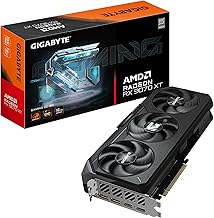
 GIGABYTE Radeon RX 9070 XT Gaming OC
- Powered by Radeon RX 9070 XT
- WINDFORCE Cooling System
- Hawk Fan
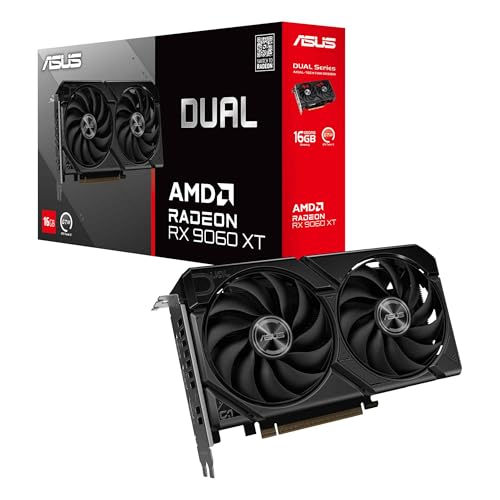 ASUS Dual Radeon RX 9060 XT 16GB
- Axial-tech fans now feature a smaller fan hub…
- 2.5-slot design allows for greater build compatibility while…
- 0dB technology lets you enjoy light gaming in…
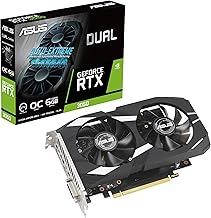
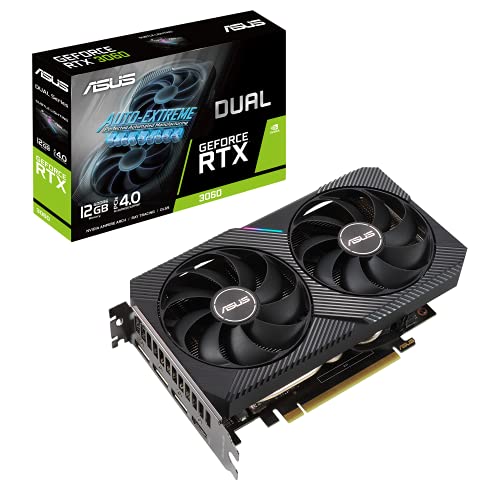 ASUS Dual NVIDIA GeForce RTX 3060 V2
- NVIDIA Ampere Streaming Multiprocessors: The building blocks for…
- 2nd Generation RT Cores: Experience 2X the throughput…
- 3rd Generation Tensor Cores: Get up to 2X…
| Product | Key specs | |
|---|---|---|
| GIGABYTE Radeon RX 9070 XT Gaming OC | Powered by Radeon RX 9070 XT WINDFORCE Cooling System Hawk Fan | Check price |
| ASUS Dual Radeon RX 9060 XT 16GB | Axial-tech fans now feature a smaller fan hub… 2.5-slot design allows for greater build compatibility while… 0dB technology lets you enjoy light gaming in… | Check price |
| ASUS Dual NVIDIA GeForce RTX 3060 V2 | NVIDIA Ampere Streaming Multiprocessors: The building blocks for… 2nd Generation RT Cores: Experience 2X the throughput… 3rd Generation Tensor Cores: Get up to 2X… | Check price |
 msi Gaming GeForce RTX 3060 12GB 15 msi Gaming GeForce RTX 3060 12GB 15 | NVIDIA GeForce RTX 3060 12GB GDDR6 dedicated graphics… 1710 MHz GPU clock speed and 1807 MHz… DisplayPort x 3 (v1.4a) and HDMI 2.1 x… | Check price |
 ASUS Dual NVIDIA GeForce RTX 5060 Ti ASUS Dual NVIDIA GeForce RTX 5060 Ti | AI Performance: 767 AI TOPS OC mode: 2632 MHz (OC mode)/ 2602 MHz… Powered by the NVIDIA Blackwell architecture and DLSS… | Check price |
 ASUS Prime AMD Radeon RX 9070 XT ASUS Prime AMD Radeon RX 9070 XT | Axial-tech fans now feature a smaller fan hub… Phase-change GPU thermal pad helps ensure optimal heat… 2.5-slot design allows for greater build compatibility while… | Check price |
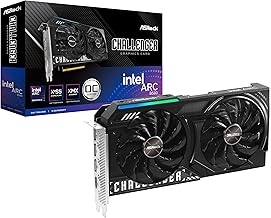 ASRock Intel Arc B580 Challenger 12GB OC ASRock Intel Arc B580 Challenger 12GB OC | Check price | |
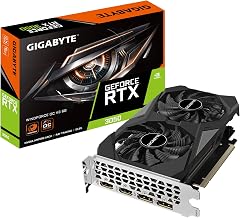
 GIGABYTE GeForce RTX 3050 WINDFORCE OC V2 GIGABYTE GeForce RTX 3050 WINDFORCE OC V2 | NVIDIA Ampere Streaming Multiprocessors 2nd Generation RT Cores 3rd Generation Tensor Cores | Check price |
As an Amazon Associate we earn from qualifying purchases at no extra cost to you.
This guide cuts through the noise. Whether you’re chasing 240 FPS at 1080p on a budget or pushing 4K 144Hz with maxed-out settings, we’ve rounded up the best graphics cards for Apex Legends this year. We focus on real-world performance in Respawn’s updated engine, value for money, and features like DLSS and FSR that matter most in fast-paced, input-critical shooters.
🛒 Best Price Today on Amazon
Prime members get fast, free shipping on everything above, plus member-only deals. New members get a 30-day free trial — cancel anytime.
Watch: Best Graphics Card for Apex Legends in 2026 (1080p, 1440p, 4K) — Video Review
How to Choose a/an Graphics Card for Apex Legends in 2026 (1080p, 1440p, 4K)
- Target Resolution and Refresh Rate: Match your card to your monitor. Competitive 1080p players benefit most from high-FPS raw rasterization, while 1440p and 4K demand more VRAM and strong memory bandwidth to maintain a steady frametime during late-game team fights.
- VRAM Capacity: Look for 12GB as a minimum for 1080p and 16GB for 1440p and above. Apex’s texture streaming and growing asset complexity mean 8GB cards now suffer from texture pop-in and reduced minimum FPS.
- Upscaling Support: DLSS 4 and FSR 4 deliver substantial image quality improvements and frame generation headroom. If your monitor exceeds what native rendering can cleanly drive, a strong upscaler extends the life of your card significantly.
- Driver Stability and Latency: Consistent frametimes matter more than peak numbers in a shooter where a single stutter can cost a match. Prioritize cards with proven driver reliability and low 1% lows, and consider Reflex-compatible NVIDIA hardware for reduced system latency.
- Power and Case Clearance: New PCIe 5.0 cards draw more power and run hotter than their predecessors. Verify your PSU wattage and connector availability, and double-check that your case can physically fit the 2.5-slot coolers common on modern mid-range and high-end models.
The Best Graphics Card for Apex Legends in 2026 (1080p, 1440p, 4K)s Reviewed
GIGABYTE Radeon RX 9070 XT Gaming OC 16G
This is the standout pick for 1440p high-refresh Apex. The 16GB of GDDR6 and factory overclock keep frametimes rock-solid during chaotic final rings, and the Gaming OC cooler runs quiet enough that you’ll never miss an audio cue.
ASUS Dual Radeon RX 9060 XT 16GB
For 1080p competitive players who want to push past 240 FPS without emptying their wallet, this 9060 XT is the value champion. The 2.5-slot axial-tech design runs cool and whisper-quiet, and 16GB of VRAM gives you future-proofing headroom as Apex’s engine evolves.
ASUS Dual NVIDIA GeForce RTX 5060 Ti 16GB
If you want DLSS 4 frame generation and best-in-class latency reduction for competitive play, the RTX 5060 Ti is the card to get. Its 16GB of GDDR7 and PCIe 5.0 interface make it a capable 1440p contender that will stay relevant well beyond this season.
ASUS Prime AMD Radeon RX 9070 XT 16GB
A slightly more restrained take on the 9070 XT, the Prime edition still delivers excellent 1440p performance with dual BIOS flexibility for a quiet mode during long ranked sessions. It’s a smart choice if you value warranty length and build simplicity over aggressive overclocking.
ASUS Dual NVIDIA GeForce RTX 3060 V2 OC Edition 12GB
Last-gen value still holds strong for budget 1080p players. The 12GB of GDDR6 at this price point keeps texture streaming smooth, and while it won’t win a 4K benchmark, it will comfortably hold 144 FPS at high settings in a competitive config.
Frequently Asked Questions
Do I need a 4K-capable card to be competitive in Apex Legends?
No. Most competitive players target 1080p or 1440p at high frame rates, where reduced input latency matters more than pixel density. A 4K card is only necessary if you play on a large 4K display and refuse to lower resolution scaling.
Is 12GB of VRAM enough for Apex Legends in 2026?
For 1080p, 12GB is still sufficient at high settings. For 1440p and beyond, especially with long sessions and high-resolution texture packs, 16GB provides a meaningful stability advantage and avoids texture streaming hitches.
Does DLSS or FSR help in a fast-paced shooter like Apex?
Yes, but use it judiciously. Frame generation can introduce a small amount of input lag, which competitive players may dislike, but the base upscaling modes deliver a clean image quality boost at minimal latency cost, making them valuable at 1440p and 4K.
Should I prioritize PCIe 5.0 support when buying a new card?
If you have a compatible motherboard and CPU, PCIe 5.0 offers a real bandwidth advantage for cards with 16GB or more of VRAM. However, PCIe 4.0 cards like the RTX 3060 remain entirely viable for Apex at 1080p, so don’t upgrade your whole platform solely for the slot.
Final Thoughts
For most players, the GIGABYTE Radeon RX 9070 XT Gaming OC 16G is the best all-around pick, offering the perfect balance of 1440p performance and 1080p longevity. Budget-focused 1080p competitors should look at the ASUS Dual Radeon RX 9060 XT 16GB, while those who want DLSS 4 and low-latency features will find the ASUS Dual NVIDIA GeForce RTX 5060 Ti 16GB an excellent forward-looking investment.