Key takeaways
- VRAM capacity: Hogwarts Legacy consumes memory aggressively at higher settings. 16GB is the safe target for 1440p Ultra and 4K, while 12GB handles 1440p High comfortably. Avoid 6GB or below for anything beyond 1080p Medium.
- Target resolution: 1080p players can rely on mainstream cards like the RTX 5060 Ti or RX 9060 XT. 1440p demands more shader power, and 4K requires flagship-tier GPUs with heavy ray tracing hardware to maintain playable frame rates.
- Upscaling support: NVIDIA’s DLSS 4 produces the cleanest image reconstruction, giving RTX cards an edge at 4K. AMD’s FSR has closed the gap, but DLSS remains preferable for shimmer-prone foliage and distant geometry in Hogwarts Legacy.
- Ray tracing hardware: If you want reflections and ray-traced shadows enabled, prioritize cards with dedicated RT cores. AMD’s RDNA 4 architecture has improved significantly, but NVIDIA still leads in pure RT throughput at the top end.
- Power and cooling: Higher-tier cards draw more power and generate more heat. Check your PSU capacity and case clearance before buying, especially for 2.5-slot and triple-fan designs that dominate the 4K category.
Few games punish underpowered hardware quite like Hogwarts Legacy. Even years after launch, Avalanche’s open-world RPG remains one of the most demanding titles on PC, combining dense asset streaming, volumetric lighting, and hardware-heavy ray tracing across a sprawling map. In 2026, with new GPU architectures from AMD and NVIDIA pushing performance ceilings higher while bringing down prices at the midrange, the question is no longer whether you can run the game, but how much visual fidelity you want at your target resolution.
Our top picks
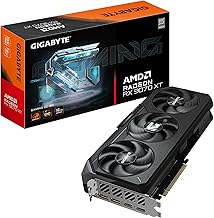
 GIGABYTE Radeon RX 9070 XT Gaming OC
- Powered by Radeon RX 9070 XT
- WINDFORCE Cooling System
- Hawk Fan
 ASUS Dual NVIDIA GeForce RTX 5060 Ti
- AI Performance: 767 AI TOPS
- OC mode: 2632 MHz (OC mode)/ 2602 MHz…
- Powered by the NVIDIA Blackwell architecture and DLSS…
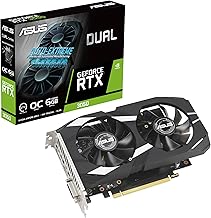
 ASUS Dual NVIDIA GeForce RTX 3050 6GB
- NVIDIA Ampere Streaming Multiprocessors: The all-new Ampere SM…
- 2nd Generation RT Cores: Experience 2X the throughput…
- 3rd Generation Tensor Cores: Get up to 2X…
| Product | Key specs | |
|---|---|---|
| GIGABYTE Radeon RX 9070 XT Gaming OC | Powered by Radeon RX 9070 XT WINDFORCE Cooling System Hawk Fan | Check price |
| ASUS Dual NVIDIA GeForce RTX 5060 Ti | AI Performance: 767 AI TOPS OC mode: 2632 MHz (OC mode)/ 2602 MHz… Powered by the NVIDIA Blackwell architecture and DLSS… | Check price |
| ASUS Dual NVIDIA GeForce RTX 3050 6GB | NVIDIA Ampere Streaming Multiprocessors: The all-new Ampere SM… 2nd Generation RT Cores: Experience 2X the throughput… 3rd Generation Tensor Cores: Get up to 2X… | Check price |
 msi Gaming GeForce GT 1030 4GB DDR4 msi Gaming GeForce GT 1030 4GB DDR4 | Check price | |
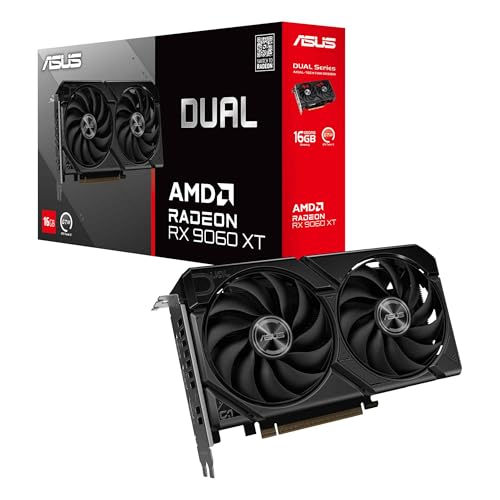 ASUS Dual Radeon RX 9060 XT 16GB ASUS Dual Radeon RX 9060 XT 16GB | Axial-tech fans now feature a smaller fan hub… 2.5-slot design allows for greater build compatibility while… 0dB technology lets you enjoy light gaming in… | Check price |
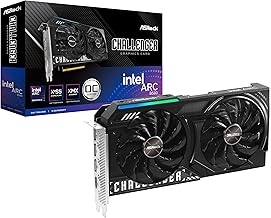 ASRock Intel Arc B580 Challenger 12GB OC ASRock Intel Arc B580 Challenger 12GB OC | Check price | |
 GIGABYTE GeForce RTX 3050 WINDFORCE OC V2 GIGABYTE GeForce RTX 3050 WINDFORCE OC V2 | NVIDIA Ampere Streaming Multiprocessors 2nd Generation RT Cores 3rd Generation Tensor Cores | Check price |
 GIGABYTE Radeon RX 9060 XT Gaming OC GIGABYTE Radeon RX 9060 XT Gaming OC | Check price |
As an Amazon Associate we earn from qualifying purchases at no extra cost to you.
This guide cuts through the noise and matches specific graphics cards to real Hogwarts Legacy performance tiers. Whether you are chasing 60+ FPS at 1080p Ultra, 90+ FPS at 1440p with ray tracing, or a locked 4K experience with all settings maxed, we have compared the relevant options and ranked them accordingly. Every pick below balances raw rasterization, upscaling quality, and VRAM allocation to the settings that matter most for this specific game.
🛒 Best Price Today on Amazon
Prime members get fast, free shipping on everything above, plus member-only deals. New members get a 30-day free trial — cancel anytime.
Watch: Best Graphics Card for Hogwarts Legacy in 2026 (1080p, 1440p, 4K) — Video Review
How to Choose a/an Graphics Card for Hogwarts Legacy in 2026 (1080p, 1440p, 4K)
- VRAM capacity: Hogwarts Legacy consumes memory aggressively at higher settings. 16GB is the safe target for 1440p Ultra and 4K, while 12GB handles 1440p High comfortably. Avoid 6GB or below for anything beyond 1080p Medium.
- Target resolution: 1080p players can rely on mainstream cards like the RTX 5060 Ti or RX 9060 XT. 1440p demands more shader power, and 4K requires flagship-tier GPUs with heavy ray tracing hardware to maintain playable frame rates.
- Upscaling support: NVIDIA’s DLSS 4 produces the cleanest image reconstruction, giving RTX cards an edge at 4K. AMD’s FSR has closed the gap, but DLSS remains preferable for shimmer-prone foliage and distant geometry in Hogwarts Legacy.
- Ray tracing hardware: If you want reflections and ray-traced shadows enabled, prioritize cards with dedicated RT cores. AMD’s RDNA 4 architecture has improved significantly, but NVIDIA still leads in pure RT throughput at the top end.
- Power and cooling: Higher-tier cards draw more power and generate more heat. Check your PSU capacity and case clearance before buying, especially for 2.5-slot and triple-fan designs that dominate the 4K category.
The Best Graphics Card for Hogwarts Legacy in 2026 (1080p, 1440p, 4K)s Reviewed
GIGABYTE Radeon RX 9070 XT Gaming OC 16G
This is the standout pick for 4K Hogwarts Legacy without paying flagship taxes. The 16GB frame buffer handles Ultra textures and ray tracing simultaneously, and GIGABYTE’s Gaming OC cooling keeps the card quiet during long exploration sessions in the Highlands.
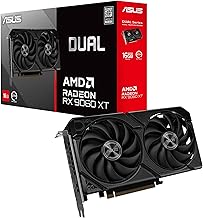
ASUS Dual NVIDIA GeForce RTX 5060 Ti 16GB
The best balance of price and 1440p performance. DLSS 4 support gives this card outsized capability in Hogwarts Legacy, reconstructing demanding water and hair shaders with minimal artifacting while maintaining well over 60 FPS at High settings.
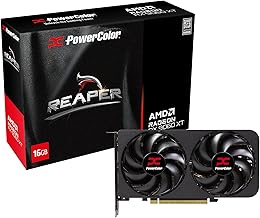
ASUS Dual Radeon RX 9060 XT 16GB
A direct competitor to the 5060 Ti that trades DLSS for stronger raw rasterization. If you prefer native rendering or AMD’s FSR upscaling, this card delivers excellent 1080p Ultra and very playable 1440p High performance in Hogwarts Legacy.
ASRock Intel Arc B580 Challenger 12GB OC
The value surprise of 2026. Intel’s B580 offers 12GB of VRAM and competent 1080p High performance for less than its AMD and NVIDIA rivals, making it a smart budget choice for players who want Hogwarts Legacy to look good without spending midrange money.
ASUS Dual NVIDIA GeForce RTX 3050 6GB OC Edition
Strictly a 1080p Medium card for Hogwarts Legacy. The 6GB VRAM limit caps how high you can push textures, but the RTX 3050 remains a viable entry point for budget builds targeting playable frame rates at reduced settings.
Frequently Asked Questions
Can the GT 1030 run Hogwarts Legacy?
The MSI GeForce GT 1030 4GB is below the game’s minimum requirements. Hogwarts Legacy will struggle to maintain 30 FPS even at 720p Low, making it unsuitable for actually playing the game. It is only listed here as a baseline reference.
Is 16GB of VRAM necessary for Hogwarts Legacy?
For 1080p High, no. For 1440p Ultra and 4K, yes. Hogwarts Legacy’s Ultra texture pool and streaming system can exceed 10GB at 1440p, and enabling ray tracing adds further pressure. 16GB provides meaningful headroom that prevents stuttering.
Does Hogwarts Legacy favor NVIDIA or AMD?
The game runs well on both, but NVIDIA holds an advantage if you use upscaling and ray tracing together. DLSS 4’s reconstruction quality is visibly superior in motion, particularly around the game’s dense foliage and reflective water surfaces.
Should I enable ray tracing in Hogwarts Legacy?
Only if you have a card with strong RT hardware, such as the RX 9070 XT or RTX 5060 Ti. The visual improvement is noticeable in reflective surfaces and ambient occlusion, but the performance cost is steep on weaker GPUs and can drop frame rates below playable thresholds.
Final Thoughts
For most players, the ASUS Dual RTX 5060 Ti 16GB and ASUS Dual RX 9060 XT 16GB represent the sweet spot, delivering excellent 1440p performance with enough VRAM to handle Hogwarts Legacy’s heaviest settings. If you are targeting 4K Ultra with ray tracing enabled, the GIGABYTE RX 9070 XT Gaming OC is the clear upgrade path and our top overall pick for experiencing the game at its visual peak.