Key takeaways
- Resolution and Refresh Rate: Match your GPU to your monitor. For 1080p at 360Hz, mid-range cards are sufficient. For 1440p at 240Hz or 4K at 144Hz, you need a stronger GPU with ample VRAM.
- VRAM Capacity: Valorant is not VRAM-hungry, but 6GB is the practical floor in 2026 for headroom and background tasks. Aim for 8GB or more if you plan to stream or run Discord overlays alongside the game.
- Driver Stability: Frame consistency matters more than peak benchmarks in a tactical shooter. Prioritize GPUs with mature, reliable drivers to avoid stuttering during decisive rounds.
- Cooling and Noise: A quieter card helps you hear footsteps and ability cues. Look for dual-fan or triple-fan designs with good thermal performance and a zero-decibel idle mode.
- Future-Proofing vs. Value: If Valorant is your only competitive game, you can save money with a lower-tier GPU. If you also play AAA titles, invest in a card with DLSS or FSR support and at least 12GB of VRAM.
Valorant remains one of the most popular competitive shooters in 2026, and while its engine is relatively forgiving, pushing high frame rates at 1440p and 4K still demands capable hardware. Buyers face a familiar dilemma: overspending on a GPU that far exceeds the game’s needs, or skimping and suffering frame drops during clutch moments. With NVIDIA’s RTX 50-series, AMD’s RX 9000-series, and Intel’s Battlemage cards all viable options, the market is more crowded and confusing than ever.
Our top picks
 ASUS Dual NVIDIA GeForce RTX 5060 Ti
- AI Performance: 767 AI TOPS
- OC mode: 2632 MHz (OC mode)/ 2602 MHz…
- Powered by the NVIDIA Blackwell architecture and DLSS…
 ASRock Intel Arc B570 Challenger 10GB OC
- Advanced Intel Arc Performance: Intel Arc B570 GPU…
- Next-Gen Xe2-HPG Architecture: Features Intel Xe2-HPG architecture with…
- High Clock Speeds: GPU clock speed of 2600…
| Product | Key specs | |
|---|---|---|
| ASUS Dual NVIDIA GeForce RTX 5060 Ti | AI Performance: 767 AI TOPS OC mode: 2632 MHz (OC mode)/ 2602 MHz… Powered by the NVIDIA Blackwell architecture and DLSS… | Check price |
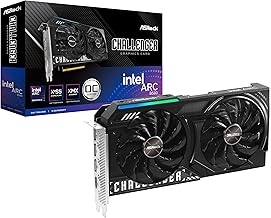 ASRock Intel Arc B580 Challenger 12GB OC ASRock Intel Arc B580 Challenger 12GB OC | Check price | |
| ASRock Intel Arc B570 Challenger 10GB OC | Advanced Intel Arc Performance: Intel Arc B570 GPU… Next-Gen Xe2-HPG Architecture: Features Intel Xe2-HPG architecture with… High Clock Speeds: GPU clock speed of 2600… | Check price |
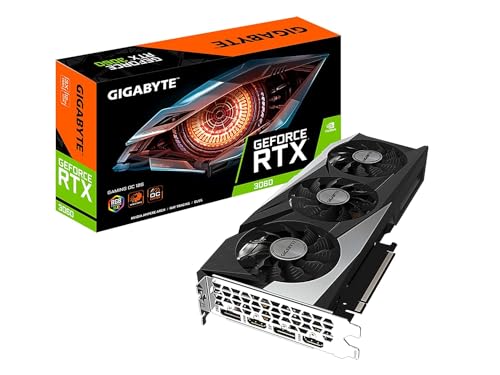 GIGABYTE GeForce RTX 3060 Gaming OC 12G GIGABYTE GeForce RTX 3060 Gaming OC 12G | NVIDIA Ampere Streaming Multiprocessors 2nd Generation RT Cores 3rd Generation Tensor Cores | Check price |
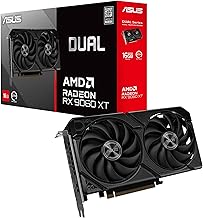
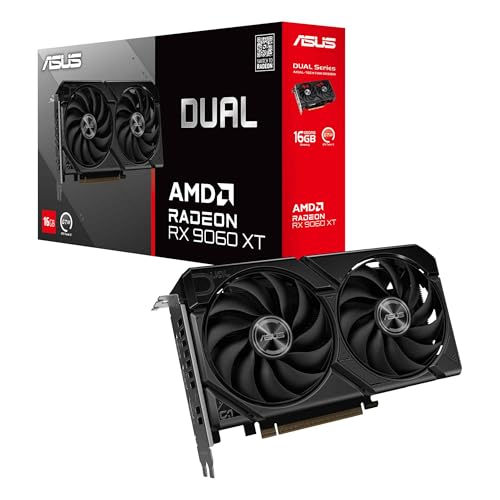 ASUS Dual Radeon RX 9060 XT 16GB ASUS Dual Radeon RX 9060 XT 16GB | Axial-tech fans now feature a smaller fan hub… 2.5-slot design allows for greater build compatibility while… 0dB technology lets you enjoy light gaming in… | Check price |
 GIGABYTE GeForce RTX 3050 WINDFORCE OC V2 GIGABYTE GeForce RTX 3050 WINDFORCE OC V2 | NVIDIA Ampere Streaming Multiprocessors 2nd Generation RT Cores 3rd Generation Tensor Cores | Check price |
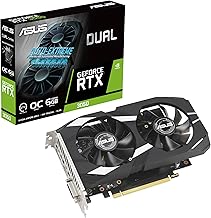
 ASUS Dual NVIDIA GeForce RTX 3050 6GB ASUS Dual NVIDIA GeForce RTX 3050 6GB | NVIDIA Ampere Streaming Multiprocessors: The all-new Ampere SM… 2nd Generation RT Cores: Experience 2X the throughput… 3rd Generation Tensor Cores: Get up to 2X… | Check price |
 GIGABYTE Radeon RX 9070 XT Gaming OC GIGABYTE Radeon RX 9070 XT Gaming OC | Powered by Radeon RX 9070 XT WINDFORCE Cooling System Hawk Fan | Check price |
As an Amazon Associate we earn from qualifying purchases at no extra cost to you.
This guide cuts through the noise to help you find the best graphics card for Valorant across 1080p, 1440p, and 4K resolutions. We focus on cards that deliver the consistently high frame rates competitive play demands, factoring in VRAM, driver stability, and value. Whether you are building a budget 1080p rig or upgrading a high-refresh 4K setup, these picks balance performance and price for Valorant specifically.
🛒 Best Price Today on Amazon
Prime members get fast, free shipping on everything above, plus member-only deals. New members get a 30-day free trial — cancel anytime.
Watch: Best Graphics Card for Valorant in 2026 (1080p, 1440p, 4K) — Video Review
How to Choose a Graphics Card for Valorant in 2026 (1080p, 1440p, 4K)
- Resolution and Refresh Rate: Match your GPU to your monitor. For 1080p at 360Hz, mid-range cards are sufficient. For 1440p at 240Hz or 4K at 144Hz, you need a stronger GPU with ample VRAM.
- VRAM Capacity: Valorant is not VRAM-hungry, but 6GB is the practical floor in 2026 for headroom and background tasks. Aim for 8GB or more if you plan to stream or run Discord overlays alongside the game.
- Driver Stability: Frame consistency matters more than peak benchmarks in a tactical shooter. Prioritize GPUs with mature, reliable drivers to avoid stuttering during decisive rounds.
- Cooling and Noise: A quieter card helps you hear footsteps and ability cues. Look for dual-fan or triple-fan designs with good thermal performance and a zero-decibel idle mode.
- Future-Proofing vs. Value: If Valorant is your only competitive game, you can save money with a lower-tier GPU. If you also play AAA titles, invest in a card with DLSS or FSR support and at least 12GB of VRAM.
The Best Graphics Card for Valorant in 2026 (1080p, 1440p, 4K) Reviewed
ASUS Dual RTX 5060 Ti 16GB OC
This is the sweet spot for 1440p high-refresh Valorant. The 16GB of GDDR7 and DLSS 4 support ensure you will not need an upgrade for years, and the ASUS dual-fan cooler runs quiet during marathon sessions.
ASRock Arc B580 Challenger 12GB OC
Intel’s Battlemage architecture delivers outstanding value here, pushing well past 360fps at 1080p in Valorant. The 12GB VRAM buffer and DisplayPort 2.1 output make it a forward-looking budget pick that punches above its weight.
ASUS Dual Radeon RX 9060 XT 16GB
The RX 9060 XT is a strong alternative to NVIDIA’s mid-tier offerings, matching the RTX 5060 Ti in raw Valorant performance while often coming in at a better price. The 16GB VRAM and PCIe 5.0 interface give it serious longevity.
ASRock Arc B570 Challenger 10GB OC
For strictly 1080p competitive play, the B570 is a remarkably cost-effective choice. It easily hits Valorant’s frame cap at 1080p, and the metal backplate and dual-fan cooler keep temperatures in check without breaking the bank.
GIGABYTE RTX 3060 Gaming OC 12G
The RTX 3060 remains relevant in 2026 as a dependable 1080p and entry-level 1440p card. Its 12GB of VRAM is a major advantage over newer budget cards, and the triple-fan WINDFORCE design ensures stable, cool operation.
Frequently Asked Questions
Does Valorant benefit from DLSS or FSR?
Valorant is CPU-bound at lower resolutions, so upscaling technologies have limited impact on raw frame rates. They can help at 4K, but most competitive players render at native resolution to avoid input latency.
How much VRAM do I need for Valorant?
Valorant uses under 4GB of VRAM even at 4K, but we recommend a minimum of 6GB for general system longevity. 8GB or more is ideal if you multitask or play other modern games alongside Valorant.
Can a budget GPU run Valorant at 360Hz?
Yes, at 1080p with competitive settings, cards in the RTX 3050 or Arc B570 class can push Valorant past 360fps. Pair it with a strong CPU to avoid bottlenecking the frame rate.
Is ray tracing relevant for Valorant?
No. Valorant does not use hardware ray tracing, so do not factor RT core performance into your buying decision. Focus on raw rasterization performance and driver stability instead.
Final Thoughts
For most players, the ASUS Dual RTX 5060 Ti 16GB OC is the best overall pick, offering an ideal balance of 1440p high-refresh performance and future-proofing. If you want maximum value at 1080p, the ASRock Arc B580 Challenger 12GB OC is hard to beat. Those willing to shop around should also consider the ASUS Dual RX 9060 XT 16GB as a strong AMD alternative that matches the 5060 Ti in Valorant at a competitive price.