Our Top Picks
Pros & cons
- 11 programmable buttons add extensive control customization
- Adjustable weights let you fine-tune balance and feel
- LIGHTSYNC RGB syncs lighting with other Logitech gear
- Wired connection limits cable-free desk setups
- Heavier than typical lightweight esports mice at 0.27 pounds
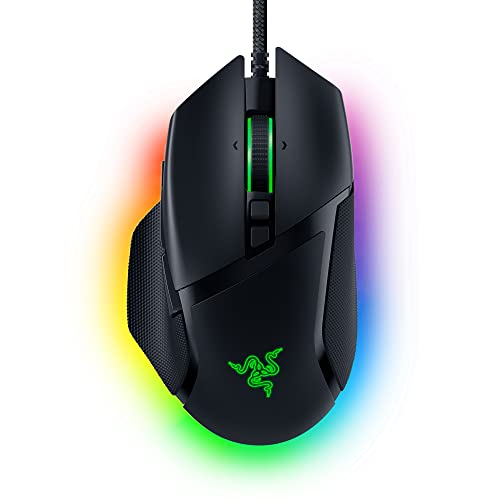 Razer Basilisk V3 Customizable RGB Wired Ergonomic GamingMouse2.96 x 5.12 x 1.67 inches0.2 poundsCheck on Amazon
 Logitech G502 LIGHTSPEED Wireless Gaming MouseWireless5.19 x 2.95 x 1.57 inches0.81 poundsCheck on Amazon

A heavy gaming mouse changes the feel of every flick and every slow tracking movement, so the real decision is not whether extra weight is good or bad but how much heft your hand actually wants. Some players overshoot with featherweight shells and want a mouse that resists accidental nudges, while others find that a solid body tires the wrist during long sessions. The weight, the balance point and the grip shape matter more than any single sensor number, because a mouse that fights your hand will cost you accuracy no matter how high its DPI ceiling goes.
This guide is for players who already know they prefer a planted mouse: low-sensitivity aimers who sweep across a large pad, MMO and strategy players who rest their palm for hours, and anyone whose current mouse feels too skittish. Every mouse below was chosen from its Amazon listing title and specifications, and each one weighs at least 100 grams, with most including removable weights so you can tune the balance yourself.
Quick Picks
As an Amazon Associate we earn from qualifying purchases.
| Product | Best for | Key spec from title |
|---|---|---|
| Logitech G502 HERO | All-round wired play with tunable weight | HERO 25K sensor, 25,600 DPI, adjustable weights |
| Razer Basilisk V3 | Ergonomic comfort with a fast scroll wheel | 26K DPI optical sensor, HyperScroll tilt wheel |
| Logitech G502 Lightspeed | Wireless freedom with a heavy, balanced body | HERO 25K sensor, tunable weights, Lightsync RGB |
How to Choose
Begin With the Weight You Can Carry All Session
A heavy mouse is usually anything from 100 grams upward, and the difference between 101 and 121 grams is easy to feel after an hour of play. Check the listed weight before anything else, then think about how you move: low-sensitivity players who lift and reposition often will notice every extra gram, while high-sensitivity players who mostly pivot the wrist may barely register it. Removable weights help, because they let you add mass near the palm or the front and shift the balance point. If you play competitive shooters for several hours at a stretch, begin near 100 grams and only go heavier if your aim feels steadier rather than slower.
Match the Shape to Your Grip and Hand Size
Weight means little if the shell forces your hand into an awkward claw. Palm-grip players need a long, tall body with a thumb rest, while claw players want a shorter shell with a defined hump under the fingers. Measure your hand from wrist to middle fingertip and compare it with the listed dimensions, because a mouse that is too long will drag your ring finger and a mouse that is too short will leave your palm unsupported. Right-handed ergonomic shapes dominate the heavy category, so left-handed players should confirm the shape before ordering. A comfortable shell keeps your wrist relaxed, which matters more over a long session than a few extra grams.
Check the Sensor Range and Polling Rate
Modern optical sensors track cleanly across a wide DPI range, so the headline number is less important than how the sensor behaves at the sensitivity you actually use. Look for a sensor that covers your preferred DPI without smoothing or acceleration, and a polling rate of 1,000 Hz so cursor updates stay consistent during fast flicks. Lift-off distance matters too, especially for low-sensitivity players who reposition constantly: a sensor that keeps tracking while the mouse is slightly raised will produce unwanted cursor drift. Adjustable DPI steps let you switch between a slow aiming setting and a fast desktop setting without opening software mid-game.
Count the Buttons You Will Actually Use
Extra buttons only help if they sit where your thumb and fingers can reach them without shifting your grip. MMO and strategy players benefit from a thumb grid or several side buttons for abilities and macros, while shooter players often need just two well-placed side buttons plus a DPI switch. Programmable buttons add value when the software lets you assign macros, push-to-talk or weapon swaps, and on-board memory keeps those assignments when you move to another computer. Avoid paying for a button layout you will never learn, and watch out for side buttons that sit so close together that you press the wrong one in a tense moment.
The 3 Best Options
Logitech G502 HERO

The G502 HERO is the classic heavy gaming mouse, and it earns that status because almost everything about it can be adjusted. The base weight of 121 grams already feels planted, and five removable 3.6-gram weights let you add up to 18 extra grams and shift the balance toward the palm or the front. Eleven programmable buttons cover macros, DPI switching and push-to-talk, while the dual-mode scroll wheel flips between precise notched scrolling and free spinning for long documents and inventory lists. It suits players who want one wired mouse for shooters, MMOs and everyday work without giving up control over how it feels.
Specs
- Sensor: HERO 25K optical sensor, 100 to 25,600 DPI
- Weight: 121 grams, plus five removable 3.6-gram weights
- Buttons: 11 programmable buttons
- Scroll wheel: Dual-mode hyper-fast scroll wheel with tilt
- Memory: On-board memory for up to five profiles
- Connection: Wired USB
- Lighting: Customizable RGB lighting
- Model: 910-005469
Best for: Players who want a heavy wired mouse with tunable weight and plenty of programmable buttons.
Watch out for: The right-handed shape does not suit left-handed players, and the 121-gram base weight feels bulky for small hands.
Razer Basilisk V3
The Basilisk V3 takes a lighter approach to heavy at 101 grams, which makes it the pick here for players who want heft without wrist fatigue. Its right-handed ergonomic shell includes a thumb rest that supports the hand during long sessions, and the HyperScroll tilt wheel switches between tactile notched scrolling, free-spin mode and a Smart-Reel setting. Eleven programmable buttons sit within thumb reach, and eleven Chroma RGB zones let you match the lighting to the rest of your setup. The Focus+ optical sensor tracks up to 26,000 DPI with a 1,000 Hz polling rate, so fast flicks stay consistent when the mouse is carrying its full weight.
Specs
- Sensor: Razer Focus+ optical sensor, up to 26,000 DPI
- Weight: 101 grams excluding cable
- Buttons: 11 programmable buttons
- Scroll wheel: HyperScroll tilt wheel with tactile, free-spin and Smart-Reel modes
- Switches: Razer optical mouse switches Gen-2
- Lighting: 11 Chroma RGB lighting zones
- Polling rate: 1,000 Hz
- Connection: Wired USB Type-A
- Model: RZ01-04000100-R3U1
Best for: Players who want a heavy ergonomic mouse that stays comfortable through long sessions.
Watch out for: The wired-only connection limits desk freedom, and the thumb rest makes the shape awkward for players who prefer a narrow ambidextrous shell.
Logitech G502 Lightspeed
The G502 Lightspeed brings the G502 shape and weight system into a wireless body, so players who hate cable drag do not have to give up heft. It weighs 114 grams and ships with six adjustable weights, two 4-gram and four 2-gram pieces, for fine-tuning the balance. The HERO 25K sensor tracks from 100 to 25,600 DPI, and the LIGHTSPEED wireless connection reports at 1 ms for responsive aiming. A rechargeable battery lasts up to 60 hours of play, and the mouse works with the PowerPlay wireless charging system. Eleven programmable buttons and on-board memory round out a mouse for players who switch between games and machines.
Specs
- Sensor: HERO 25K optical sensor, 100 to 25,600 DPI
- Weight: 114 grams, plus six adjustable weights (two 4-gram, four 2-gram)
- Buttons: 11 programmable buttons
- Battery: Up to 60 hours of gameplay per charge
- Wireless: LIGHTSPEED wireless with 1 ms report rate
- Charging: PowerPlay wireless charging compatible
- Scroll wheel: Dual-mode hyper-fast scroll wheel
- Memory: On-board memory for profiles
- Model: 910-005565
Best for: Players who want a heavy wireless mouse with tunable balance and long battery life.
Watch out for: The battery adds weight that cannot be removed, and wireless play means keeping an eye on charge before long sessions.
Which One Fits Your Situation
You Play Low-Sensitivity Shooters
Choose the Logitech G502 HERO. Its 121-gram base weight and five removable weights give you the most mass to anchor slow, wide sweeps, and the planted feel helps stop overshoot when you track a moving target. The DPI shift button lets you drop sensitivity for long-range aiming and return to normal speed instantly, which suits low-sensitivity players who already move their whole arm.
You Want Heft Without Wrist Fatigue
Choose the Razer Basilisk V3. At 101 grams it is the lightest mouse in this guide, yet it still feels solid compared with ultralight shells, and the thumb rest supports your hand through long sessions. The ergonomic shape and smooth HyperScroll wheel make it a strong pick for players who like a heavy feel but worry about strain during extended play.
You Hate Cables but Love Weight
Choose the Logitech G502 Lightspeed. It keeps the heavy G502 character at 114 grams with six tuning weights, while the wireless connection removes cable drag from your aim. The 60-hour battery covers several long sessions, and PowerPlay compatibility means you can charge it by resting it on a compatible mat between games.
You Play MMOs and Strategy Games for Hours
Choose the Logitech G502 HERO for wired reliability or the G502 Lightspeed if you prefer wireless. Both carry eleven programmable buttons for abilities, macros and push-to-talk, plus on-board memory that keeps your setup when you move computers. The heavy, stable body suits palm-grip players who rest their hand on the mouse between commands.
Common Mistakes
- Buying the heaviest mouse available without checking whether your wrist can handle it through a full session.
- Ignoring grip style and choosing a right-handed ergonomic shell that fights a claw or fingertip grip.
- Assuming a high DPI ceiling guarantees accuracy, when lift-off distance and polling rate matter just as much.
- Filling every programmable button on day one instead of learning two or three useful assignments first.
- Forgetting to check battery life on a wireless heavy mouse, since the battery itself adds weight you cannot remove.
Frequently Asked Questions
How heavy should a heavy gaming mouse be?
Most players call a mouse heavy once it passes 100 grams, and the picks here run from 101 to 121 grams before any added weights. The right weight depends on your sensitivity and grip: low-sensitivity arm aimers often prefer 110 grams or more for stability, while wrist aimers feel comfortable near 100 grams. Removable weights let you adjust in small steps until the mouse feels planted without slowing you down.
Is a heavy mouse bad for competitive shooters?
A heavy mouse is not automatically bad for shooters, but it changes how you aim. Extra mass steadies slow tracking and reduces accidental movement, which helps low-sensitivity players. The trade-off is slower flicks and more effort during repeated repositioning, so fast-paced shooters can feel sluggish above 120 grams. Try a weight near 100 grams first and add mass only if your aim feels steadier.
Do adjustable weights actually change how a mouse feels?
Yes, adjustable weights change both total mass and balance. Adding weights near the palm makes the rear feel heavier and steadier, while weights near the front shift the pivot point forward for different flick behavior. Small changes of 4 to 8 grams are noticeable, so adjust one weight at a time and play a few rounds before changing anything else.
Can a heavy mouse cause wrist strain?
A heavy mouse can add strain if your grip or desk setup forces extra effort, especially during long sessions with frequent lifting. A palm grip with a supported wrist and a large pad reduces lifting, which keeps strain down. If your wrist aches after playing, try a lighter pick in this guide, raise your sensitivity slightly, or take short breaks between matches.
FAQ
How heavy should a heavy gaming mouse be?
Is a heavy mouse bad for competitive shooters?
Do adjustable weights actually change how a mouse feels?
Can a heavy mouse cause wrist strain?
More from Amazon
Programs that pair well with the guide above. Offers and eligibility are set by Amazon and may change.
Free shipping on eligible items, Prime Video and more. Eligible new members can start with a free trial.
Start a Prime free trialAd-free music streaming. Eligible new subscribers can start with a free trial.
Try Music Unlimited freeA Prime membership for ages 18-24 with a trial period. Eligibility is set by Amazon.
See Prime for Young AdultsAudiobooks and podcasts to listen to on the go. Eligible new members can start with a free trial.
Try Audible freeAs an Amazon Associate we earn from qualifying purchases.