Key takeaways
- Resolution and VRAM: If you play at 1440p with high texture settings, the RX 7800 XT’s 16GB of VRAM gives it an edge in modern titles. The RTX 4070’s 12GB is sufficient for most scenarios, but it can struggle in unoptimized or memory-heavy ports.
- Ray Tracing and Upscaling: The RTX 4070 is the clear winner for ray tracing performance and benefits massively from DLSS 3 frame generation. If visual fidelity matters more than raw rasterization, go NVIDIA.
- Raw Rasterization Performance: The RX 7800 XT frequently outperforms the RTX 4070 in traditional rasterization, particularly at 1440p and 4K. For pure frame rates without relying on upscaling, AMD holds the advantage.
- Power Efficiency: The RTX 4070 draws significantly less power, typically around 200W compared to the RX 7800 XT’s 263W. If your PSU is modest or you prioritize a cool, quiet build, NVIDIA is the safer bet.
- Price-to-Performance: The RX 7800 XT consistently delivers better value per dollar. If budget is your primary concern and ray tracing is not a priority, AMD offers superior raw gaming performance for the money.
Choosing between the RTX 4070 and RX 7800 XT is one of the hardest decisions facing PC gamers building a mid-range rig right now. Both cards hover around the same price point and target 1440p gaming, but they take very different approaches. NVIDIA leans on ray tracing performance, DLSS 3 frame generation, and lower power consumption, while AMD counters with more VRAM, stronger rasterization at higher resolutions, and a more aggressive price-to-performance ratio.
Our top picks


 GIGABYTE Radeon RX 9070 XT Gaming OC
- Powered by Radeon RX 9070 XT
- WINDFORCE Cooling System
- Hawk Fan


As an Amazon Associate we earn from qualifying purchases at no extra cost to you.
This guide breaks down everything you need to know before pulling the trigger. We compare real-world gaming performance, feature sets, thermals, and value to help you make an informed decision. Whether you care about cutting-edge ray tracing or raw frame rates at 1440p and beyond, we have identified the best Radeon options on the market alongside clear guidance on when each card wins.
🛒 Best Price Today on Amazon
Prime members get fast, free shipping on everything above, plus member-only deals. New members get a 30-day free trial — cancel anytime.
Watch: RTX 4070 vs RX 7800 XT: Which GPU Is Better in 2026? — Video Review
How to Choose an RTX 4070 vs RX 7800 XT
- Resolution and VRAM: If you play at 1440p with high texture settings, the RX 7800 XT’s 16GB of VRAM gives it an edge in modern titles. The RTX 4070’s 12GB is sufficient for most scenarios, but it can struggle in unoptimized or memory-heavy ports.
- Ray Tracing and Upscaling: The RTX 4070 is the clear winner for ray tracing performance and benefits massively from DLSS 3 frame generation. If visual fidelity matters more than raw rasterization, go NVIDIA.
- Raw Rasterization Performance: The RX 7800 XT frequently outperforms the RTX 4070 in traditional rasterization, particularly at 1440p and 4K. For pure frame rates without relying on upscaling, AMD holds the advantage.
- Power Efficiency: The RTX 4070 draws significantly less power, typically around 200W compared to the RX 7800 XT’s 263W. If your PSU is modest or you prioritize a cool, quiet build, NVIDIA is the safer bet.
- Price-to-Performance: The RX 7800 XT consistently delivers better value per dollar. If budget is your primary concern and ray tracing is not a priority, AMD offers superior raw gaming performance for the money.
The Best RTX 4070 vs RX 7800 XTs Reviewed
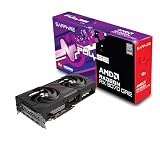
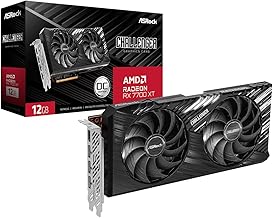
Sapphire Pure RX 7800 XT
Sapphire’s Pure edition delivers exceptional cooling and a quiet acoustic profile, making it one of the most reliable RX 7800 XT variants available. Build quality and out-of-the-box clock speeds make this a top-tier choice for 1440p gaming.
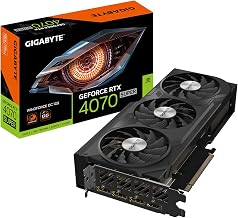
GIGABYTE RX 7800 XT Gaming OC
The GIGABYTE Gaming OC uses the proven WINDFORCE triple-fan cooler to keep temperatures low under sustained loads. It pairs strong factory overclocking headroom with solid build construction for gamers who want reliability without paying premium brand prices.
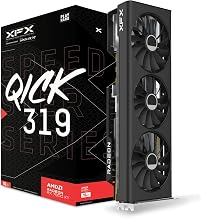
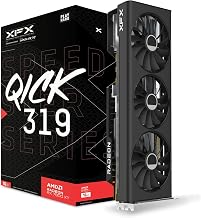
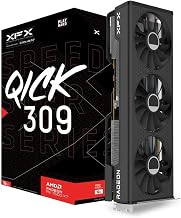
XFX Speedster QICK319 RX 7800 XT Core
XFX’s Speedster QICK319 offers a clean, understated design with excellent thermal performance and competitive pricing. It represents one of the best value propositions in the RX 7800 XT lineup, delivering reference-beating performance at a reasonable cost.
PowerColor Twin Fan RX 7800 XT
The PowerColor Twin Fan focuses on compact dimensions while maintaining solid gaming performance and respectable thermals. It is ideal for smaller form factor builds where space is limited but you still want full RX 7800 XT capabilities.
PowerColor Fighter RX 7800 XT
As the budget-friendly option in the RX 7800 XT family, the PowerColor Fighter strips away premium features but retains the core silicon. It is the card to buy when you want maximum AMD rasterization performance at the lowest possible entry price.
Frequently Asked Questions
Is the RTX 4070 or RX 7800 XT better for 4K gaming?
The RX 7800 XT generally performs better at 4K due to its 16GB of VRAM and stronger rasterization, though the RTX 4070 closes the gap with DLSS 3. For native 4K without upscaling, the RX 7800 XT is the stronger choice.
Does the RTX 4070 have better ray tracing?
Yes, the RTX 4070 consistently outperforms the RX 7800 XT in ray-traced titles. NVIDIA’s dedicated RT cores and DLSS 3 frame generation give it a significant advantage when visual fidelity features are enabled.
Which card uses less power?
The RTX 4070 is notably more power-efficient, drawing roughly 60W less under load compared to the RX 7800 XT. This means you can pair it with a lower-wattage PSU and enjoy lower overall system temperatures.
Is 12GB of VRAM enough for modern gaming?
For most current titles at 1440p, 12GB is sufficient. However, some modern ports and games with ultra texture packs can exceed this at higher resolutions, where the RX 7800 XT’s 16GB provides more headroom for future-proofing.
Final Thoughts
For most buyers, the Sapphire Pure RX 7800 XT represents the best overall value, combining excellent cooling, strong 1440p performance, and future-proof VRAM. If ray tracing and DLSS 3 are priorities, the RTX 4070 remains a compelling alternative. Budget-conscious builders should also consider the XFX Speedster QICK319 for its balance of price and performance.