Key takeaways
- Performance Tiers: The RX 6600 generally delivers significantly higher raw frame rates in standard rasterized games at 1080p, while the RTX 3050 falls behind in pure pixel-pushing benchmarks.
- VRAM Capacity: AMD offers 8GB of GDDR6 memory compared to NVIDIA’s 6GB on the 3050, giving the RX 6600 an edge in texture-heavy modern titles and higher resolution gaming.
- Upscaling Technology: NVIDIA’s DLSS provides superior image reconstruction and performance scaling compared to AMD’s FSR, making the RTX 3050 more competitive when games support DLSS.
- Ray Tracing Capability: Both GPUs feature hardware-accelerated ray tracing, but NVIDIA’s architecture handles lighting effects more efficiently, offering a better experience if ray tracing matters to you.
- Power and Form Factor: The RTX 3050 boasts lower power draw and is widely available in low-profile, single-fan designs, making it ideal for small form factor builds with limited PSU headroom.
Building or upgrading a budget gaming PC often comes down to the same frustrating bottleneck: graphics card pricing. Both the AMD Radeon RX 6600 and NVIDIA GeForce RTX 3050 sit firmly in the entry-level tier, promising playable 1080p frame rates without demanding a small fortune. However, they take markedly different paths to get there. AMD leans on raw rasterization performance and more video memory, while NVIDIA counters with superior feature sets like DLSS upscaling and hardware-accelerated ray tracing. Understanding where each architecture excels is the key to spending your money wisely.
Our top picks
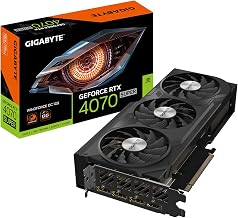
 GIGABYTE GeForce RTX 3050 WINDFORCE OC V2
- NVIDIA Ampere Streaming Multiprocessors
- 2nd Generation RT Cores
- 3rd Generation Tensor Cores
 ASUS Dual NVIDIA GeForce RTX 3050 6GB
- NVIDIA Ampere Streaming Multiprocessors: The all-new Ampere SM…
- 2nd Generation RT Cores: Experience 2X the throughput…
- 3rd Generation Tensor Cores: Get up to 2X…


 msi Gaming RTX 3050 Ventus 2X 6G
- Chipset: GeForce RTX 3050
- Boost Clock / Memory: 1492 MHz / 14…
- Video Memory: 6GB GDDR6


As an Amazon Associate we earn from qualifying purchases at no extra cost to you.
This guide breaks down the RX 6600 versus the RTX 3050 across the most important metrics for budget gamers, including 1080p gaming performance, VRAM capacity, power efficiency, and feature set compatibility. We compare real-world frame rates, cooling solutions, and form factors so you can confidently choose the right GPU for your specific rig, monitor resolution, and game library.
🛒 Best Price Today on Amazon
Prime members get fast, free shipping on everything above, plus member-only deals. New members get a 30-day free trial — cancel anytime.
Watch: RX 6600 vs RTX 3050: Which GPU Is Better in 2026? — Video Review
How to Choose an RX 6600 vs RTX 3050
- Performance Tiers: The RX 6600 generally delivers significantly higher raw frame rates in standard rasterized games at 1080p, while the RTX 3050 falls behind in pure pixel-pushing benchmarks.
- VRAM Capacity: AMD offers 8GB of GDDR6 memory compared to NVIDIA’s 6GB on the 3050, giving the RX 6600 an edge in texture-heavy modern titles and higher resolution gaming.
- Upscaling Technology: NVIDIA’s DLSS provides superior image reconstruction and performance scaling compared to AMD’s FSR, making the RTX 3050 more competitive when games support DLSS.
- Ray Tracing Capability: Both GPUs feature hardware-accelerated ray tracing, but NVIDIA’s architecture handles lighting effects more efficiently, offering a better experience if ray tracing matters to you.
- Power and Form Factor: The RTX 3050 boasts lower power draw and is widely available in low-profile, single-fan designs, making it ideal for small form factor builds with limited PSU headroom.
The Best RX 6600 vs RTX 3050s Reviewed
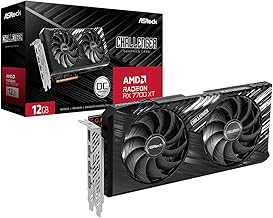
MSI Radeon RX 6600 Armor 8G
This renewed model offers excellent value, delivering the full 8GB VRAM and strong 1080p gaming performance that defines the RX 6600 tier. The Armor cooling solution runs quiet under load, making it a solid pickup for budget-focused builders willing to buy refurbished.
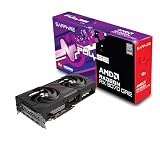
Sapphire Pulse AMD Radeon RX 6600
Sapphire’s cooling engineering is among the best in the industry, and this renewed Pulse card runs cooler and quieter than most blower-style alternatives. It remains a top recommendation for gamers who prioritize thermal management alongside raw rasterization performance.
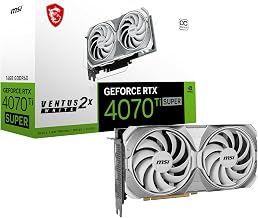
MSI Gaming RTX 3050 Ventus 2X 6G OC
The Ventus 2X provides a compact dual-fan design with a modest factory overclock, making it a reliable entry point into NVIDIA’s DLSS and ray tracing ecosystem. It is best suited for 1080p medium-settings gaming where power efficiency matters.
GIGABYTE GeForce RTX 3050 WINDFORCE OC V2 6G
GIGABYTE’s WINDFORCE cooler handles the 3050’s low thermal output efficiently, ensuring silent operation during standard gameplay sessions. The alternate spinning fans reduce turbulence, offering a premium acoustic experience for a budget-tier card.
ASUS Dual NVIDIA GeForce RTX 3050 OC Edition
ASUS packs this card with Axial-tech fans and a sturdy steel bracket, providing exceptional build quality and a clean aesthetic. The dual-slot design ensures broad case compatibility, and the three-year warranty on a renewed unit adds welcome peace of mind.
Frequently Asked Questions
Which card is better for 1080p gaming?
The RX 6600 is objectively faster for traditional rasterized 1080p gaming, often outperforming the RTX 3050 by 20 to 30 percent in raw frame rates. However, the RTX 3050 closes this gap considerably in titles that support DLSS upscaling.
Is 6GB of VRAM enough for modern games?
While 6GB is sufficient for most games at 1080p on medium to high settings, newer AAA titles are increasingly demanding on video memory. The RX 6600’s 8GB buffer provides better future-proofing for texture-heavy environments.
Can either card handle ray tracing?
Both GPUs can enable ray tracing, but the RTX 3050 generally delivers a smoother experience due to NVIDIA’s more efficient RT cores. On the RX 6600, ray tracing significantly impacts performance and is best reserved for lighter implementations.
What power supply do I need for these cards?
The RTX 3050 is highly efficient and requires only a 300W to 350W power supply. The RX 6600 draws slightly more power, so pairing it with a reliable 450W or 500W power supply is recommended for safe, stable operation.
Final Thoughts
For pure 1080p gaming performance and longevity, the Sapphire Pulse RX 6600 and MSI Radeon RX 6600 Armor stand out as the clear winners in this lineup. However, if your priority is a compact, low-power build with access to NVIDIA’s superior DLSS upscaling and streaming features, the ASUS Dual RTX 3050 OC Edition offers the best combination of build quality and feature set.