Key takeaways
- Performance Targets: The RTX 4060 generally pulls ahead in 1080p gaming, especially with DLSS 3 frame generation enabled, while the RX 7600 trades blows in raw rasterization. Determine which titles you play most before committing.
- VRAM and Memory Bus: Both cards ship with 8GB of GDDR6 on a 128-bit bus, which is adequate for 1080p but can struggle with ultra textures in modern titles. The 7600 XT variant with 16GB is worth considering for longevity.
- Ray Tracing and Upscaling: NVIDIA holds a clear advantage in ray tracing performance and DLSS 3 support, making the 4060 the stronger pick for visually demanding games. AMD’s FSR has improved but still trails in image quality at lower resolutions.
- Power Efficiency: Both GPUs sip power, with the 4060 drawing roughly 115W and the 7600 around 165W. Any decent 500W power supply can handle either card without issue.
- Form Factor and Cooling: AIB partner designs range from compact dual-fan setups to triple-fan coolers. Check your case clearance, as triple-fan cards like the ASRock Challenger Pro demand more length and may limit smaller builds.
The budget graphics card market is more competitive than ever, and two GPUs dominate the conversation for 1080p gamers: AMD’s Radeon RX 7600 and NVIDIA’s GeForce RTX 4060. Both land in the same sub-$300 price bracket, yet they take fundamentally different approaches to delivering playable frame rates. Buyers are left weighing raw rasterization performance, upscaling tech, VRAM considerations, and feature sets, which makes choosing between them genuinely difficult.
Our top picks


As an Amazon Associate we earn from qualifying purchases at no extra cost to you.
This guide breaks down the RX 7600 vs RTX 4060 matchup across every metric that matters, including real-world gaming performance, power efficiency, ray tracing capability, and feature ecosystems like FSR and DLSS. We’ve selected the best custom-cooled AIB models from ASRock, XFX, and ASUS so you can find the exact card that fits your build, budget, and performance goals.
🛒 Best Price Today on Amazon
Prime members get fast, free shipping on everything above, plus member-only deals. New members get a 30-day free trial — cancel anytime.
Watch: RX 7600 vs RTX 4060: Which GPU Is Better in 2026? — Video Review
How to Choose an RX 7600 vs RTX 4060
- Performance Targets: The RTX 4060 generally pulls ahead in 1080p gaming, especially with DLSS 3 frame generation enabled, while the RX 7600 trades blows in raw rasterization. Determine which titles you play most before committing.
- VRAM and Memory Bus: Both cards ship with 8GB of GDDR6 on a 128-bit bus, which is adequate for 1080p but can struggle with ultra textures in modern titles. The 7600 XT variant with 16GB is worth considering for longevity.
- Ray Tracing and Upscaling: NVIDIA holds a clear advantage in ray tracing performance and DLSS 3 support, making the 4060 the stronger pick for visually demanding games. AMD’s FSR has improved but still trails in image quality at lower resolutions.
- Power Efficiency: Both GPUs sip power, with the 4060 drawing roughly 115W and the 7600 around 165W. Any decent 500W power supply can handle either card without issue.
- Form Factor and Cooling: AIB partner designs range from compact dual-fan setups to triple-fan coolers. Check your case clearance, as triple-fan cards like the ASRock Challenger Pro demand more length and may limit smaller builds.
The Best RX 7600 vs RTX 4060s Reviewed
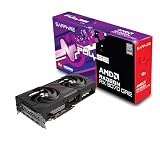
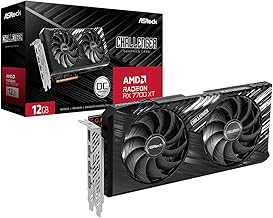
ASRock RX 7600 Challenger Pro 8GB OC
This triple-fan variant runs exceptionally quiet thanks to ASRock’s 0dB silent mode, and its 2695MHz boost clock provides solid headroom for overclocking. It’s one of the coolest-running 7600 models available, making it ideal for cramped cases with limited airflow.
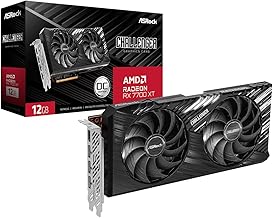
ASRock RX 7600 Challenger 8GB OC
The dual-fan Challenger keeps things compact while retaining the same 2695MHz boost and 8GB of GDDR6 memory. It’s a strong value pick for budget builders who want reliable 1080p performance without paying for oversized cooling.
XFX Speedster SWFT210 RX 7600
XFX’s SWFT210 design offers a clean, understated aesthetic with dependable thermals and three DisplayPort outputs for multi-monitor setups. It matches reference performance with a slightly more aggressive out-of-the-box tune.
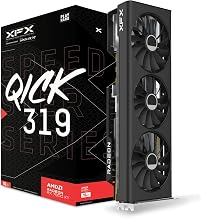
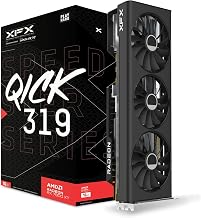
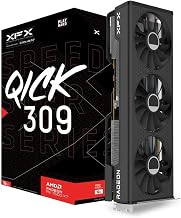
XFX Speedster QICK309 RX 7600 XT 16GB
Stepping up to the 7600 XT with 16GB of GDDR6 gives this card meaningful breathing room for higher resolutions and texture-heavy games. The QICK309’s robust cooling and extra VRAM make it the most future-proof option in this lineup.
ASUS Dual GeForce RTX 4060 V2 OC Edition
This renewed ASUS model brings NVIDIA’s superior DLSS 3 and ray tracing capabilities to the budget space in a compact two-slot design. Axial-tech fans and 0dB technology keep it whisper-quiet under typical gaming loads.
Frequently Asked Questions
Is the RTX 4060 faster than the RX 7600?
On average, yes, the RTX 4060 outperforms the RX 7600 by roughly 10 to 15 percent at 1080p in most modern titles. The gap widens significantly when DLSS 3 frame generation is enabled in supported games.
Is 8GB of VRAM enough for 1080p gaming?
For the majority of current 1080p titles, 8GB remains sufficient at high settings. However, some recent releases like The Last of Us Part I and Resident Evil 4 can exceed 8GB at ultra textures, making the 16GB 7600 XT a safer long-term bet.
Which card is better for ray tracing?
NVIDIA’s RTX 4060 is the clear winner for ray tracing, benefiting from dedicated RT cores in NVIDIA’s Ada Lovelace architecture. The RX 7600 supports ray tracing through RDNA 3, but its performance in RT-heavy titles falls behind.
Do these cards require a powerful PSU?
No, both are highly power-efficient GPUs. The RTX 4060 draws about 115W and the RX 7600 around 165W, so a quality 500W power supply is more than sufficient for either card in a standard system.
Final Thoughts
For most 1080p gamers, the ASUS Dual GeForce RTX 4060 V2 OC Edition delivers the best all-around experience thanks to DLSS 3 and superior ray tracing. However, value-focused buyers should look at the ASRock RX 7600 Challenger Pro for its quiet triple-fan cooling, and the XFX Speedster QICK309 RX 7600 XT stands out for anyone wanting 16GB of VRAM for long-term durability in demanding titles.