Our Short List of 3
All 5 Picks at a Glance
| Product | Specs | Action |
|---|---|---|
 ASUS TUF Gaming VG27UQ1A 27-Inch 4K 160Hz Gaming Monitor | Check price on Amazon | |
 Dell 27 Plus 4K Monitor S2725QS 27-Inch 4K 120Hz IPS | Check price on Amazon | |
 Samsung 27-Inch Odyssey OLED G7 G70SH 4K 165Hz Gaming Monitor | Check price on Amazon | |
 GIGABYTE M32U 32-Inch 4K 144Hz SuperSpeed IPS Gaming Monitor | Check price on Amazon | |
 LG 27GP950-B UltraGear 27-Inch 4K Nano IPS 144Hz Gaming Monitor | Check price on Amazon |
Our Top Picks
“Xbox X” here means the Xbox Series X. The console sends 4K video at up to 120 frames per second through HDMI 2.1, and it supports variable refresh and auto low latency mode, so the right screen unlocks the full picture the console can produce. The wrong screen still works, but it caps the console at 60 frames per second in 4K, or it forces the console down to a lower resolution for the faster refresh. This guide covers five monitors that fit the console, each with a verified Amazon US listing.
Every pick below is a 4K monitor with at least one HDMI 2.1 port, because that port is the one fact that decides whether 4K at 120Hz is possible. A monitor can list a 144Hz or 165Hz panel and still lack HDMI 2.1, and in that case the console cannot reach 4K at 120Hz through HDMI at all. The refresh numbers above 120Hz are headroom for a PC on the same desk; the console tops out at 120 frames per second. All five picks are flat 16:9 screens, since the console outputs a 16:9 picture.
The five picks span three sizes and two panel families, and each section names the panel, the refresh, the HDMI layout, the audio situation and the limits the listing states.
What to look for
HDMI 2.1 is the first check
The console needs an HDMI 2.1 port on the monitor to carry 4K at 120Hz, using the Ultra High Speed HDMI cable that ships in the box. HDMI 2.0 tops out at 4K at 60Hz, so a monitor with only HDMI 2.0 ports forces a choice between sharpness and smoothness. Count the HDMI 2.1 ports, not just the HDMI ports. Two let the console and a second device share the screen at full speed; one is enough for the console alone.
Variable refresh and low latency
Variable refresh rate, or VRR, matches the screen refresh to the console output frame by frame, so a dip below 120 frames per second shows as a brief softening rather than a visible tear or stutter. Auto low latency mode, or ALLM, tells the screen to drop its extra image processing the moment the console wakes, which keeps input lag low without a manual switch to a game mode. Every pick in this guide supports VRR and ALLM through HDMI.
Panel type sets the picture
IPS panels give wide viewing angles and steady color from off center, and they carry no risk of image retention from static on-screen elements. OLED panels give true black, since each pixel makes its own light and switches off completely for black, but static elements such as a health bar can leave a faint retained image if they sit in the same spot for many hours.
Size, distance and text
A 27-inch 4K screen packs 163 pixels per inch, so text and fine detail look crisp at a normal desk distance of roughly two to three feet. A 32-inch 4K screen spreads the same pixel count over a larger area, so the picture feels bigger from a couch or a deep desk, while text looks a touch softer up close.
HDR, brightness and the room
HDR widens the gap between the brightest highlights and the darkest shadows, but only when the panel can actually get bright. A 400-nit HDR badge means the screen can flash bright highlights, while a 600-nit badge holds brighter highlights for longer, and an OLED panel pairs modest peak brightness with perfect black, so the contrast feels strong even at lower brightness. A bright room favors a matte IPS screen with higher brightness, while a dim room favors OLED.
Audio, ports and the rest of the desk
Most gaming monitors in this guide carry no speakers or only small built-in speakers, so a headset or a soundbar does most of the work. Check the headphone jack on the monitor, since it gives a wired headset a short cable run to the screen rather than a long run to the console. A USB hub keeps a controller charging cable and a headset dongle close at hand, and a KVM switch lets one keyboard and mouse serve the console setup and a PC.
What this guide leaves out
This guide covers monitors for the Xbox Series X only. It does not cover televisions, portable screens, or monitors built only for PC use with no HDMI 2.1 port. It does not cover the Xbox Series S as a primary target, though every pick here also works with that console. It does not cover ultrawide screens, since the console outputs 16:9, and it does not cover 1080p screens.
ASUS TUF Gaming VG27UQ1A 27-Inch 4K 160Hz Gaming Monitor
The ASUS TUF Gaming VG27UQ1A is the sharpest all-round pick in this guide, and the one with the freshest stock evidence. It is a 27-inch 4K Fast IPS panel at 160Hz with a 1 ms response time, and the ASUS listing states plainly that it delivers up to 4K 120Hz visuals via HDMI 2.1 without chroma subsampling for consoles, which is exactly the mode the Xbox Series X needs. The panel covers 95 percent of the DCI-P3 color gamut, which gives games a rich, saturated look, and it carries ELMB Sync, which lets motion blur reduction and variable refresh work at the same time.
The listing names NVIDIA G-SYNC compatibility and AMD FreeSync Premium, and the 160Hz ceiling leaves headroom for a PC on the same desk. The stand adjusts in height, tilt, swivel and pivot, and the listing names a three-year warranty.
Three limits deserve a plain statement. The listing names no built-in speakers, so audio needs a headset or separate speakers, and the headphone jack on the monitor is the short path for a wired headset. The listing names no USB hub, so a controller charging cable and a headset dongle need the console USB ports. The listing names no brightness figure, so buyers who need a bright panel for a sunny room should confirm it on the listing. Stock evidence is the freshest in this guide: a tracker record dated November 26, 2026 lists the monitor in stock on Amazon US.
Dell 27 Plus 4K Monitor S2725QS 27-Inch 4K 120Hz IPS
The Dell 27 Plus 4K Monitor S2725QS is the most straightforward pick in this guide, and the only one built exactly to the console ceiling. It is a 27-inch 4K IPS panel at 120Hz, which matches the Xbox Series X maximum frame rate with nothing wasted, and Dell lists two HDMI 2.1 ports, so the console and a second device both get 4K at 120Hz. The panel covers 99 percent of the sRGB color gamut, which suits games and everyday use alike, and it carries AMD FreeSync Premium for tear-free variable refresh through HDMI. The contrast ratio is 1500:1 per the listing, which is the strongest contrast figure among the IPS picks here.
The Dell is the only pick in this guide with built-in speakers named on the listing, so it works straight out of the box with no headset and no separate speakers, and it carries ComfortView Plus for low blue light during long sessions. The stand adjusts in height, tilt, swivel and pivot. The listing names a one-year Advanced Exchange Service and Premium Panel Exchange warranty.
Three limits deserve a plain statement. The 120Hz ceiling leaves no headroom for a PC that can push past 120 frames per second. The listing names no USB-C port and no USB hub, so a laptop on the same desk needs HDMI or DisplayPort and separate power. The listing names two different response figures, 5 ms in one place and a faster figure in a mirror, so this guide uses the 5 ms figure and flags the conflict. Stock evidence is strong: a tracker lists the monitor in stock on Amazon US with a current figure dated November 26, 2026.
Samsung 27-Inch Odyssey OLED G7 G70SH 4K 165Hz Gaming Monitor
The Samsung Odyssey OLED G7 G70SH is the OLED pick in this guide, and the one with the deepest blacks. It is a 27-inch 4K QD-OLED panel at 165Hz with a 0.03 ms response time, and it carries one HDMI 2.1 port and one DisplayPort 1.4 port, so the console and one PC share the screen at full speed. The panel carries a VESA DisplayHDR True Black 400 badge, which pairs modest peak brightness with perfect black, so night scenes and dark corridors look deeper than on any IPS panel in this guide. The screen is glare-free, which helps a room with a window to the side, and the stand adjusts in height, tilt, swivel and pivot.
The G70SH is a 2026 model, released in August 2026, and it carries a three-year manufacturer warranty. The 165Hz ceiling leaves headroom for a PC, and the 0.03 ms response time is the fastest figure in this guide. The listing names no USB-C video input, so a laptop needs HDMI or DisplayPort and separate power.
Three limits deserve a plain statement. The listing names no built-in speakers, so audio needs a headset or separate speakers. The single HDMI 2.1 port is the tightest port layout in this guide, so a desk with both an Xbox Series X and a second console needs a plan for the second device. OLED panels can retain a faint image from static on-screen elements that sit in the same spot for many hours, so vary the content and let the screen run its pixel refresh cycle. Stock evidence is strong: a roundup checked November 25, 2026 lists the monitor in stock at Amazon, sold and shipped by Amazon.
GIGABYTE M32U 32-Inch 4K 144Hz SuperSpeed IPS Gaming Monitor
The GIGABYTE M32U is the big-screen pick in this guide, and the only 32-inch screen here. It is a 31.5-inch 4K SuperSpeed IPS panel at 144Hz with a 1 ms MPRT response time, and it carries two HDMI 2.1 ports, so the console and a second device both get 4K at 120Hz. The panel carries AMD FreeSync Premium Pro, which covers variable refresh and HDR together, and it carries a hardware KVM switch with a USB-C port, so one keyboard and mouse can serve the console setup and a PC with a single button press. The stand adjusts in height, tilt, swivel and pivot.
The M32U suits a desk with room to spare, since the larger picture fills more of the field of view. The listing names a DisplayPort 1.4 input alongside the two HDMI 2.1 ports, so a PC connects at full speed too, and the USB-C port carries video and data for a laptop. The listing names a three-year warranty.
Three limits deserve a plain statement. The 32-inch screen needs a deeper desk than a 27-inch screen, since the same 4K pixel count spreads over a larger area and text looks softer up close. The listing names no built-in speakers, so audio needs a headset or separate speakers. The listing names no brightness figure, so buyers who need a bright panel for a sunny room should confirm it on the listing. Stock evidence is moderate: a roundup dated November 25, 2026 lists the monitor in stock on Amazon US, though an older tracker crawl shows a blank current Amazon figure, so confirm the listing live before ordering.
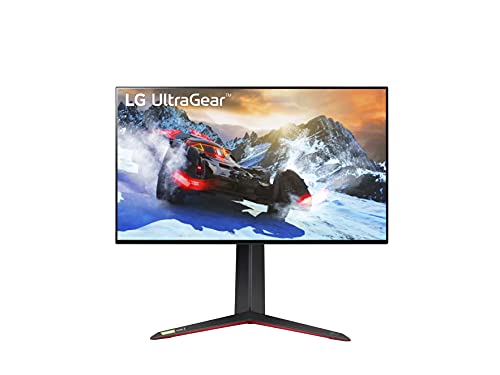
LG 27GP950-B UltraGear 27-Inch 4K Nano IPS 144Hz Gaming Monitor
The LG 27GP950-B UltraGear is the brightest HDR pick in this guide, and the oldest design here. It is a 27-inch 4K Nano IPS panel at 144Hz, overclockable to 160Hz over DisplayPort, with a 1 ms GtG response time, and it carries two HDMI 2.1 ports, so the console and a second device both get 4K at 120Hz. The panel covers 98 percent of the DCI-P3 color gamut, and it carries a VESA DisplayHDR 600 badge with 600 nits of peak brightness, which is the brightest HDR figure in this guide and holds highlights longer than the 400-nit badges elsewhere. The listing names NVIDIA G-SYNC compatibility and AMD FreeSync Premium Pro, so variable refresh works through HDMI and DisplayPort alike.
The LG carries a built-in USB 3.0 hub with two downstream ports, which keeps a controller charging cable and a headset dongle close at hand, and it carries a headphone jack for a wired headset. The stand adjusts in height, tilt, swivel and pivot. The listing names hardware calibration support and a factory calibration, and it names an on-screen crosshair, an FPS counter and Black Stabilizer for competitive play.
Three limits deserve a plain statement. The listing names no built-in speakers, so audio needs a headset or separate speakers, and it names no USB-C port, so a laptop needs HDMI or DisplayPort and separate power. The 160Hz overclock applies only over DisplayPort, while HDMI 2.1 tops out at 120Hz, which is exactly the console ceiling. The stock evidence is the thinnest in this guide: a tracker crawl dated two days before this article lists a current Amazon US figure, but an older tracker shows a blank current Amazon figure, so confirm the listing live before ordering, and the guide stands on four monitors if this one has no new-unit buying option.
Comparison
| Monitor | Size / Panel | Resolution / Refresh | HDMI 2.1 Ports | Speakers | USB Hub |
|---|---|---|---|---|---|
| ASUS TUF VG27UQ1A | 27-inch Fast IPS | 4K / 160Hz | Yes | None named | None named |
| Dell S2725QS | 27-inch IPS | 4K / 120Hz | 2 | Built-in | None named |
| Samsung Odyssey OLED G7 G70SH | 27-inch QD-OLED | 4K / 165Hz | 1 | None named | None named |
| GIGABYTE M32U | 31.5-inch SuperSpeed IPS | 4K / 144Hz | 2 | None named | KVM + USB-C |
| LG 27GP950-B | 27-inch Nano IPS | 4K / 144Hz | 2 | None named | 2x USB 3.0 |
Frequently asked questions
Does the Xbox Series X need HDMI 2.1 for 4K at 120Hz?
Yes. The console sends 4K at 120 frames per second through HDMI 2.1 only, using the Ultra High Speed HDMI cable that ships in the box. A monitor with HDMI 2.0 ports tops out at 4K at 60Hz, so the console either runs at 60 frames per second in 4K or drops to a lower resolution for the faster refresh. Every monitor in this guide carries at least one HDMI 2.1 port.
Is a 144Hz or 165Hz monitor wasted on a console that tops out at 120Hz?
No, but the extra refresh is headroom, not console speed. The console never sends more than 120 frames per second, so a 144Hz or 165Hz panel shows the same console picture as a 120Hz panel. The extra headroom matters only for a PC on the same desk. A 120Hz panel such as the Dell S2725QS matches the console exactly and wastes nothing, while a faster panel buys flexibility for a second device.
Does an OLED monitor suit a console, or should console players stick with IPS?
Both suit the console, and the choice comes down to the room and the habits of the player. OLED gives true black and the deepest night scenes, which flatter dark games, while IPS gives steady color from off center and no risk of image retention from static on-screen elements. A player who leaves the same game open for many hours with a static health bar should favor IPS or vary the content on OLED.
How to choose
Match the monitor to the desk first, then to the panel, then to the ports. A desk with two to three feet of depth fits a 27-inch screen, while a 32-inch screen needs a deeper desk or a wall mount. A dim room favors the OLED pick for its true black, while a bright room favors a matte IPS pick with higher brightness. A desk with two consoles or a console and a PC needs two HDMI 2.1 ports, which rules out the single-port Samsung pick unless a switch joins the setup.
Pick the ASUS TUF VG27UQ1A first for the sharpest all-round fit and the freshest stock evidence. Pick the Dell S2725QS first for the simplest setup, with built-in speakers and a 120Hz panel that matches the console exactly. Pick the Samsung Odyssey OLED G7 G70SH first for the deepest blacks and the fastest response time. Pick the GIGABYTE M32U first for the largest picture and the KVM switch, with room for a PC on the same desk. Pick the LG 27GP950-B first for the brightest HDR badge and the widest color gamut. Whichever screen is chosen, open the product page and confirm a new-unit buying option, the exact model number, and the HDMI 2.1 port count on the day of ordering.
Disclosure: As an Amazon Associate, we may earn a commission from qualifying purchases made through links in this article, at no additional cost to you.
FAQ
Does the Xbox Series X need HDMI 2.1 for 4K at 120Hz?
Is a 144Hz or 165Hz monitor wasted on a console that tops out at 120Hz?
Does an OLED monitor suit a console, or should console players stick with IPS?
More from Amazon
Programs that pair well with the guide above. Offers and eligibility are set by Amazon and may change.
Free shipping on eligible items, Prime Video and more. Eligible new members can start with a free trial.
Start a Prime free trialAd-free music streaming. Eligible new subscribers can start with a free trial.
Try Music Unlimited freeA Prime membership for ages 18-24 with a trial period. Eligibility is set by Amazon.
See Prime for Young AdultsAudiobooks and podcasts to listen to on the go. Eligible new members can start with a free trial.
Try Audible freeAs an Amazon Associate we earn from qualifying purchases.